I booked this trip happening February 2026 on August 1st 2024, about 20 minutes after the announcement e-mail that the photography Antarctica expedition was happening again. Antarctica had been the number one spot on my bucket list for years, and, having freshly committed to tackle my travel dreams a few months earlier, I booked my spot as soon as I read: “Yes, the early-bird discount is still available.”
Was it worth it? Was it everything I ever dreamed of? Spoiler alert: Yes! But let’s start from the beginning.
Table of Contents
Antarctica - Know Before You Go
Antarctica - Know Before You GoAntarctica is not a place you just quickly travel to. And also, you can’t just go “on a solo trip” to Antarctica and get those quiet moments of solitude solo trips are so great for. Visiting Antarctica means signing up for a very social big group experience. With lots and lots and lots of rules.
I did a small breakdown of all the know before you go stuff in a separate article, if you are interested, if you just want to read about my trip and see photos, skip those 1k words.
My Trip To Antarctica
My Trip To AntarcticaAs for my trip, I had learned about photography expeditions to Antarctica through YouTube videos of photographers that I had been following for a couple years. I had watched the videos of previous trips and when one of them shared a Google form to sign up for notifications when the next trip would be announced, I immediately signed up.
The description sounded like pure magic.
11 days along the Antarctic peninsula, ~100 passengers, with 9 renowned photographers available to help you take the best photos possible in the photography workshop of a lifetime.
We had a WhatsApp Chat for over a week before departure with everyone giddy, cracking jokes, talking about camera brands, storage options and splitting into camps of “bobble hats” or pom-pom opponents as they have a tendency to sneak into photos. The first bunch was already in South America and as my flight was coming closer, I panic-bought Samsung Smart-Tags to know in real-time if my luggage got lost and two more batteries because I was scared the camera battery that had never let me down might suddenly run out of juice if I didn’t have backup.
Gear - What I Brought and What I’d Change
Gear - What I Brought and What I’d ChangeWhile a lot of Antarctica trips include kayaking, hiking, snow shoeing, camping on the ice, snorkeling, the madness that is the Polar Plunge (more on that later), etc. our trip was just about the monumental task of capturing the magic of the white continent with our lenses.
Choosing the right gear for this adventure was a big part of our pre-departure WhatsApp conversations and while the photographers and previous travelers to the place were of some help (“Bring enough storage, make sure you can backup, bring extra batteries, bring a wide angle, get something in the 400mm range.”) in the end it was up to each of us to try and find the right thing to bring.
Gear List
Gear ListSo here’s everything I brought.
- Sony A7c + Tamron 17-28mm f/2.8
- Sony A7V + Tamron 50-400mm f/4.5-6.3
- 1 Set of Urth Filters (ND1000, ND64, ND8, Circular Polarizer)
- 1 Phone (Samsung S24 Ultra), with a very cheap but amazing lanyard case
- 6 Sony NP-FZ100 batteries
- Patona Dual Battery Charger for Sony NP-FZ100
- 2 x 2TB SSDs (Samsung T7 & SanDisk Extreme Portable)
- 5 x 128GB SD Cards (SanDisk Extreme Pro UHS-I V30)
- Sony GP-VPT2BT Shooting Grip
- Blackrapid Double Breathe Camera Strap
- Peak Design Slide Lite Camera Strap
- Lenovo Yoga 7 Laptop (whose battery stopped working by Day 2 so I had to be tethered to the ship’s power outlets for all of the trip… yay)
I tried to keep the gear list as minimal as possible while covering a lot of ground and in general I was quite happy with my choices. However, one big thing I should’ve done differently is my choice of wide angle lens.
I know myself and the thing is, that I usually use my phone for the wide angle things. I am a long lens person and don’t really know how to bring out the best of a wide angle lens. I bought the 17-28 last year to capture the northern lights and it was fantastic for that, but I found myself almost never bringing the second body at all, because the times I did bring it, I was disappointed with the results.
What I really missed was my favorite “wideish” focal length, which is a 35mm. I have an amazing 35mm f/1.4 Sigma Art lens that I looked at but decided not to bring due to weight restrictions on our charter flight to Antarctica. I also have an absolutely minuscule 35mm f/2.8 lens by Samyang that I could’ve easily brought and I believe that had I had that, I would’ve never left the second body out. However, the 50-400 proved once again to be an absolute gem and I adore it so much, that I am seriously contemplating selling my Sony 70-200 f/4 Macro lens because the 50-400 is more versatile and every time I opt to bring the 70-200 I kind of regret not having the extra range.
Other things I would change is the cards. I’m still fairly new to taking photos of animals that move very fast and before this trip, I would almost always shoot low burst rates or no burst at all. The camera always kept up with that. But now that I bought the Sony A7V, which offers pre-capture and very fast burst rates, my card cannot keep up with that.
If there is one thing I learned from the wildlife photographers on this trip, then that burst should be used to its full potential. That perfect shot might be hidden in the frames you miss and I learned that the hard way this time round when my camera was buffering in the middle of a burst and I missed a couple moments of penguins in the air or birds in perfect alignment with the backgrounds, or whale flukes.
So, first order of action when I got back was buying some faster cards. (💸💸💸)
Things I didn’t use at all were the mini tripod and the filters. There were some great opportunities for the polarizers, but since I have never used one before, this trip was not really the moment to learn about them. I’ll play with them in the future.
I’m still happy with some of the shots, even though I know they could’ve been better if I had brought the filters along on the Zodiac rides that day.
Bags
BagsAnother subject of discussion was the camera bag. Our trip started via charter flight to King George Island with very heavy restrictions. 20kg luggage, 7kg and super small carry-on dimensions. I opted to bring a big 55l backpack as my carry-on for the other flights instead of my regular camera backpack to store extra clothes, because I was scared of losing luggage, so I brought a second smaller non-photography backpack just for that flight and landings. On the Zodiacs, big backpacks were really just a nuisance, so I brought a sling bag that is about 12l and it was perfect to store extra batteries, extra layer, snow gloves and dry bags. The cameras stayed out all the time.
Just make sure your gear can be waterproofed and you’re good to go.
Getting To Antarctica
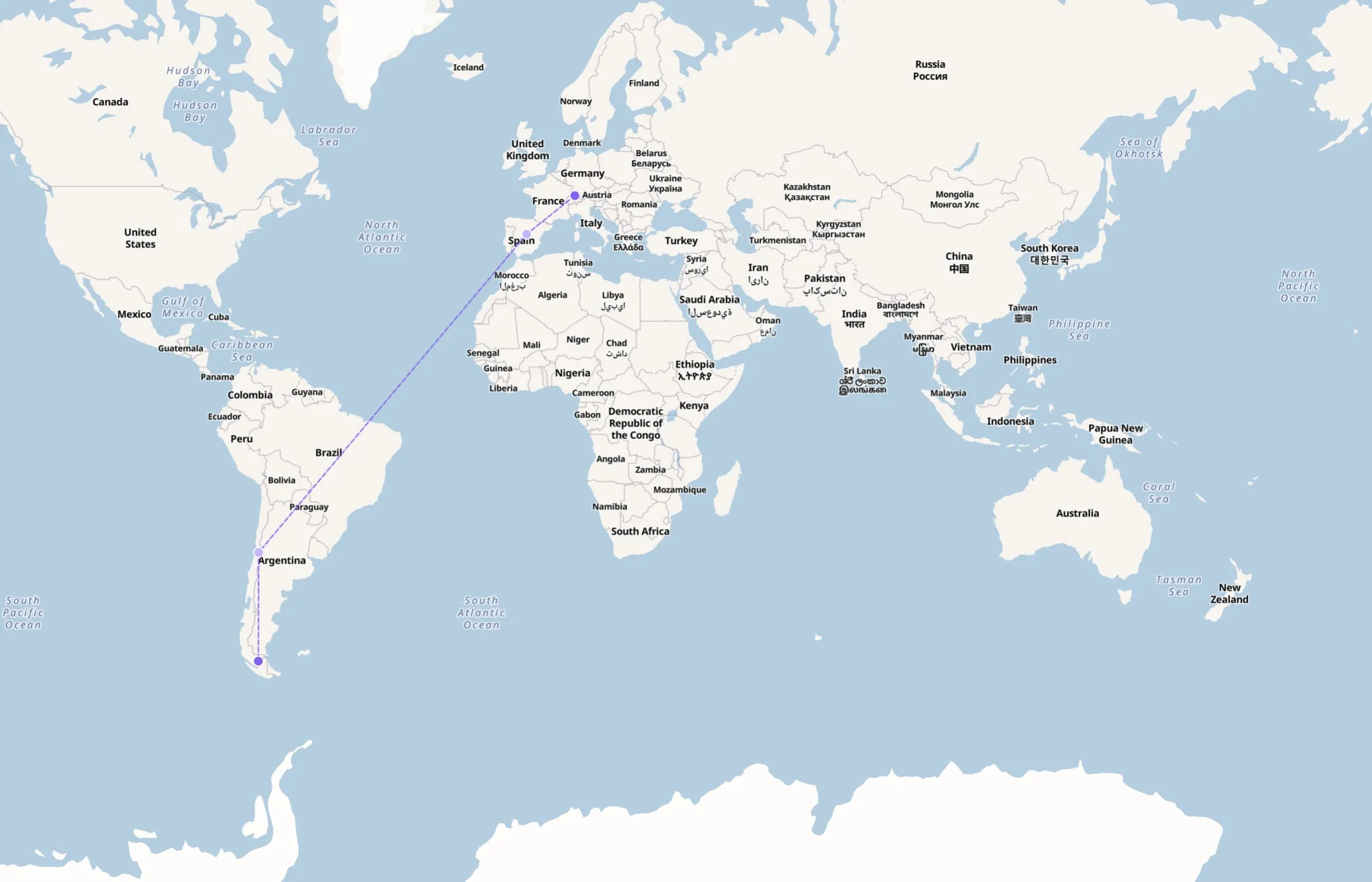
Getting To AntarcticaOur Expedition was to start from Punta Arenas, Chile and travelling there from Zürich took a whopping 32h with flights from Zürich to Madrid to Santiago to Punta Arenas. I arrived a day early along some fellow travelers and the entire group of professional photographers.
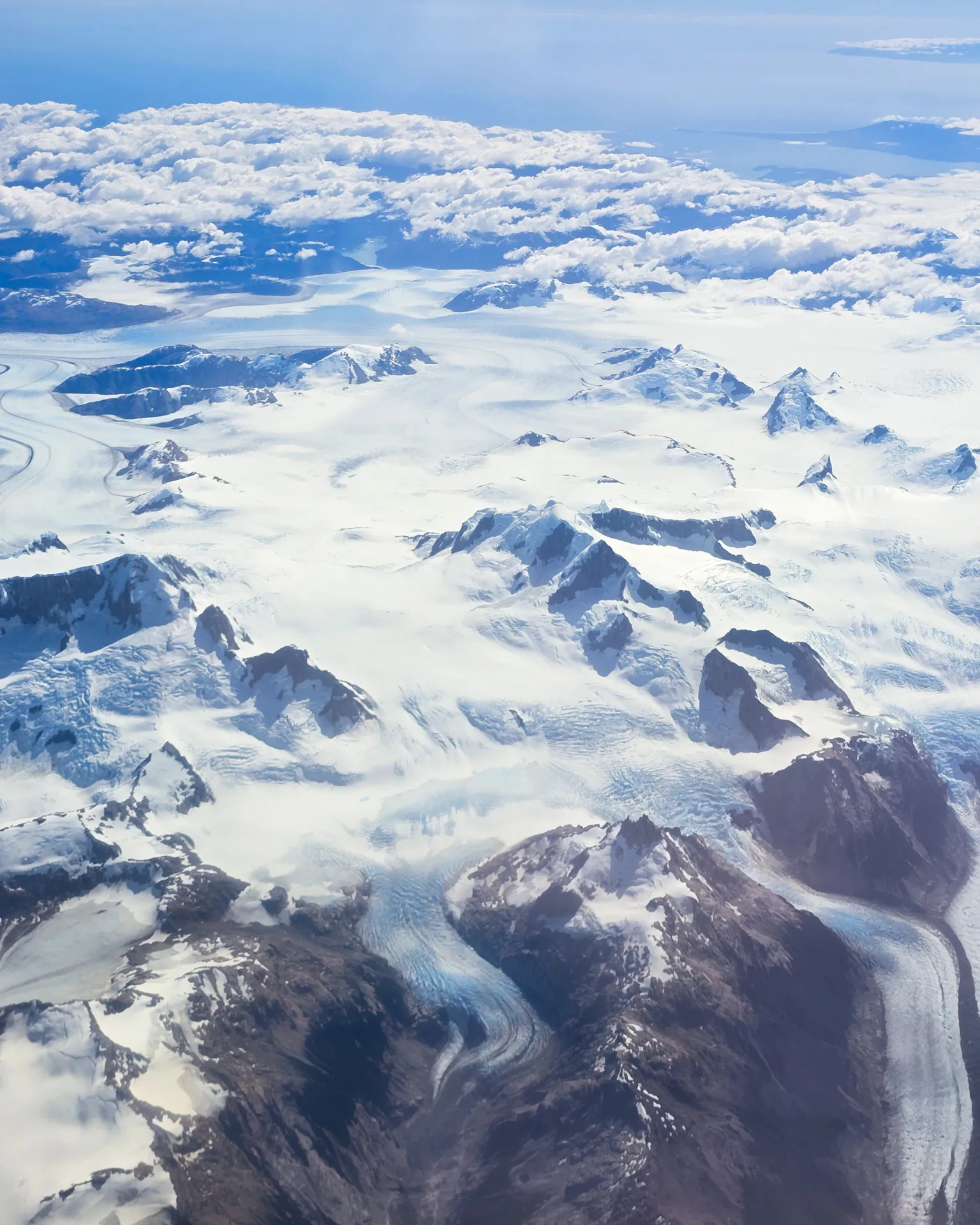
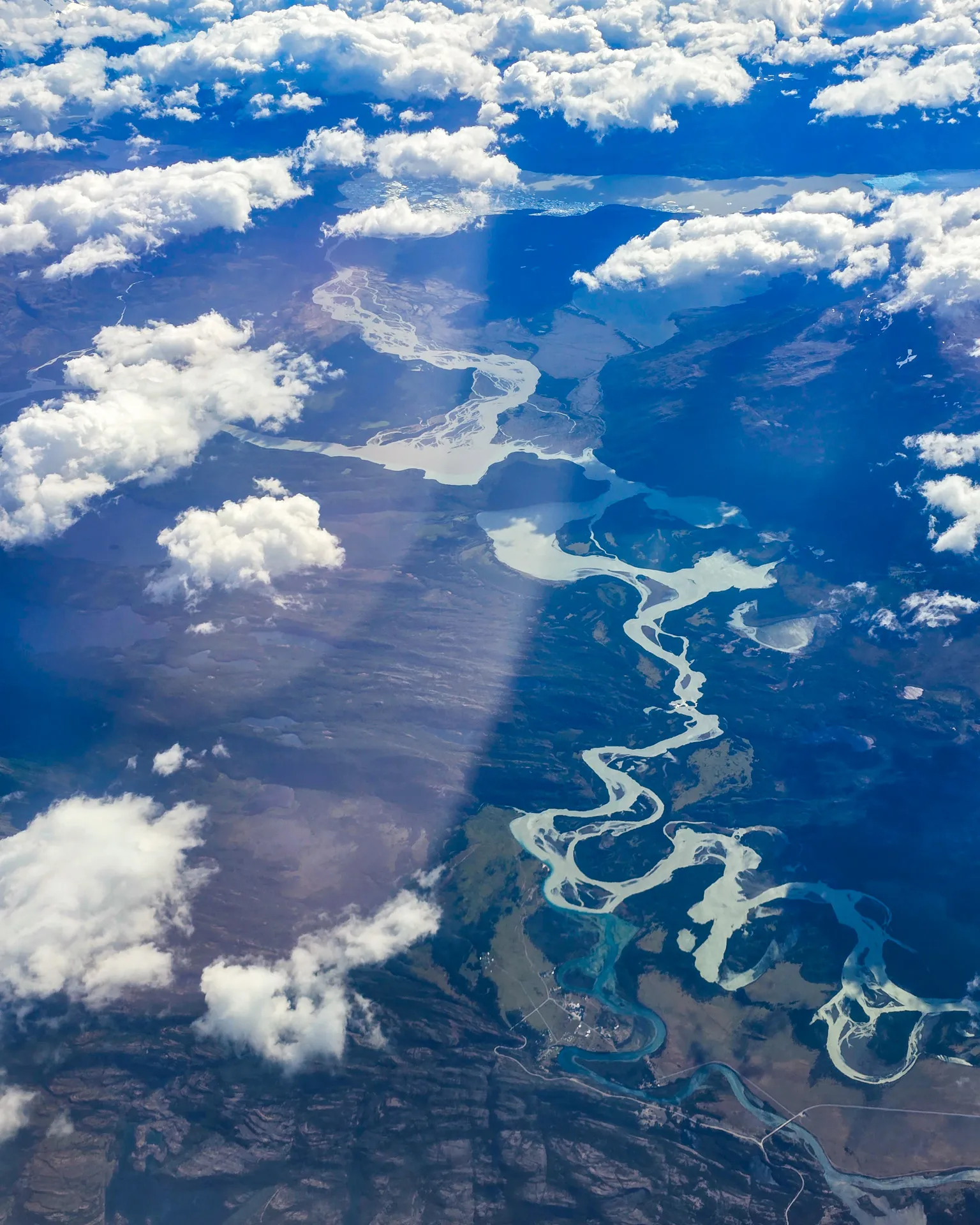
Sitting next to Mads on the flight and surrounded by the other professionals as we were flying from Santiago to Punta Arenas with the most gorgeous views of the Andes, I got the best first impression. They were all lining up to shoot out the windows and you could feel the excitement for the upcoming adventure coursing through the entire ride.
Though, really with those views, it was a great start. The Andes look stunning even through dirty plane window glass.
The Photographers
The PhotographersSo, who were the photographers?
They are a wonderful bunch that represent a wide spectrum of specialties, each with their own distinct styles and so much to teach.
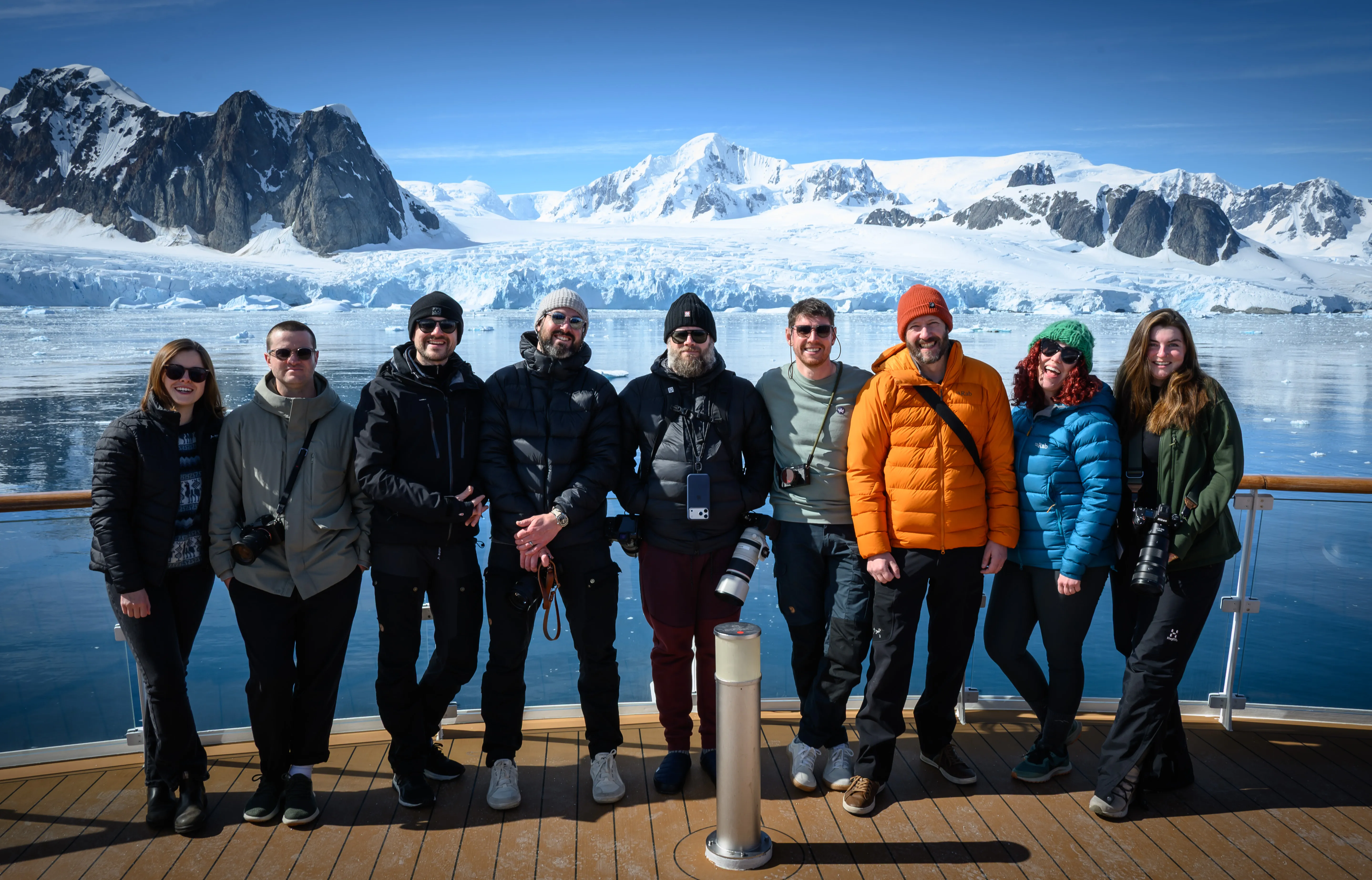
The Photographers of the 2026 Antarctica Expedition © by Art Childs
From left to right:
- Dani Connor
much more than “squirrel-girl” and the person who shared the link I signed up through - Roman Fox
street photographer with beautiful video work - Mads Peter Iverson
insane composition and landscapes - James Popsys
special love for huts and bins - Jeroen Van Nieuwenhove
hybrid, probably best-known for otherworldly volcano content - Rick Bebbington
beautifully understated photography and amazing video - Nigel Danson
beautiful minimal landscapes - Rhiannon Lawler
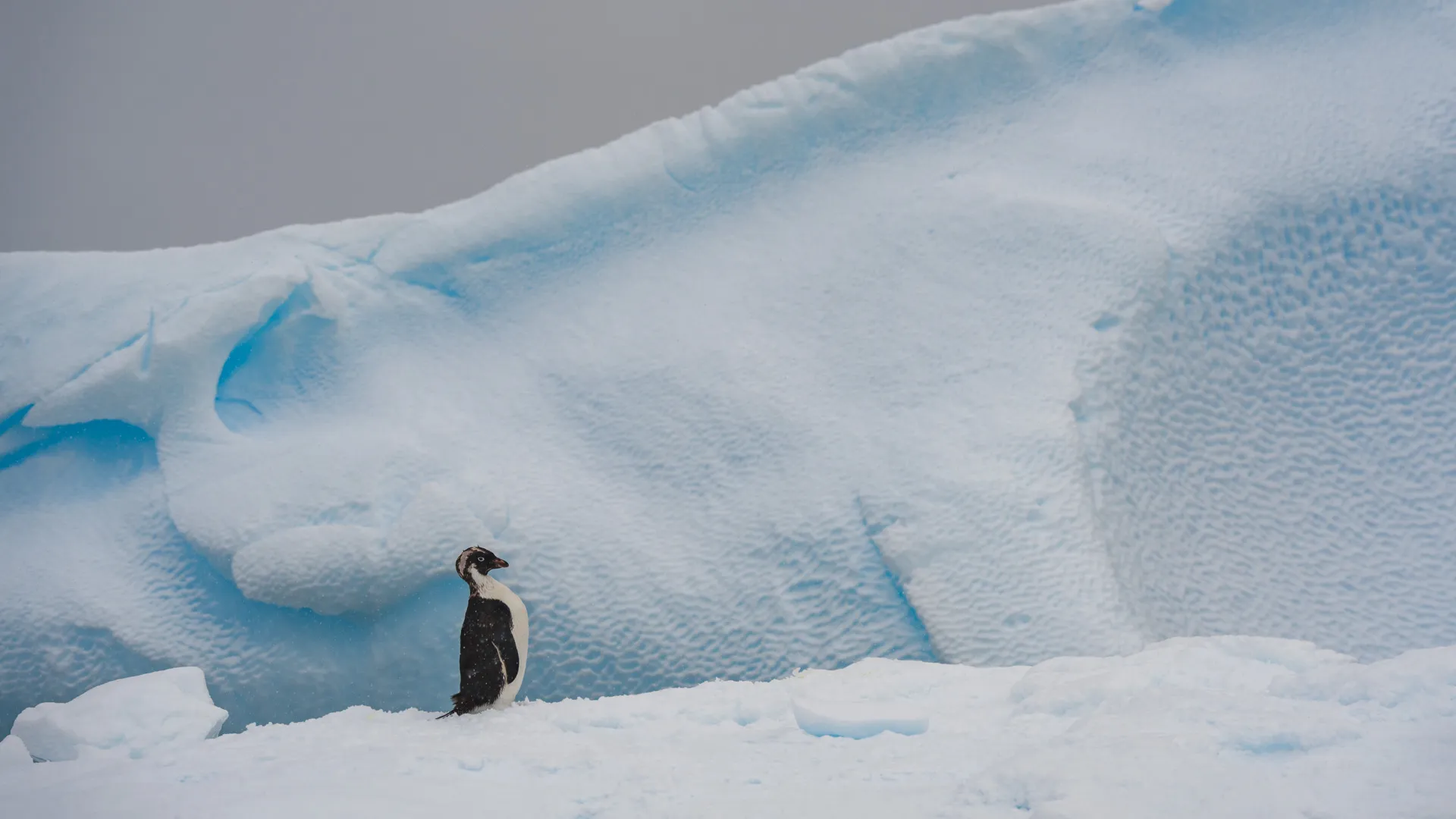
the taker of the one penguin on ice shot I still am most jealous of - Rachel Bigsby
gorgeous artsy seabirds
Punta Arenas
Punta ArenasThis was the third iteration of the Antarctica “Through the Lens” expedition for the photographers and the last time, in 2024, the trip had been delayed by a day due to bad weather. We were all hoping that would not be repeated.
But, luckily, we started with a good omen! On the day of arrival, we were transported in a bus and on the way to the hotel, we saw a rainbow, which we interpreted as a good omen for the upcoming trip and hopefully, a flight on time!
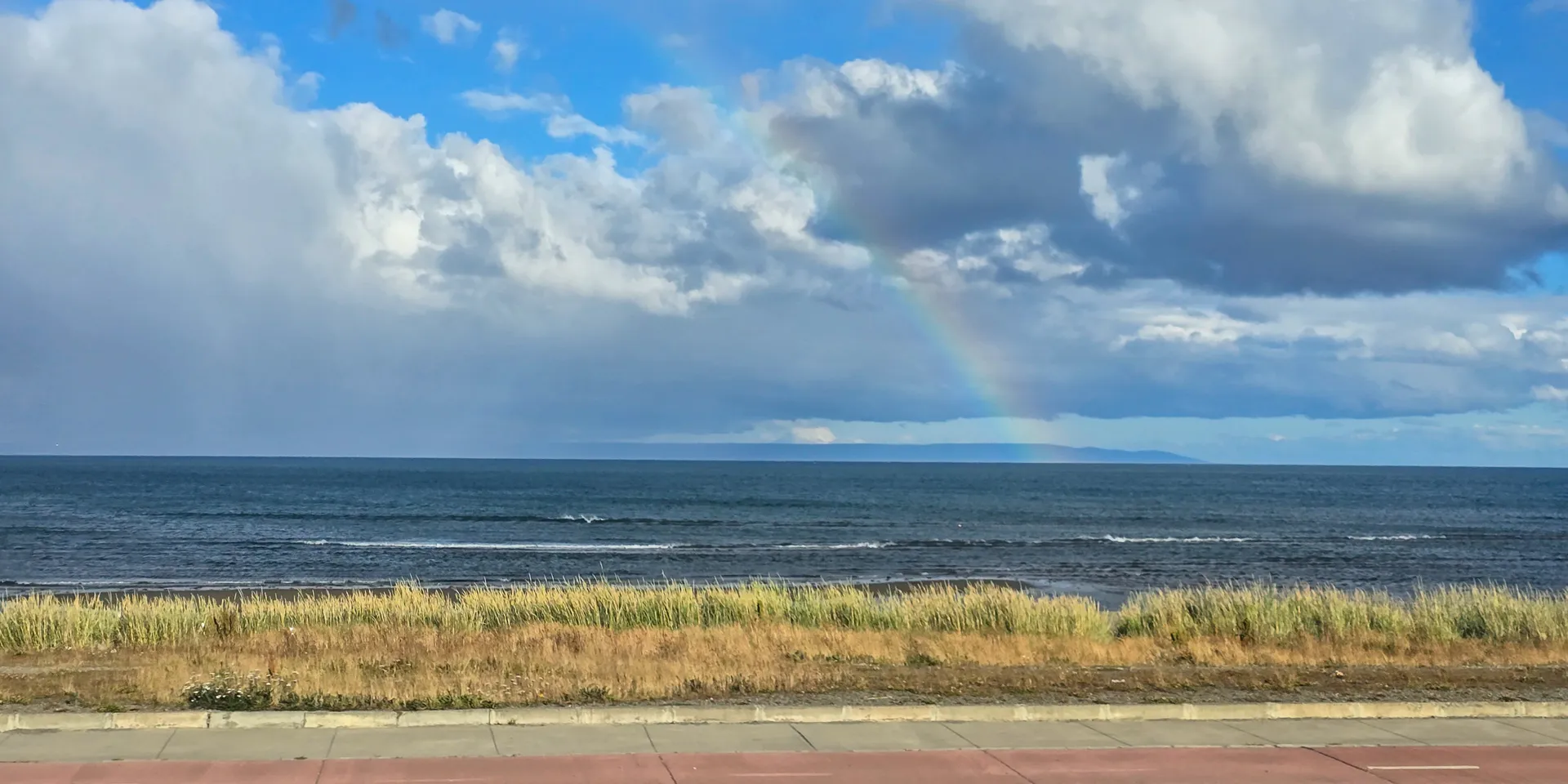
We learned, that in the previous 4 days no plane had been able to land in King George Island due to bad weather, so we were a bit nervous. But—luckily—the weather report was looking good for the day after tomorrow.
I had met a few fellow travelers at the airport in Santiago and on our extra day we set off on a walk to explore the city and shoreline.
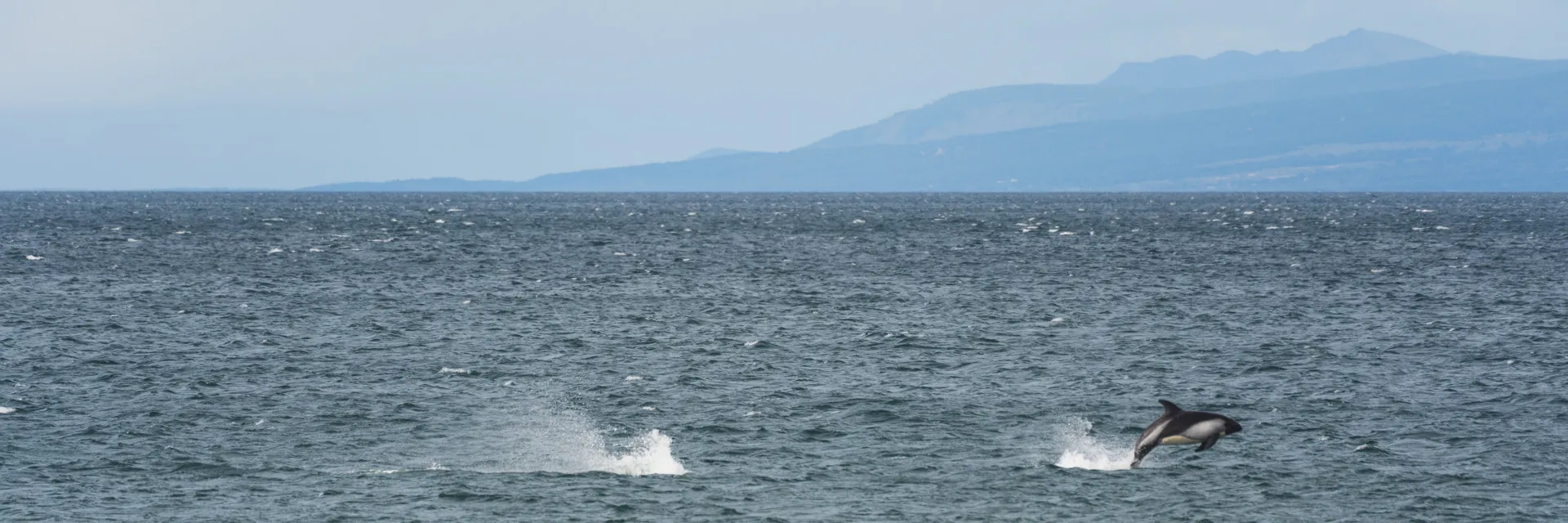
A notable sight was seeing my second ever dolphin in the distance. As it turns out, identifying dolphins is incredibly hard. I believe it was either a dusky or a peale’s dolphin but whatever type it was, it got me hopeful, that I’d finally get to see my first whale ever too, in just a short amount of time.
In the evening, it was time to formally meet the photographers and the rest of the group as well as a spokesperson from the expedition company, which was Aurora Expeditions (highly recommend, their service was impeccable and they are very committed to protecting the environment they operate in).
Our official first day would start with two presentations by Rhiannon and Jeroen, and then our flight in the afternoon. So, if everything went to plan, we would actually be in Antarctica by the end of the next day!
En Route To Antarctica
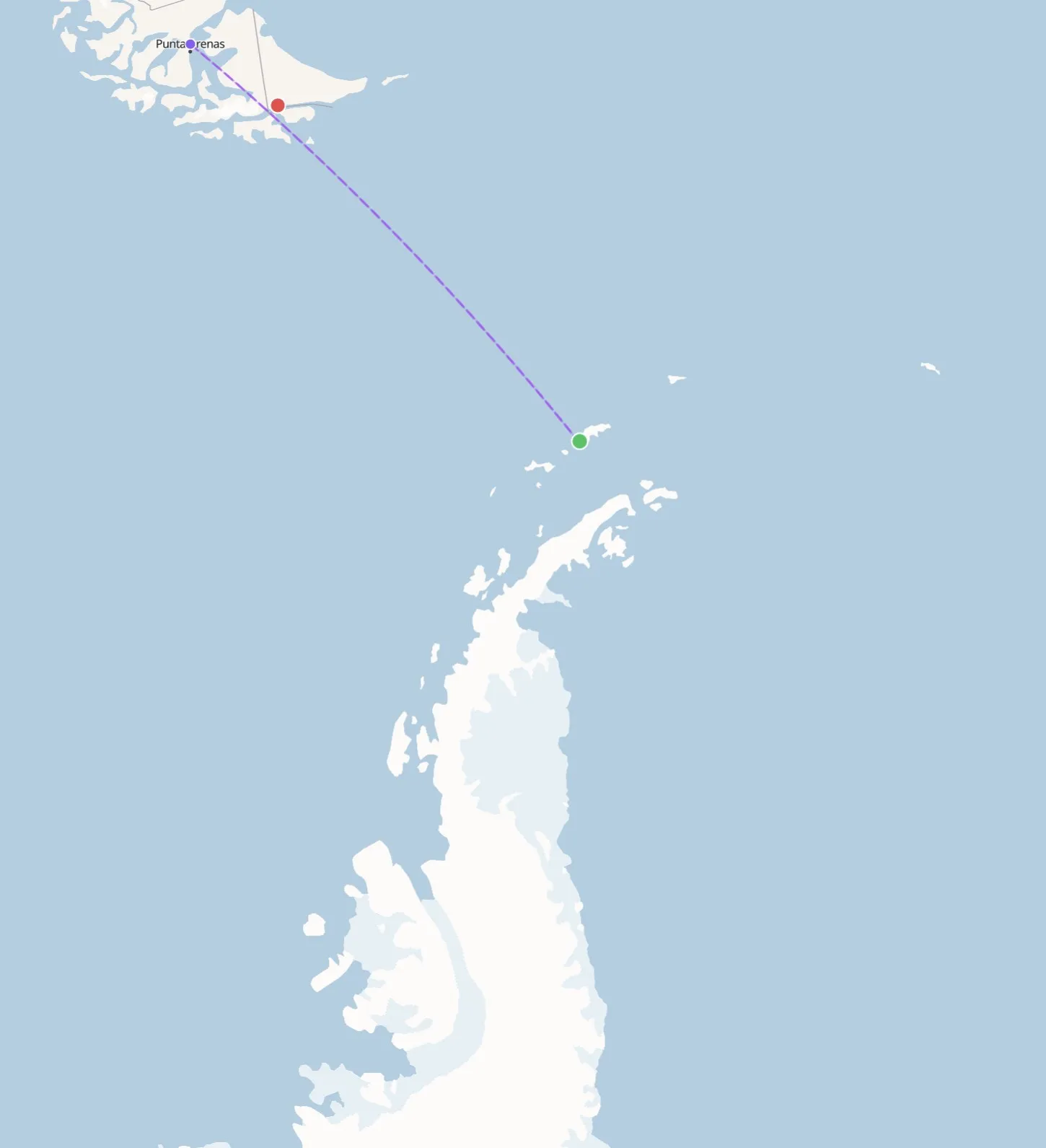
En Route To AntarcticaI’ve been to a few small airports at this point, but King George Island doesn’t have an “airport”. It has a 1300m long gravel landing strip with very little navigational support so it can only be landed at in good weather conditions when it is ice-free, with a cloud cover > 900m, reasonable wind speed and if there is good visibility.
King George Island is the largest of the South Shetland Islands and you can get there in a 2h flight instead of a 2-day Drake Passage crossing. In our short introduction about King George Island we learned that it was the only place where Russia an Chile are neighbors, as they both operate bases there.
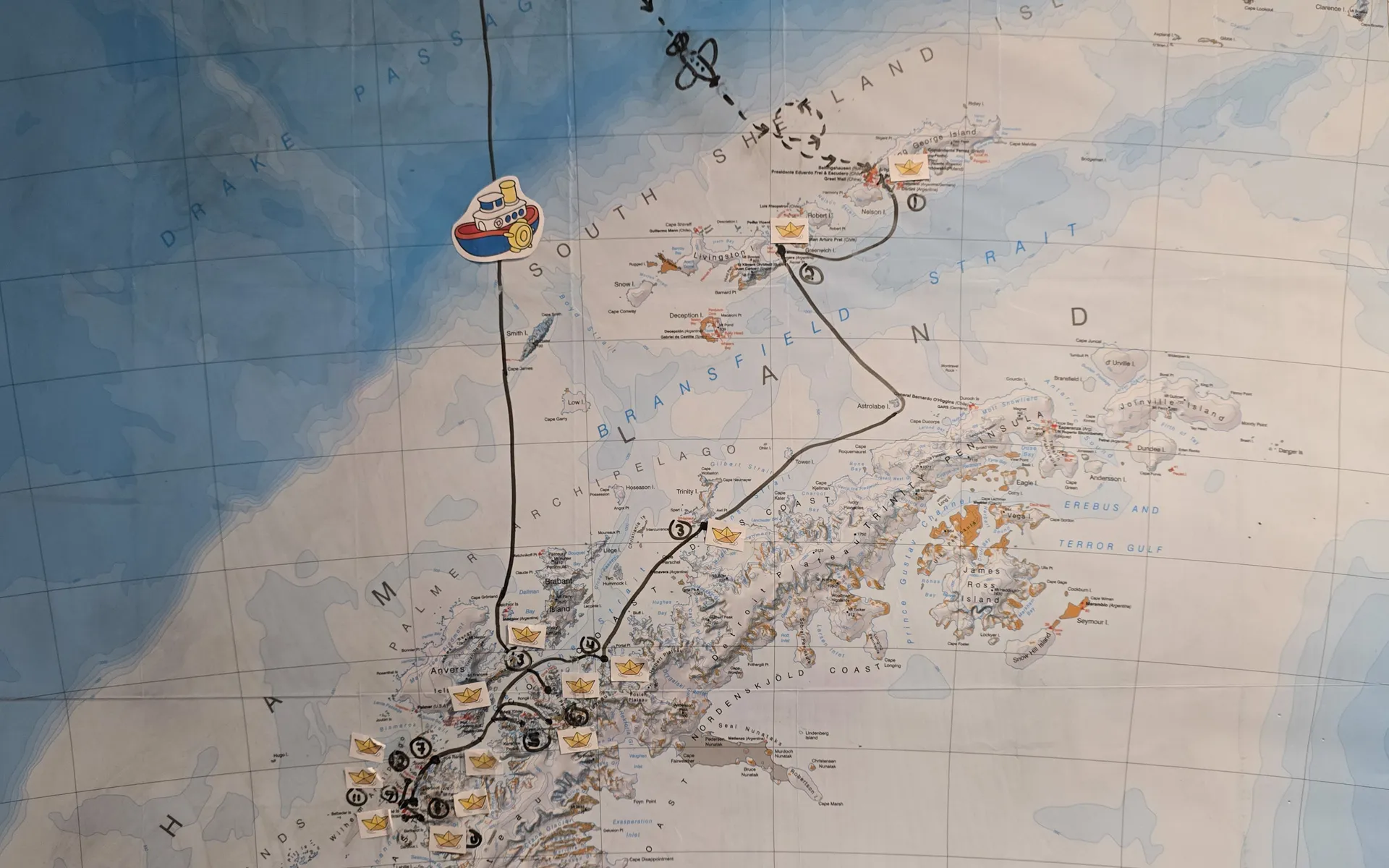
It’s crazy to think, that this was one of the only fixed items on our itinerary. We knew we’d fly into Antarctica, and then return via Drake Passage into Ushuaia, Argentina, but the actual route we would take in Antarctica was going to be determined by the weather. And that is the beauty of Antarctica and I assume why probably so many of the passengers had returned.
Not a single expedition is the same. So really, this is what you sign up for when you book Antarctica. One or two fixed points and the promise of that little white tip poking out at the end of the world.
Excitement was high after morning presentations by Rhiannon and Jeroen.
Jeroen went over good settings for the pictures and Rhiannon, who had been a previous participant in this trip before working on the other side, had a few great tips on how to get the most out of the trip. One of the biggest lessons I took away from her was “There will be FOMO” and that had to be okay (though, there were moments were it maybe wasn’t as much…)
Once the presentations were done, we got a packed lunch and headed to the airport in Punta Arenas. We’d be taking two separate flights as the maximum capacity of one of those planes was more than the number of passengers. Luckily that meant plenty of space. The plane was also open seating! No seat numbers, which was a first for me.
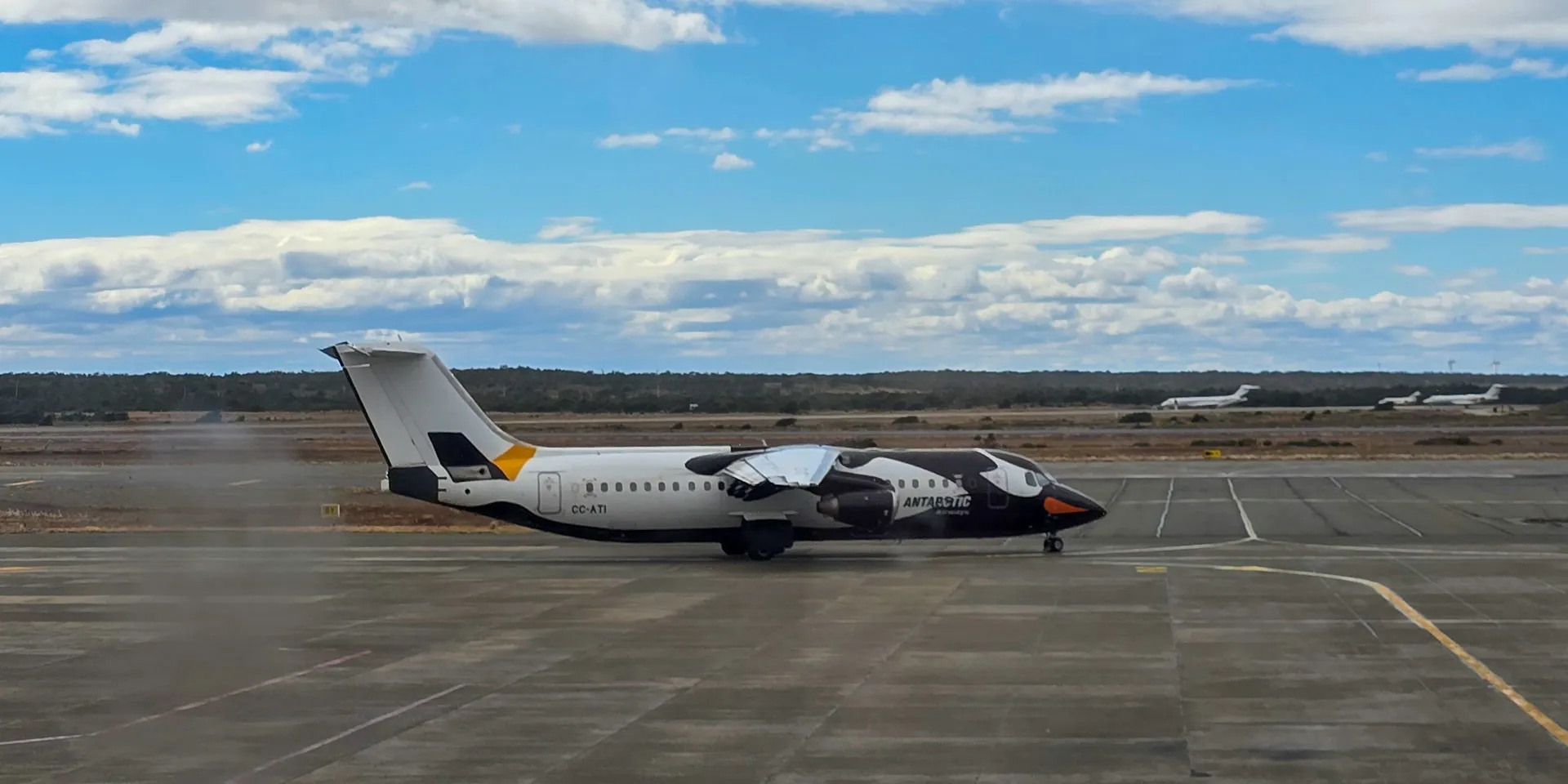
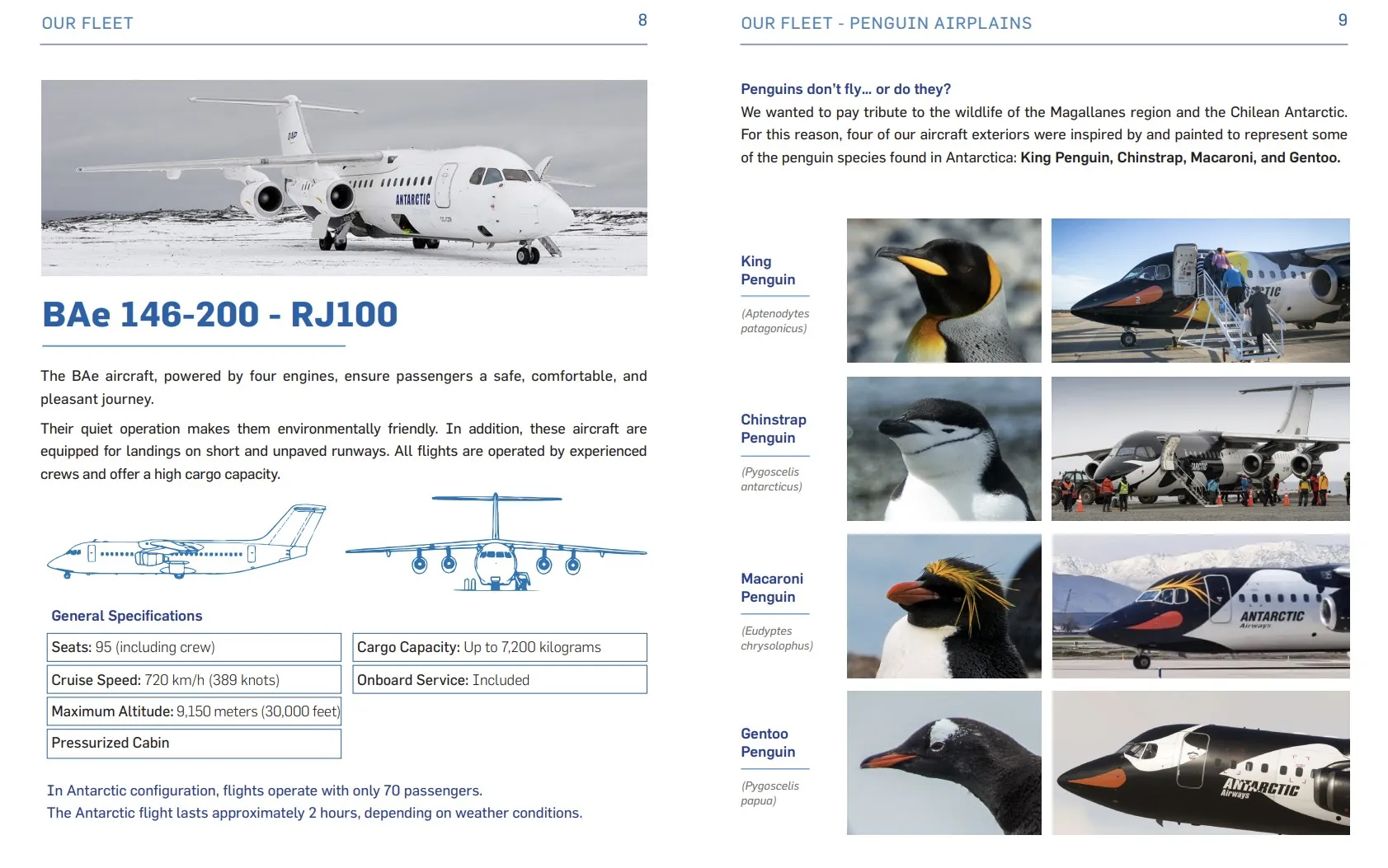
We took a Charter Flight with Antarctic Airways, which has the coolest plane design! They have one for each penguin, Group 1 got into the Gentoo, our Group 2 was a bit of a plain plane, but check out the screenshot from the DAP Antarctic Briefing to see the penguin coolness.
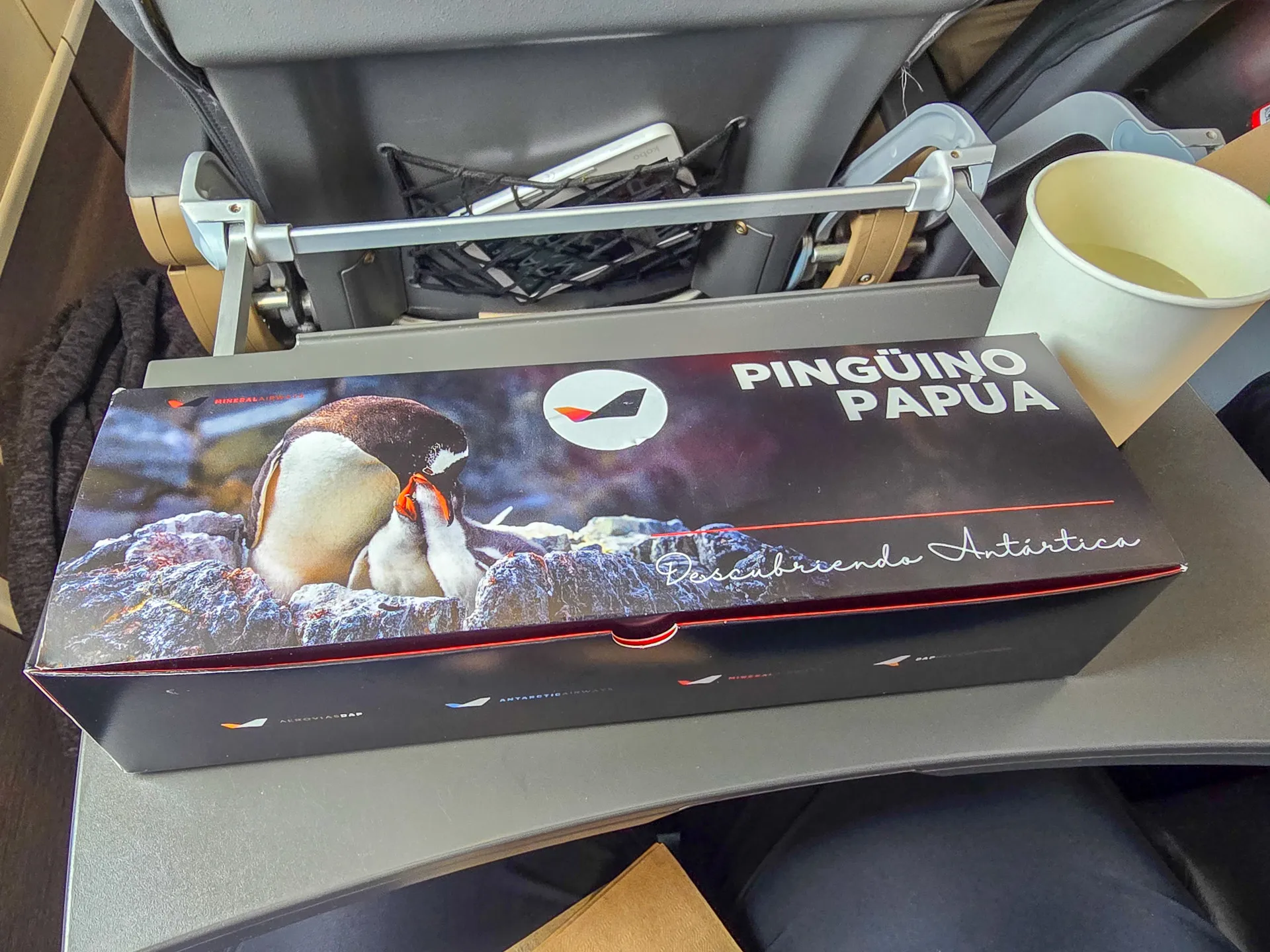
They also had the prettiest in-flight meal package, though the soggy sandwich inside was a bit of a disappointment. Though, better than having what baby penguin is having.
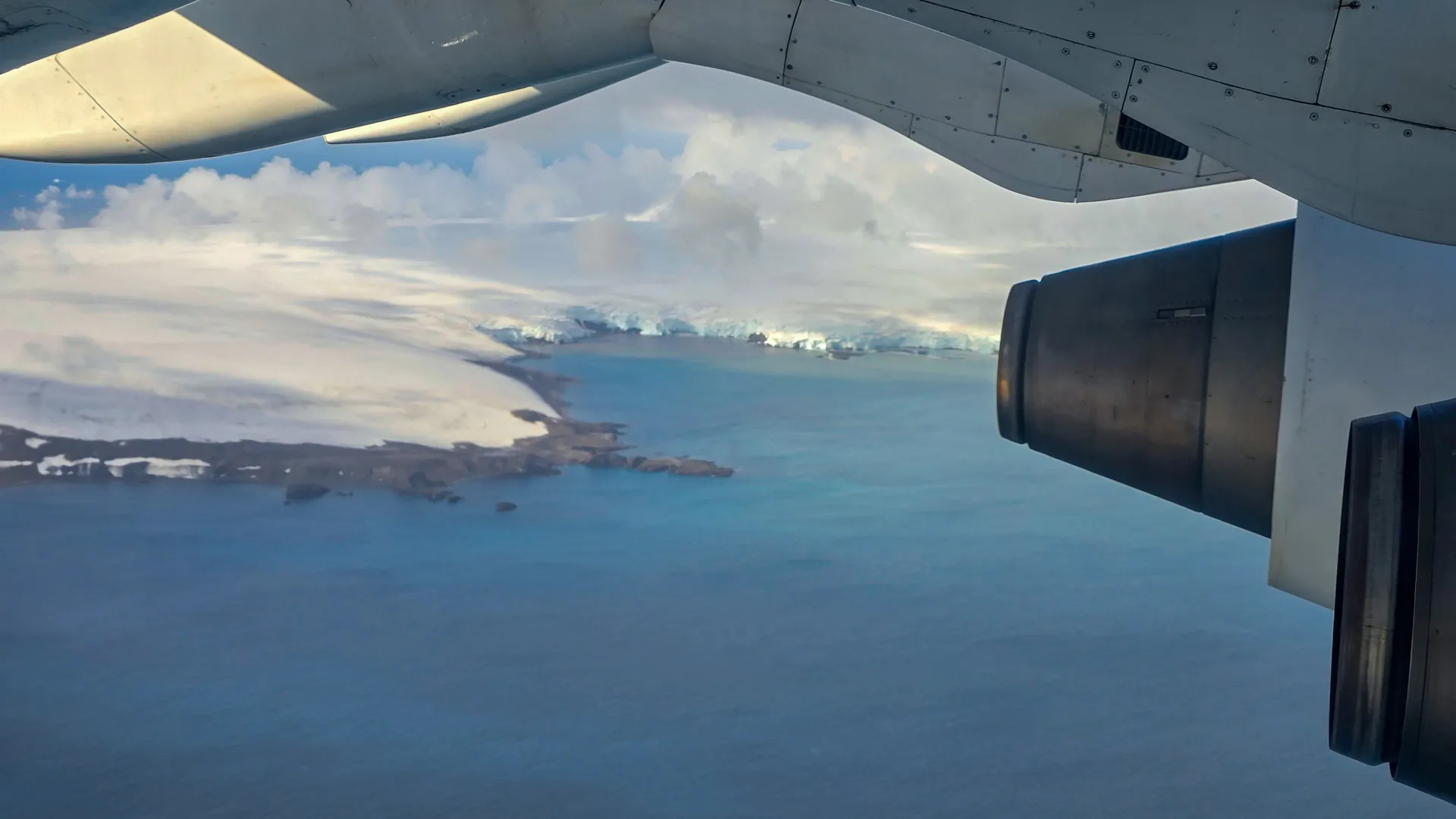
I chose a spot right next to one of the plane wings, since I had never been in a plane with four engines under the wings, though that did impact my first glimpse of the continent a bit. It still promised to be glorious!
Once landed, we were ushered into a Bus, where we were greeted by part of the Expedition Team and driven past the military bases to the shore, where a tarp lined with muck boots and Zodiacs awaited.
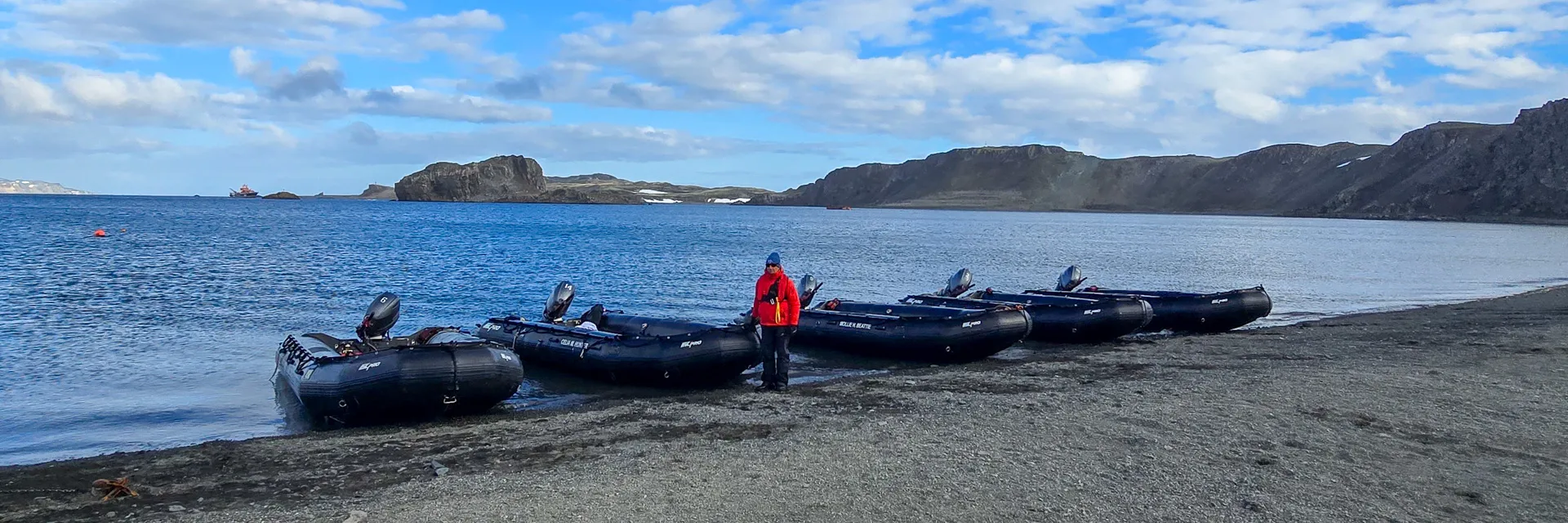
After a quick shoe change, we hopped onto the rubber boats and then met our home for the next week.
Hello Greg Mortimer
Hello Greg MortimerThe Greg Mortimer is a modern purpose-built ship for Polar Expeditions, it has lots of space to explore from outside, a sauna I never saw because I don’t do heat like that and two hot tubs (I do heat like that, sometimes) with excellent views.
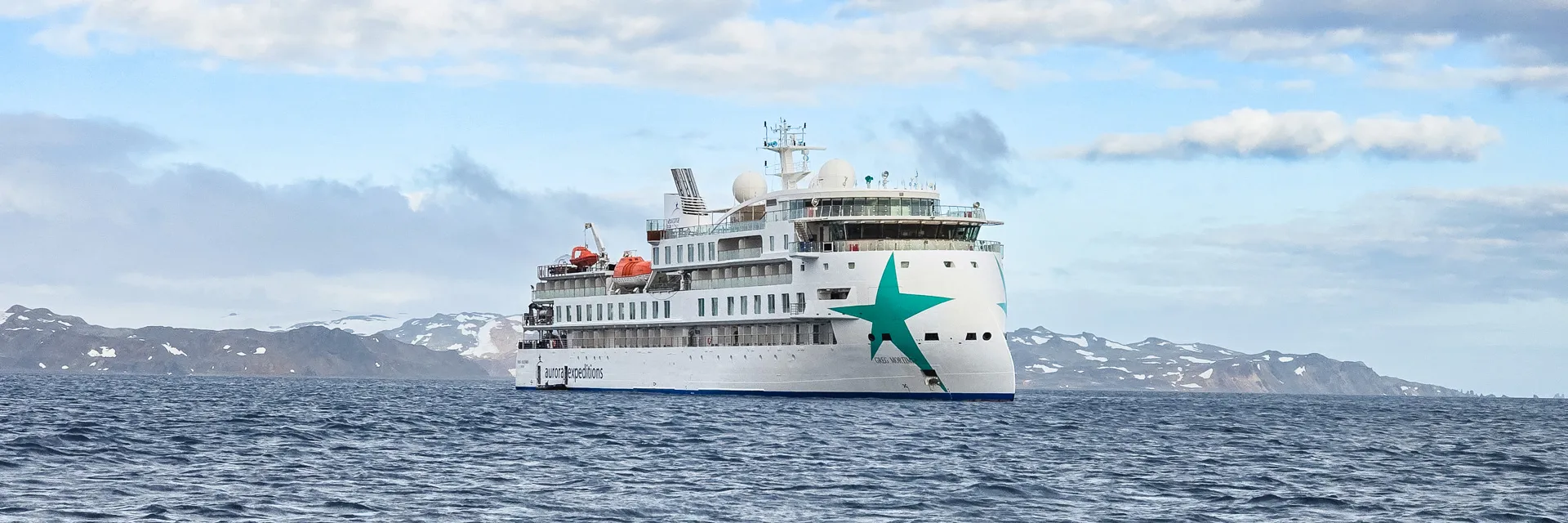
Tonight was all about admin and getting settled in. We had our picture taken so staff and our co-passengers could learn our names and then it was time for welcome refreshments and then our first Briefing!
We got to meet our Onboard Expedition Manager, Alesha, and the Hotel Director who told us about life onboard and then the on-site Doctor ran us through Safety and Health Rules. Hand-Washing stations before the Restaurant were to be used and— never forget ship doors are heavy. Use the handles to avoid amputations, Dr. Pranav’s dry way of presenting was fabulous!
Then our Expedition Leader (EL) Gaby told us about the plan for our first day of Expedition, which would start at 6.30 a.m. Yes, this was an expedition, not a vacation, and our days were going to be jam-packed, as soon as that “Good Morning, Good Morning, Everybody” wake-up call would sound all over the ship.
Necessary Safety Briefing ensued, then it was time for dinner and a little bit of sleep before the adventure could commence!
Day 1: Feb 3 2026
Day 1: Feb 3 2026Regulated Morning
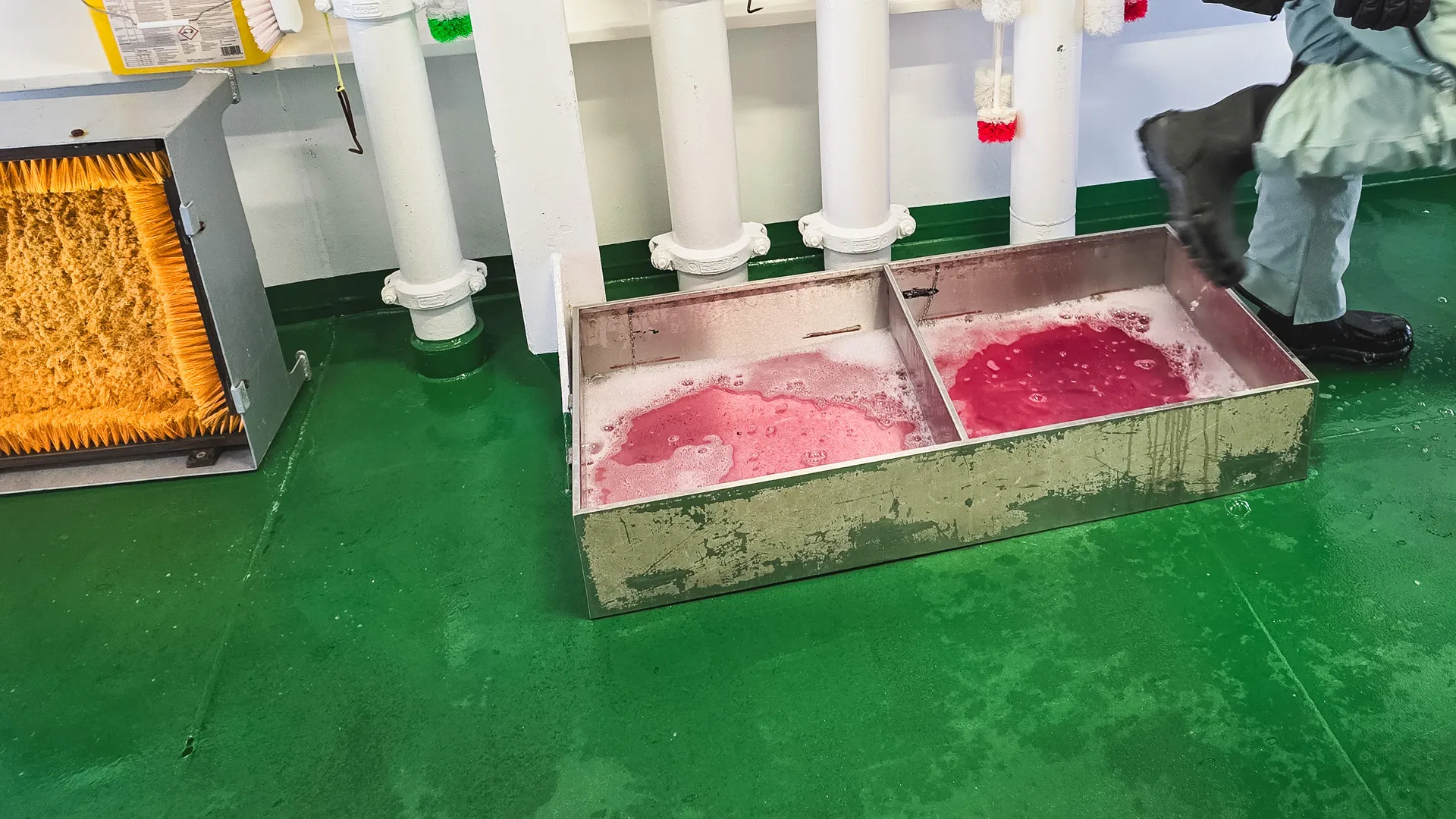
Regulated MorningVisiting Antarctica comes with responsibilities, and thus, before the adventure begins there’s some necessary things to take care of. After breakfast we learned all about IAATO and the guidelines. You know all that don’t touch the ground with anything that hasn’t previously been in pink Verkon before, respect wildlife distance rules, etc.
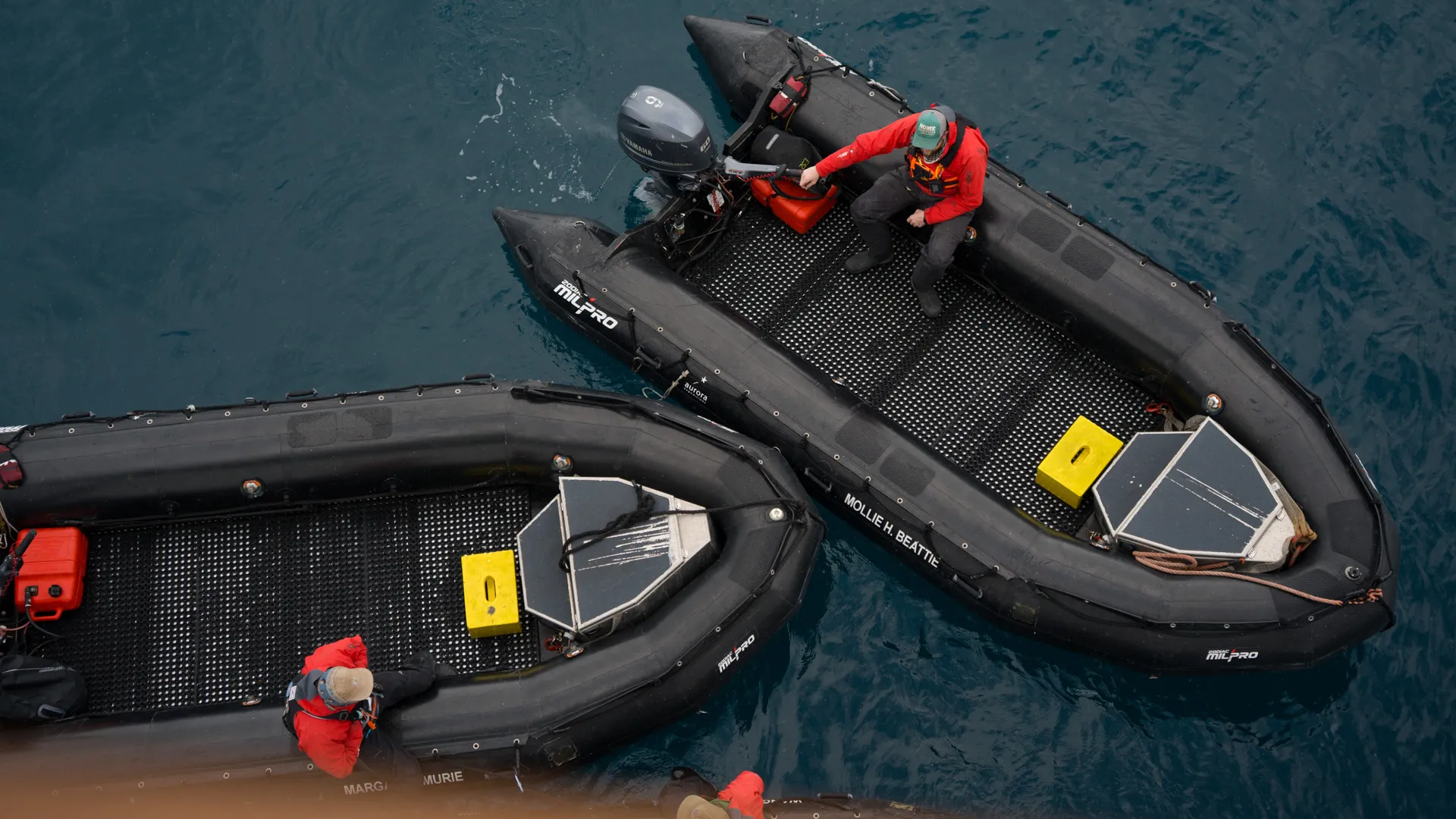
We also learned how to properly get into a Zodiac and accept help through the Sailor’s Grip. These procedures almost felt like some sort of intricate choreography that I ended up stumbling through a couple times, but everyone on board was incredibly nice so if you forgot to pass your bag to the AB before grabbing the Zodiac Driver’s helping hand or slid the wrong way into the Zodiac they’d gently remind you of the forgotten steps.
After all the Briefings we also had to bring all of our things in for Biosecurity Checks. Anything that was exposed to the white continent was checked for rocks, seeds, grass etc. to make sure no foreign biomatter got introduced. The Expedition Team was armed with vacuums and eager eyes and found everything hidden in the smallest crevices and bits of Velcro. Luckily, new items did not have to be inspected, though and the big new item each passenger had received was the expedition jacket, which you get to keep. (Man, was I happy Aurora’s jackets are blue and not orange, I like the red hood accent and that they come with a separate puffer jacket inside!)
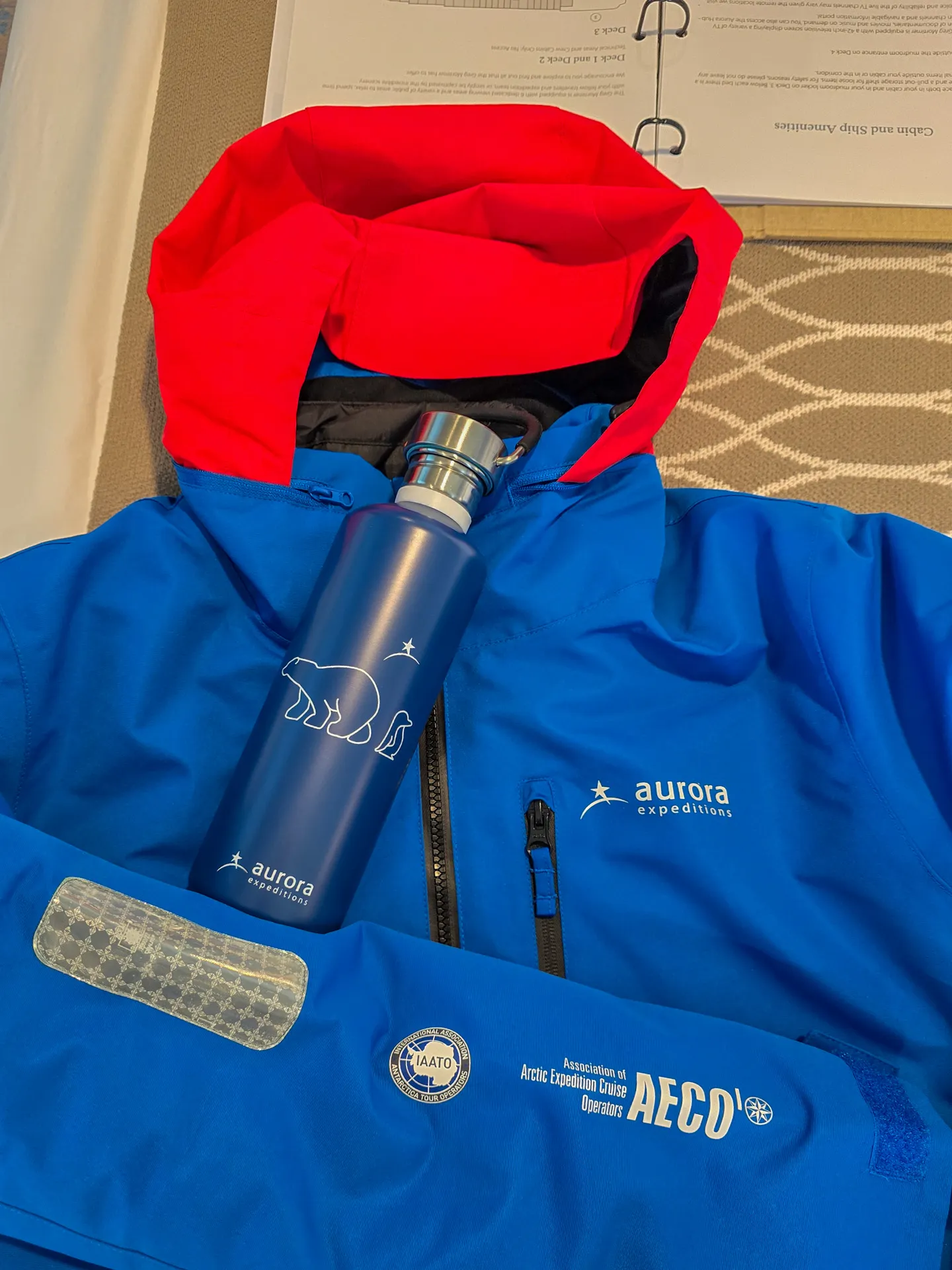
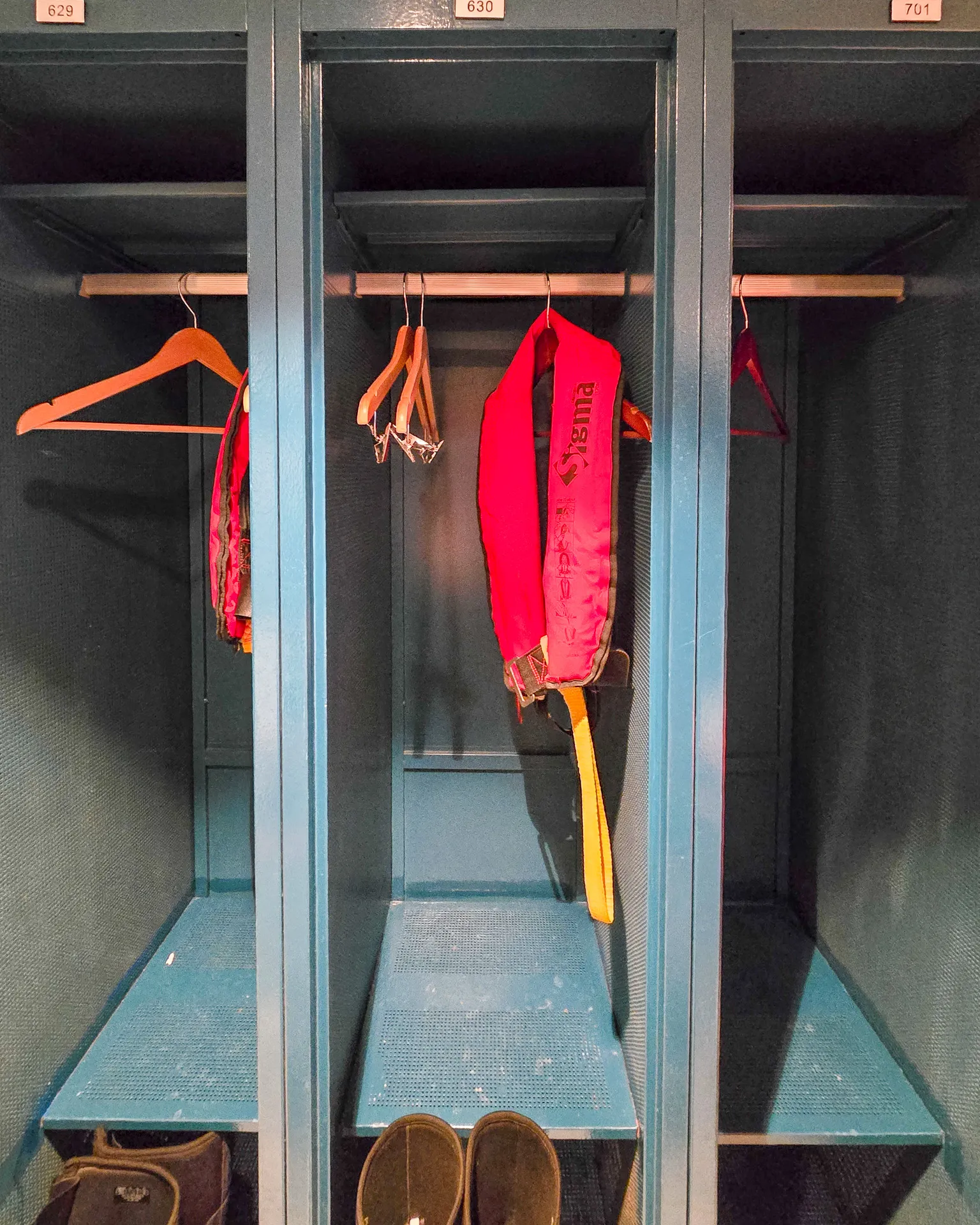
Time spent on the ship was usually far from stressful, except when you were called into the Mud Room. There was plenty of time to explore, trying not to get lost in the sometimes confusing halls, sneak in a cookie or hot chocolate and take pictures of passing landscapes.
Half-Moon Island
Half-Moon Island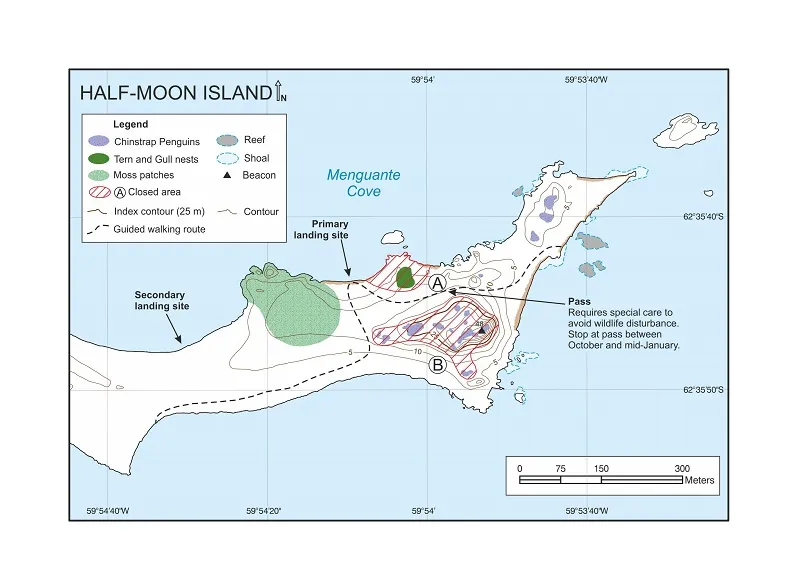
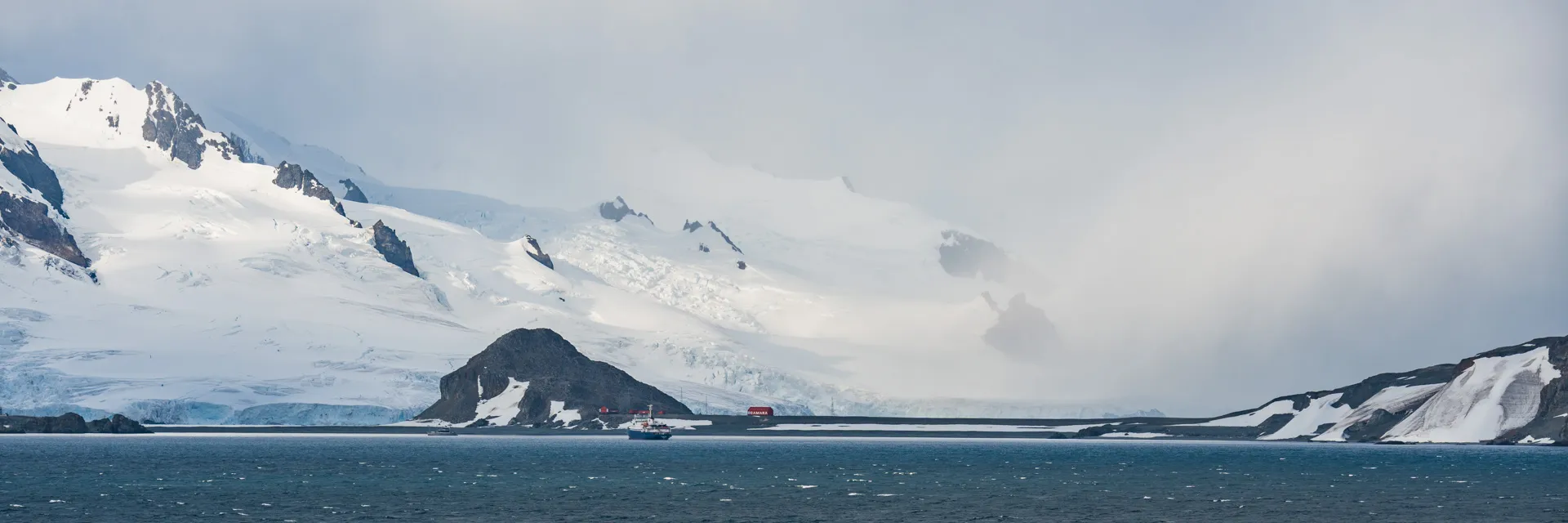
In the afternoon our first landing was awaiting. We had learned the previous day that our Plan A was a Landing at Half-Moon Island and Gaby hadn’t told us much about it, before we arrived. Our EL was a fan of showing us Satellite pictures and a small teaser and then letting us take our own pictures, which was wonderful. Getting to explore a place with no expectations was so much fun.
I am usually a chronic researcher, but because I liked her explanation that it’s nicer to get your own first impression I actually held back from googling any site before we landed and that was probably the best call.
It looked very promising looking out from the balcony, with the 400mm I could zoom in and get my first idea that sometimes “penguin for scale” might fail me. The landscape size was just so insanely big I didn’t even realize there were penguins when I zoomed out.
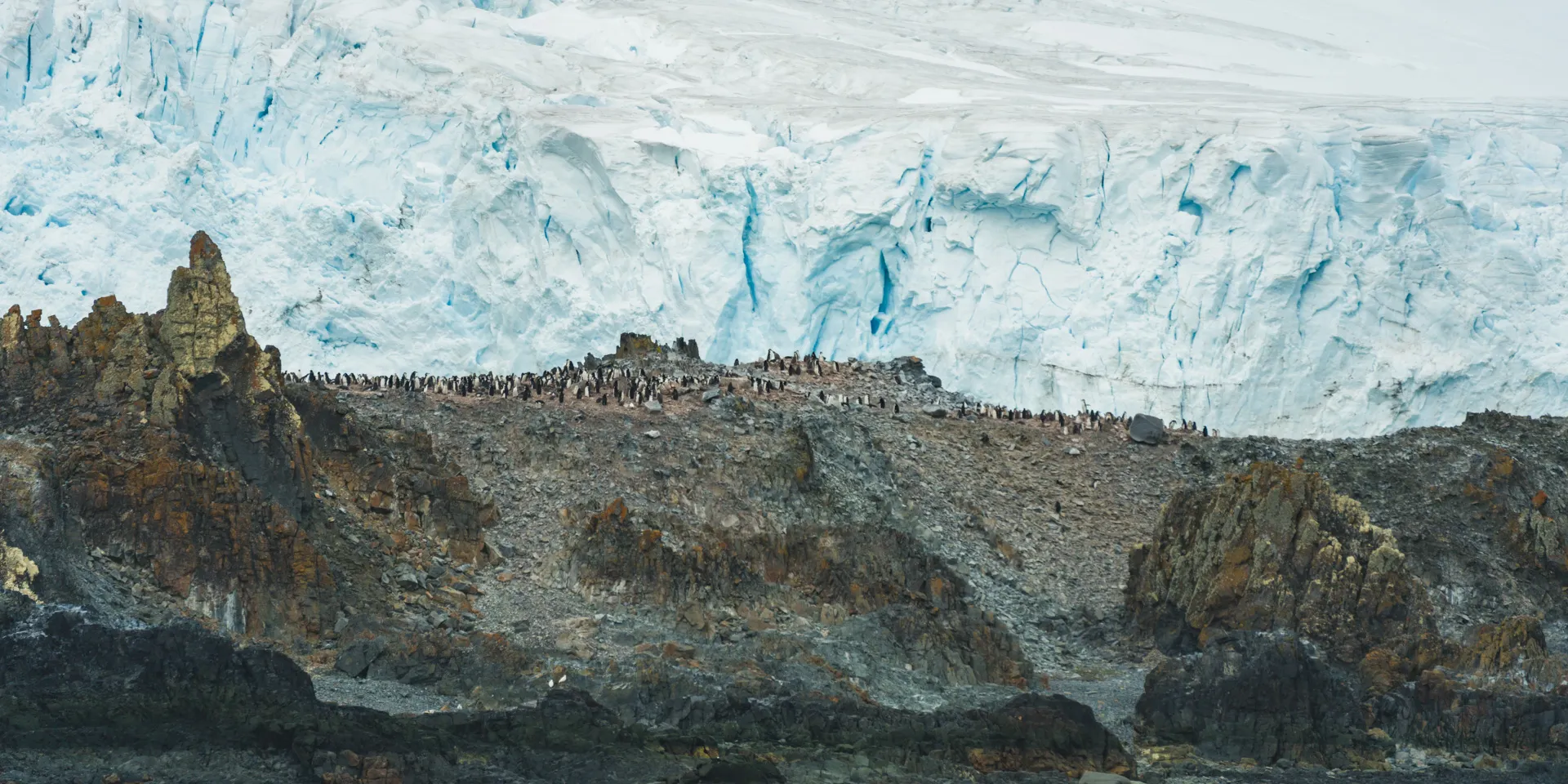
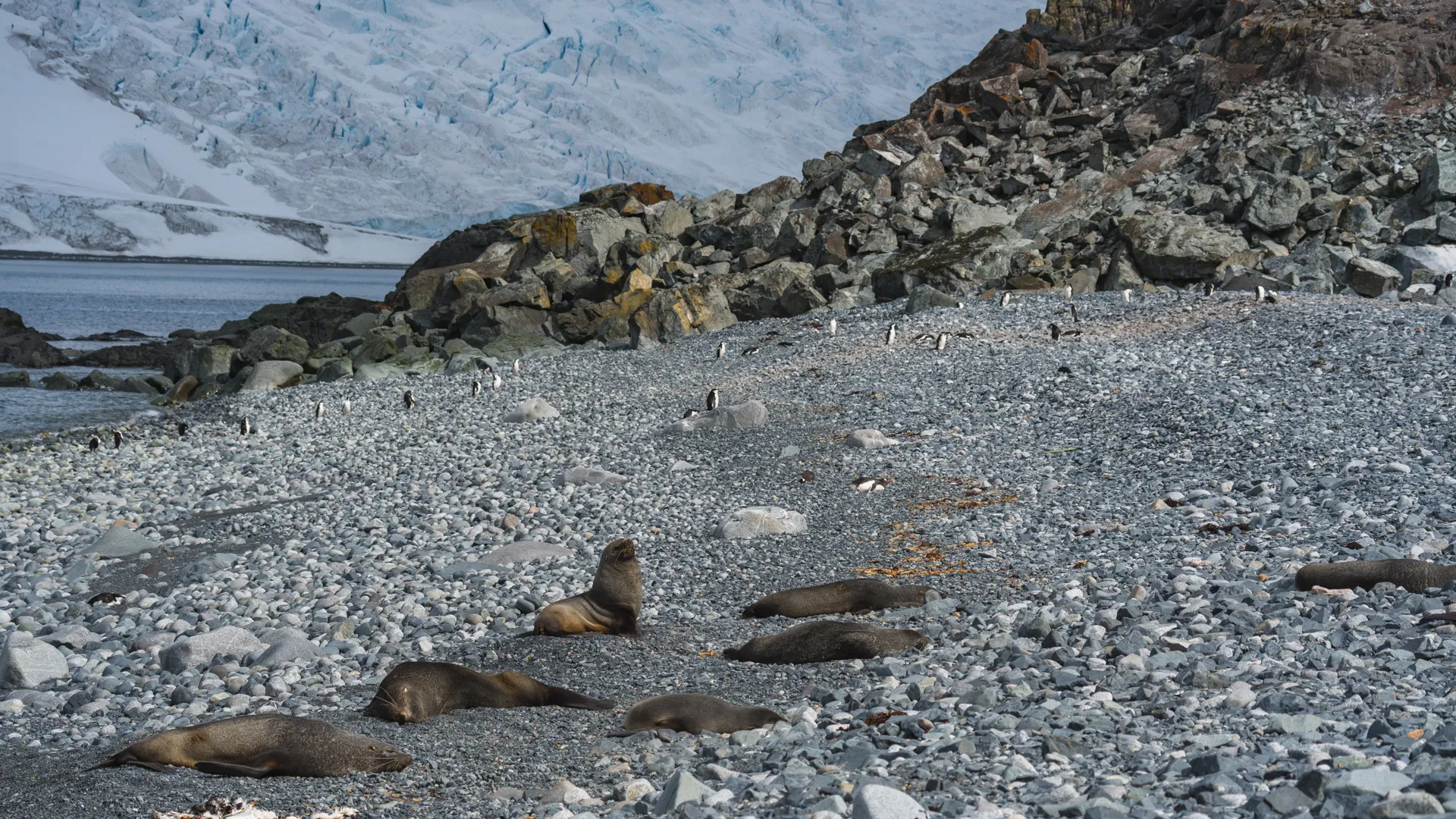
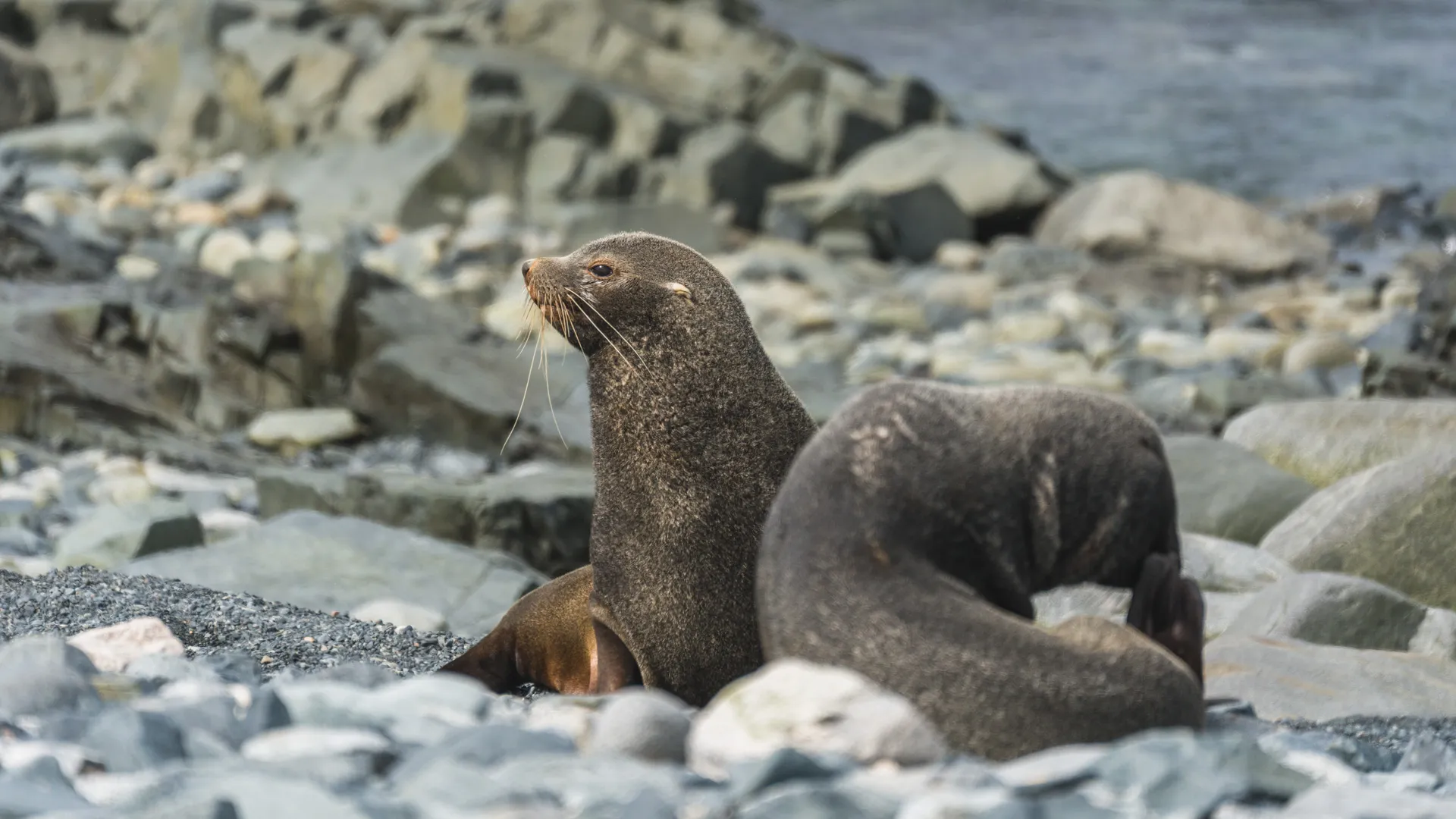
Before a landing, the ET always went out first and marked the route and closed off areas with red flags. They would also scout for wildlife and let you know if there was something special to be seen, like a seal. Believe it or not, they wouldn’t tell you the direction to the penguins. They were literally all over the place.
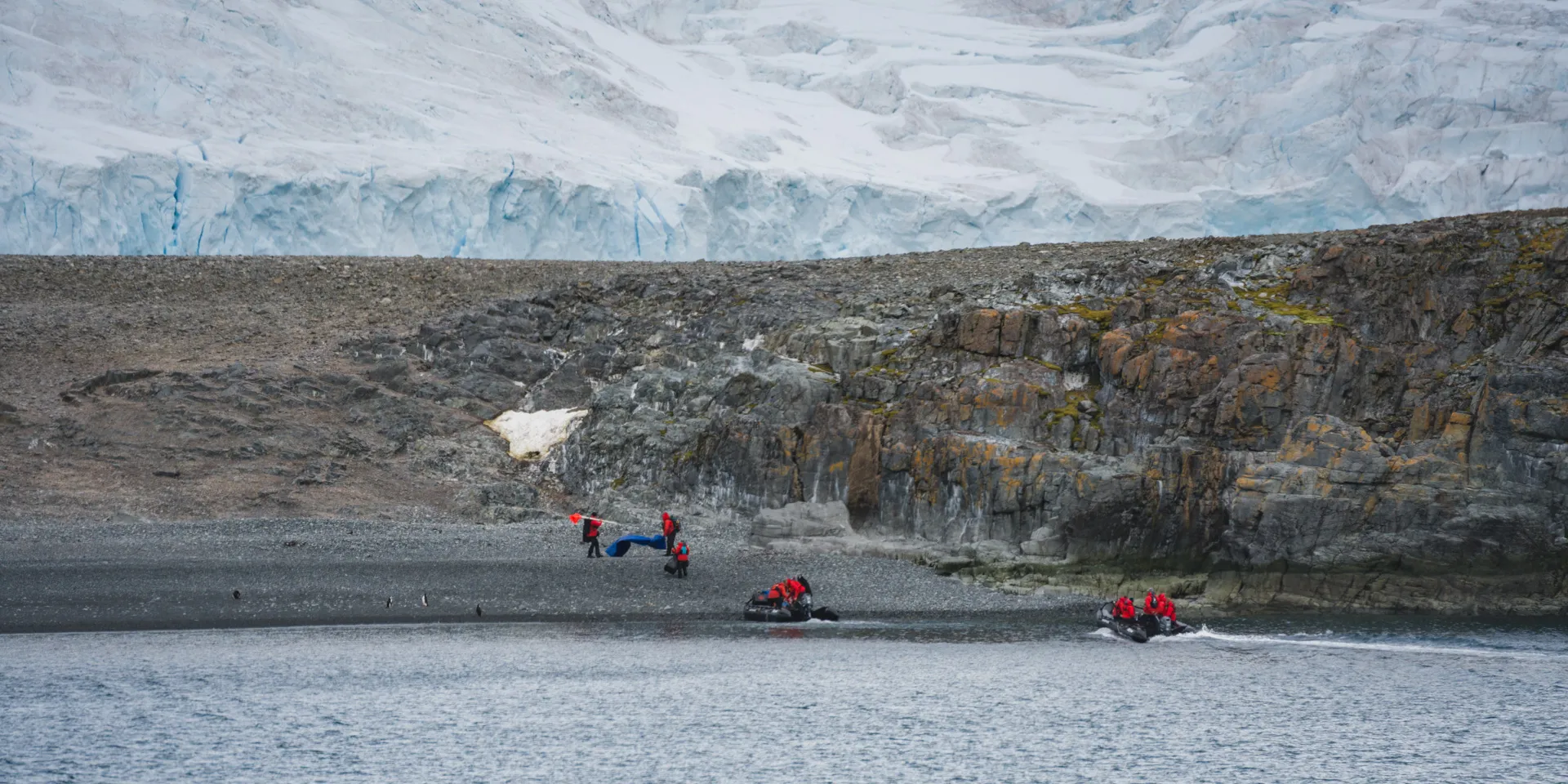
After the site was prepared, we’d be called by either “port” or “starboard” side. (I was port, which is left, easy to learn because left and port both have 4 letters.) On to the mud room we went. Our jackets had little plastic windows on the sleeves, were we could slip in our ID cards that we had gotten on the ship.
We’d be scanned in and out so count was always ensured. Then a quick step into Verkon, into a Zodiac while stumbling through the choreography we had learned a couple hours prior and then it was finally time to see penguins! (excited squeal)
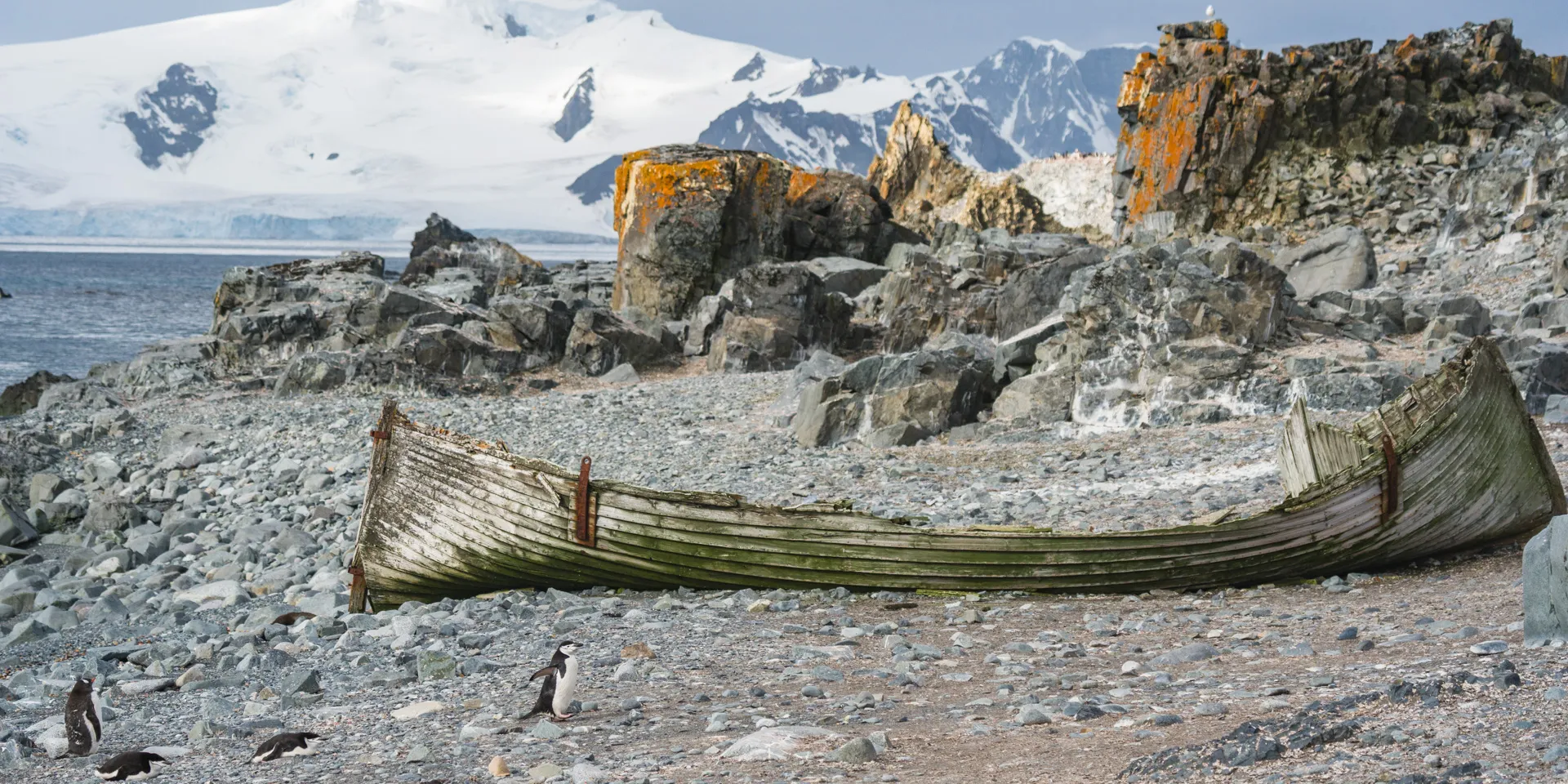
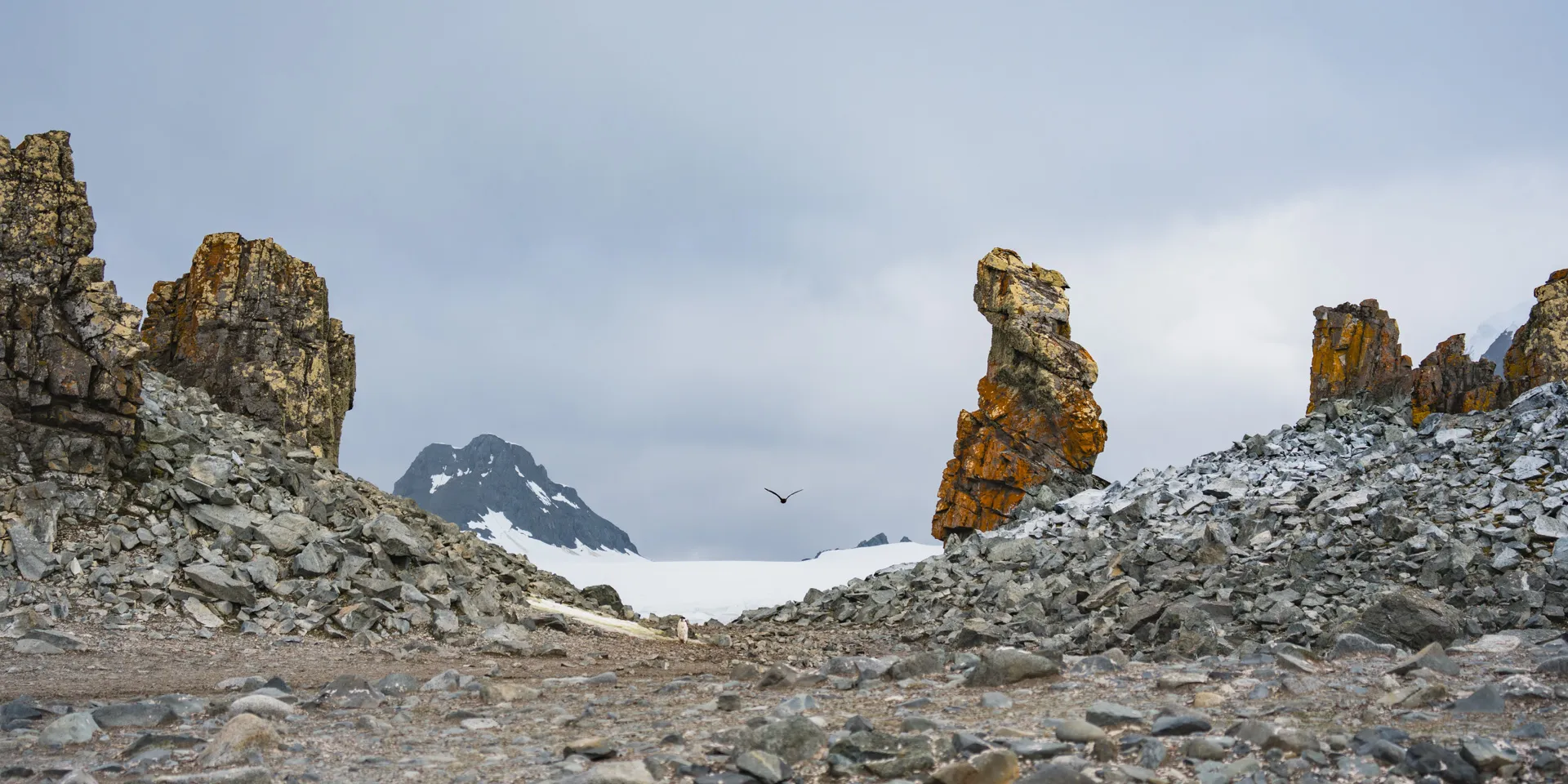
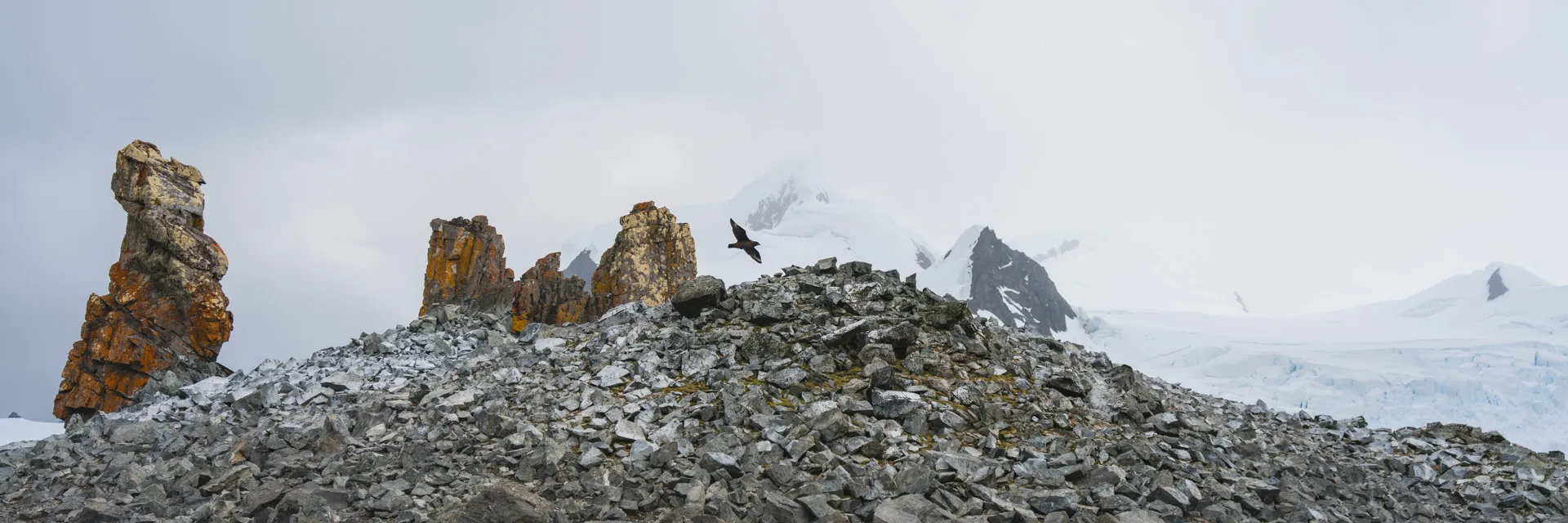
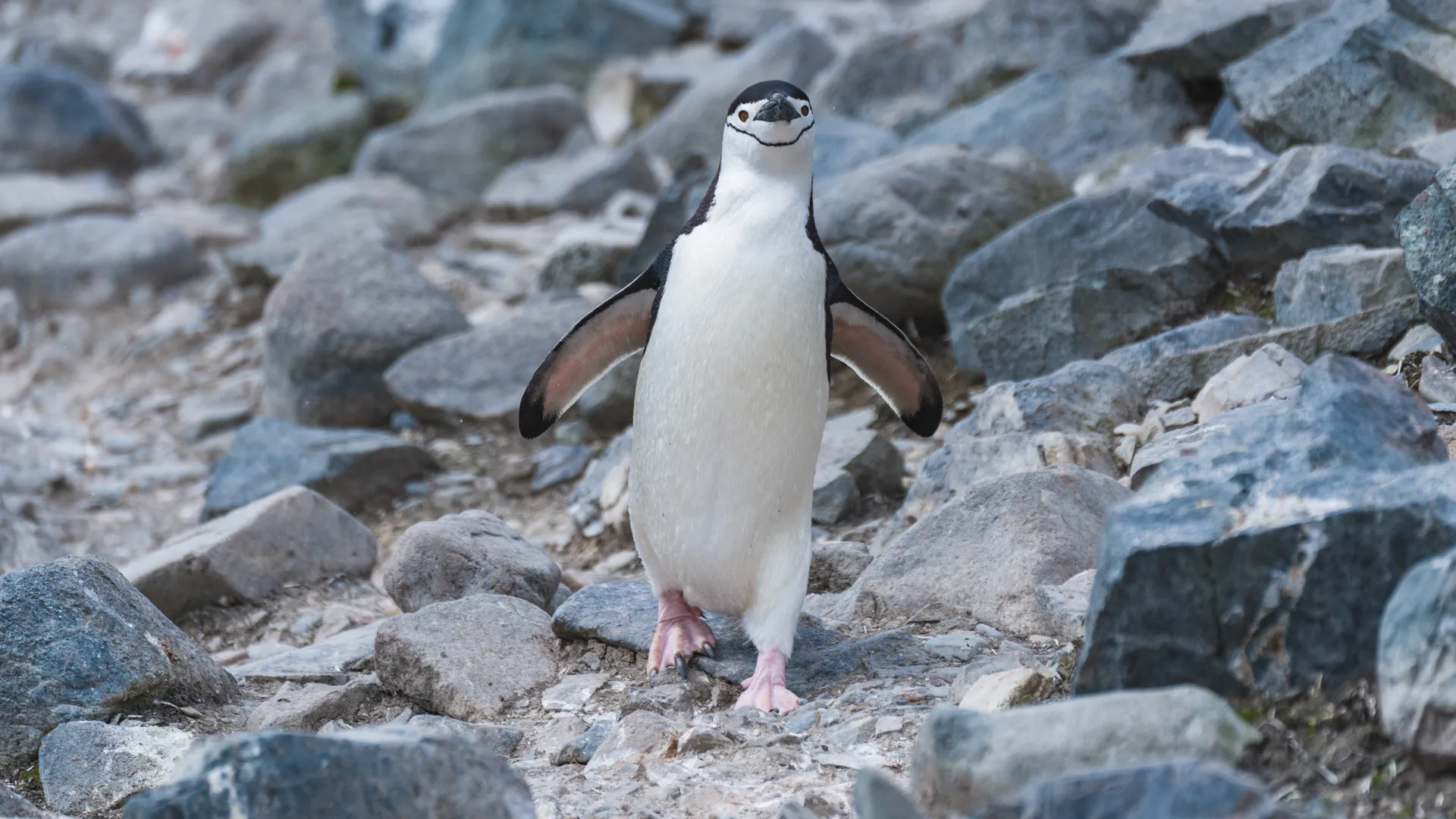
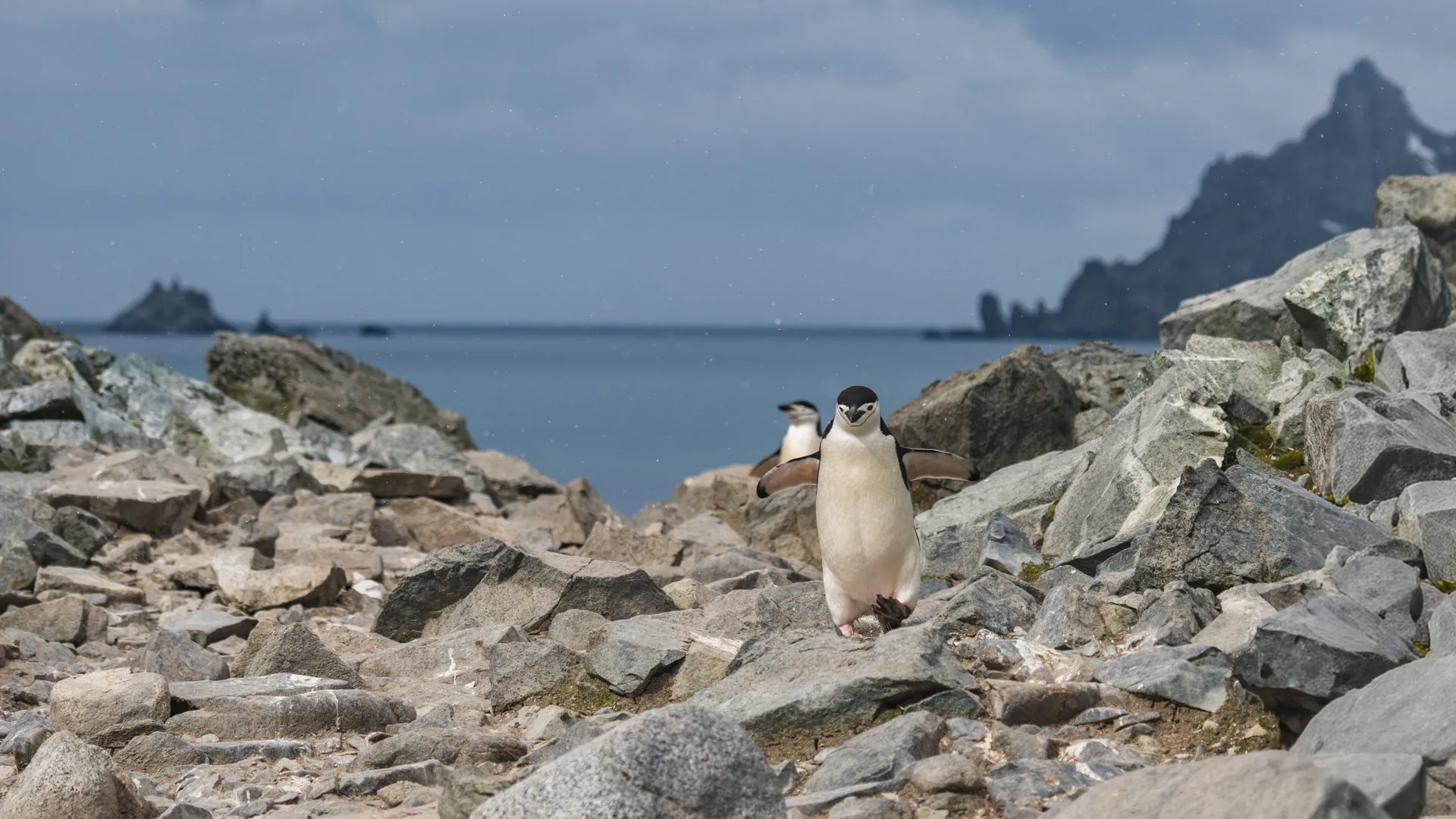
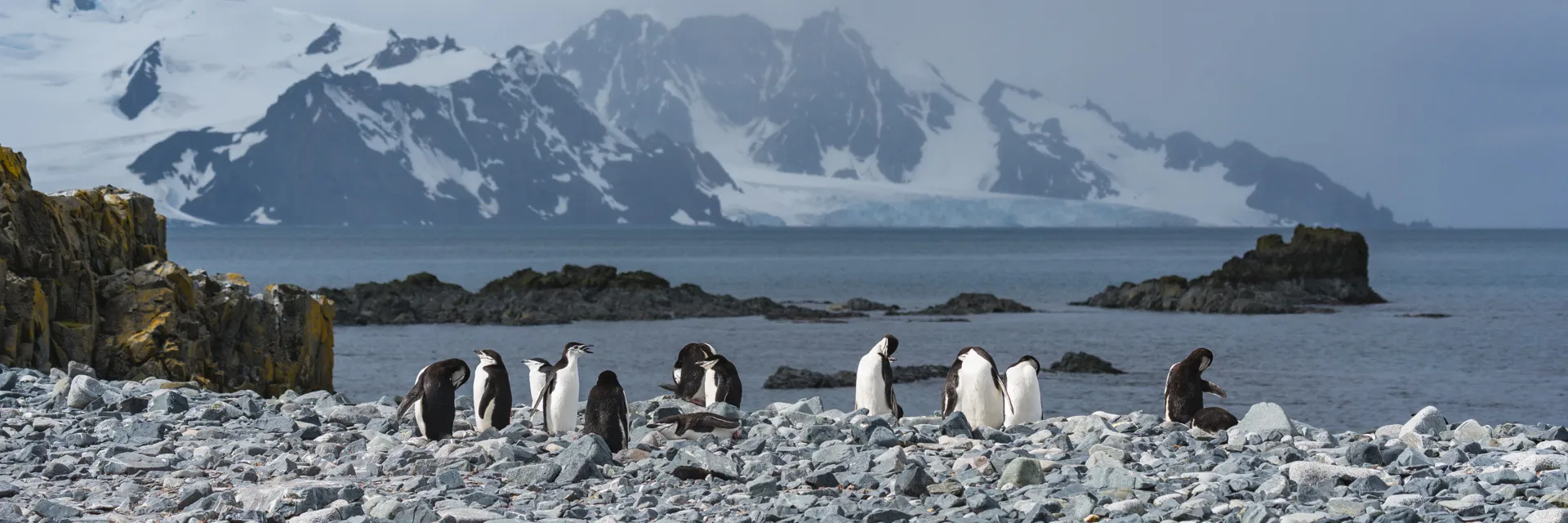
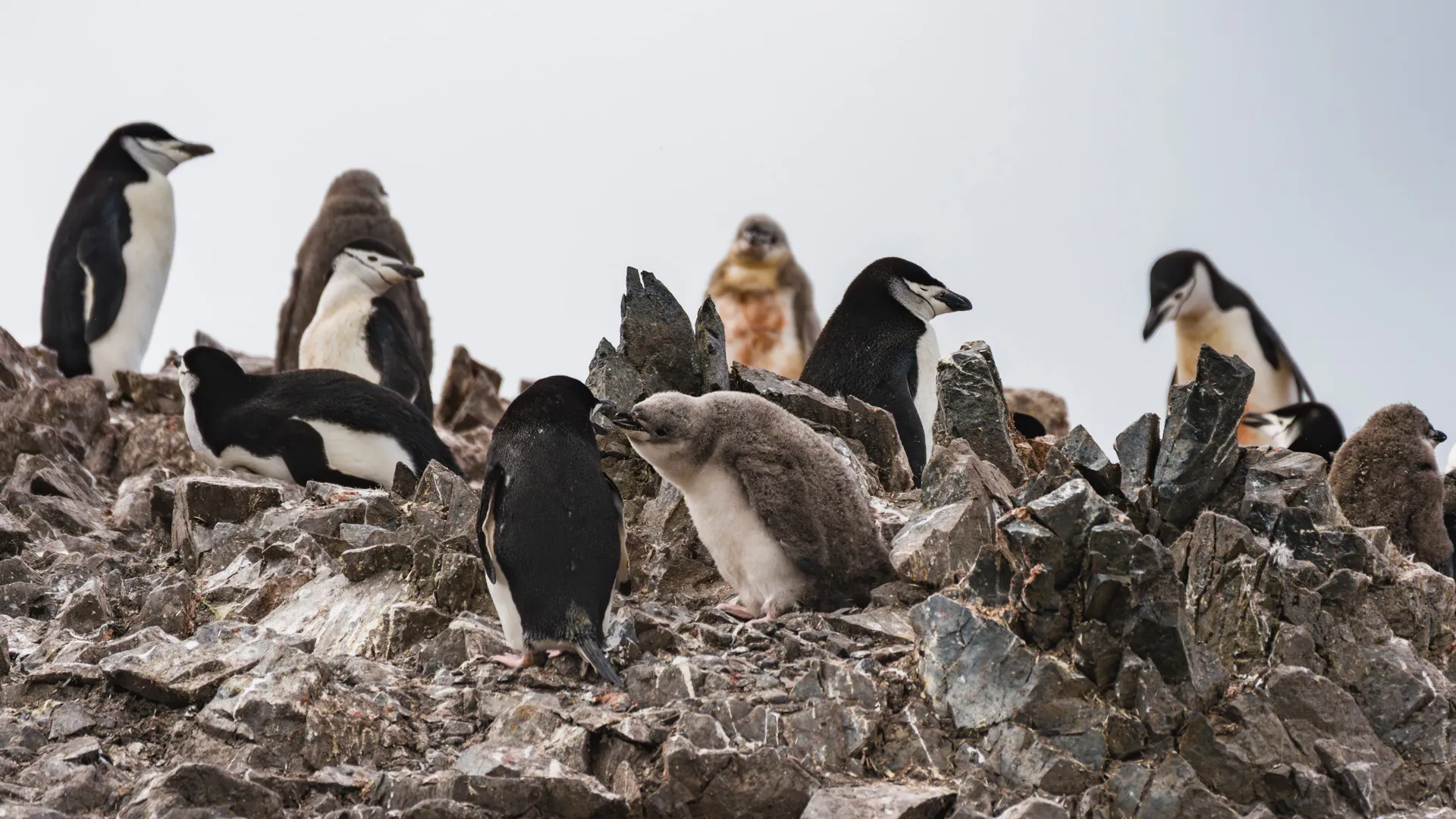
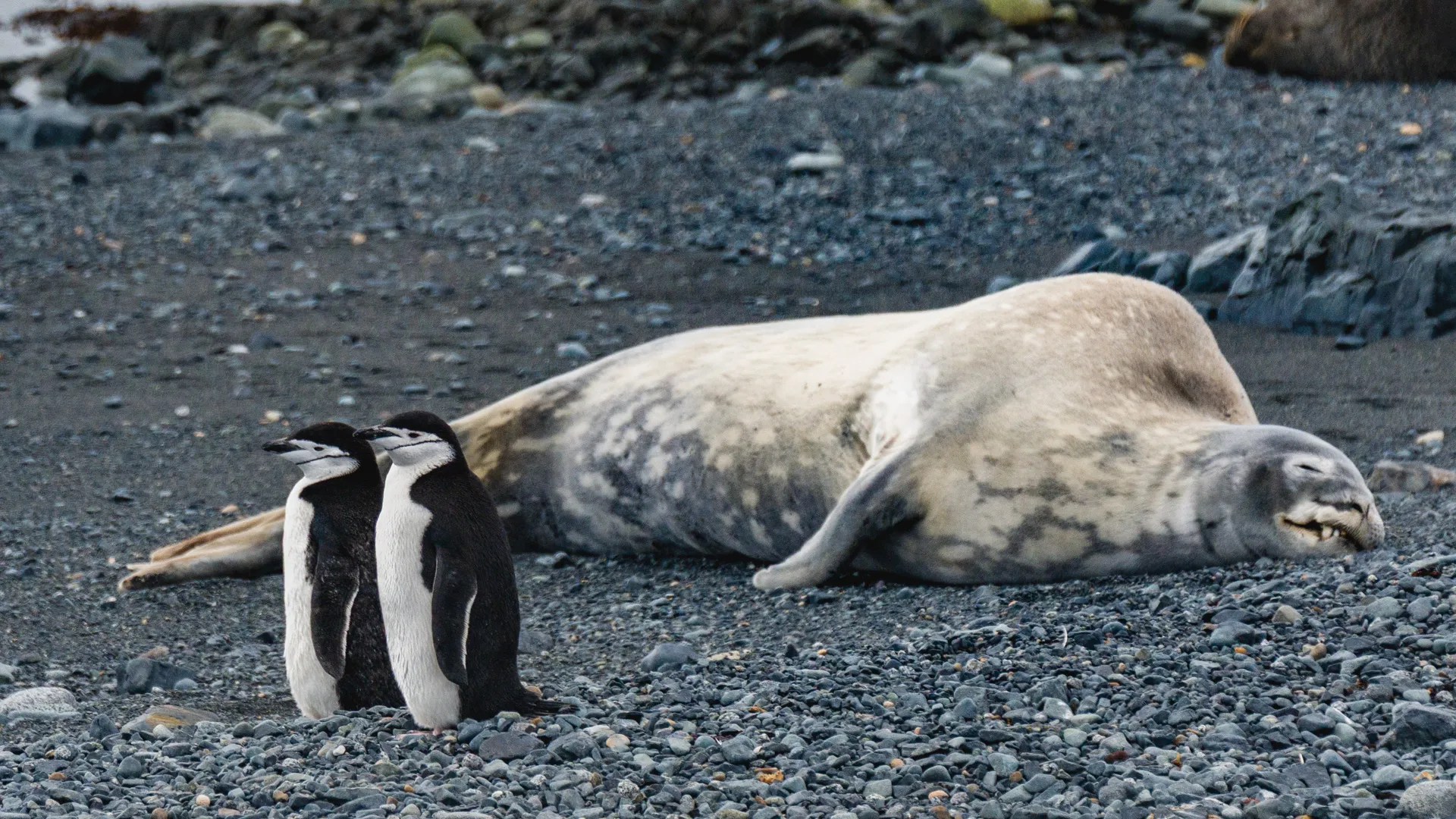
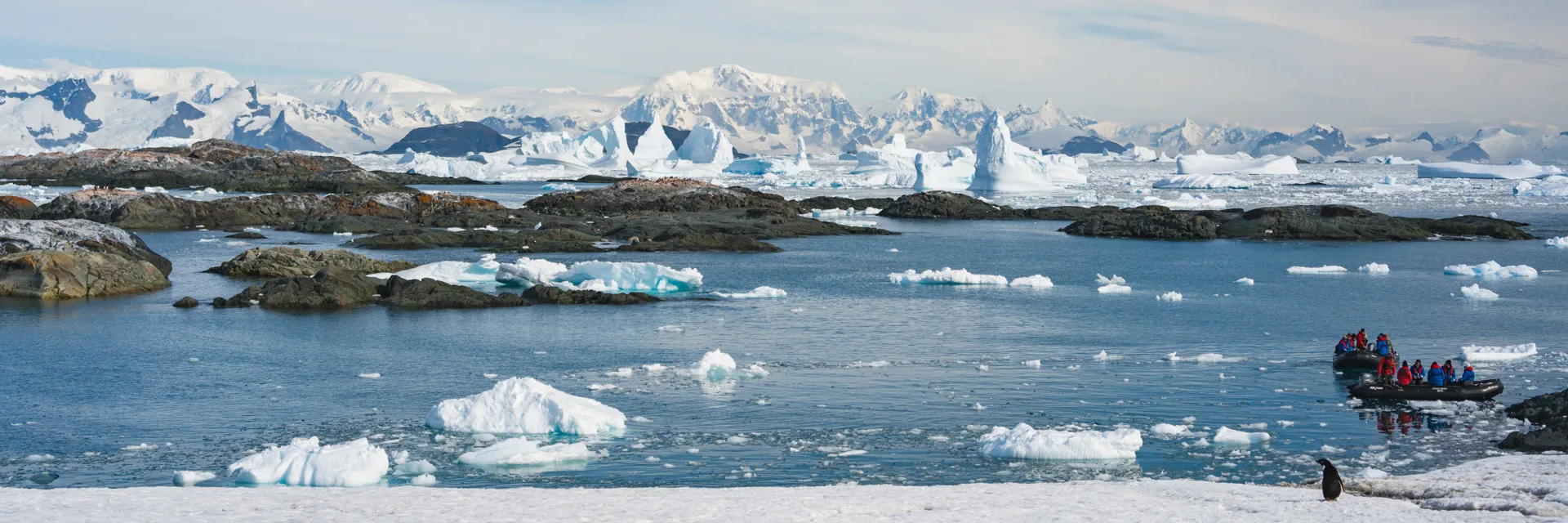
Our first steps on Antarctica were onto a place close to a big basalt formation and featured incredible rock stacks, a small shipwreck and a colony of chinstrap penguins. And all of Half-Moon was ours to explore for a glorious 4 hours.
It was the only chinstrap colony we got to visit on this trip, so a few extra penguin shots here.
Evening
EveningGenerally, Evenings looked the same each night. Quick Briefing with Plan A for the next day, including the information of what ungodly time the wake-up call would be (6, usually), then a short presentation by a member of the Expedition Team and the Announcement of the winner of the daily photo contest. On this first night, no photo contest winner had been chosen yet, but instead we had Captain’s Welcome where we also got to meet all crew and Hotel staff.
Dinner was also à la carte, while breakfast and lunches were usually buffet style. Food was delicious and I definitely gained weight during this trip because I had dessert twice a day.
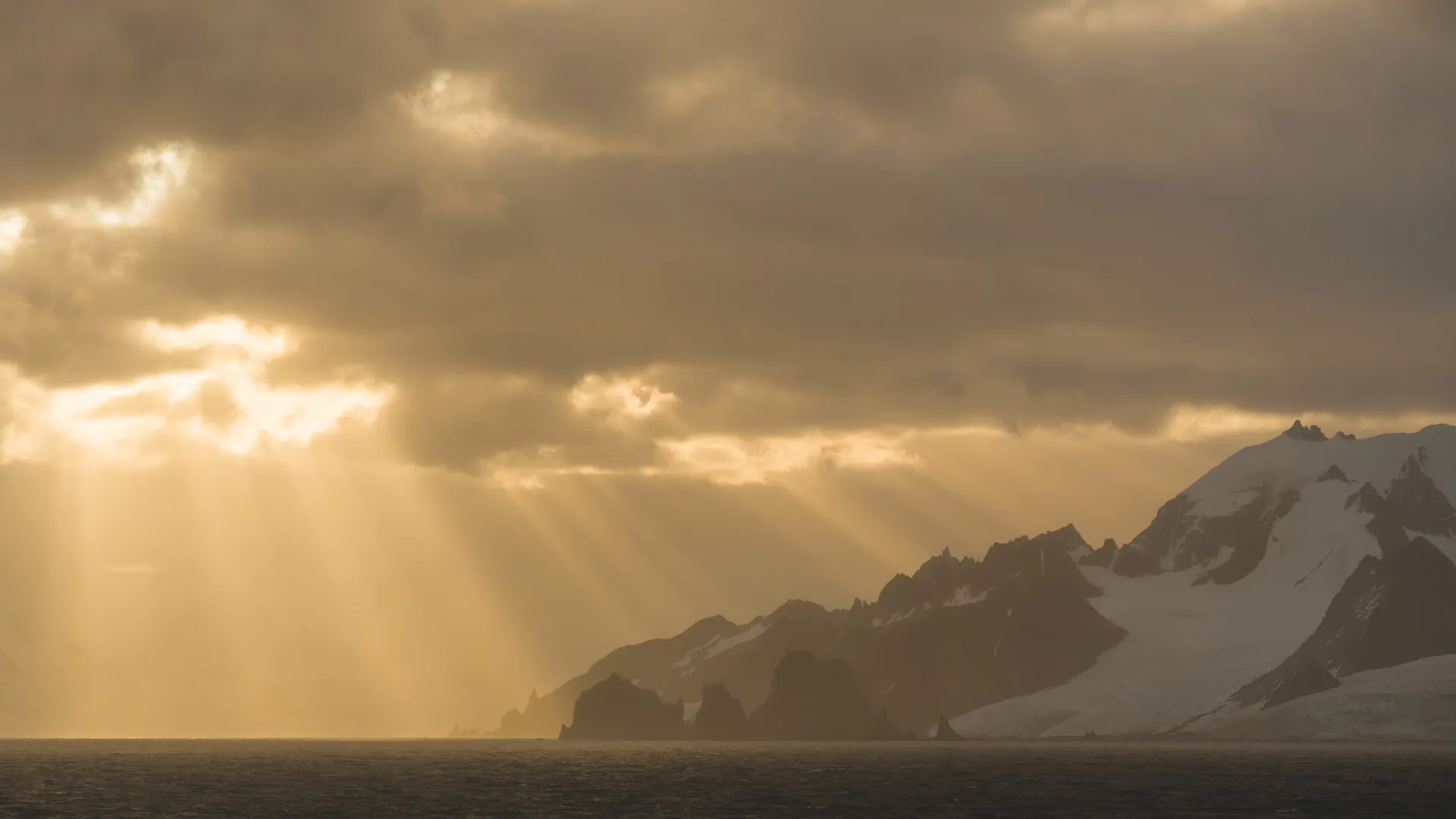
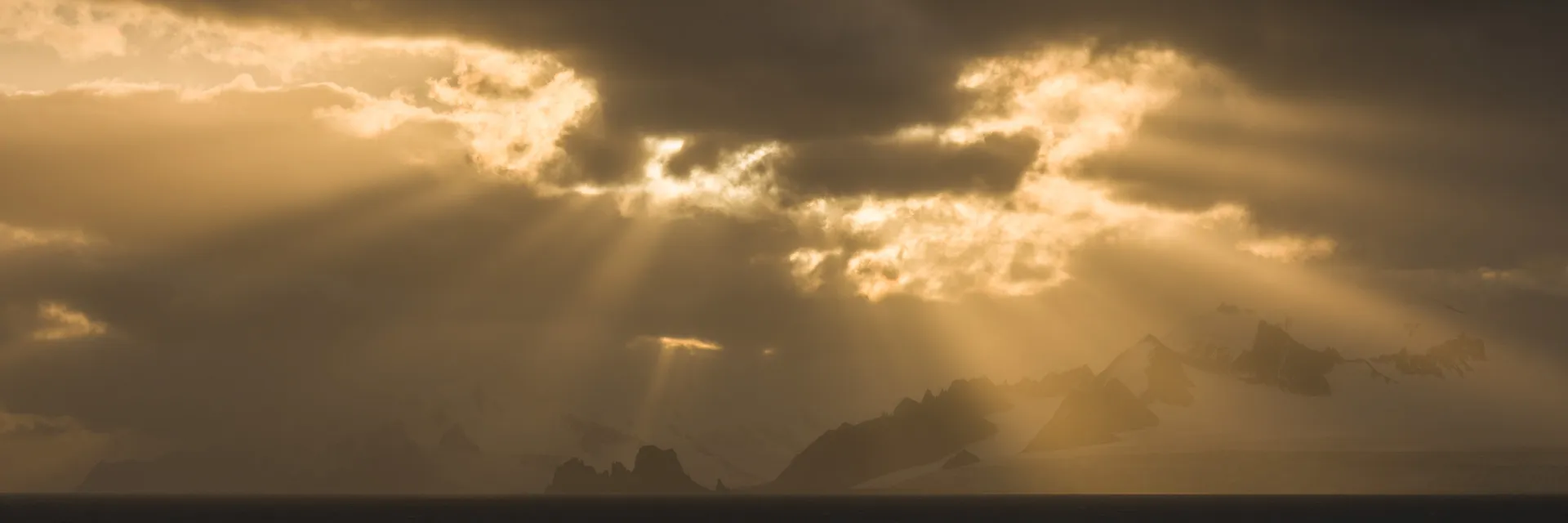
Evening views out on deck were also fabulous that night, which is when we caught some gorgeous sun rays.
Day 2: Feb 4 2026
Day 2: Feb 4 2026We had learned previously, that not everything goes to Plan in Antarctica. While sites have to be booked by the ships a year in advance, the actual itinerary is never guaranteed. And we would learn all about going off of Plan A on this day.
Astrolabe Island
Astrolabe Island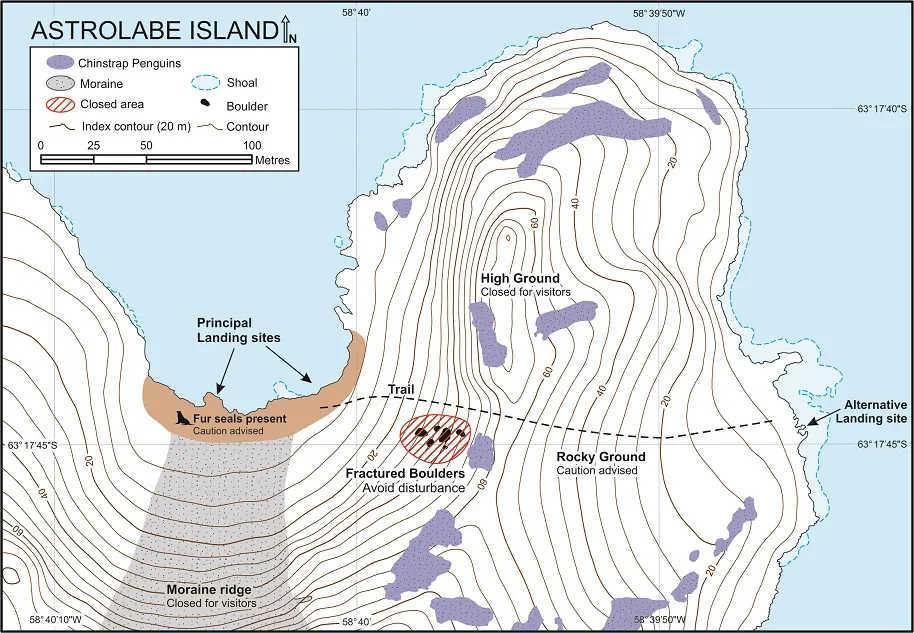
Originally, our plan A was to land or have a zodiac cruise on or around Astrolabe Island and stay around the area for a second landing in the afternoon. But, unfortunately, despite pretty nice-looking weather the swell of the water was too high to safely get into a zodiac.
So, instead our morning was spent cruising around the island, and heading 7h through the Brainsfield Strait to our Plan B location.
It was time for some gorgeous landscape shots.
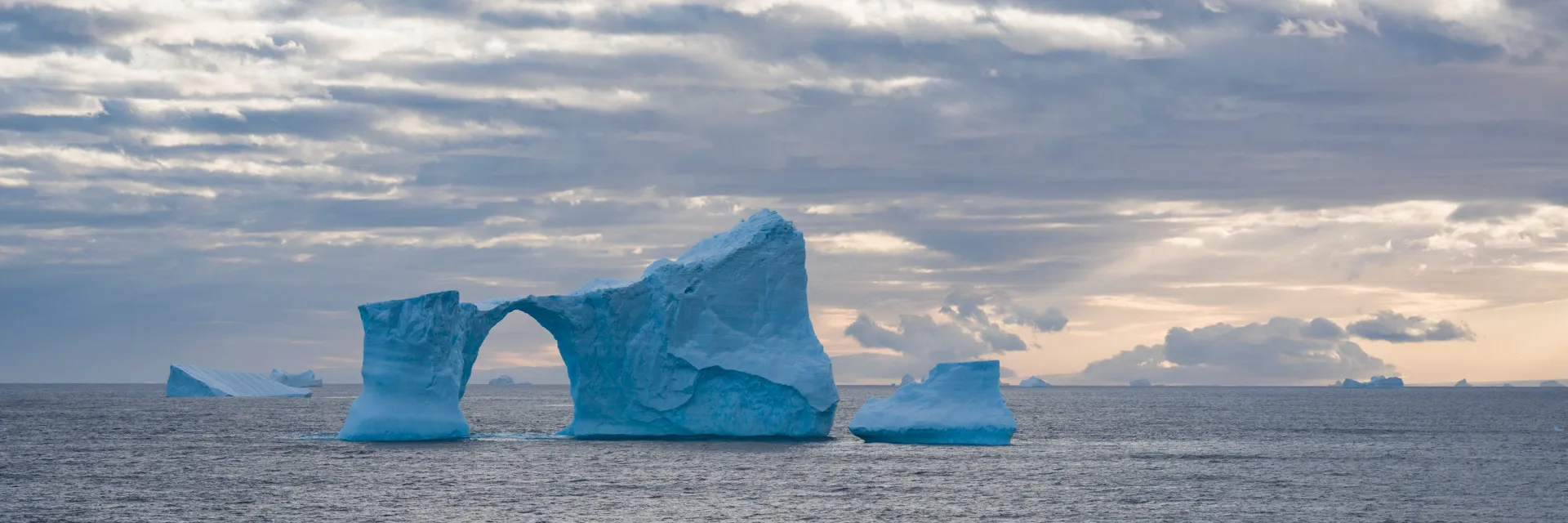
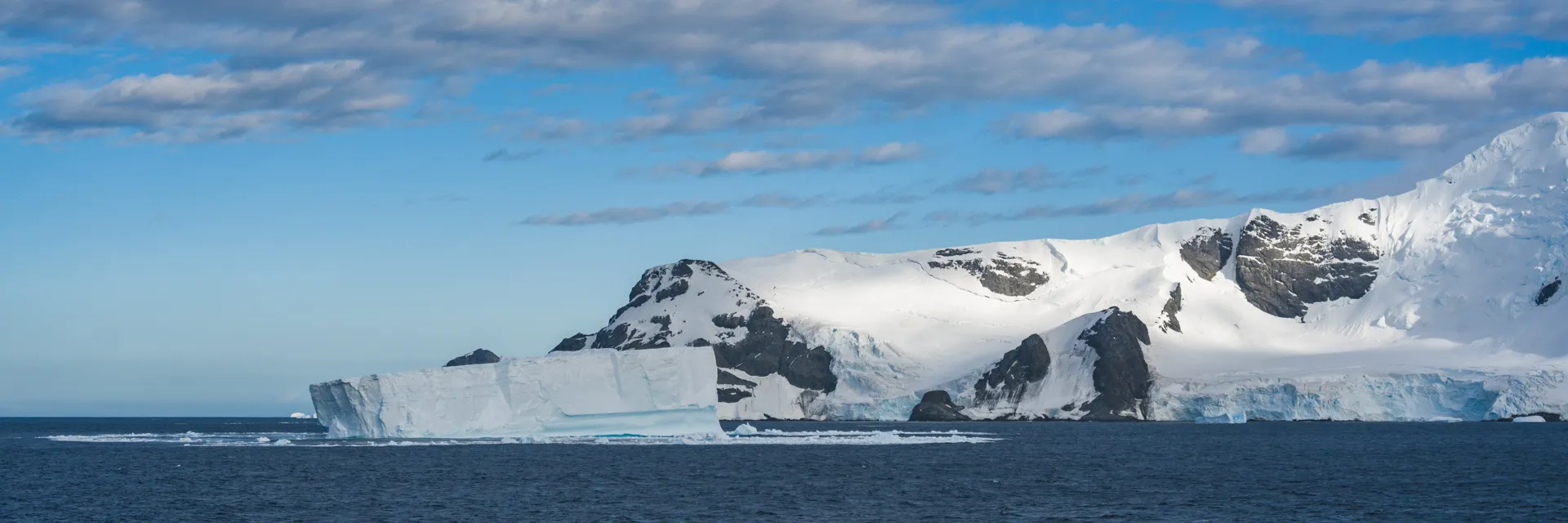
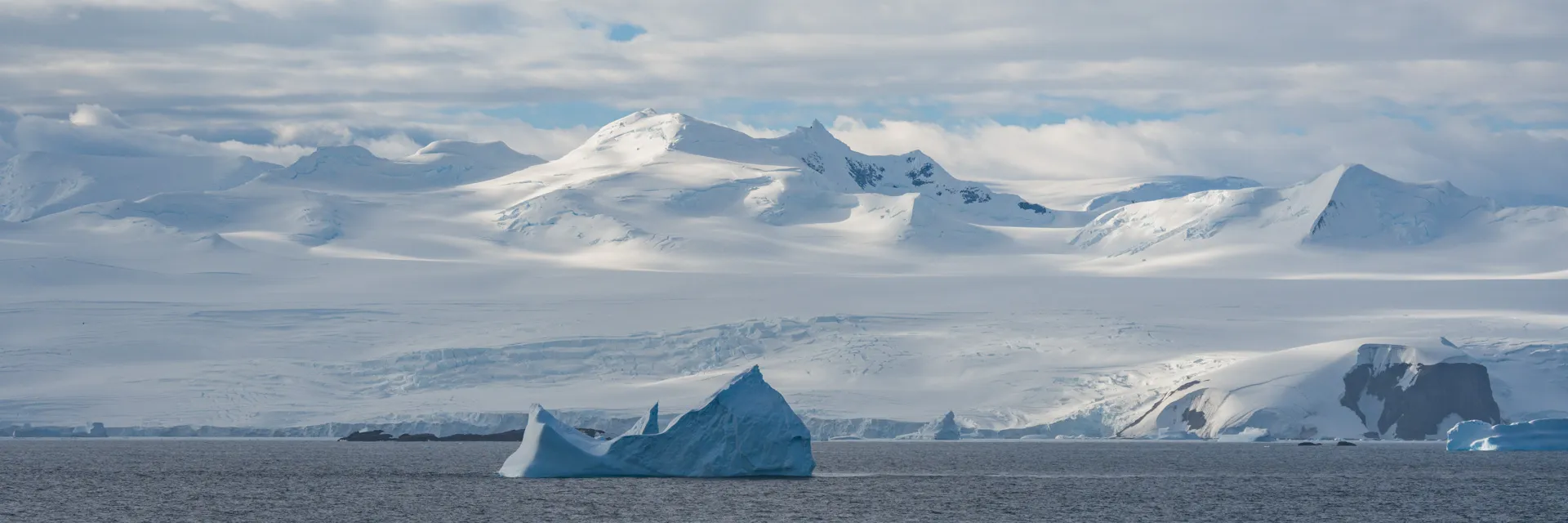
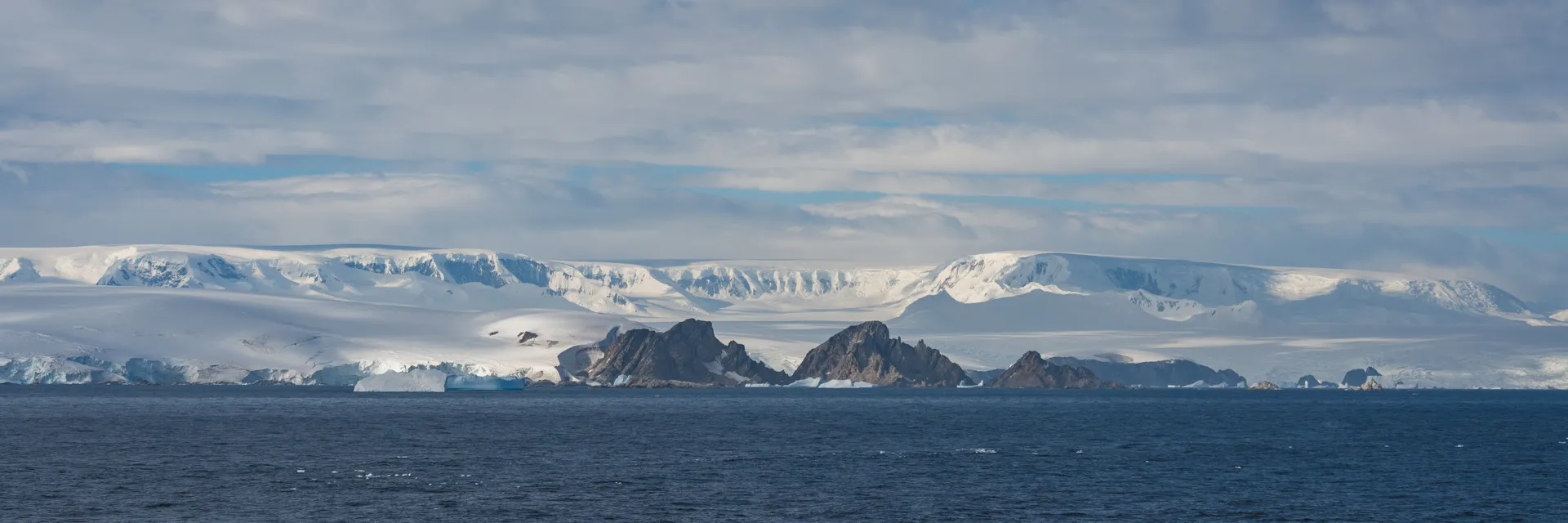
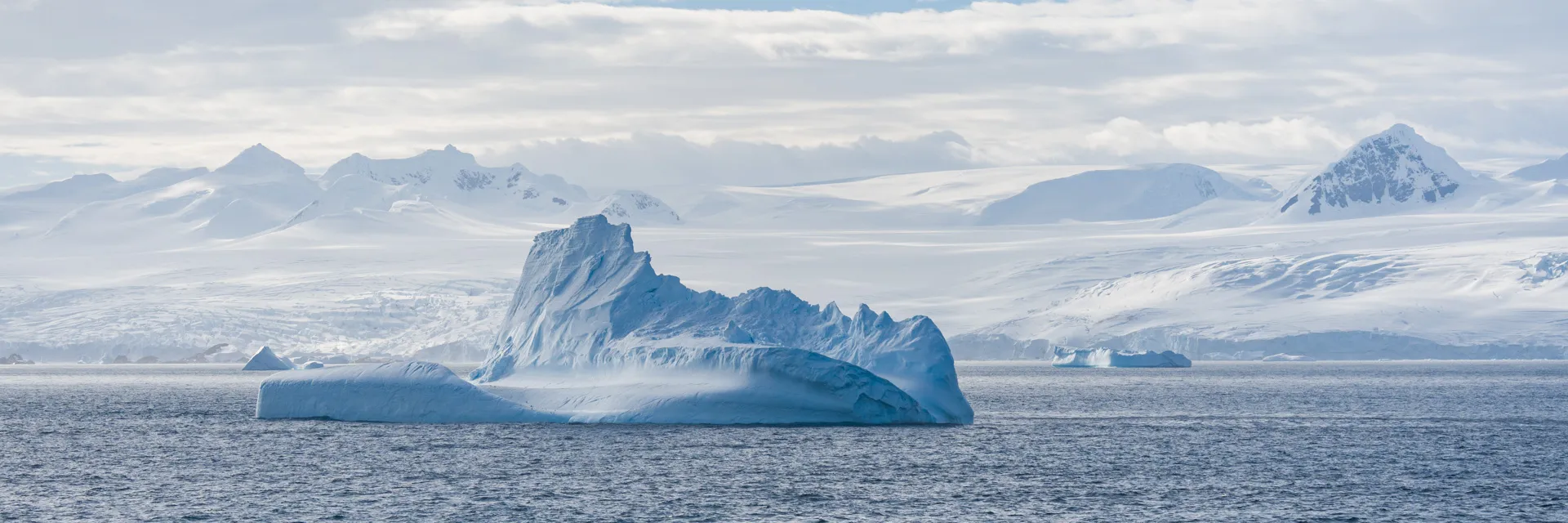
Now there would be many a time when we were all out on deck, snapping away at ice bergs and spotting animals, but if I had to pick a few soundbites from this trip that would be representative, there would obviously be, the wake-up call
Good Morning, Good Morning, Everybody!
Gaby’s dreaded cheerful wake up call at 6 a.m.
But also, Jeroen spotting a whale and all the scattered people on deck scrambling to shoot that one place where Jeroen’s camera was pointing to.
WHALE!
Jeroen, all the time on deck.
Before this trip, I had never seen a whale in real life. So when I heard my first “Whale” shout, I was just all adrenaline.
And then actually a “hand” came out of the water and it looked like it was waving. My first ever whale was a humpback and it was waving at me (and the dozen other people on deck, never alone in Antarctica, haha).
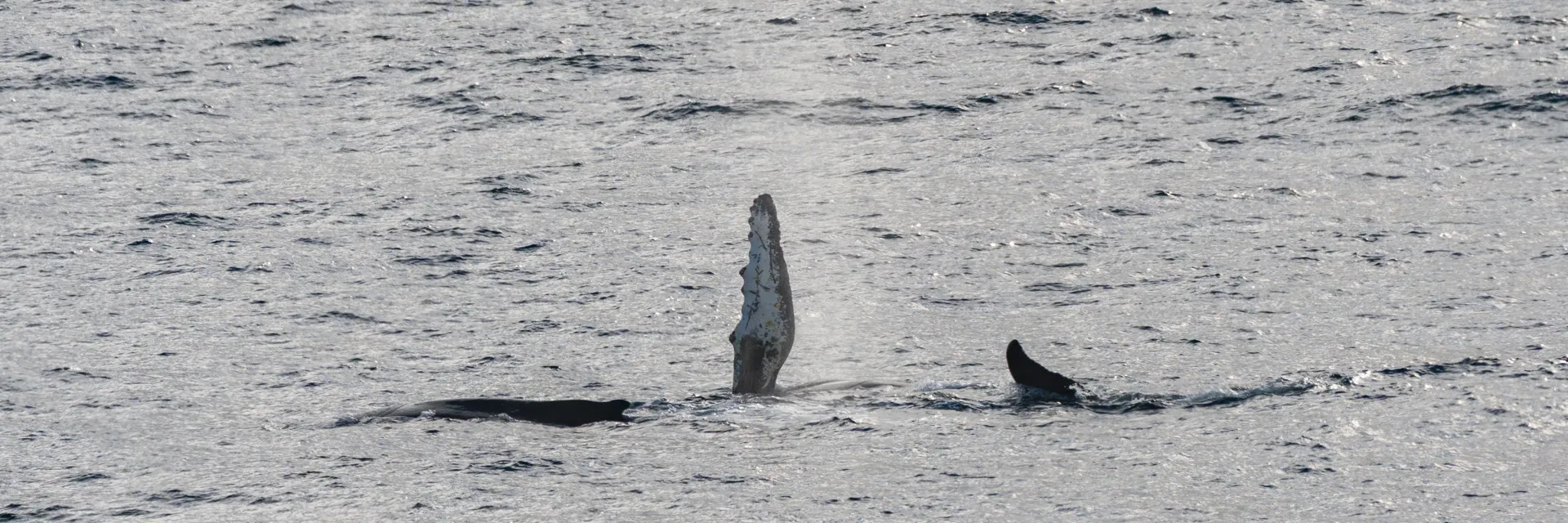
And then we got to see tail!
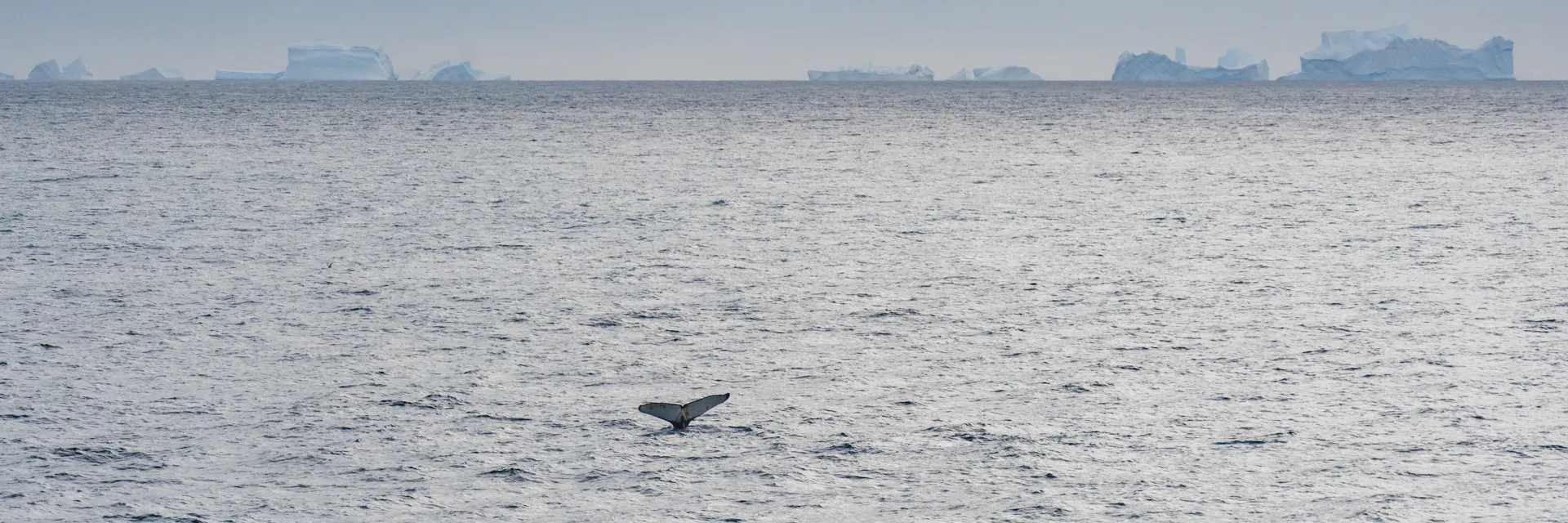
The Best Tip
The Best TipWhile en route, that morning Dani held a presentation titled “Antarctica with Intention” and she shared a few tips on how to take intentional photos.
The main takeaway was very simple, but also extremely powerful.
Is it a Top 10 Shot? If not, move on.
Dani Connor’s advice for wildlife photography in Antarctica
I tend to point my camera at everything whenever I’m out and about and sometimes I’ll take 10 shots of a thing I don’t end up liking that much.
But this tip stuck with me throughout the trip, not just when photographing wildlife.
Whenever I was in a zodiac and people were zapping away at brash ice or an ice berg they loved but I did not, I didn’t take 10 shots. I took one or two, sometimes none. Instead, I leaned back, took a breath and let the moment sink in.
Weirdly, this photography tip was also a tip that helped me give myself moments of mindfulness and sheer existence in this gorgeous foreign place.
D’Haintaut Island in Mikkelsen Harbour
D’Haintaut Island in Mikkelsen Harbour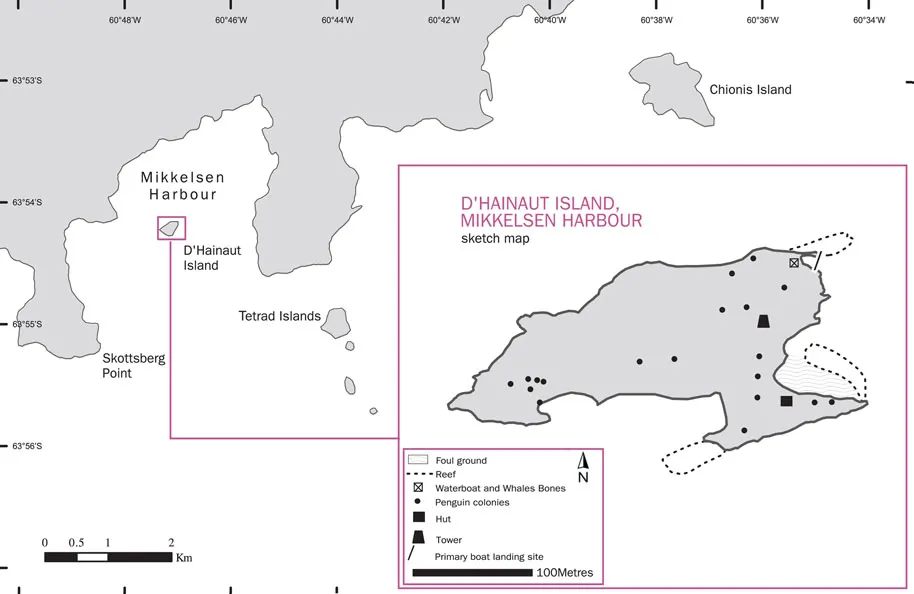
In the afternoon, we arrived in Mikkelsen Harbour and reached our second landing site. This was the first place where we would see the first colony of the most common brush-tailed penguin on the Antarctic Peninsula: Gentoo. We had seen a few scattered penguins with red beaks on Half-Moon, but here we’d see them in large numbers.
And we’d smell them.
On our way to the D’Haintaut Island, our zodiac driver and ET member Nils said that they liked to refer to Mikkelsen as “Shitelsen” because there is so much poop.
Penguins are smelly little birds and yes, their pink fish and krill powered poop is literally everywhere, including their chicks. Well, other penguin’s chicks. Apparently they never poop on their own nest, but specifically away from it. If another penguin is in line—it will probably be covered, that poop comes out fast.
Really, it is quite fascinating how they lift their little brush tails and how it squirts out. And that doesn’t make me weird, people literally have written scientific papers about penguin poop pressure (no Gentoo, but the first projectile poop I saw was a chinstrap—I’m not kidding, this is the poop paper, it won a fluid dynamics science prize.
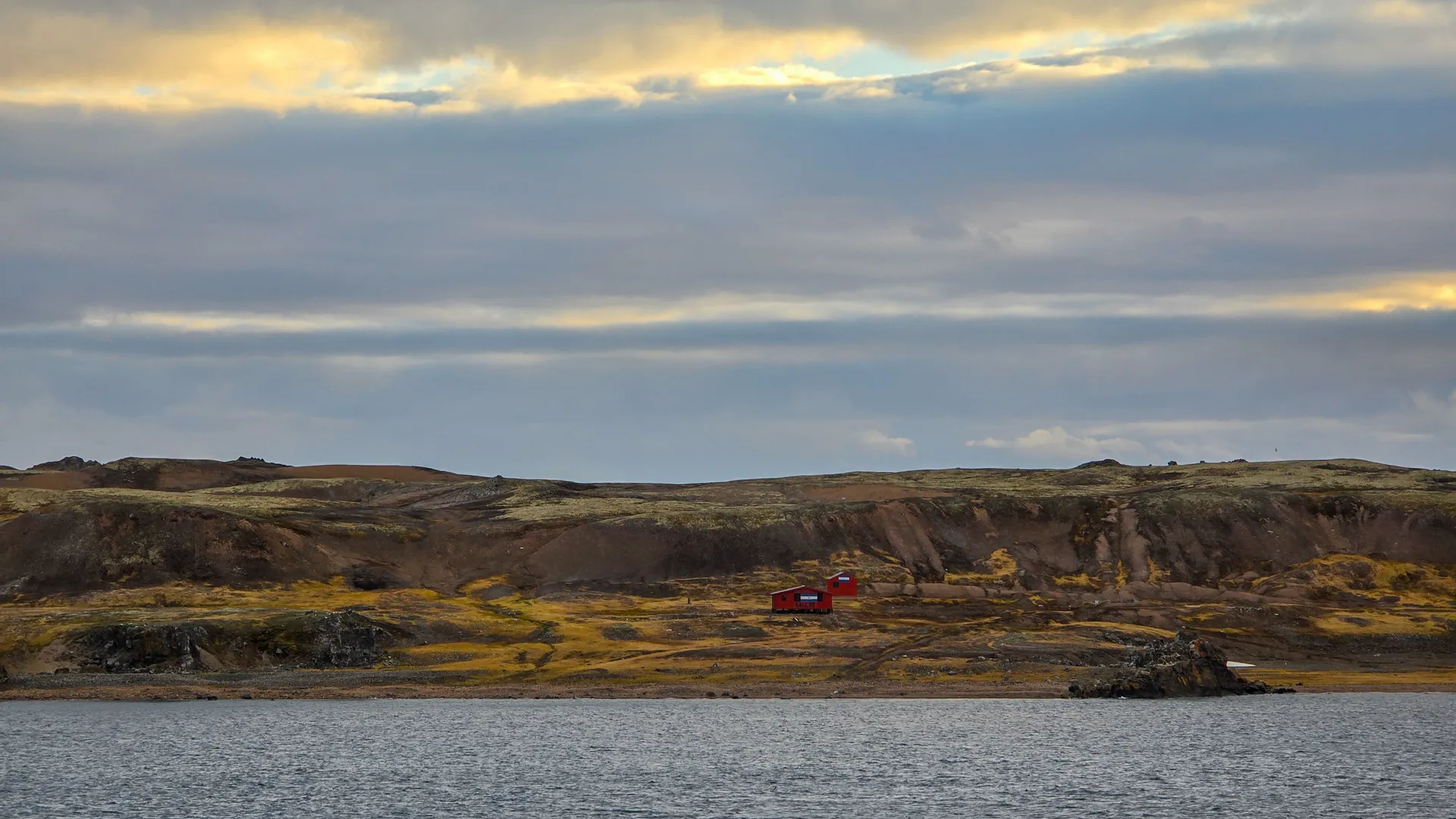
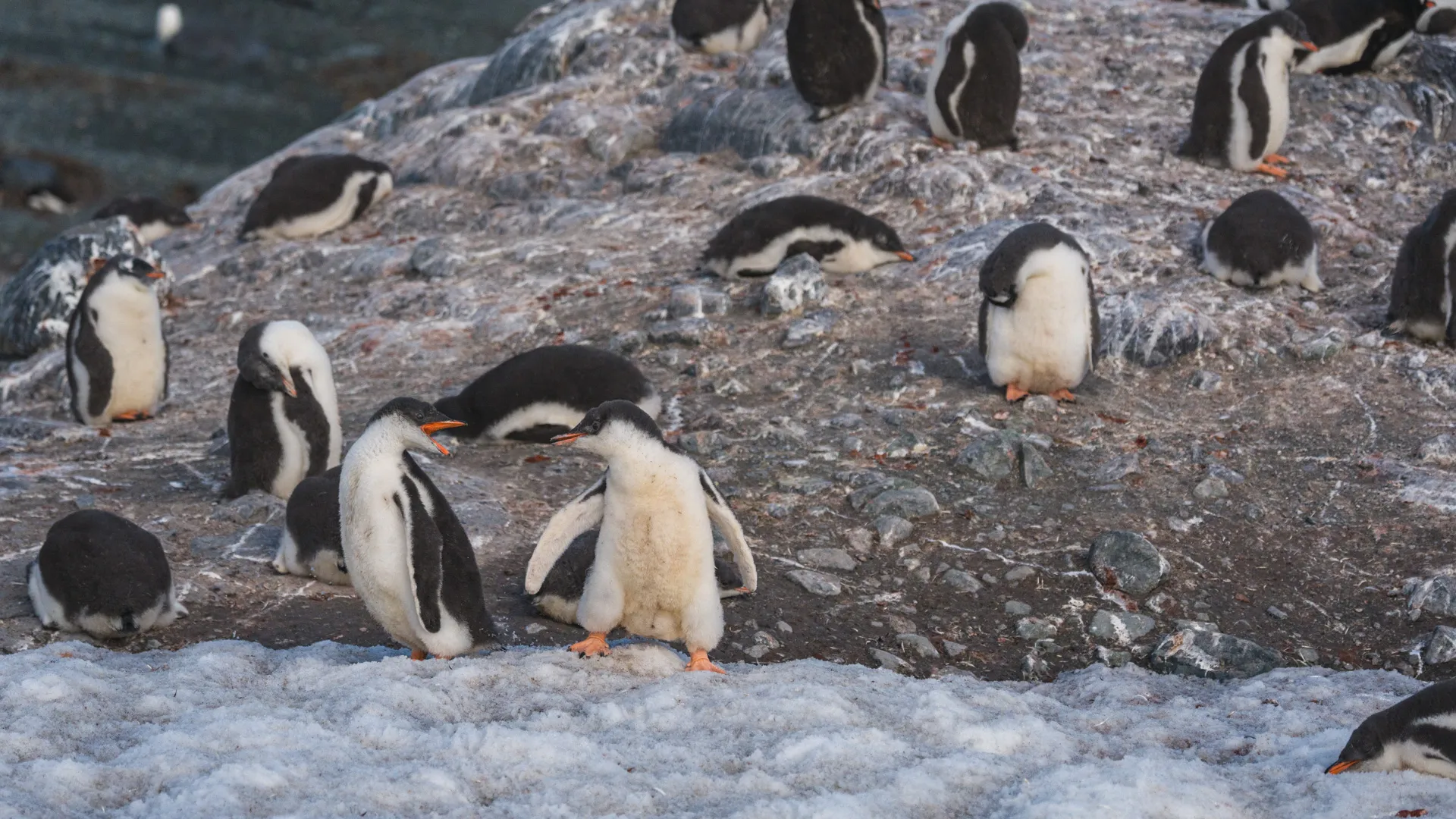
Anyways, D’Haintaut Island had everything for everyone. A red hut, gorgeous landscape, whale bones(!) and a colony of penguins, and our first good look at the adorable fluffy chicks.
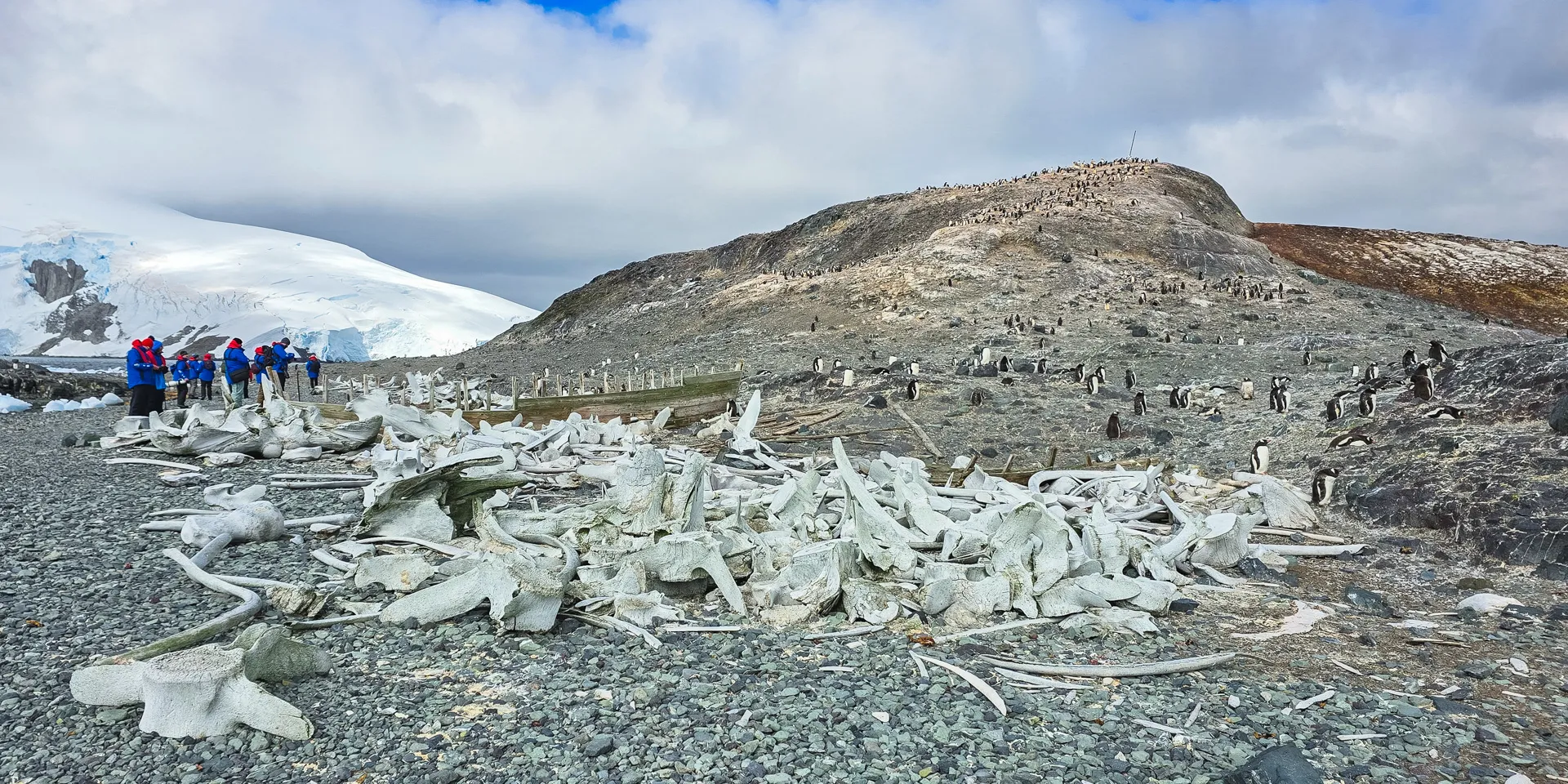
We also learned that at this time a lot of penguins were moulting. The brush-tailed penguins go through what is called a “catastrophic moult” once a year where they lose all their feathers at once and grow new ones. Moulting is very painful for them and we had to keep extra distance and give them space. I mean, they can’t eat for 2-3 weeks as their waterproofing is compromised. I’d probably be a hangry sulker that hides in a corner too, if I had to go through that.
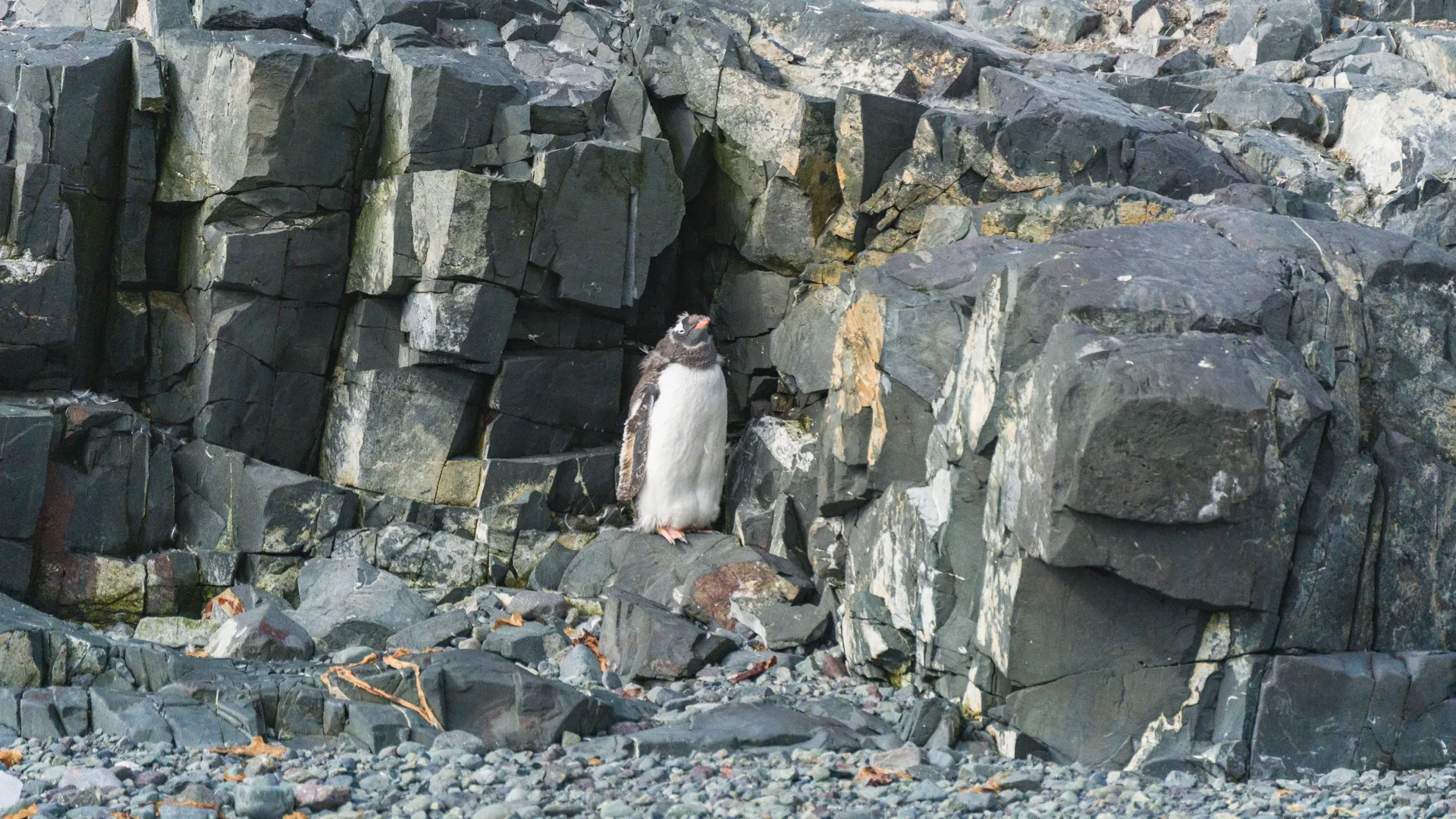
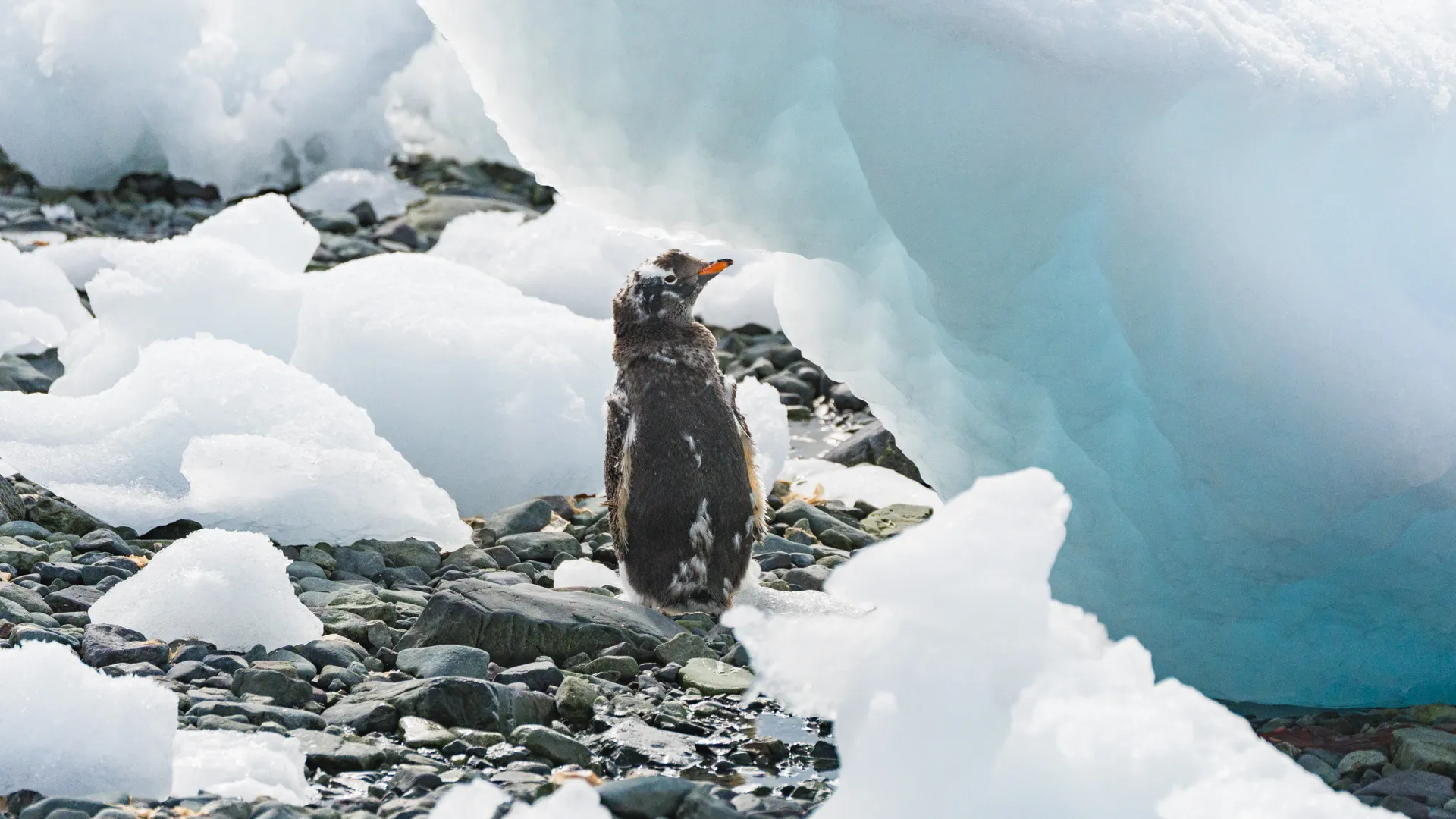
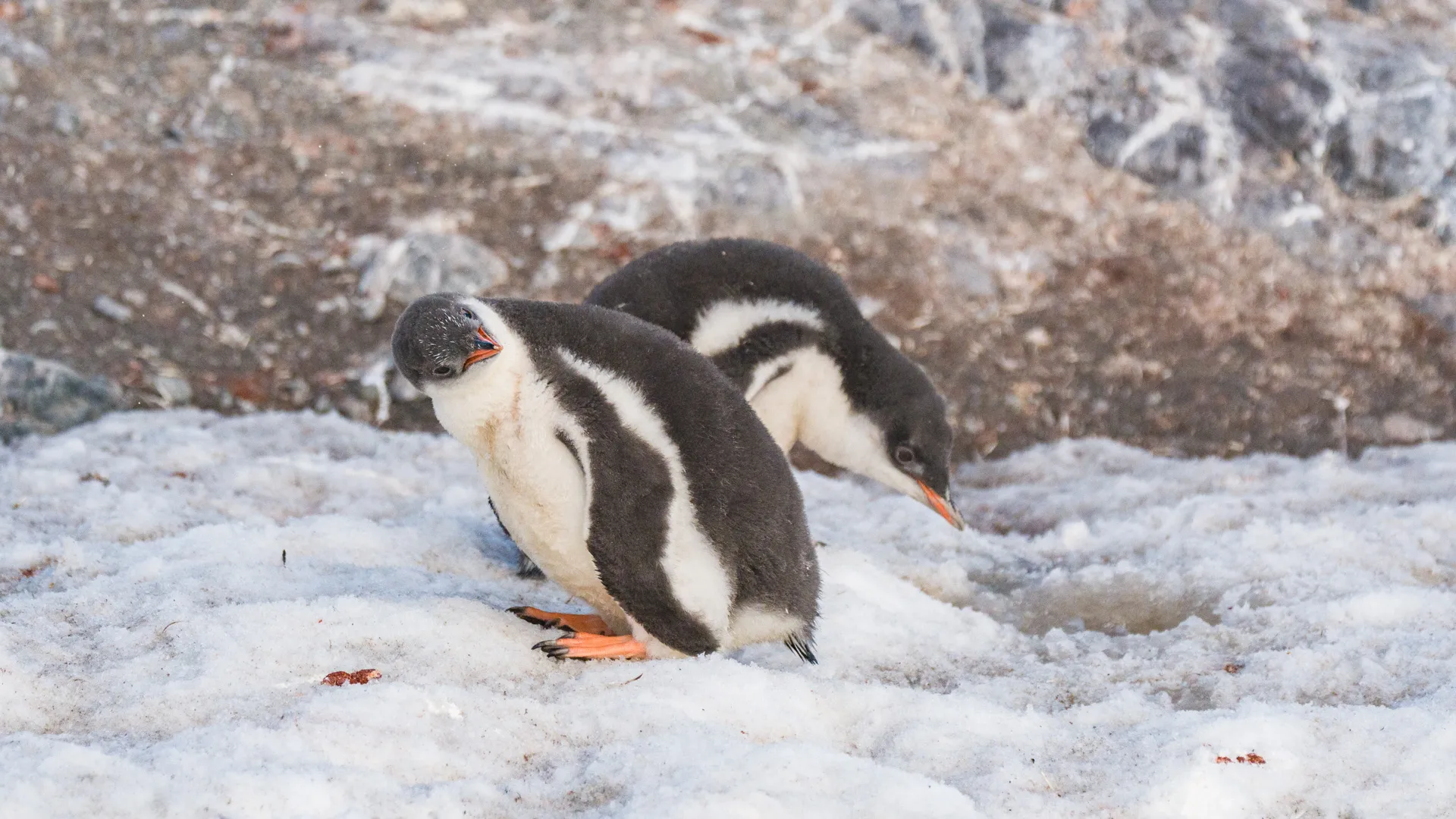
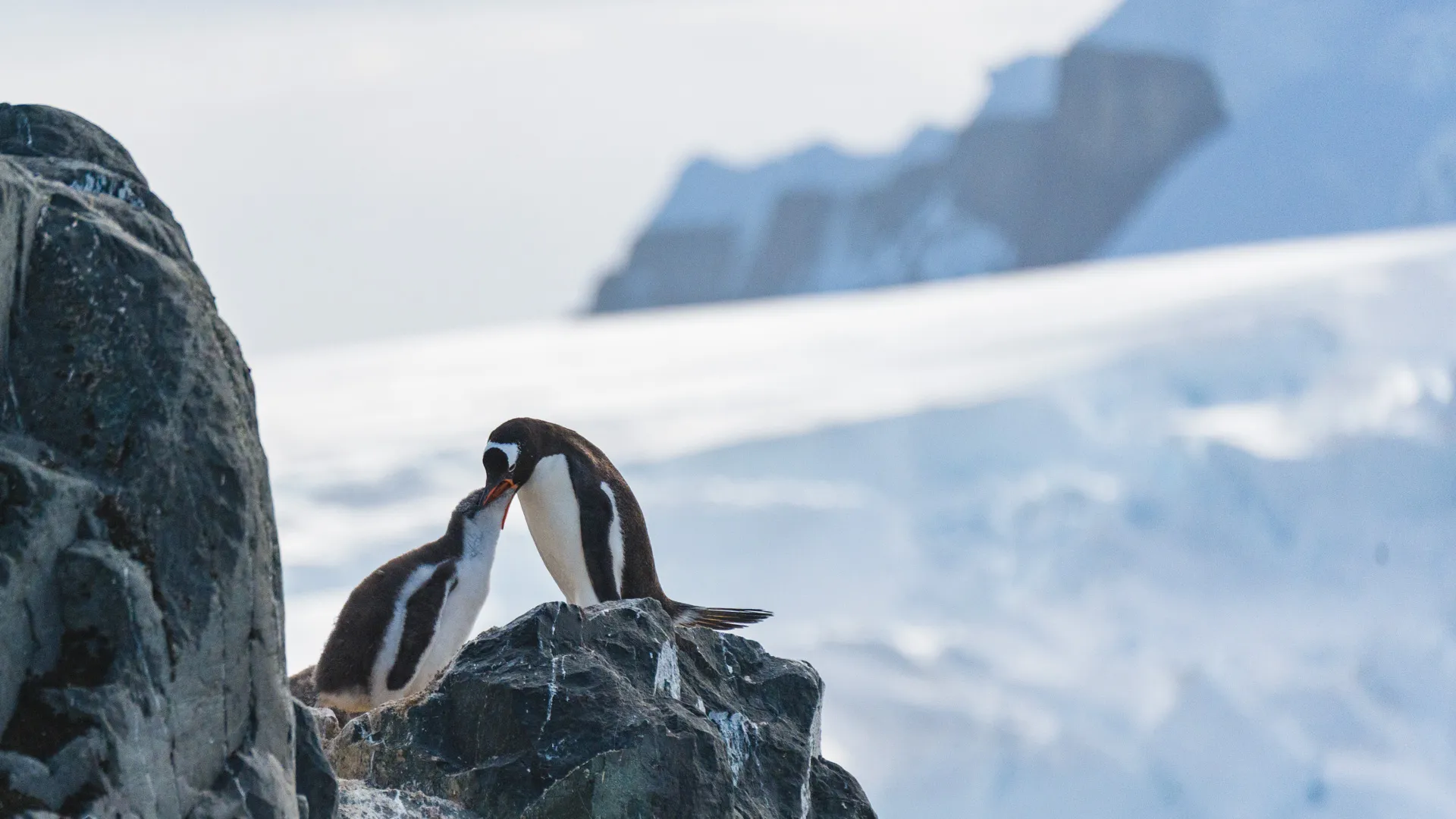
But then we also got to see the cutest fluffy chicks which absolutely melted my heart. Chicks are kept in crèches, so within a colony there are areas where lots of chicks are kept together. They are fluffy and adorable and it was so fun to watch them interact with each other and their parents. They are super needy with their parents and bug them a lot.
We also learned that they take micro-naps throughout the day, so they will do thousands of little 4s naps throughout the day. It was so fun to see a mix of different chick behavior. Some chill, some napping, some stumbling, some fighting. It was amazing.
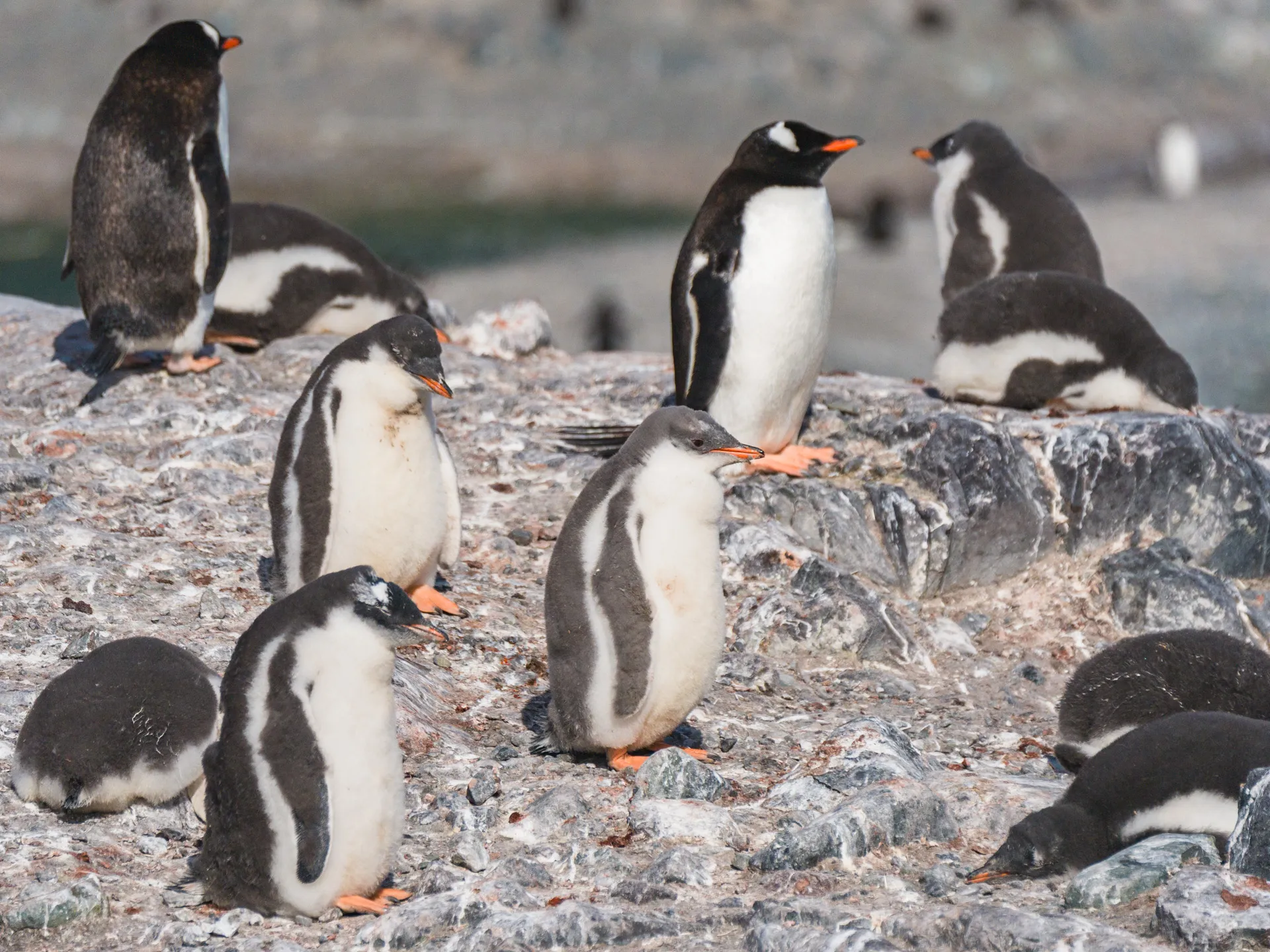
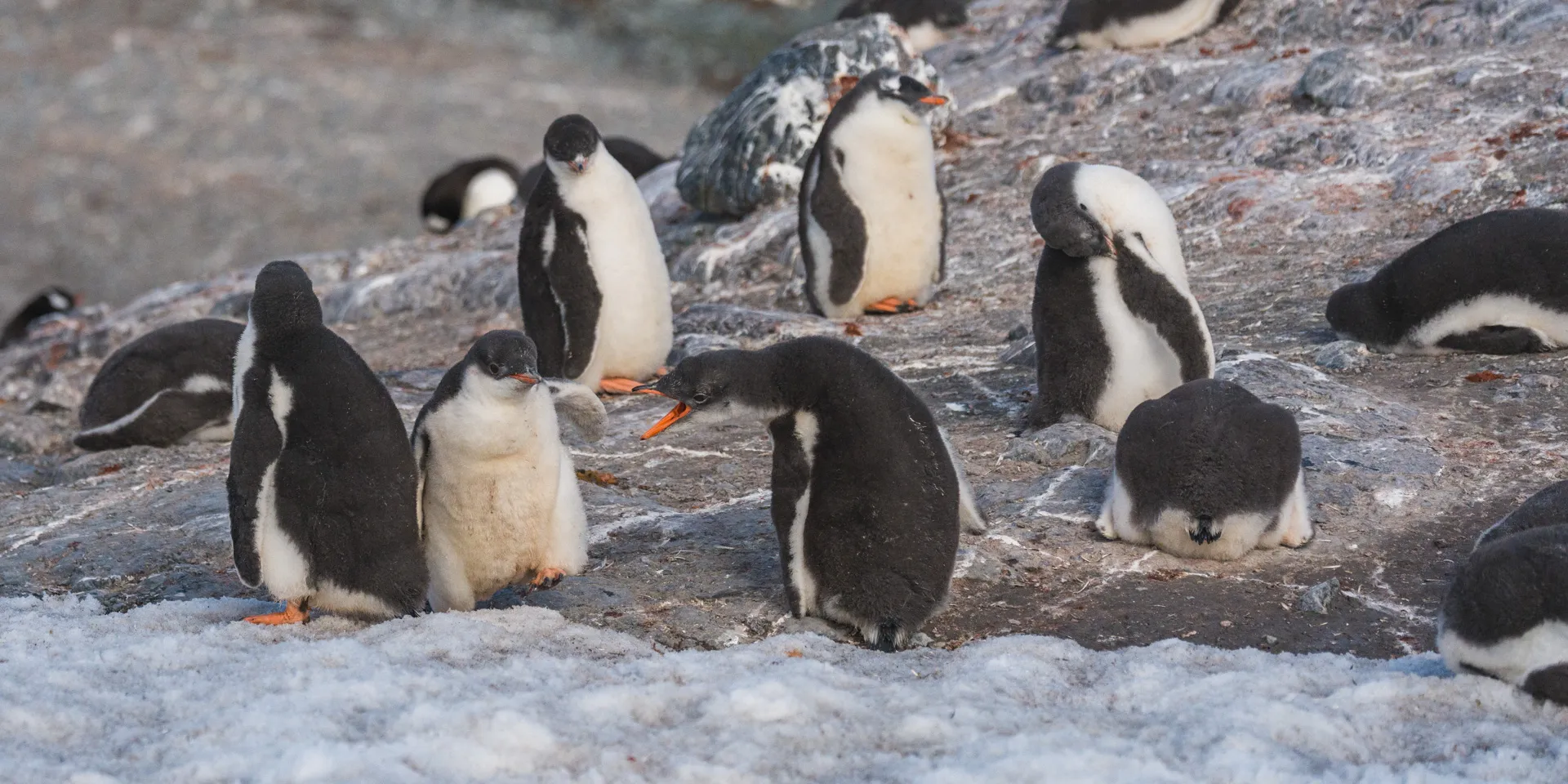
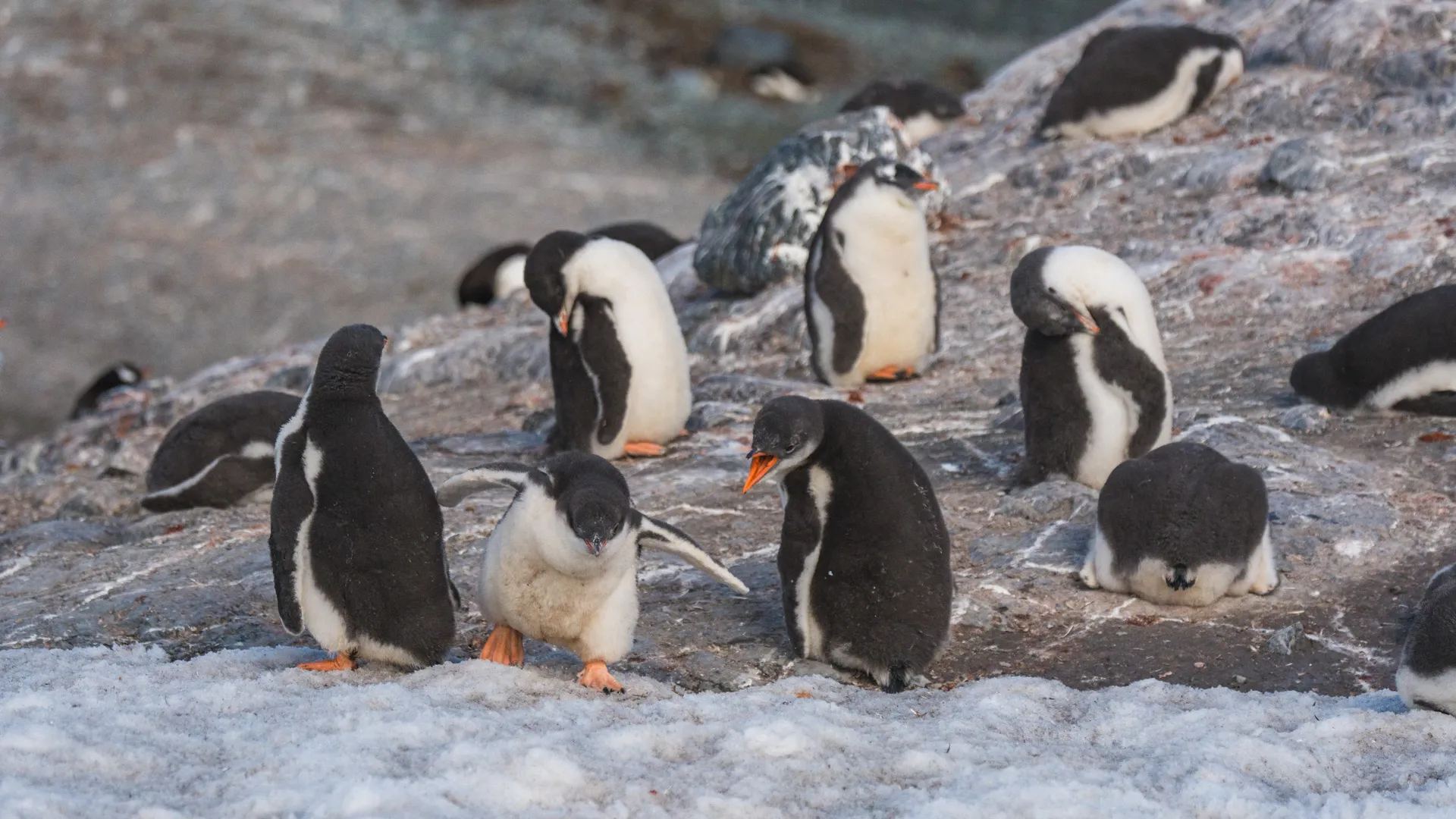
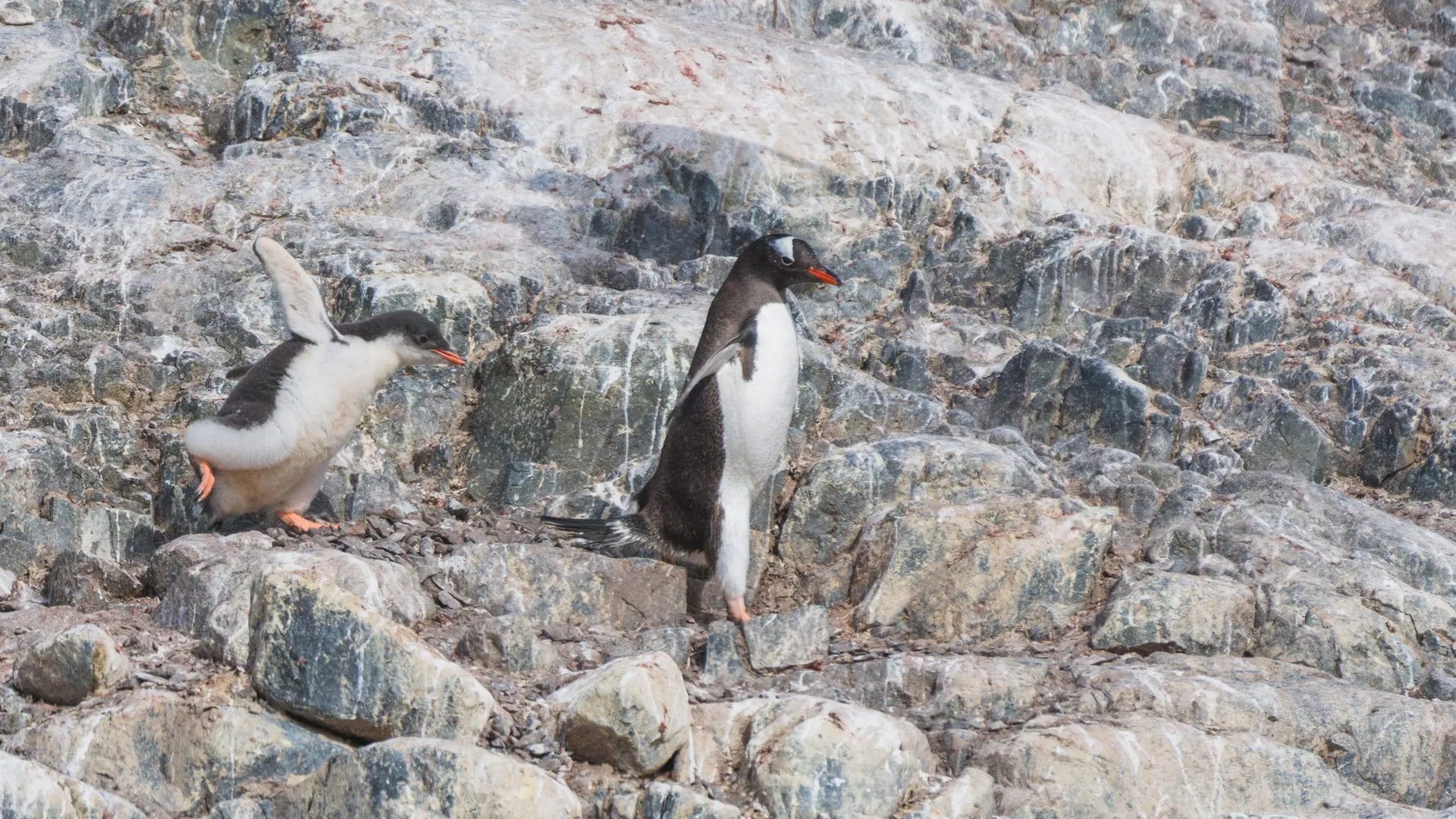
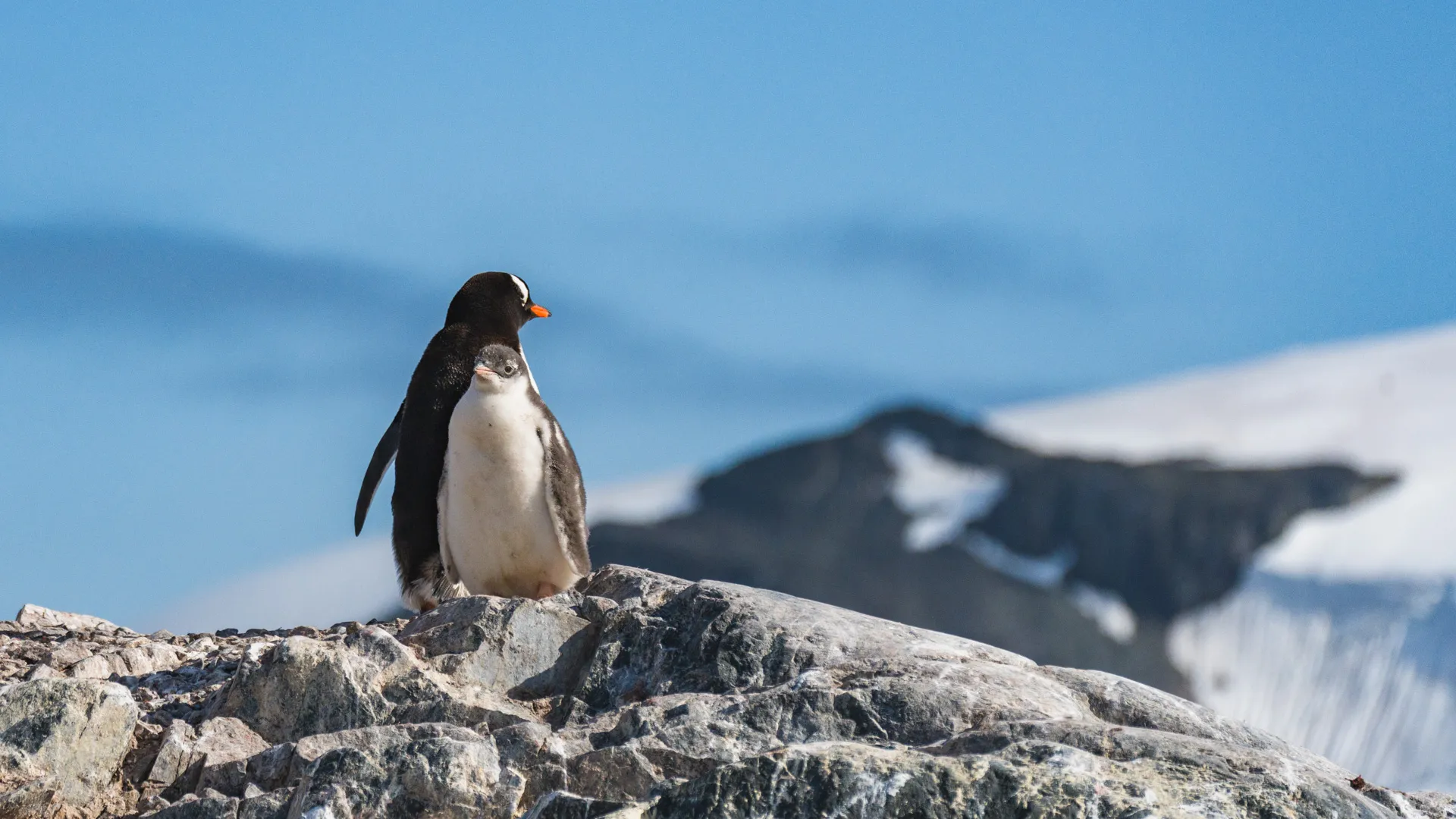
What I really loved was also watching chicks with their parents.
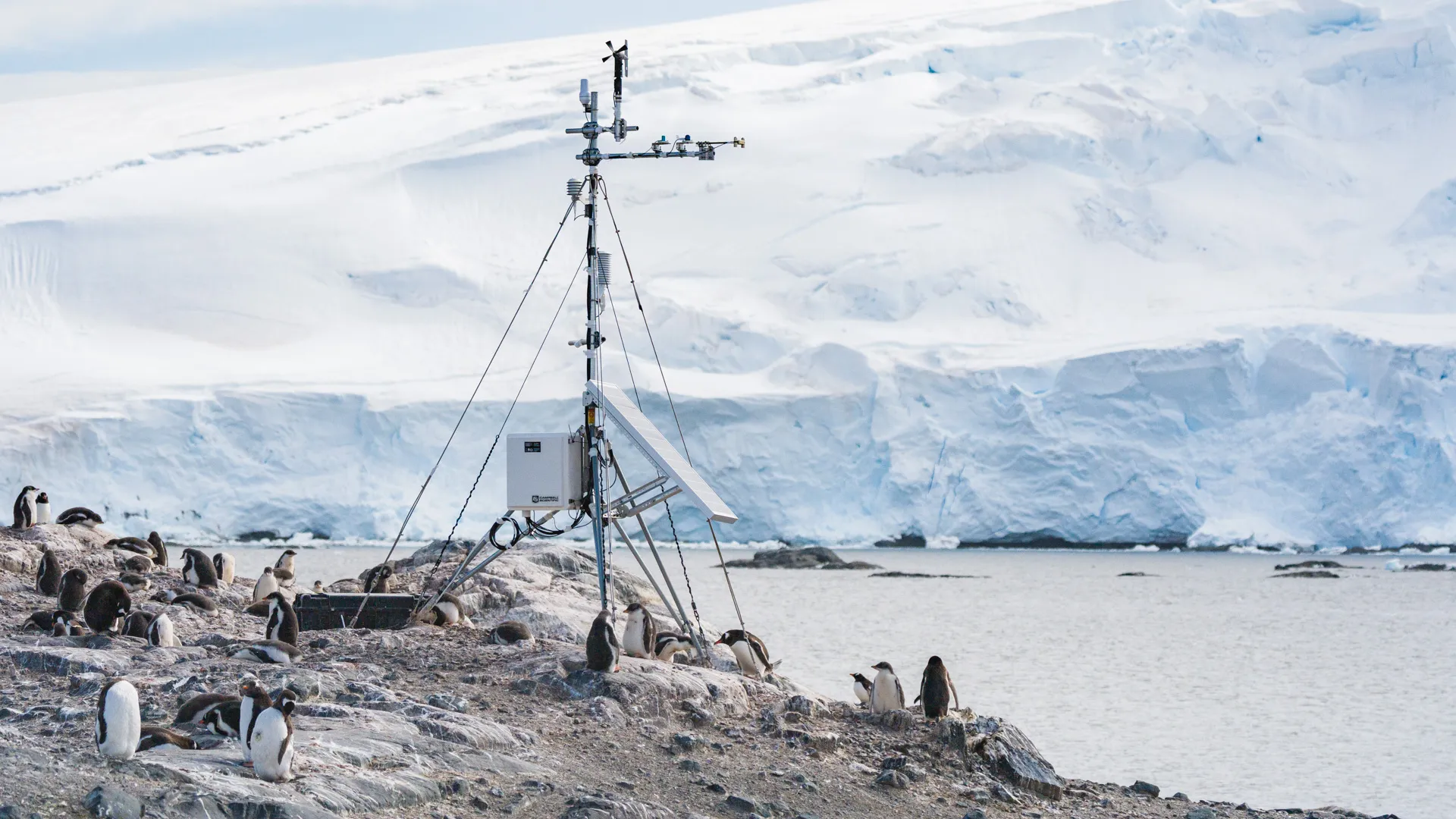
D’Haintaut had also human-made things. There was this sciency-looking tower. Penguins did care about it as much as they did about the whale bones. Or the red hut that was also there.
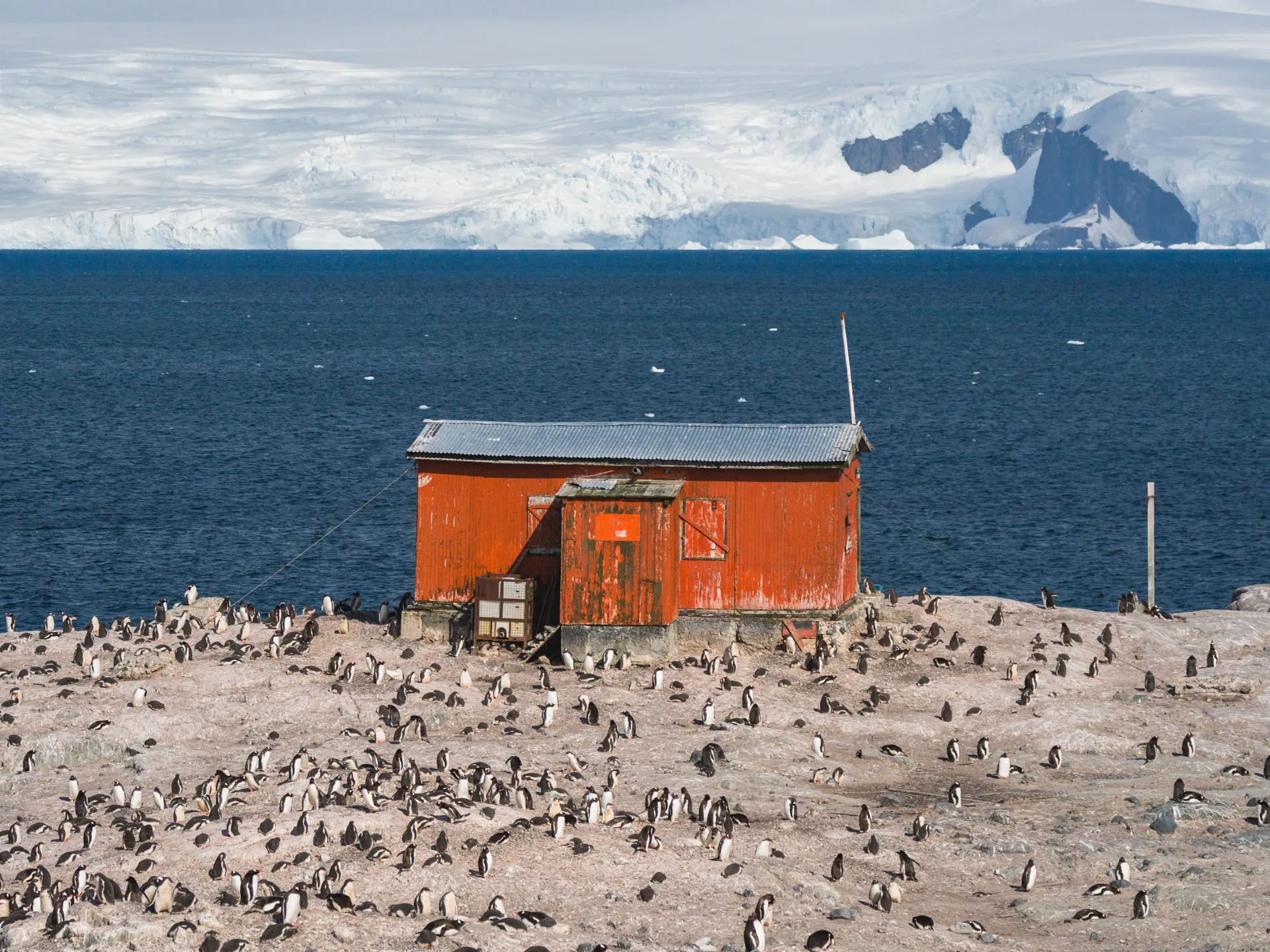
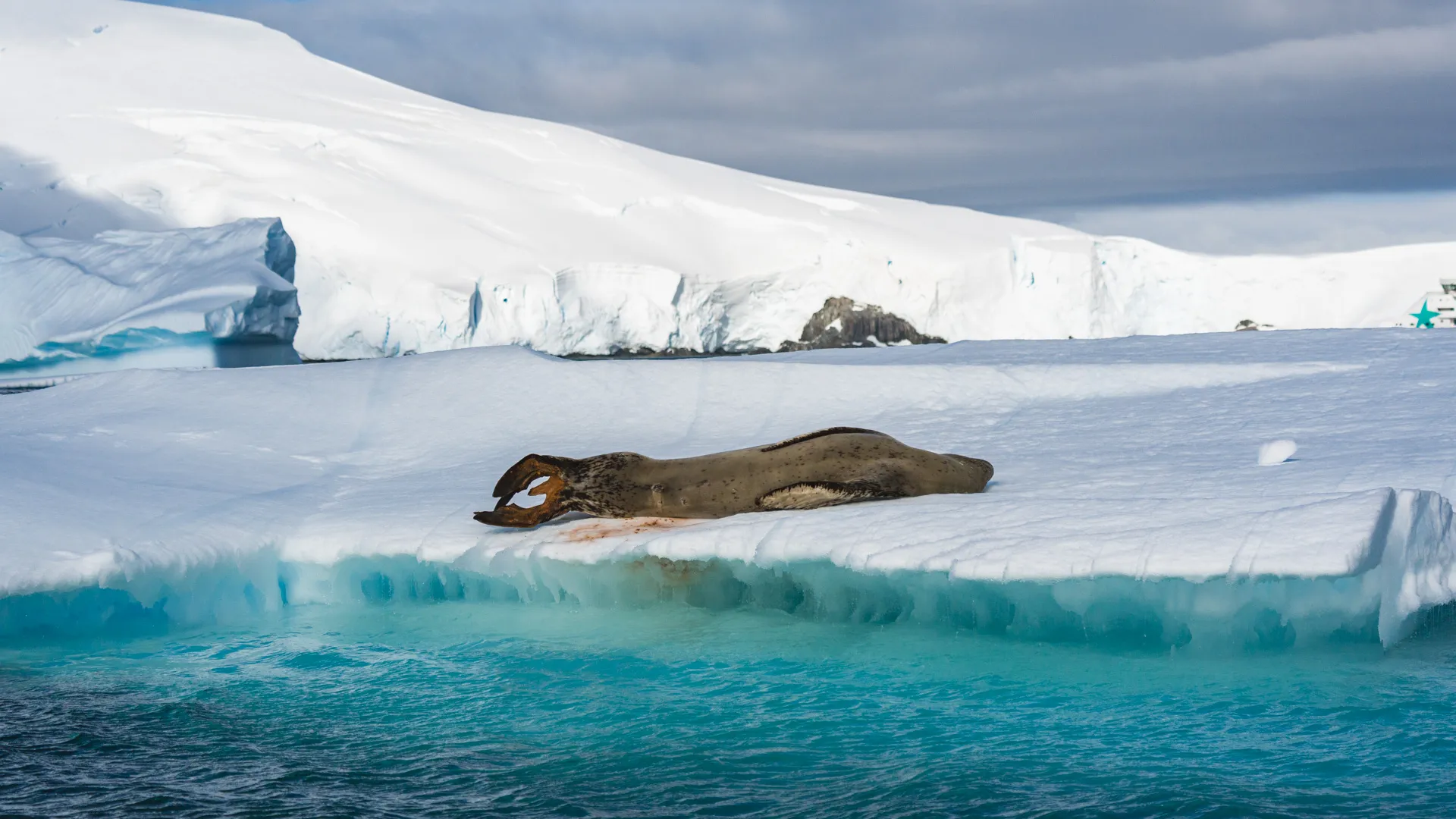
Before going back to the ship, we got a short zodiac detour to have a look at the hut from a different perspective (no good shots here) and also saw our first leopard seal and a weddell seal on a floe of ice.
The leopard seal greeted us with being full of shit (be glad you can’t smell that photo) and spread its hind flippers, but didn’t look at our zodiac. And we were fine moving onto some prettier blubber that wasn’t as stinky. Antarctica is not for the faint of nose indeed.
The second seal we saw was another weddell seal. This one did not have a scarred lip and had gorgeous face markings. I think they have the prettiest face of all the seals we saw.
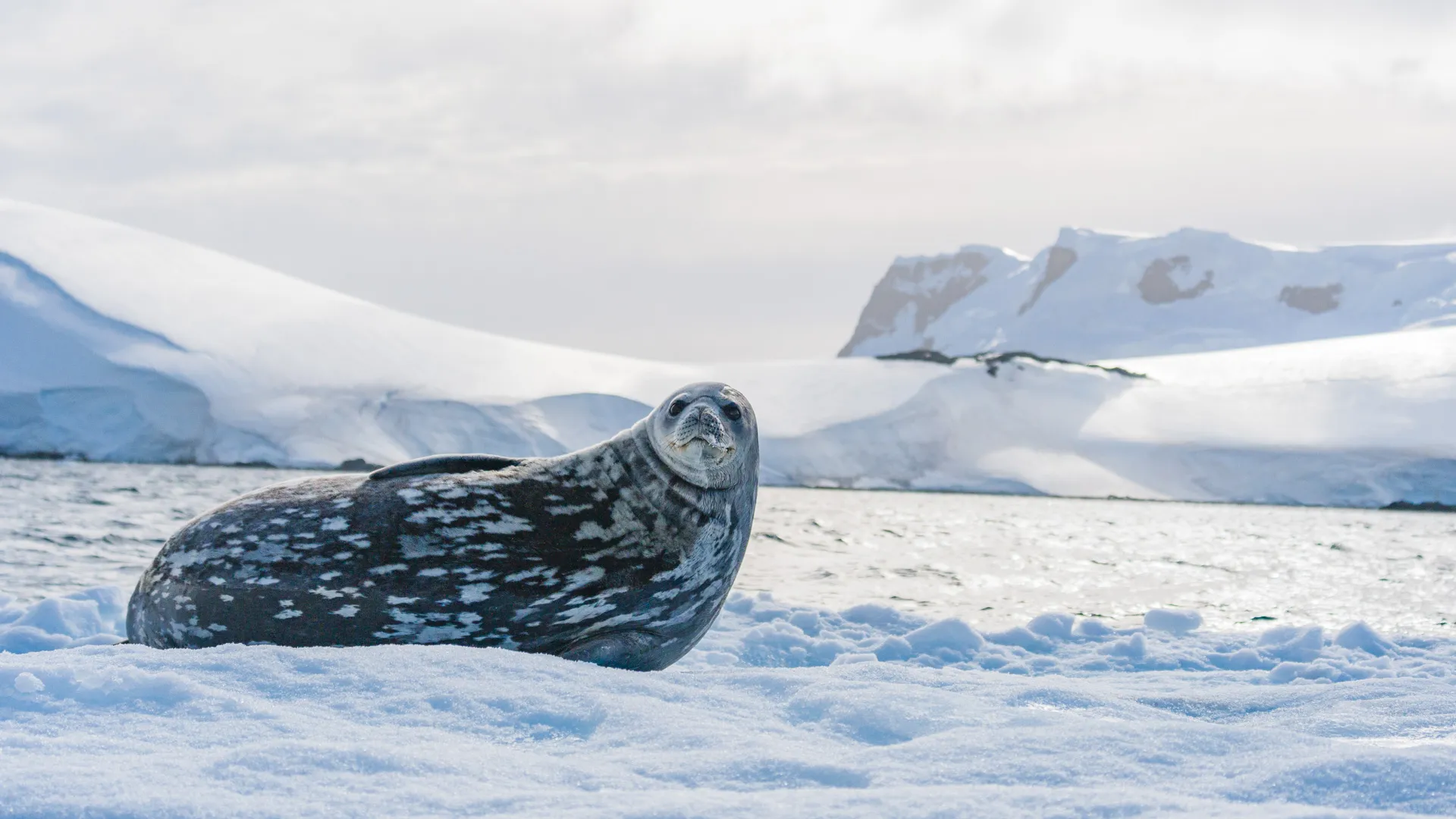
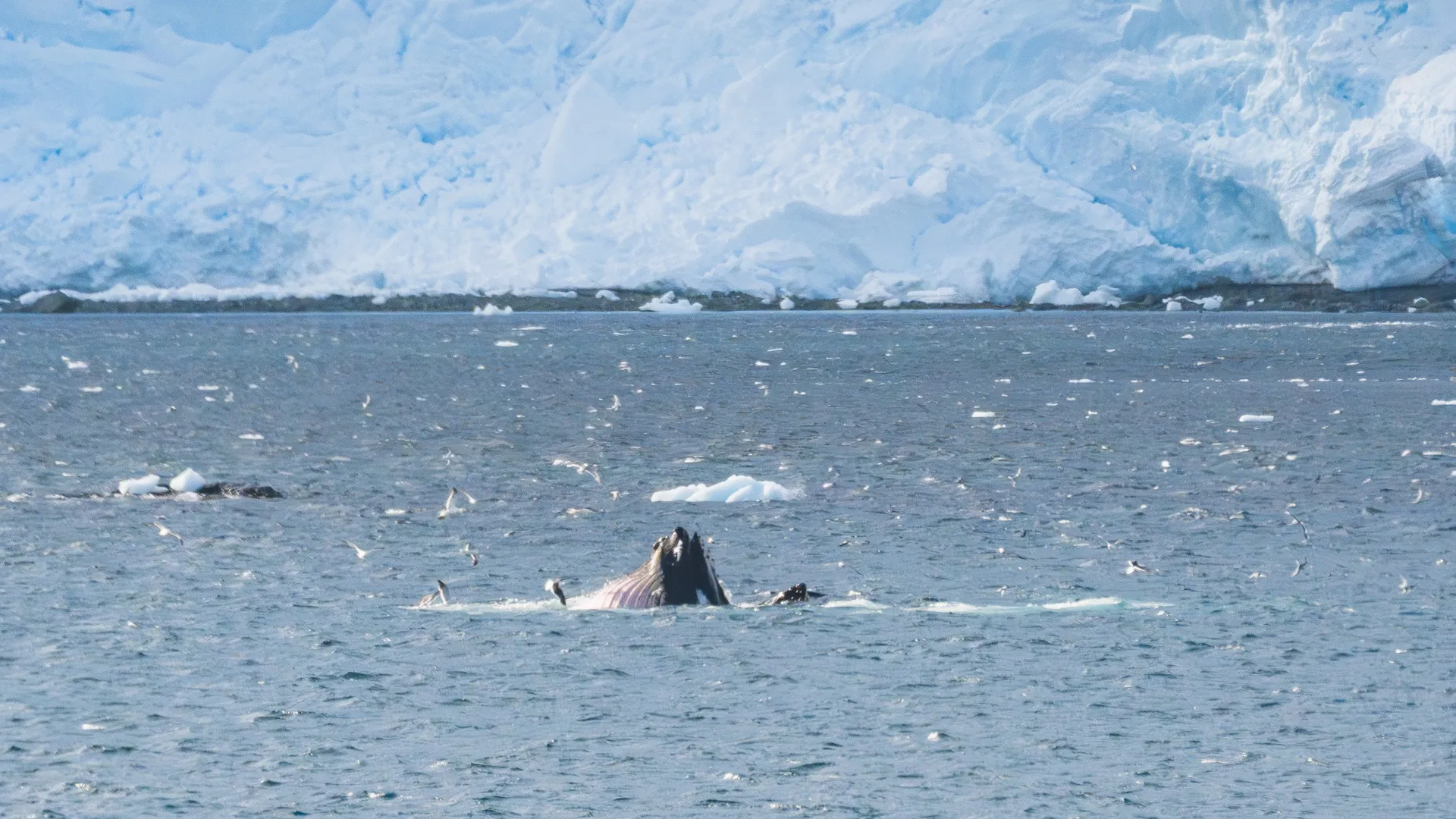
Shortly after getting back, I was uploading my photos to my laptop, and texting my family about the fact that I had seen my first whale that morning, when something outside my window caught my eye. It was whales!
Humpbacks were bubble feeding, with lots of birds around!
Unfortunately I was quite far away, so I did not get to see it up close—the last Zodiac coming back from the landing however definitely turned around when they caught the view and a few lucky people got to take some close-up shots. The envy was pretty big that night. No, we’re happy for y’all. Totally.
Evening Program
Evening ProgramAs the night before, we had our regular scheduled programming of briefing, presentation and photo contest. This time, we also had another Doctor’s visit. Dr. Pranav was back to tell us about health and safety concerns surrounding Antarctica’s wildest ritual: the Polar Plunge.
Even on a photography expedition, two things have to be on the itinerary for each Antarctica trip. A continental landing and the Polar Plunge. The Polar Plunge is a tradition where you jump into the freezing Antarctic waters, which can be as cold as -2°C.
Dr. Pranav’s presentation was all about the health risks of the Polar Plunge, which include hypothermia, cold shock response, and even cardiac arrest. (Yup, there was “Death” written on the Risk list on his slide) Absolutely want to do it afterwards, right?
We didn’t know when the Polar Plunge was going to happen, but dinner was definitely filled with conversations about it. I had been very on the fence about doing it, and I was very much leaning towards not doing it. But there was also the small voice in the back of my head that a couple seconds of freezing water couldn’t be that bad, right?
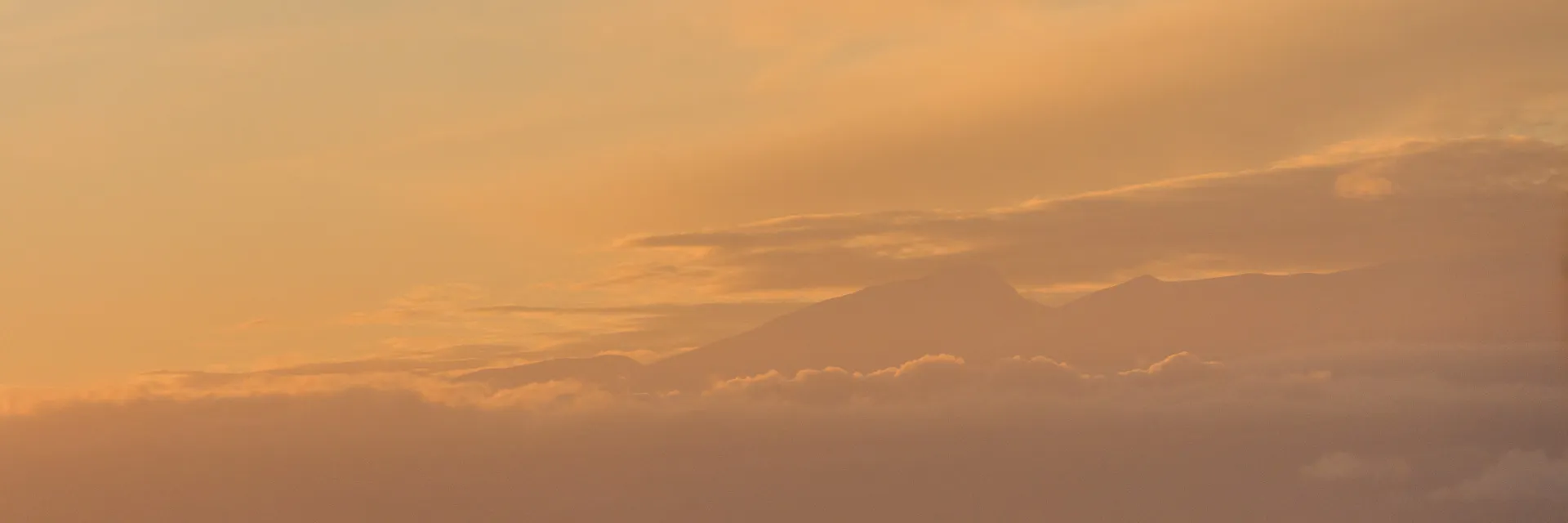
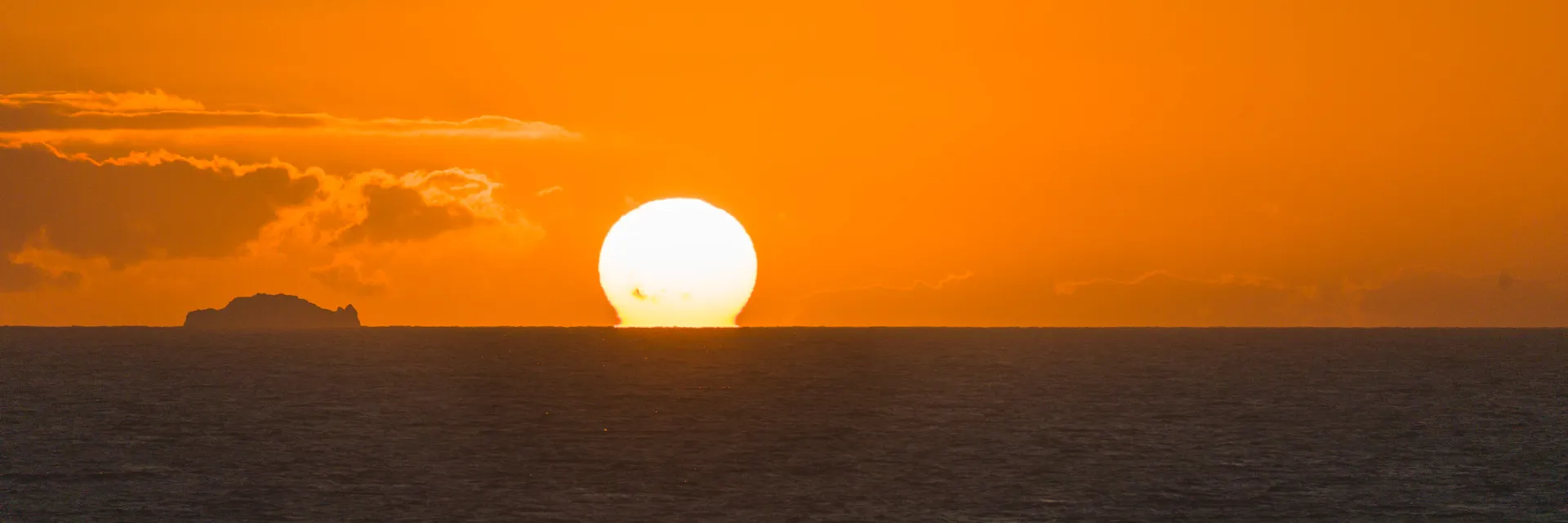
Luckily, I didn’t get to ponder too long about it, as there was a gorgeous sunset to be admired and then a shitton of photos to be backed up and sighted.
Day 3: Feb 5 2026
Day 3: Feb 5 2026Morning Cruise - Foyn Harbour & Guvernøren Wreck
Morning Cruise - Foyn Harbour & Guvernøren Wreck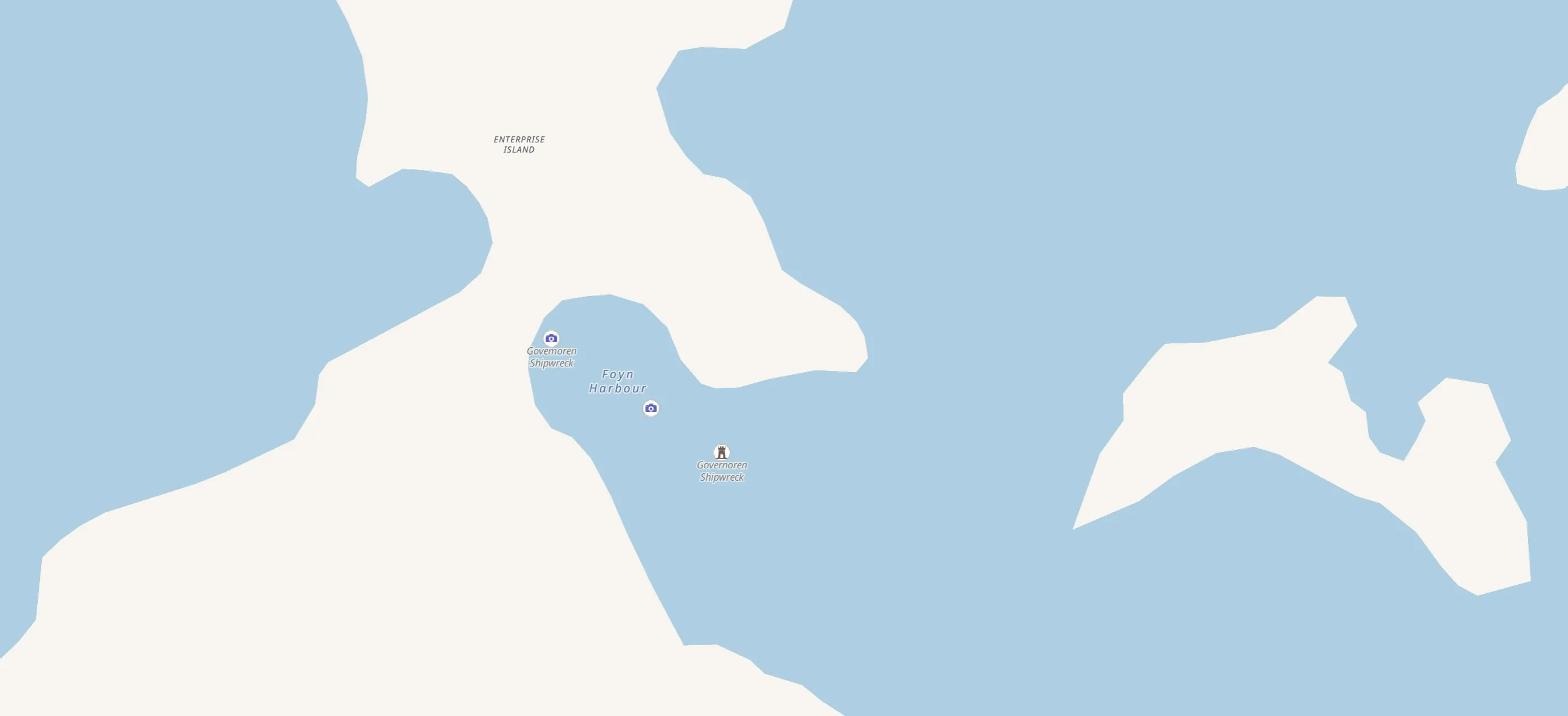
Our morning program was a zodiac cruise in Foyn Harbour, which offered up a witness to Antarctica’s dark past and current annoyances.
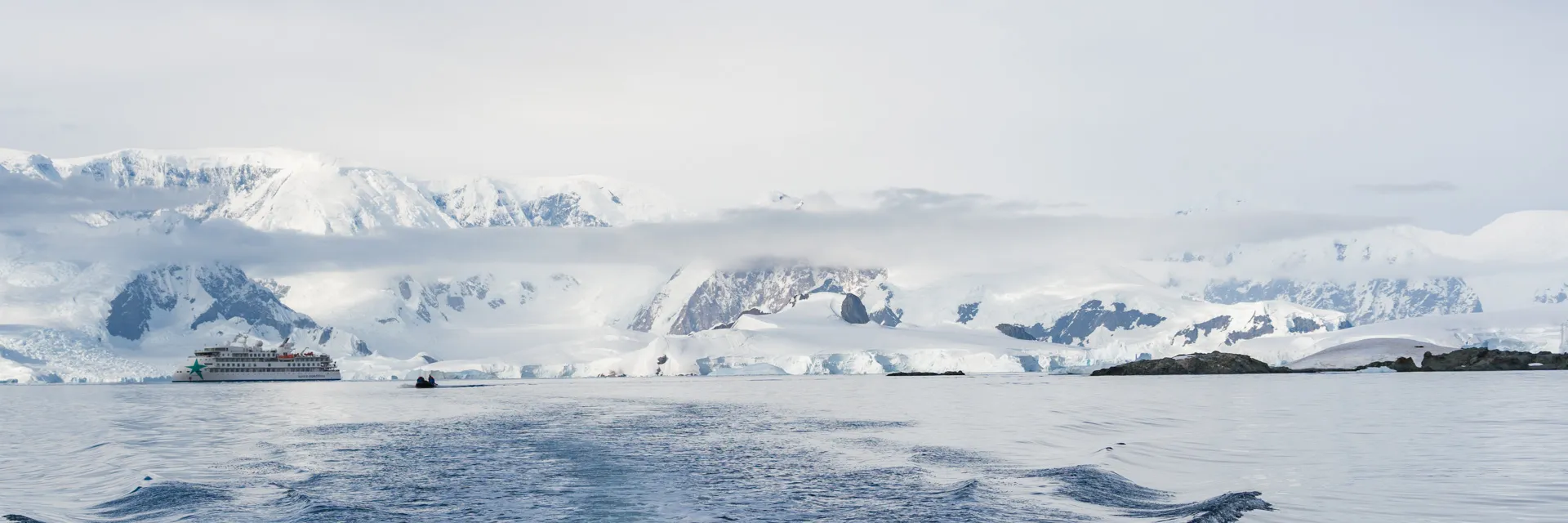
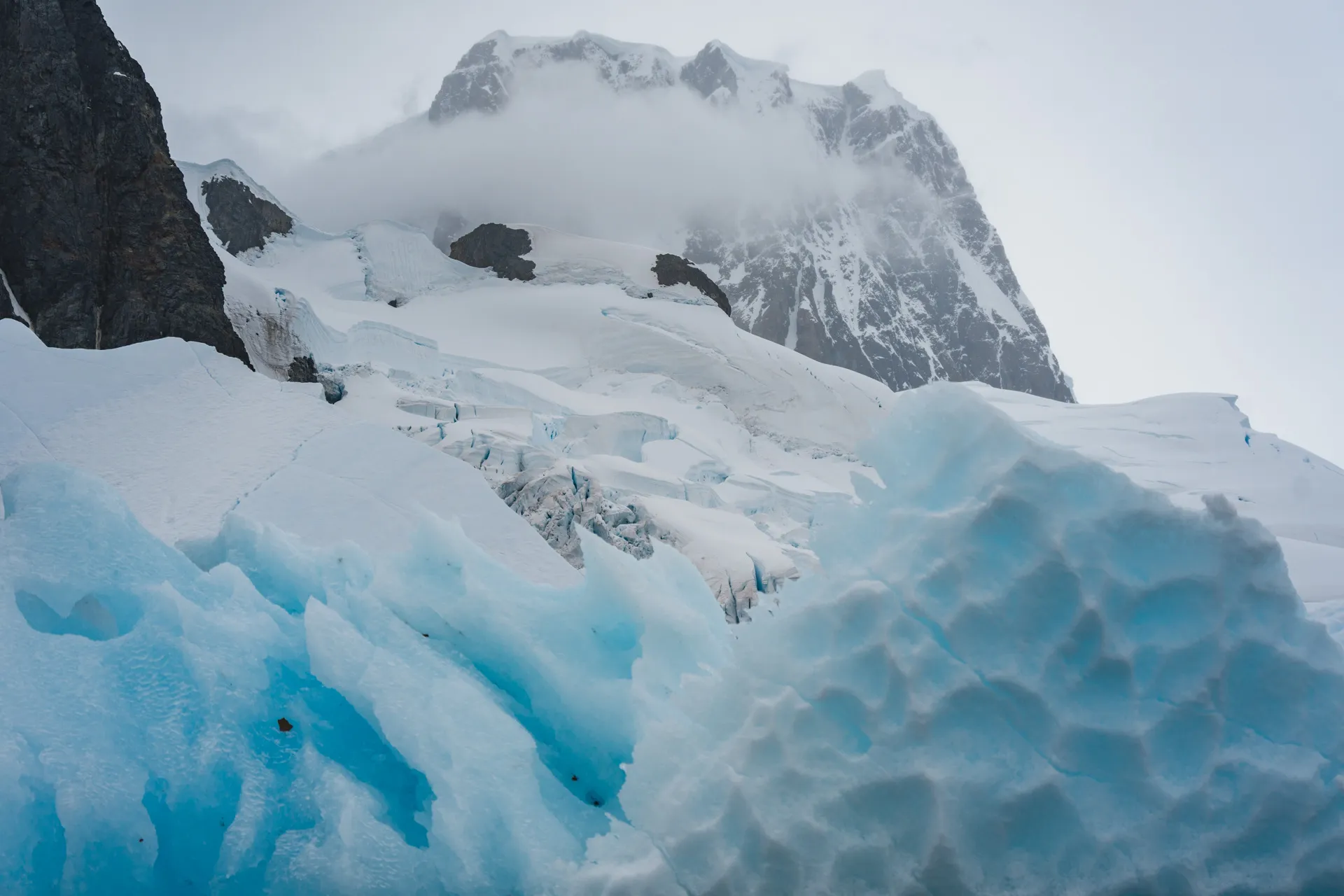
We knew we’d see a shipwreck, but before that, we were surrounded by glaciers and mountains and waters covered in brash ice. It was a little foggy and the light was beautiful. Foyn Harbour was one of those mornings where I knew there was absolutely no way i would be able to capture the overwhelming beauty of it with my camera. I attempted a few times to capture it, but failed. Instead, I opted to just feel the moment, this place. There are photos, but know—they don’t come nowhere close to how insanely gorgeous this place was. In those early morning hours it was just—magical.
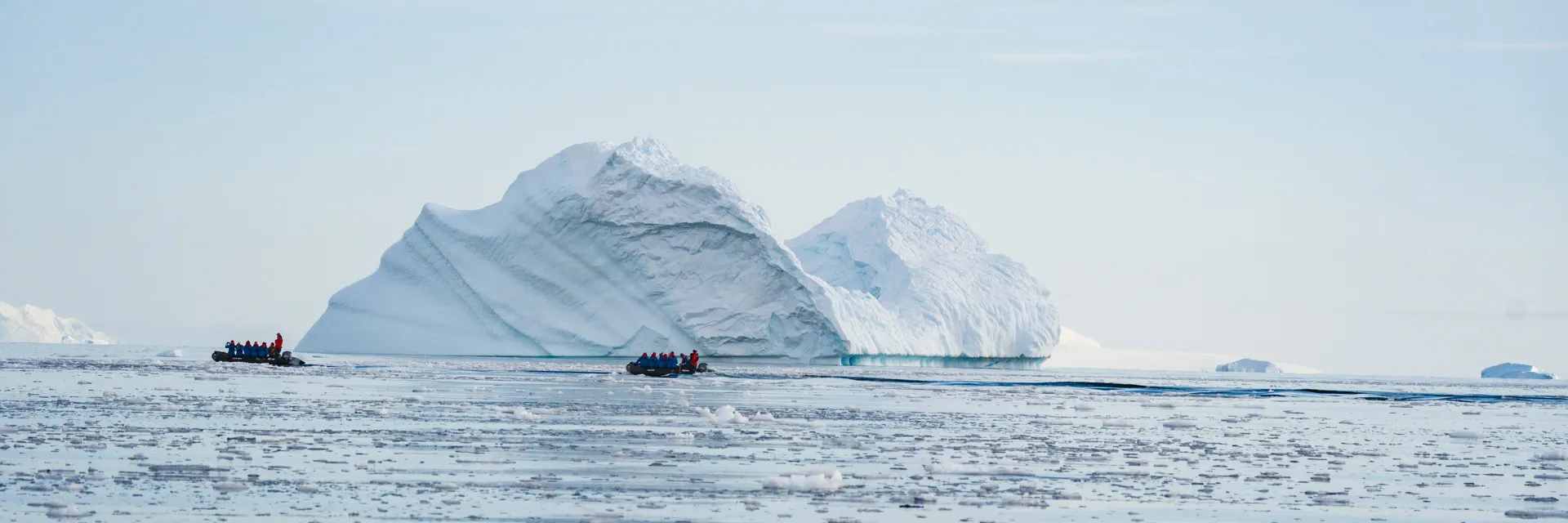
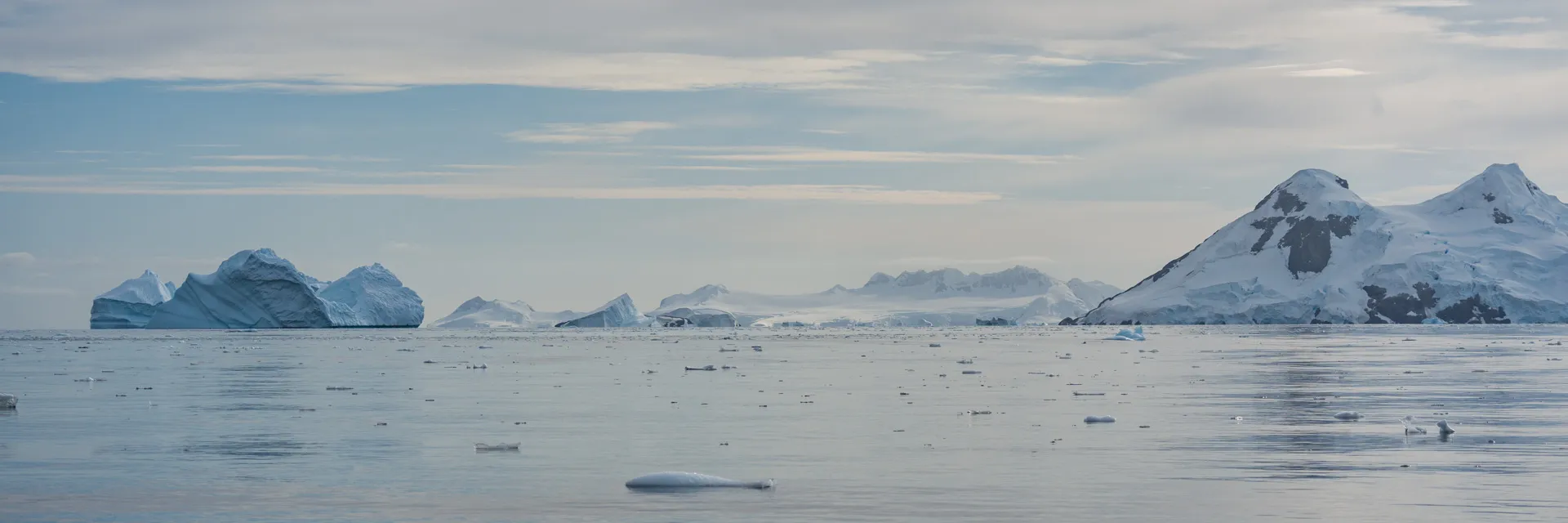
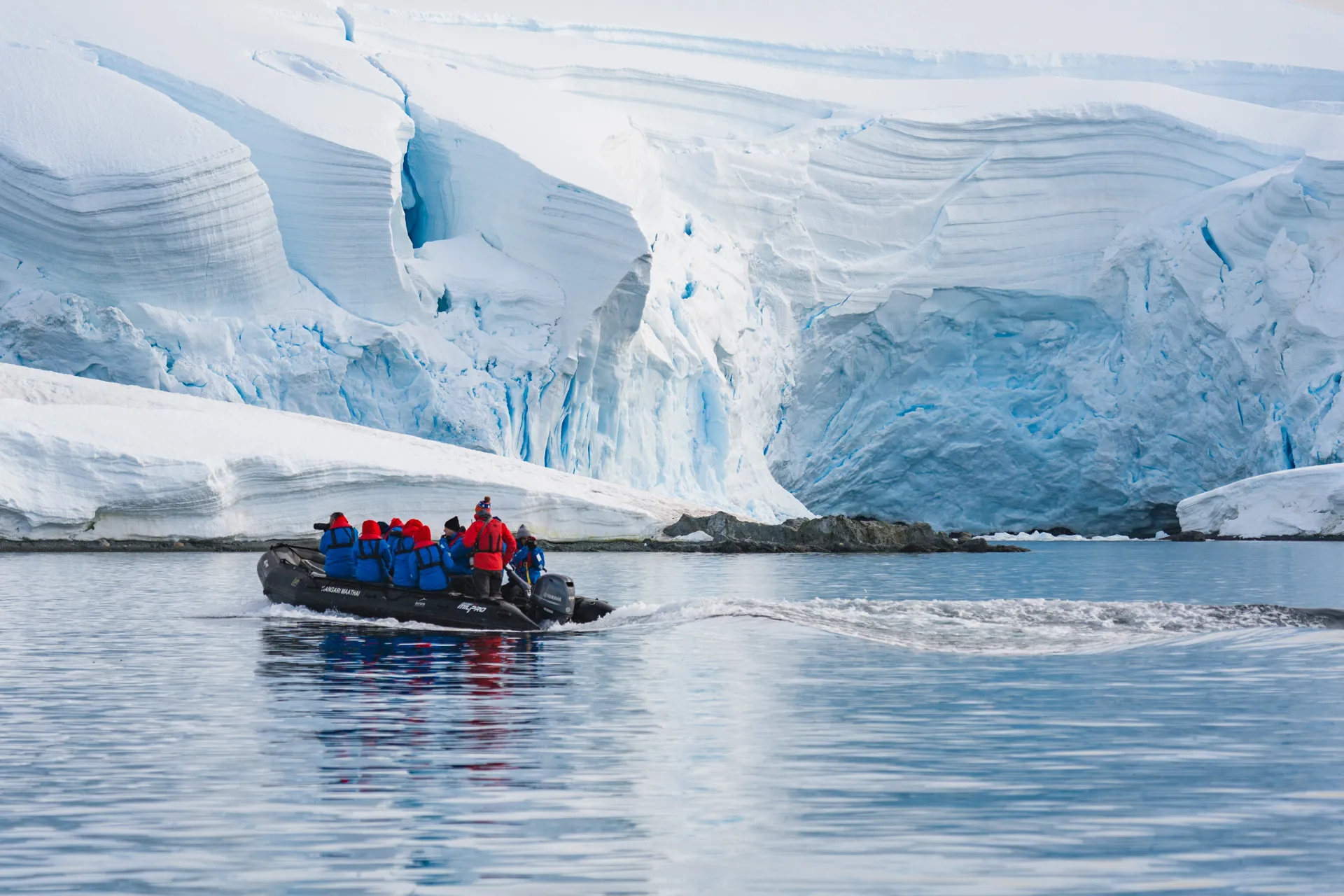
We saw a whale, which seemed to be asleep, penguins and a couple seals and then came close to Guvernøren. A Norwegian shipwreck that has been sunk in the water for over 100 years.
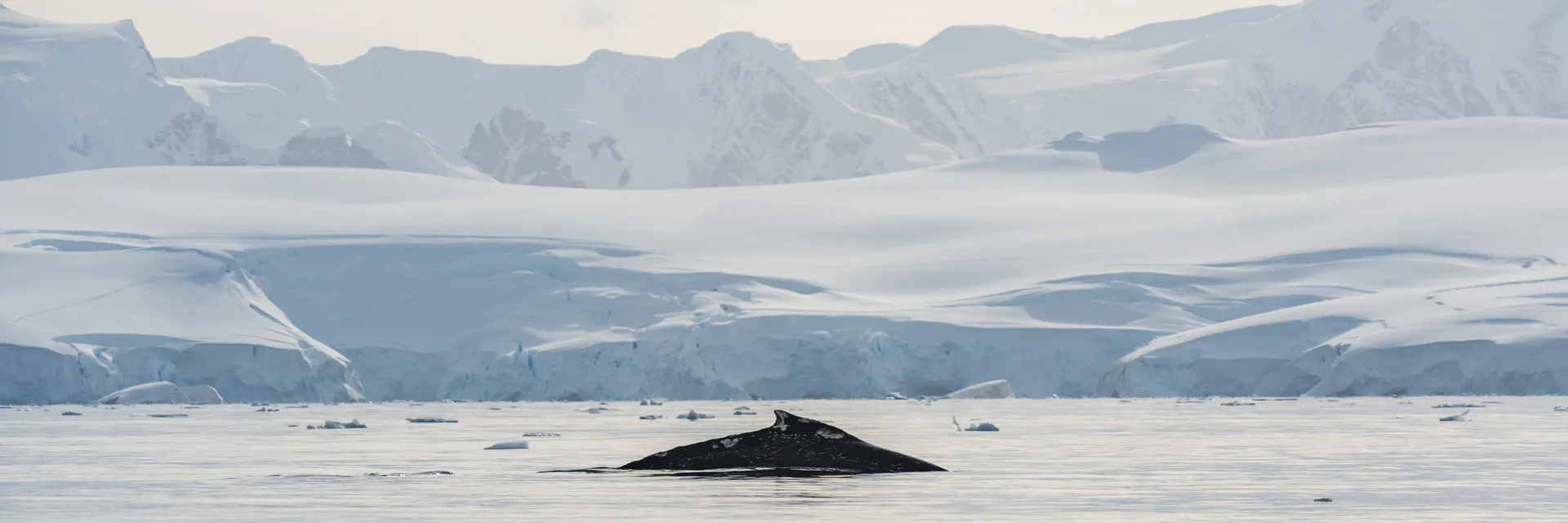
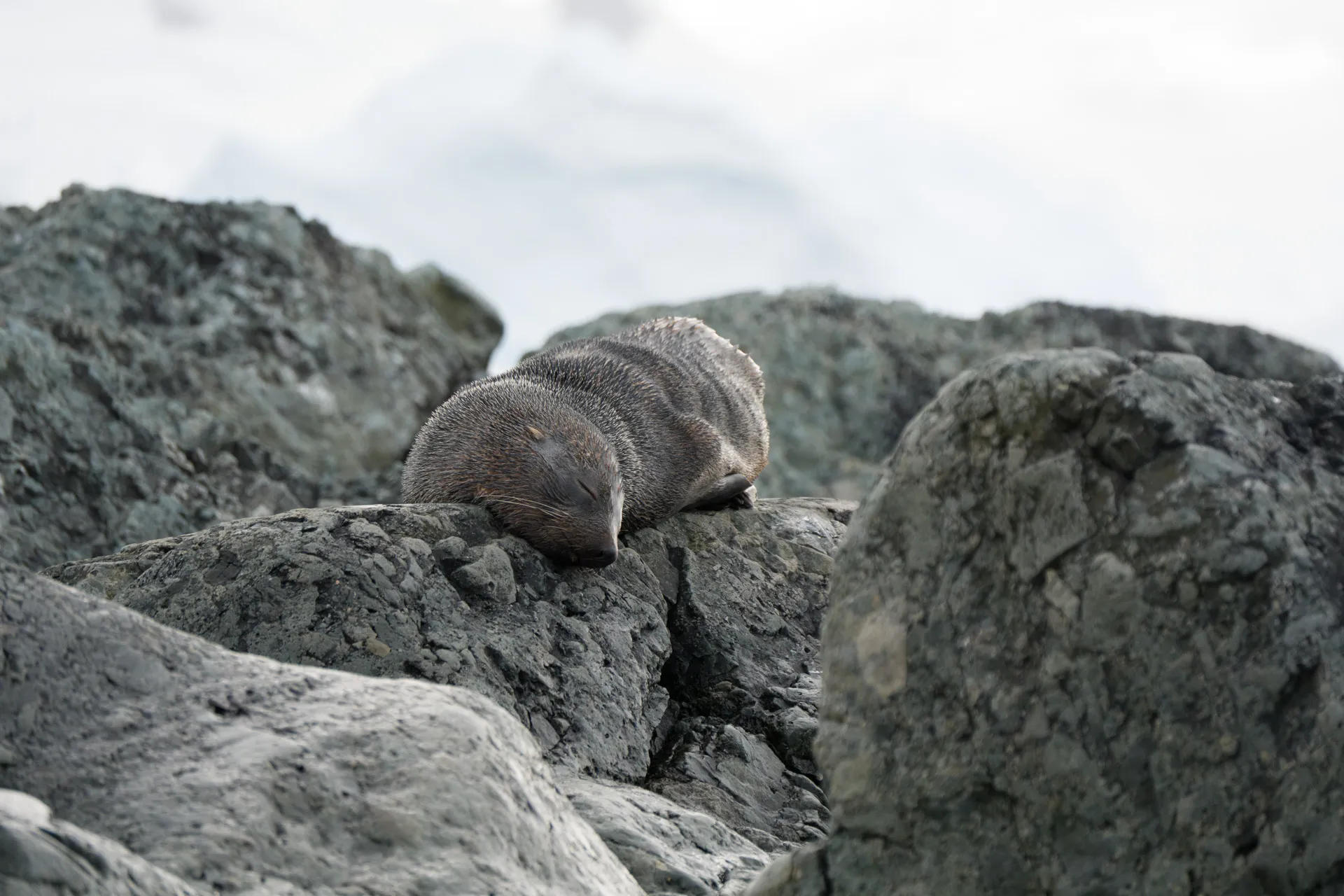
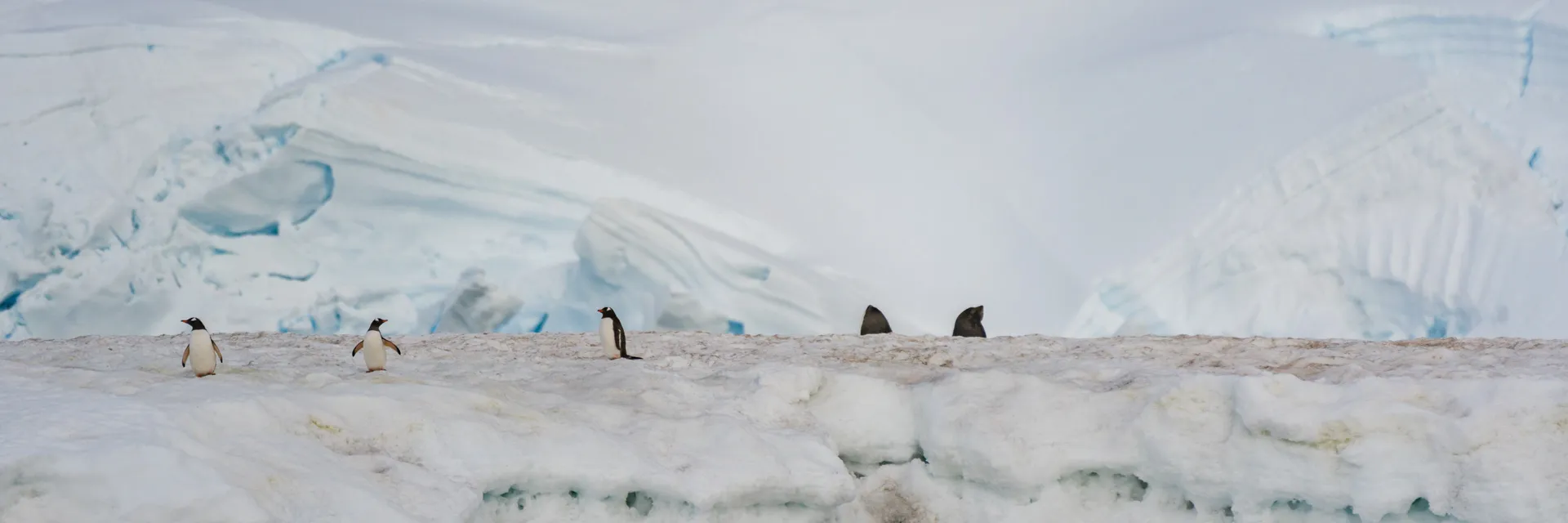
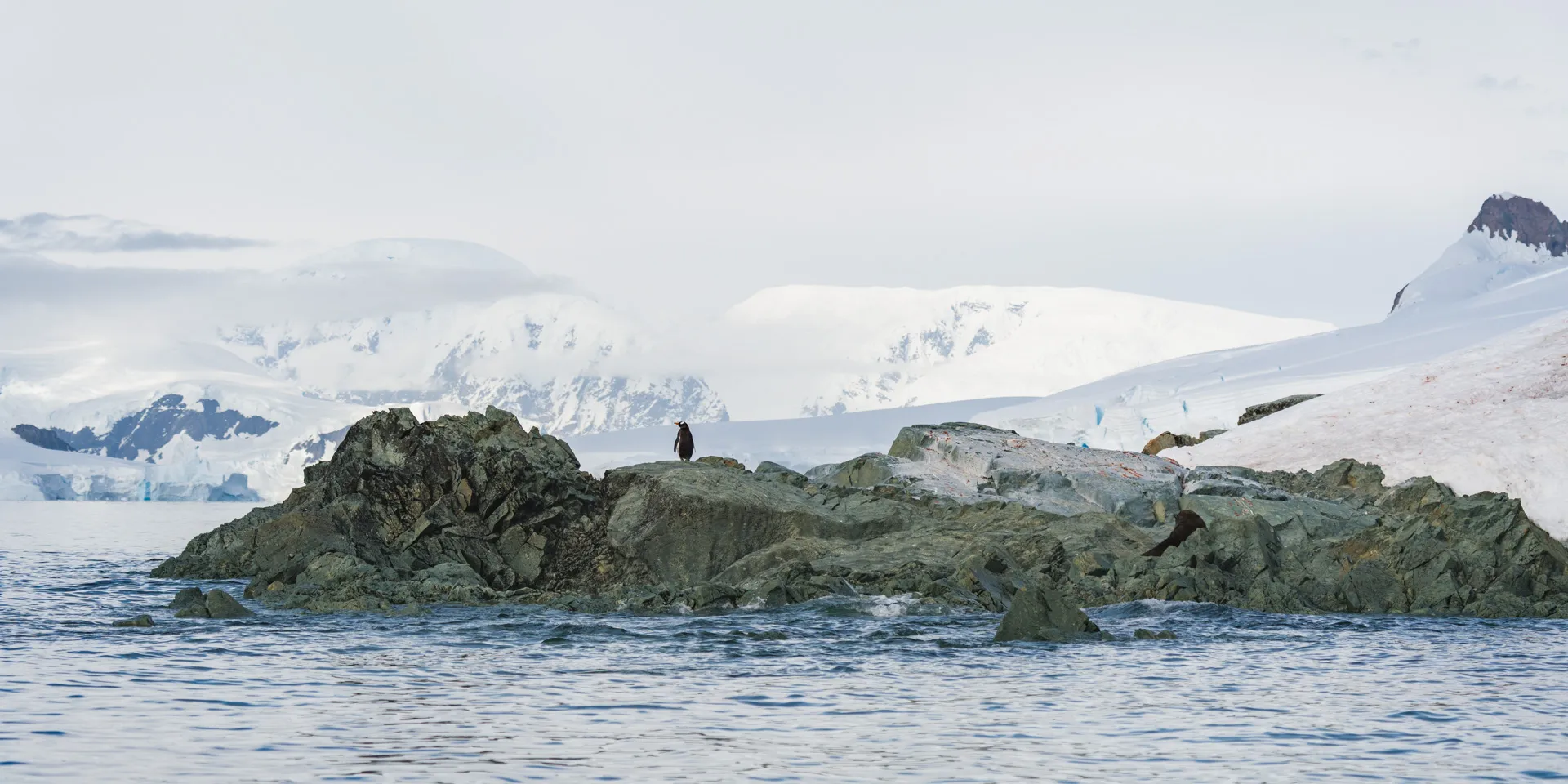
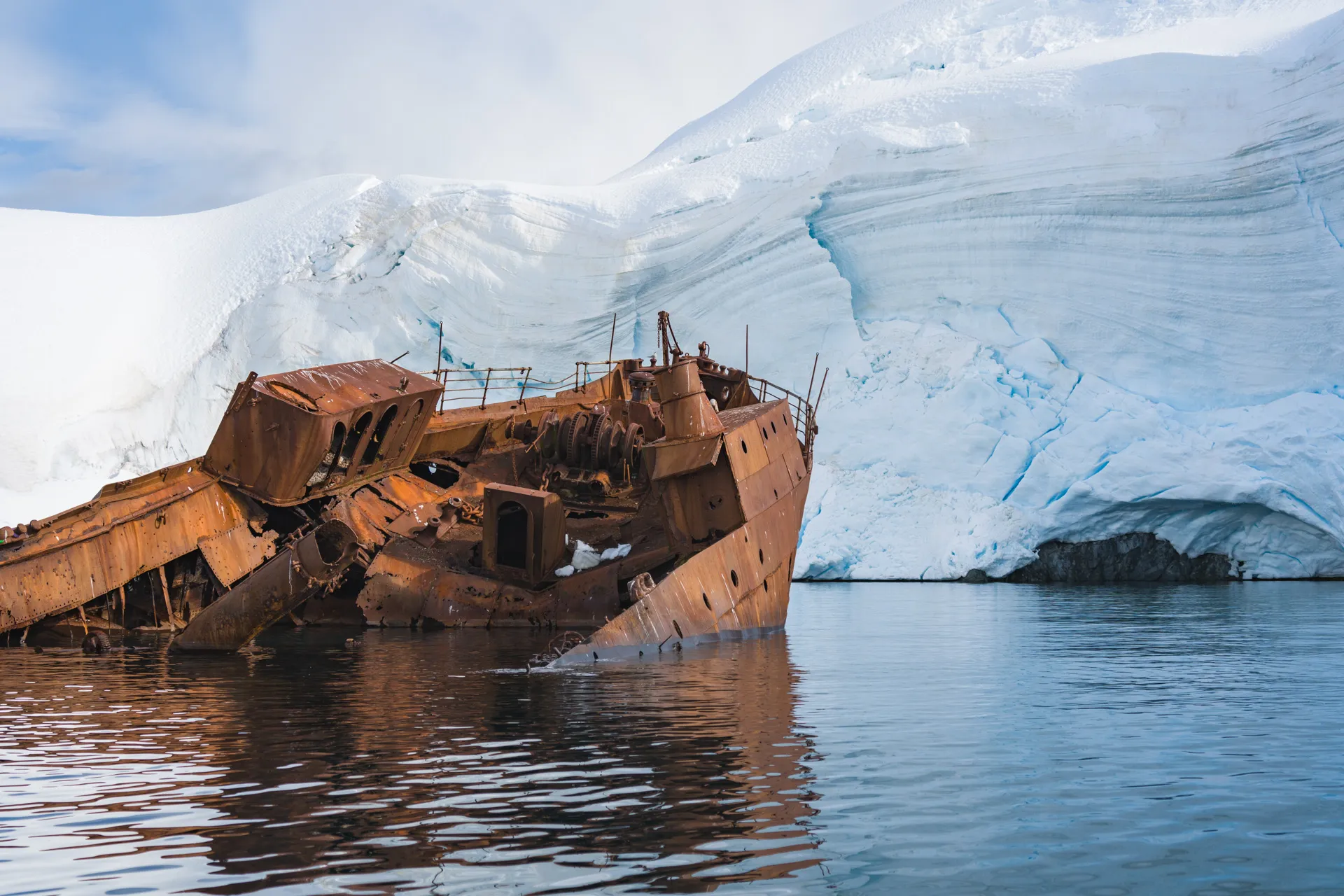
Annoyingly, the wreck was not alone. We had seen a few visitors disrespecting the rules at Half-Moon and this morning there was a ship that had attached itself to the wreck. It ruined the shots, but it was also a reminder why there are rules.
Since this isn’t a landing, there are no rules that regulate how to operate around the ship. But tying your ship to a historical artefact? Why? Just anchor somewhere else.
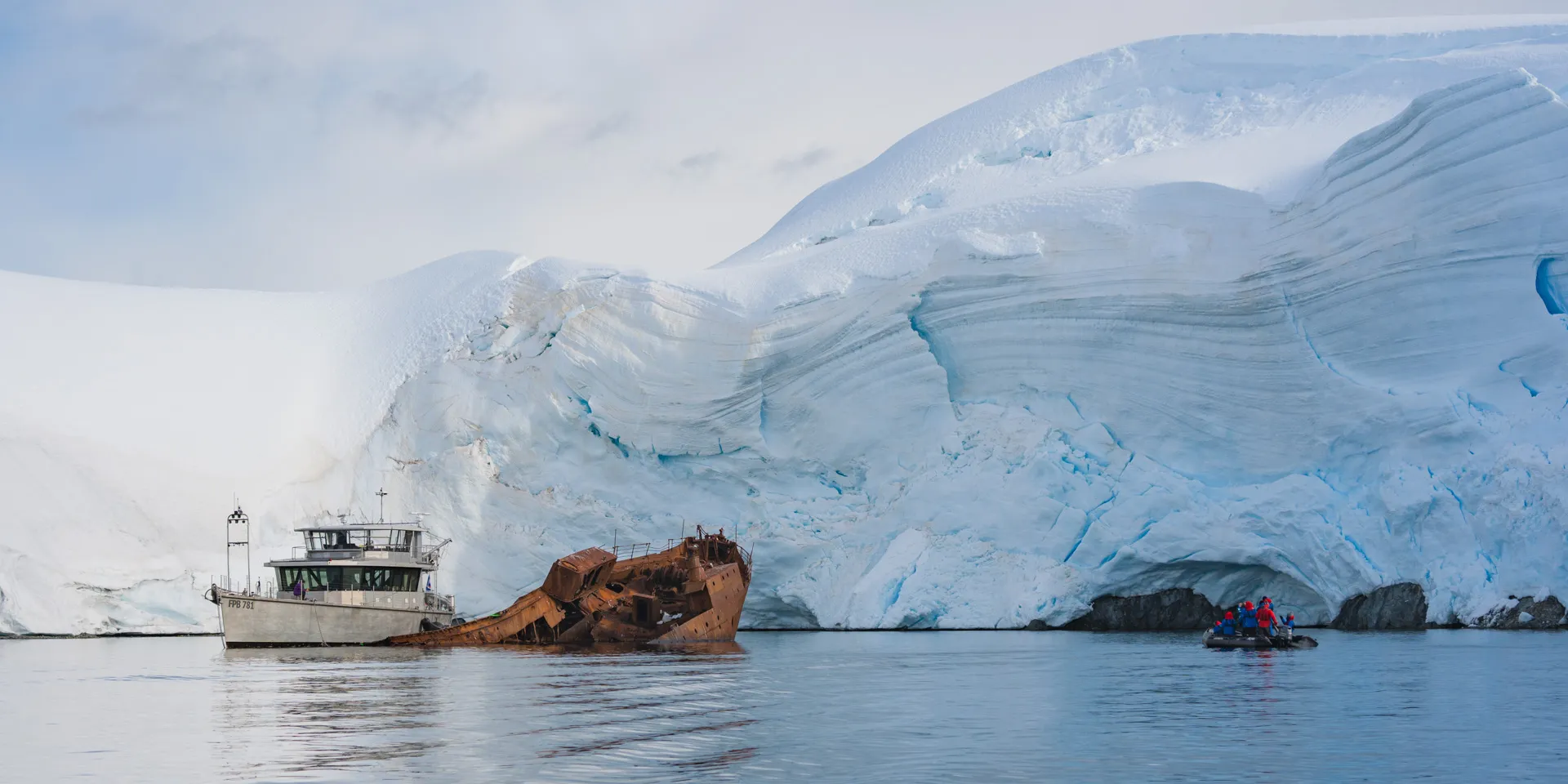
The wreck is of an old whaling ship. There was a big industry and Foyn Harbour used to be lined in factory ships that produced whale oil. So when a lamp fell over the entire ship ignited and sunk. I don’t remember if it was that night or the previous but we saw an old video of the whaling industry during one of the ET presentations. I’m very glad we moved on from that. It was a terrible watch, albeit interesting.
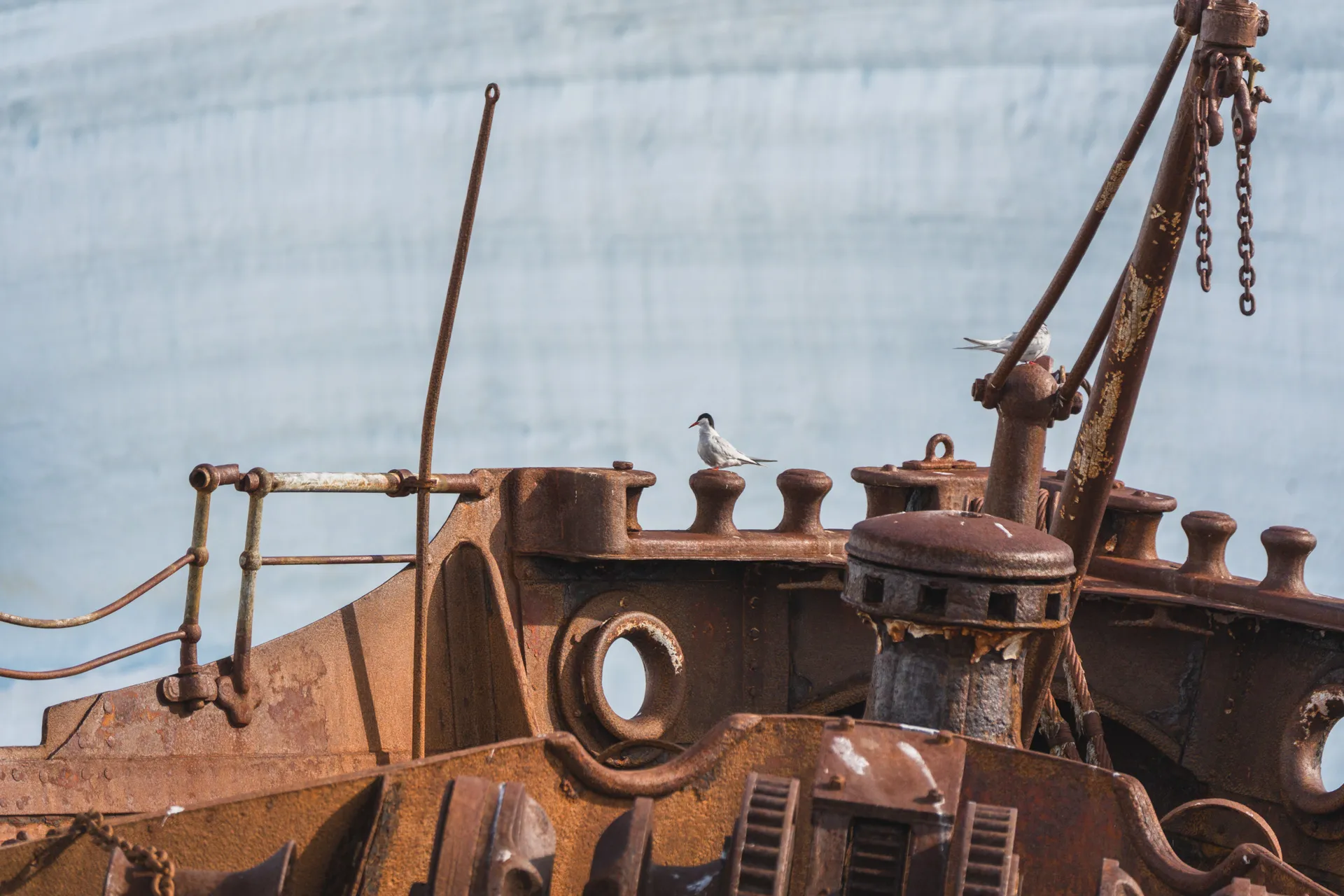
Though, really. My biggest excitement around the wreck was seeing the Antarctic terns that were nesting on it.
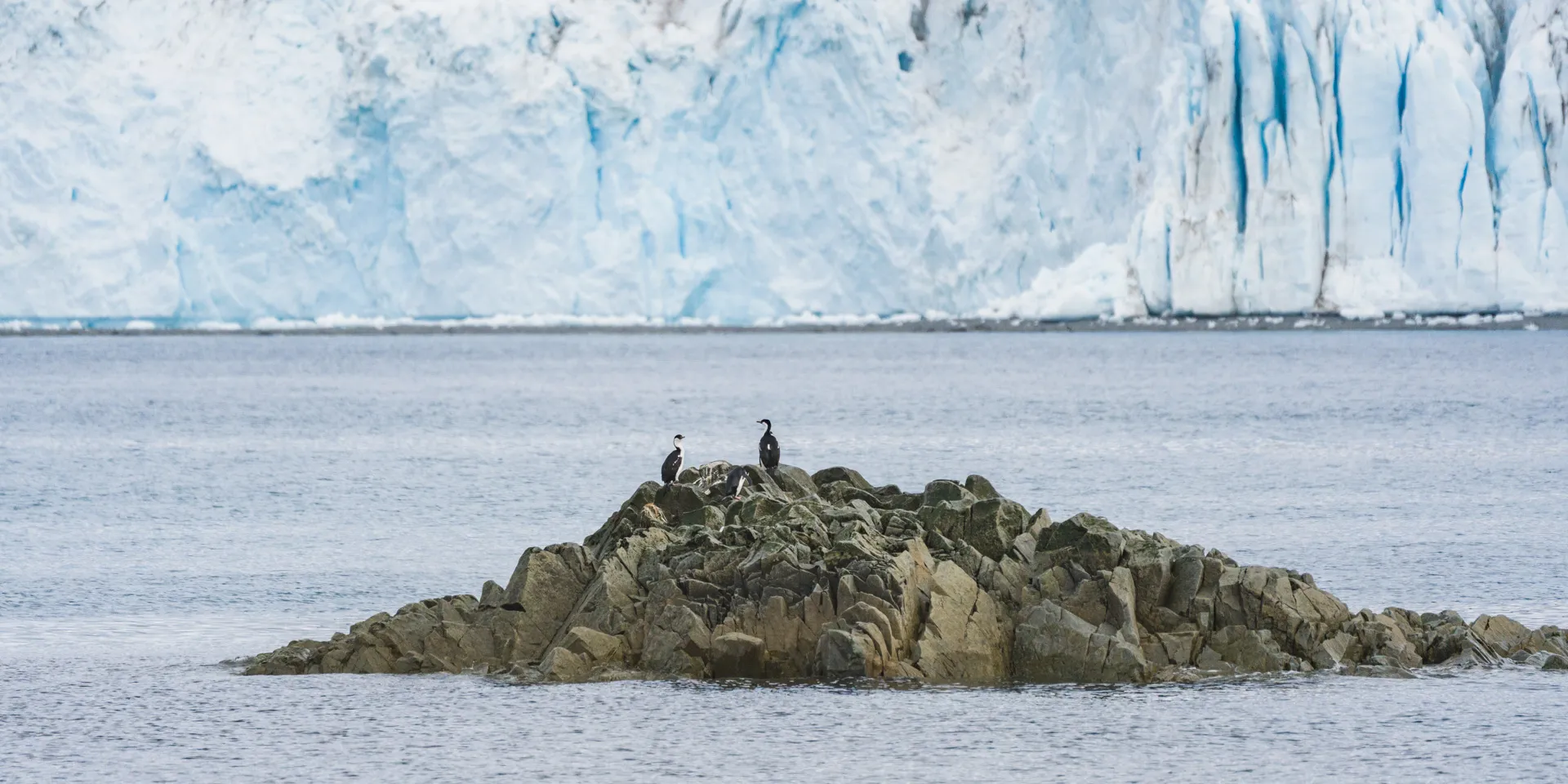
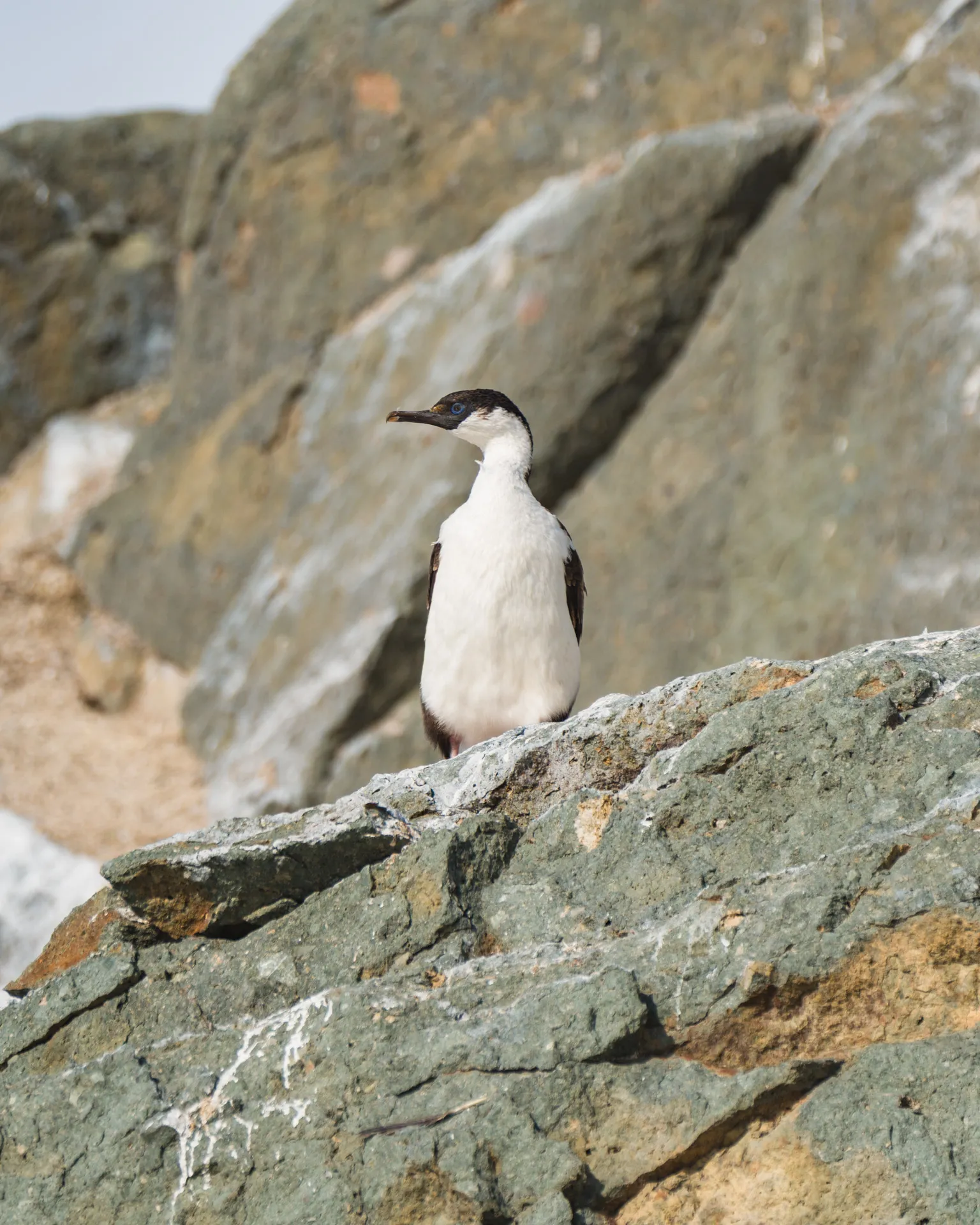
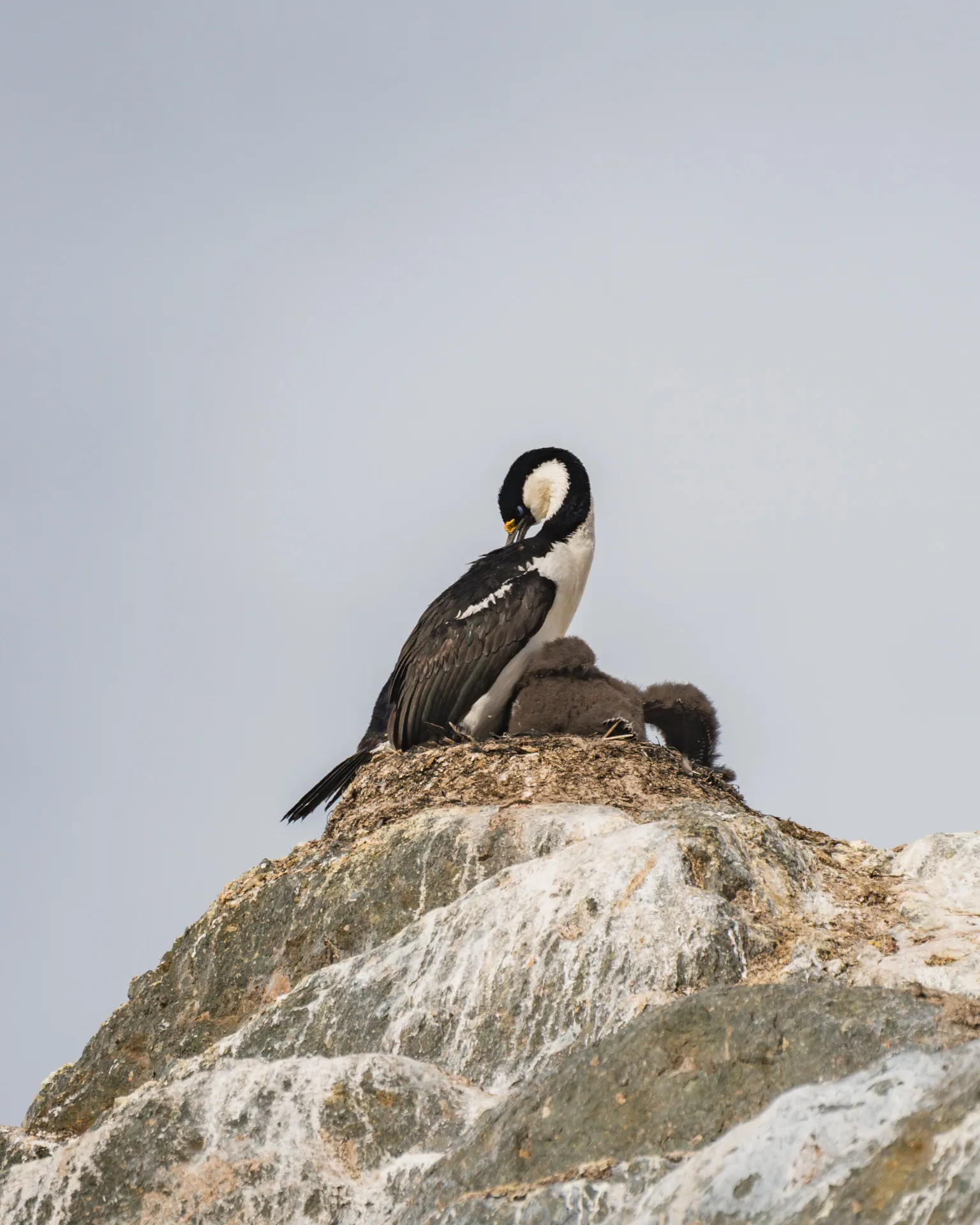
We also saw a lot of Shags or Imperial Cormorants. The highlight was seeing that there was a nest in one spot, and the chicks popped out.
Polar Plunge Time
Polar Plunge TimeSince our zodiac cruise was very early it wasn’t that late, when we came back on the ship. I was uploading my photos to my laptop and pondering plans until lunch, when suddenly Alesha’s voice came through the loudspeaker. Polar Plunge Time! If you wanted to participate, it was time to get a bathing suit on and head to the mud room.
I have no idea how long I was pacing in my room, pondering if I should face my respect of wide open water (the cold wasn’t my main issue) and go through the Antarctic Rite of Passage or just watch.
Last call for the polar plunge to everyone that wants to participate.
Head to the Mud Room now.
And I went. Dressed in a bathing suit, and the ship provided robe I went to the same room I usually walked in wearing at least 3 layers of wool clothes and waterproofing.
It felt like absolute madness, but at least it was a party of lunatics. The room was filled with white robes and bare legs and music and new friends and we were all hyping each other up.
Out of the 98 passengers 41 decided to jump.
The worst part for me wasn’t jumping into the -1°C water. It was standing on the zodiac lined in wet towels. Standing on the rubber ledge I definitely had a split second of panic, but then I just went for it.
Did I pose for the photographer? No. My polar plunge photos are terrible (and not a thing I’ll put on the internet). But I did it and there is proof, and it was fun!
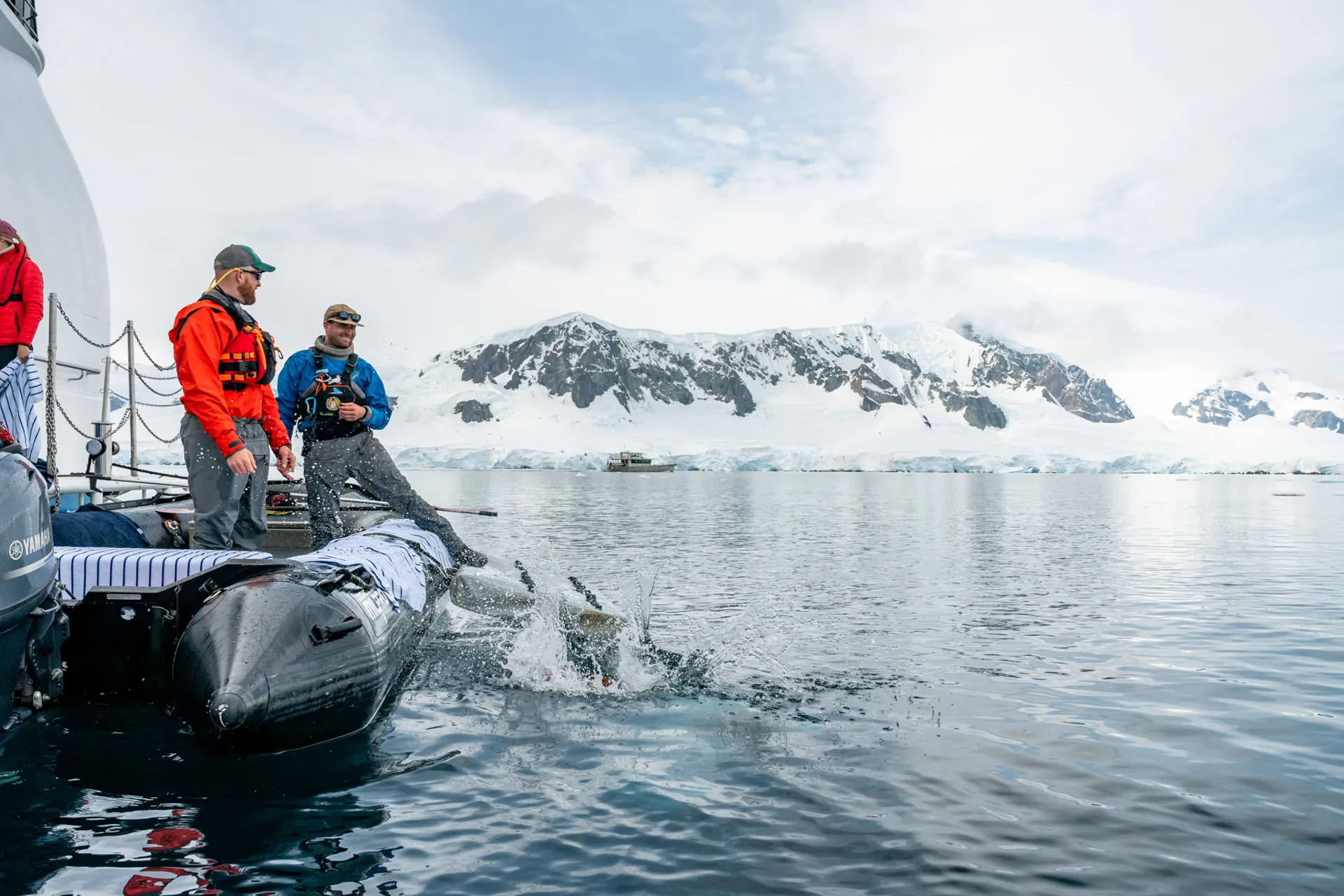
Last bit of my jump, note red dot in the middle of splash belonging to the faux redhead writing this. The photographers will usually make sure you get a nice scenig background. © by Jarryd Salem, one of the two ET photographers.
If you do the polar plunge, you usually also get an official certificate sent your way.
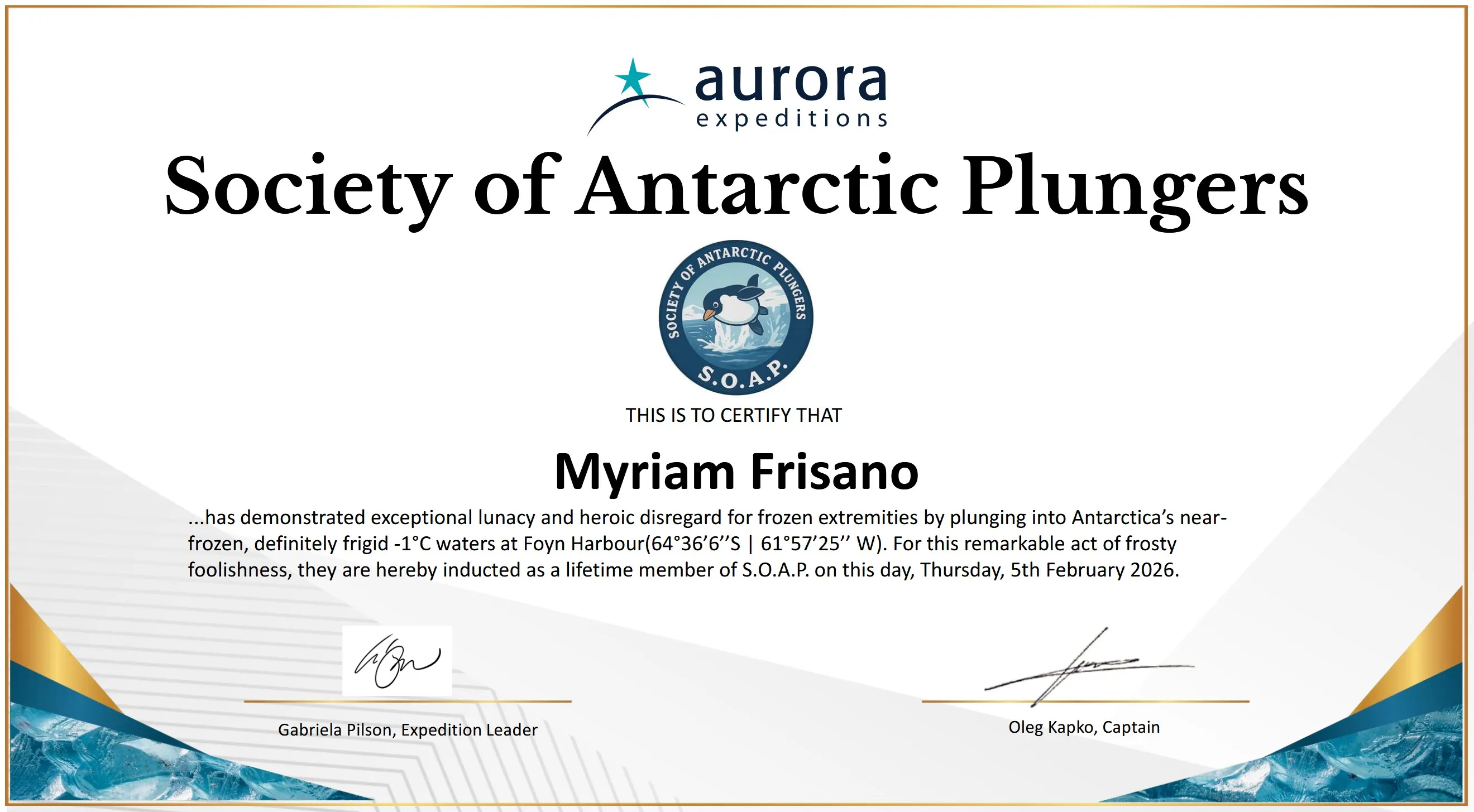
Once you’ve gotten out of the freezing foray, you get wrapped in a towel and offered a shot of Vodka and then off you go to your favorite source of warmth. We got into the hot tub and I felt like I had an entire day already by the time lunch rolled around.
Paradise Bay and Neko Harbour
Paradise Bay and Neko Harbour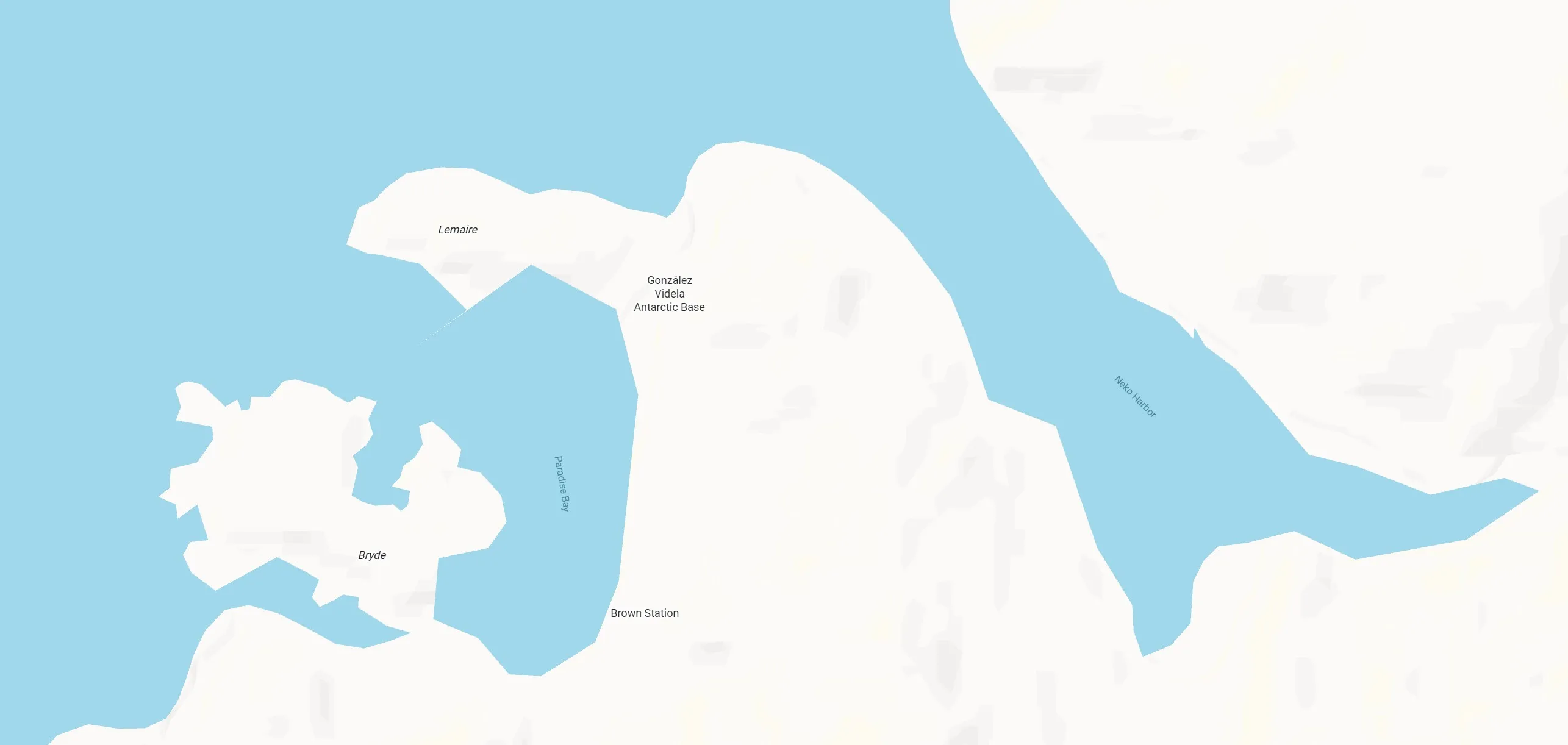
But this day didn’t stop. It took a couple hours of cruising but then we entered a moody Paradise Bay, which is where the Argentinian Brown Research Station is located. We had a zodiac cruise around the Bay. We weren’t allowed to go too close to the station and this time round I was in a zodiac filled with landscape photographers, so not a lot of wildlife opportunities were pursued. Still got to see some lovely shags and big ice bergs and glaciers.
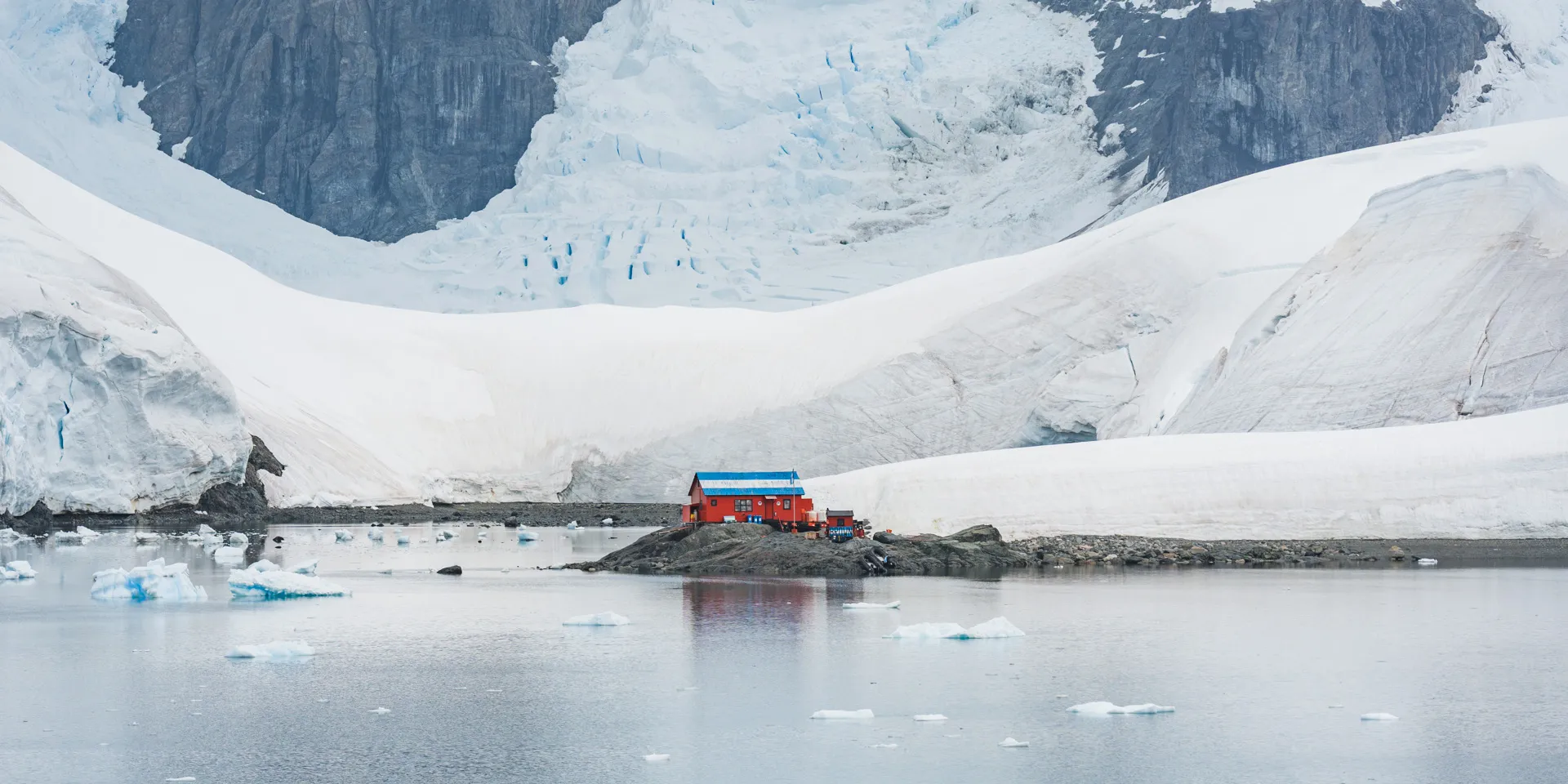
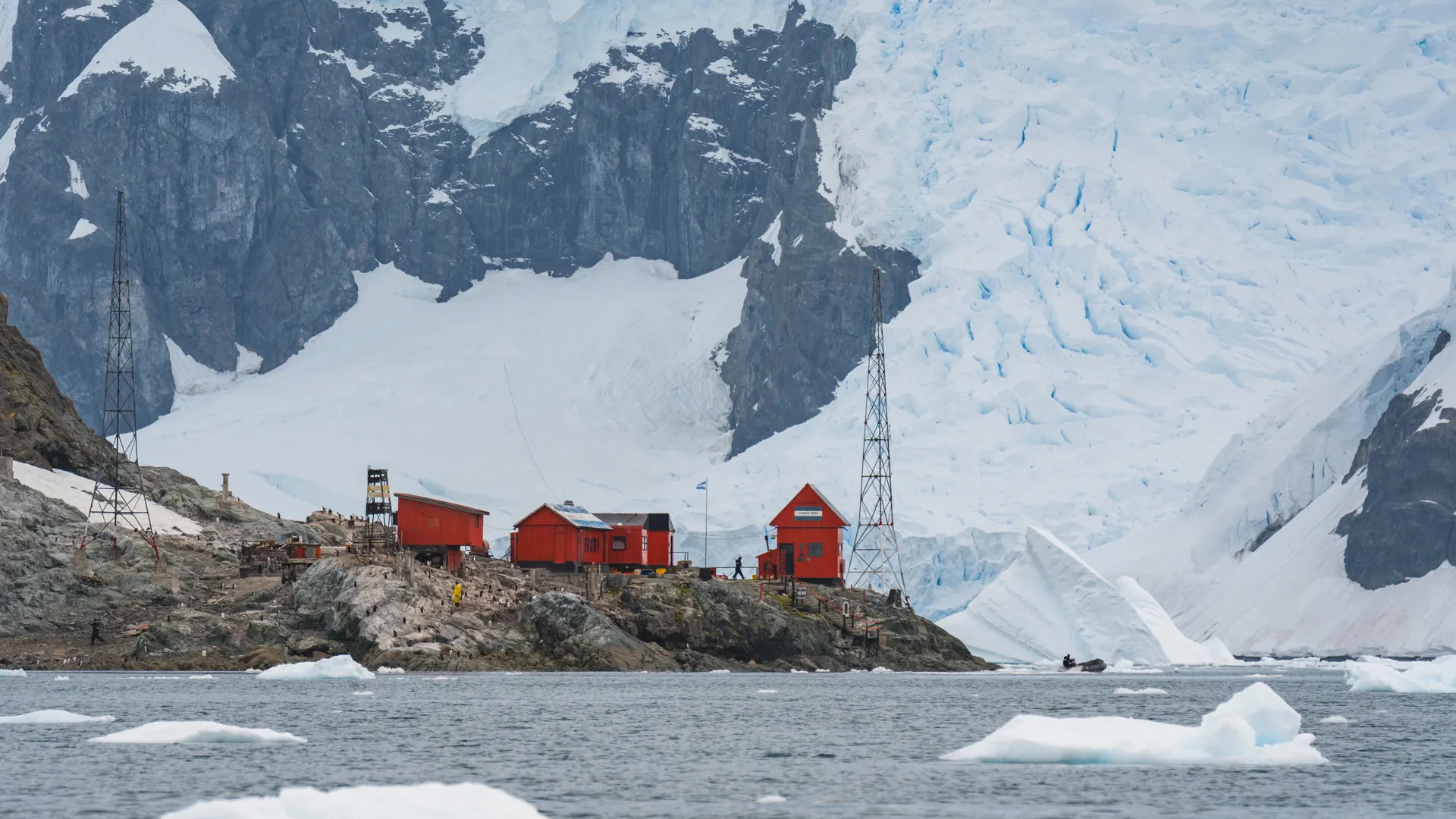
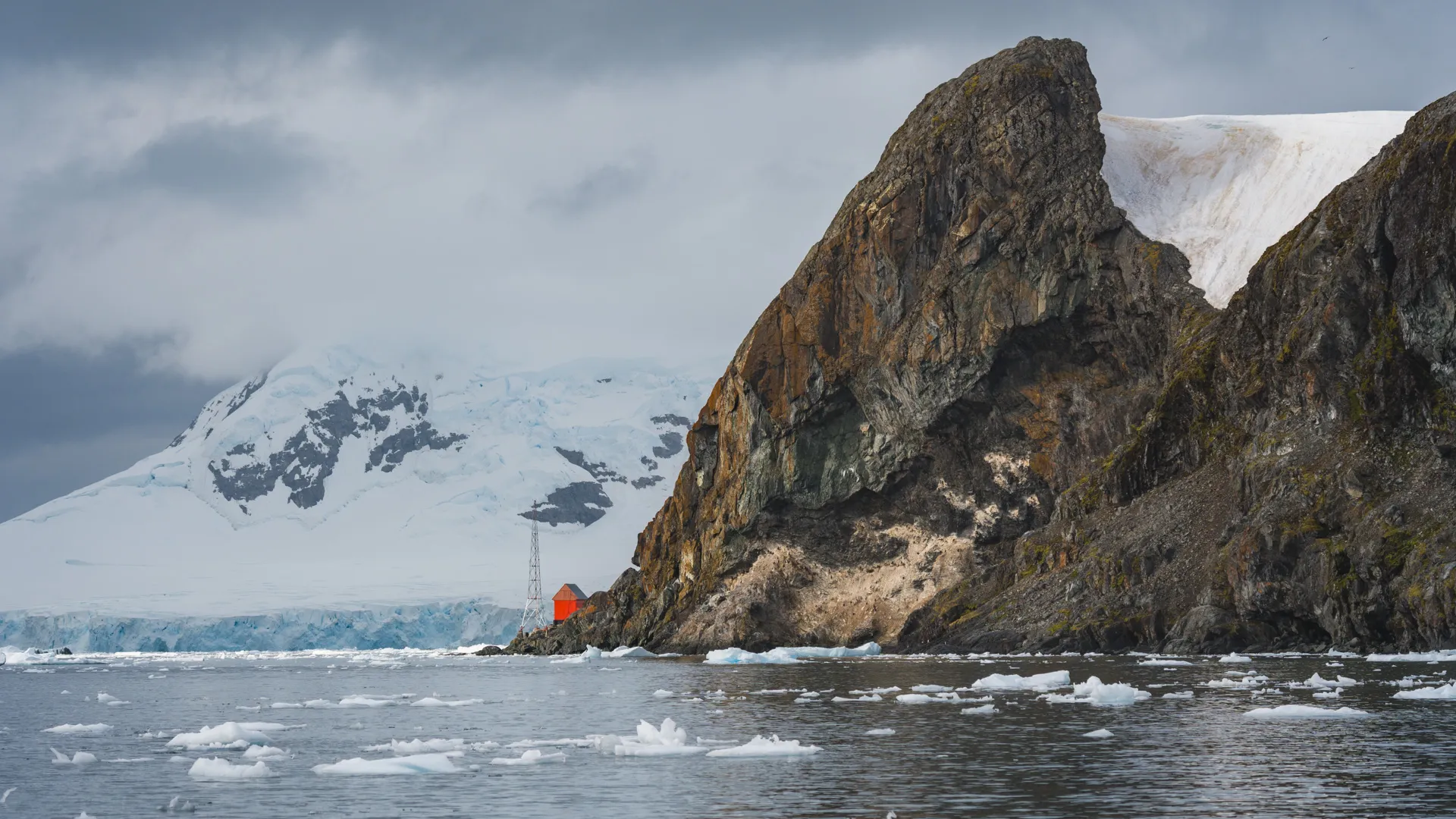
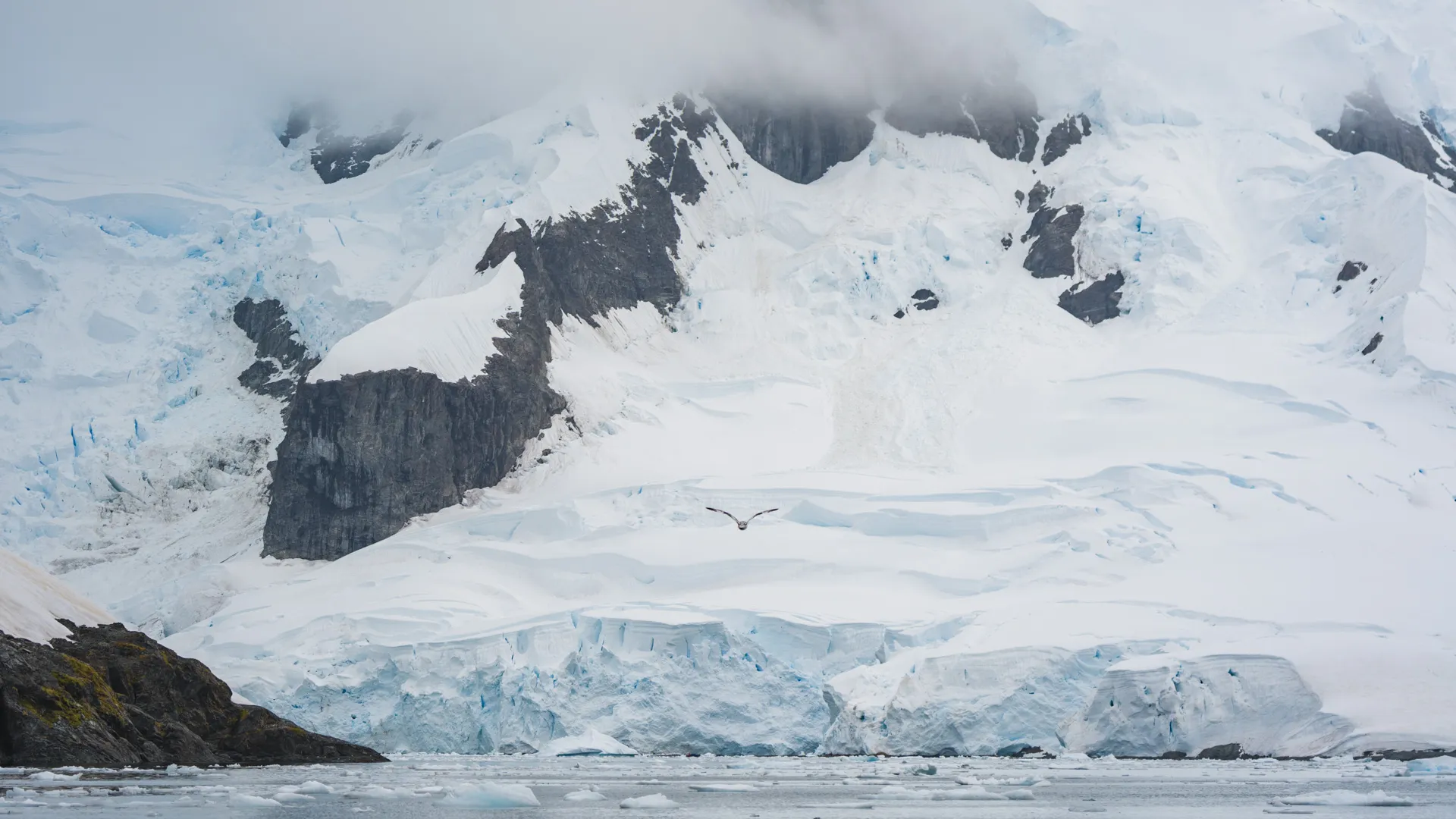
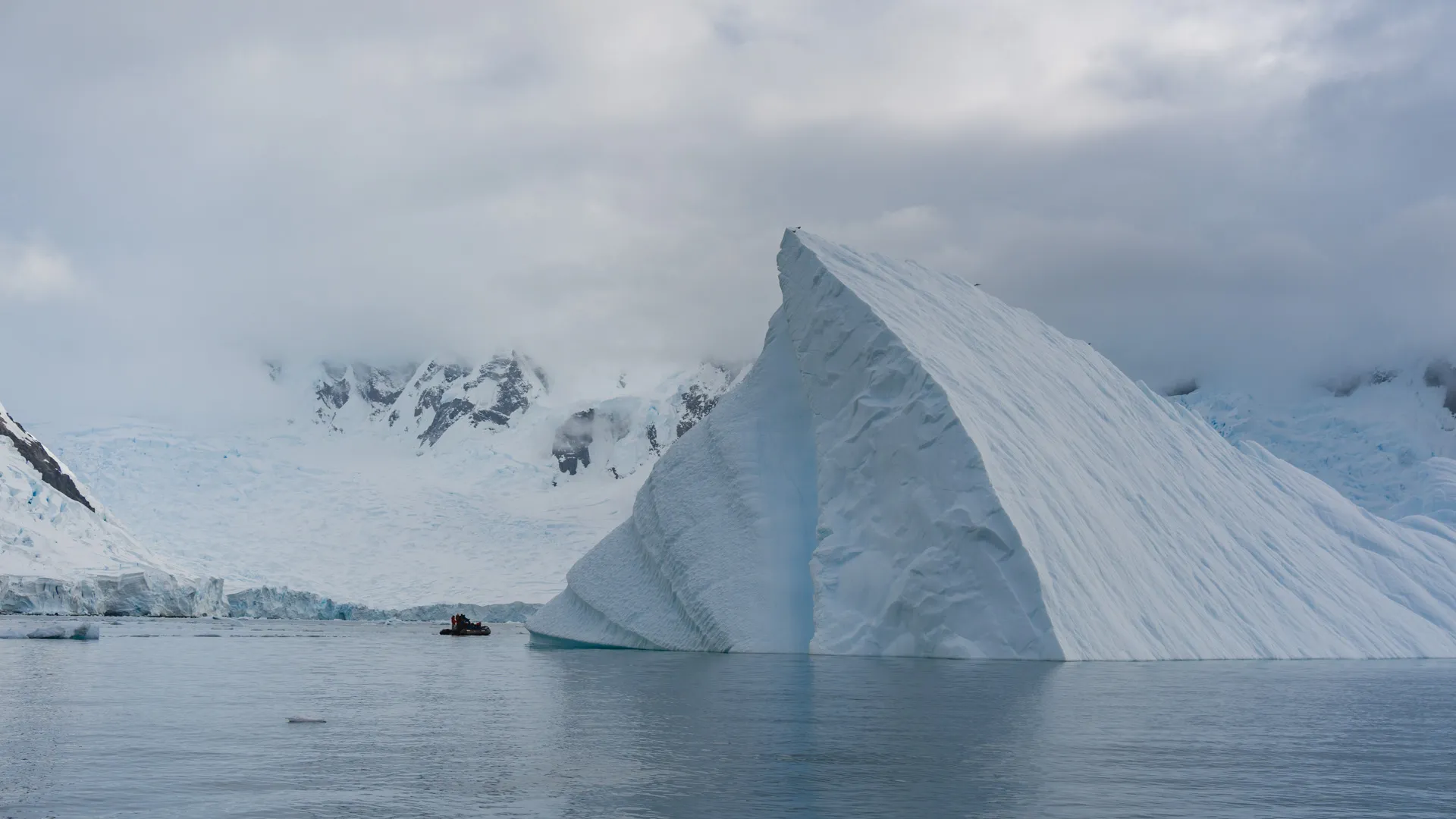
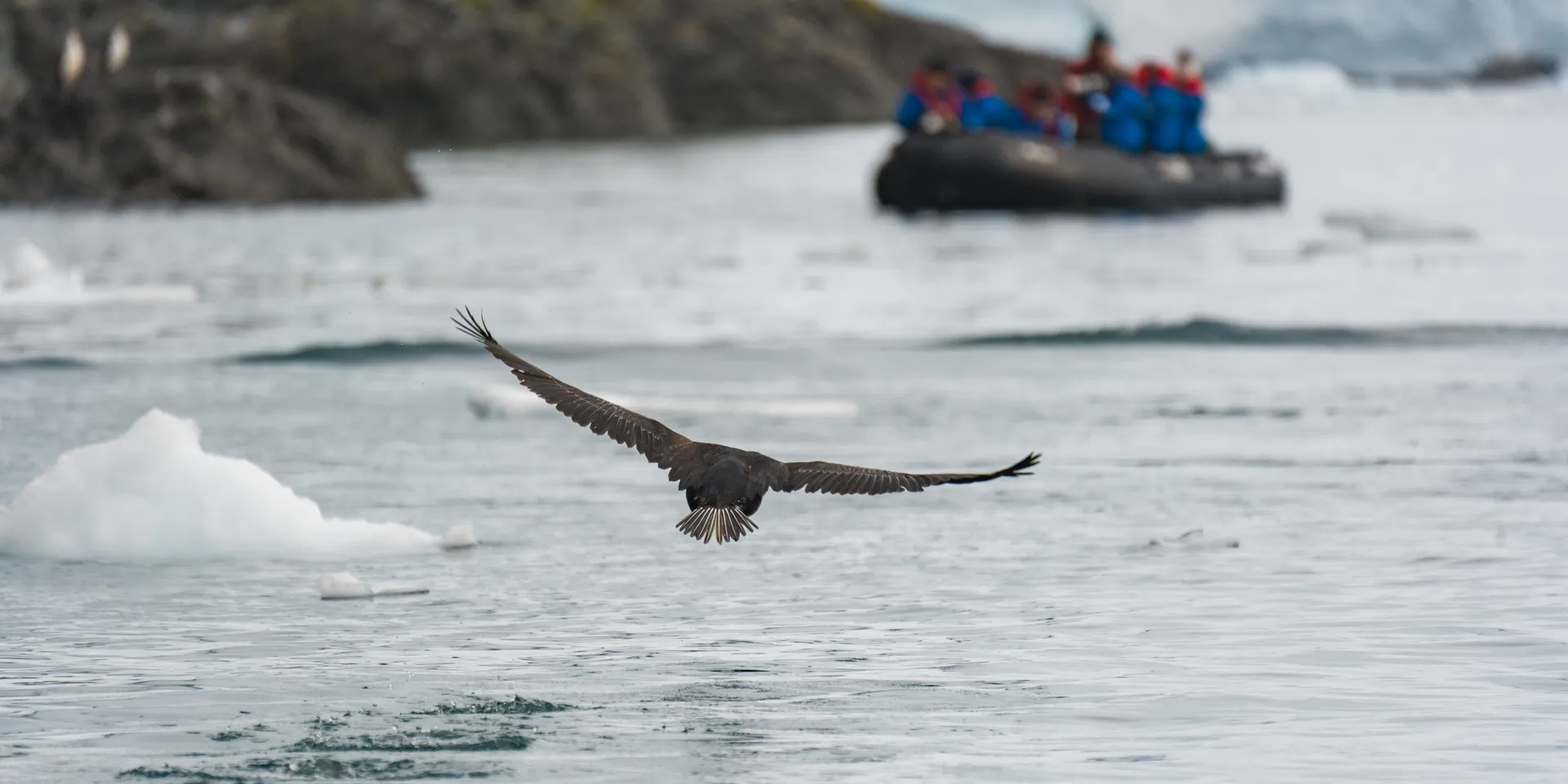
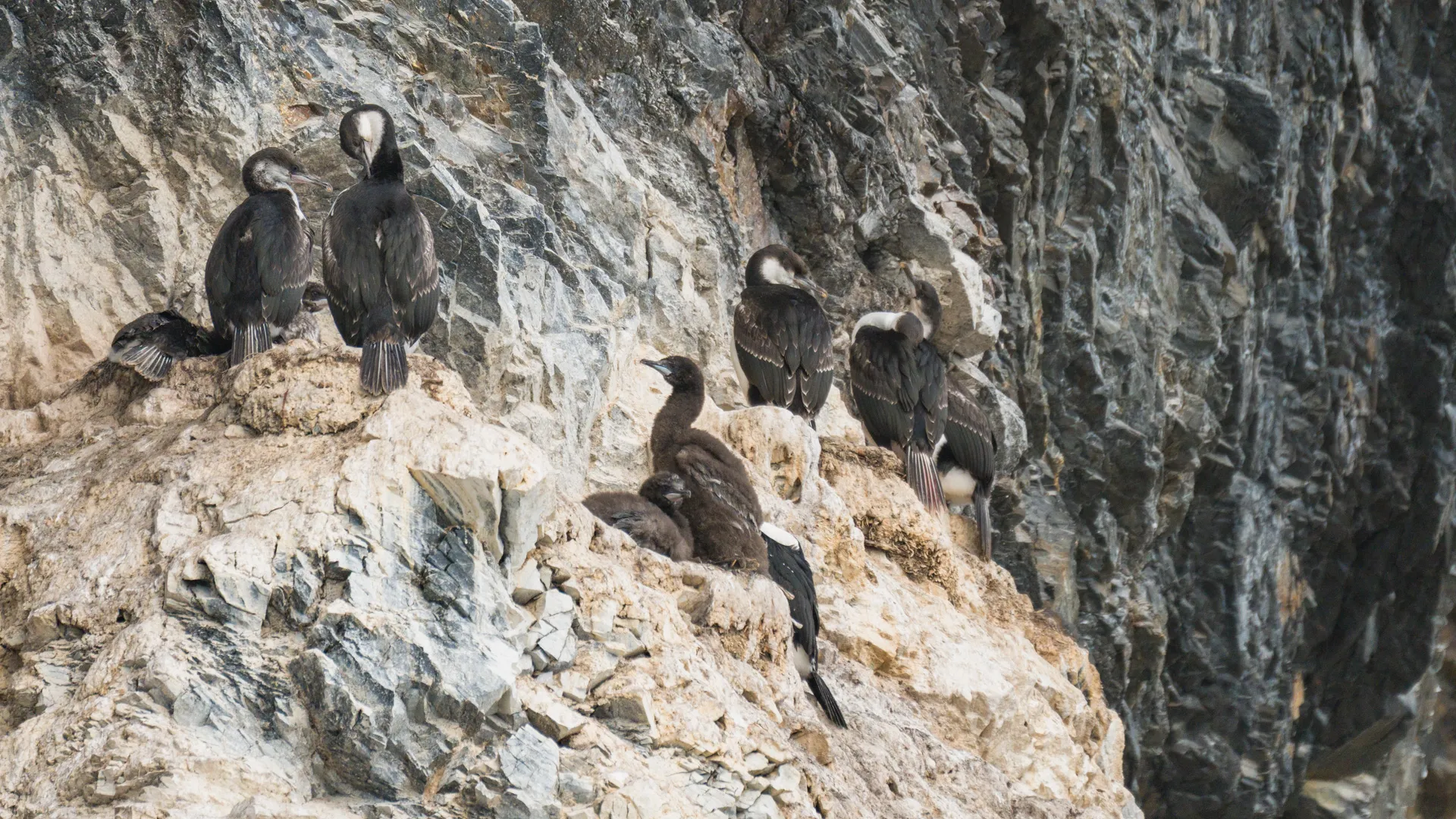
As Evening came, Gaby told us, that she wanted to try and get us a third little adventure and try and get us a landing at Neko Harbour.
Unfortunately, we didn’t get to have that opportunity. But we still went just to have a scenic cruise.
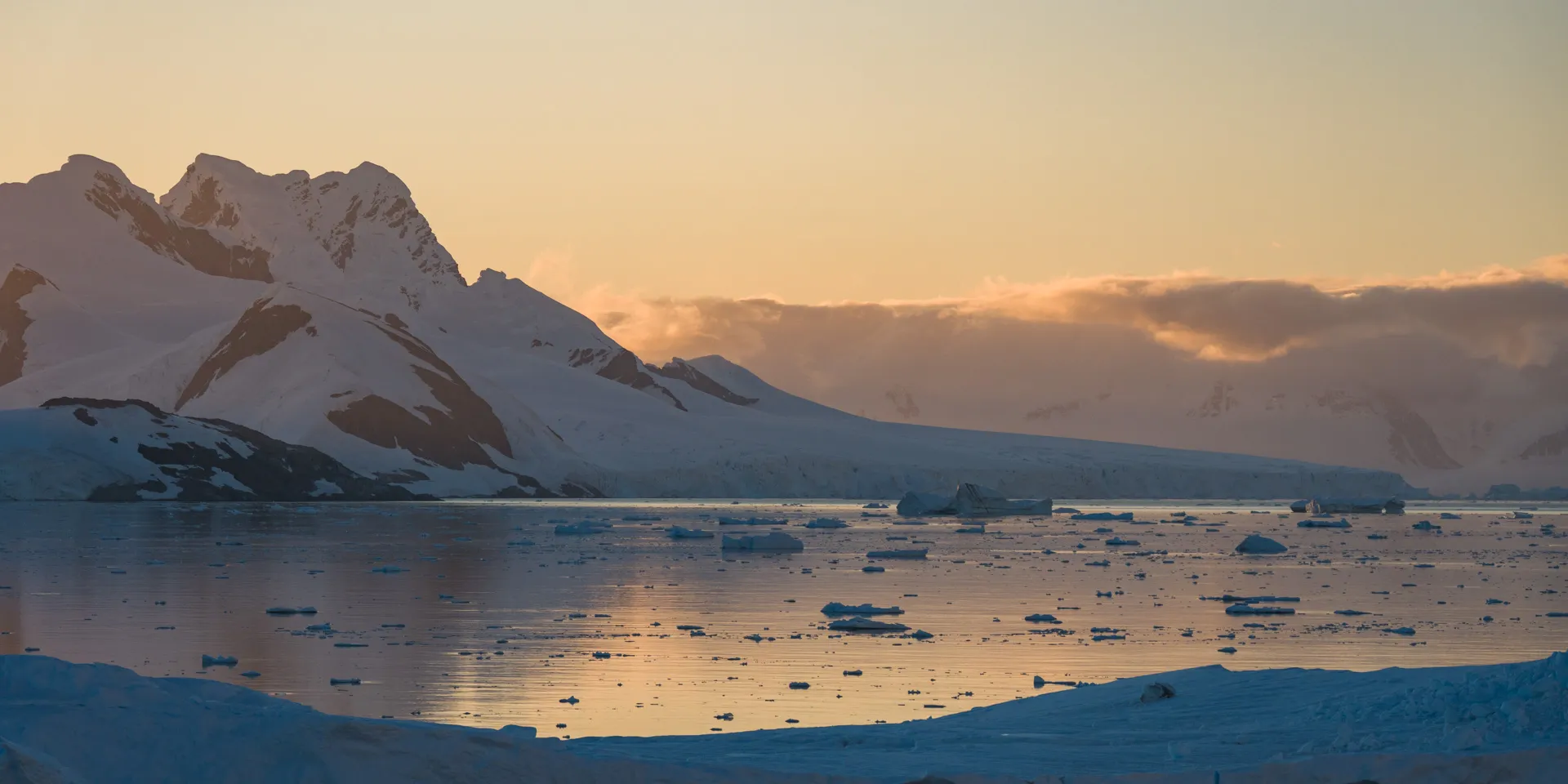
The views were absolutely spectacular. We were there right at golden hour, the water was like glass and reflective like a mirror and the entire expedition team was on deck alongside almost all passengers to enjoy the views. It was phenomenal.
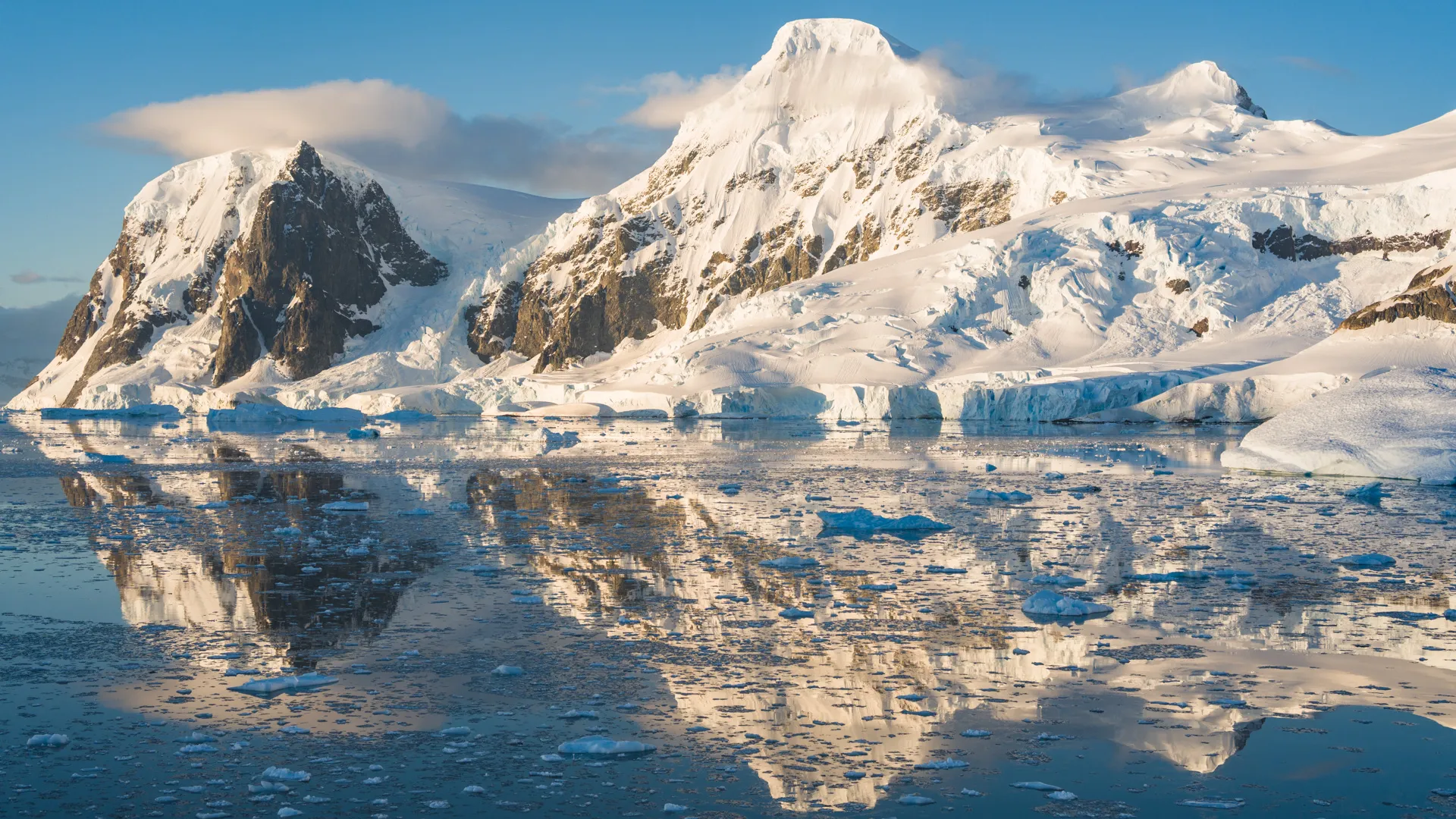
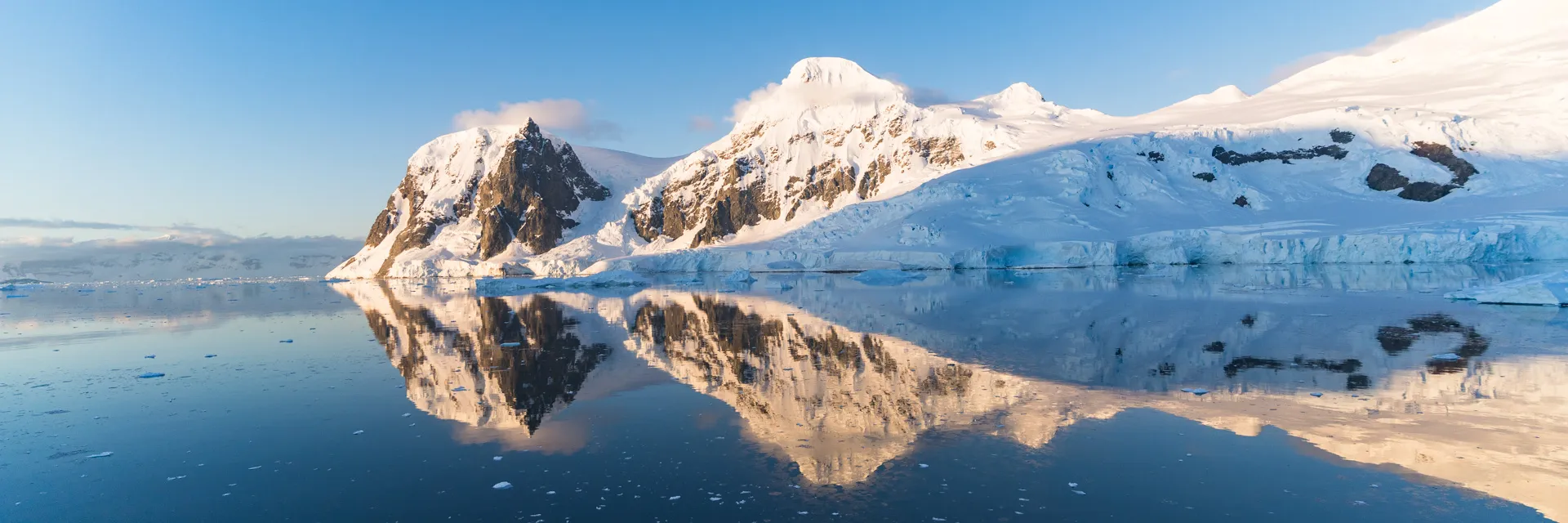
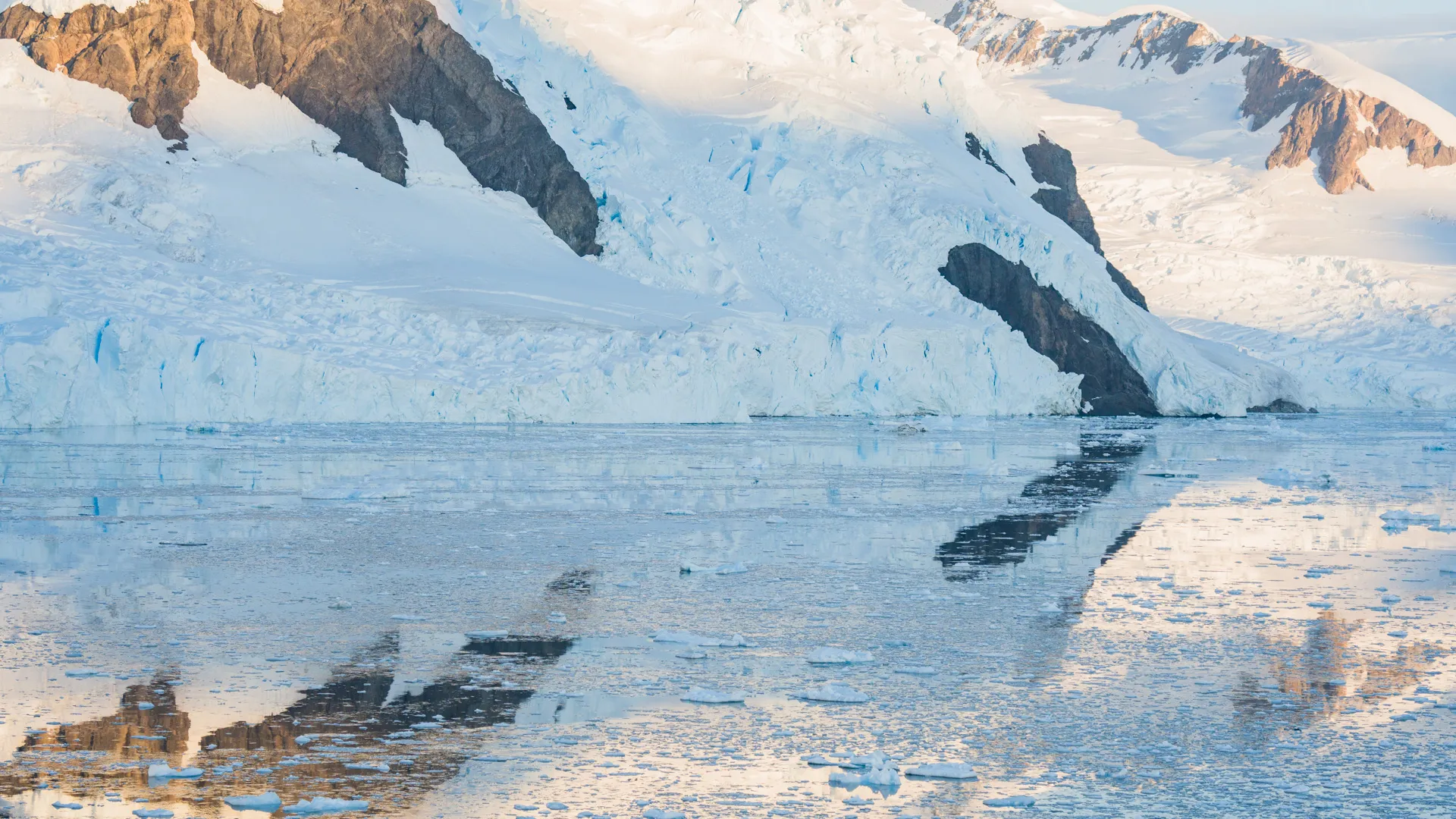
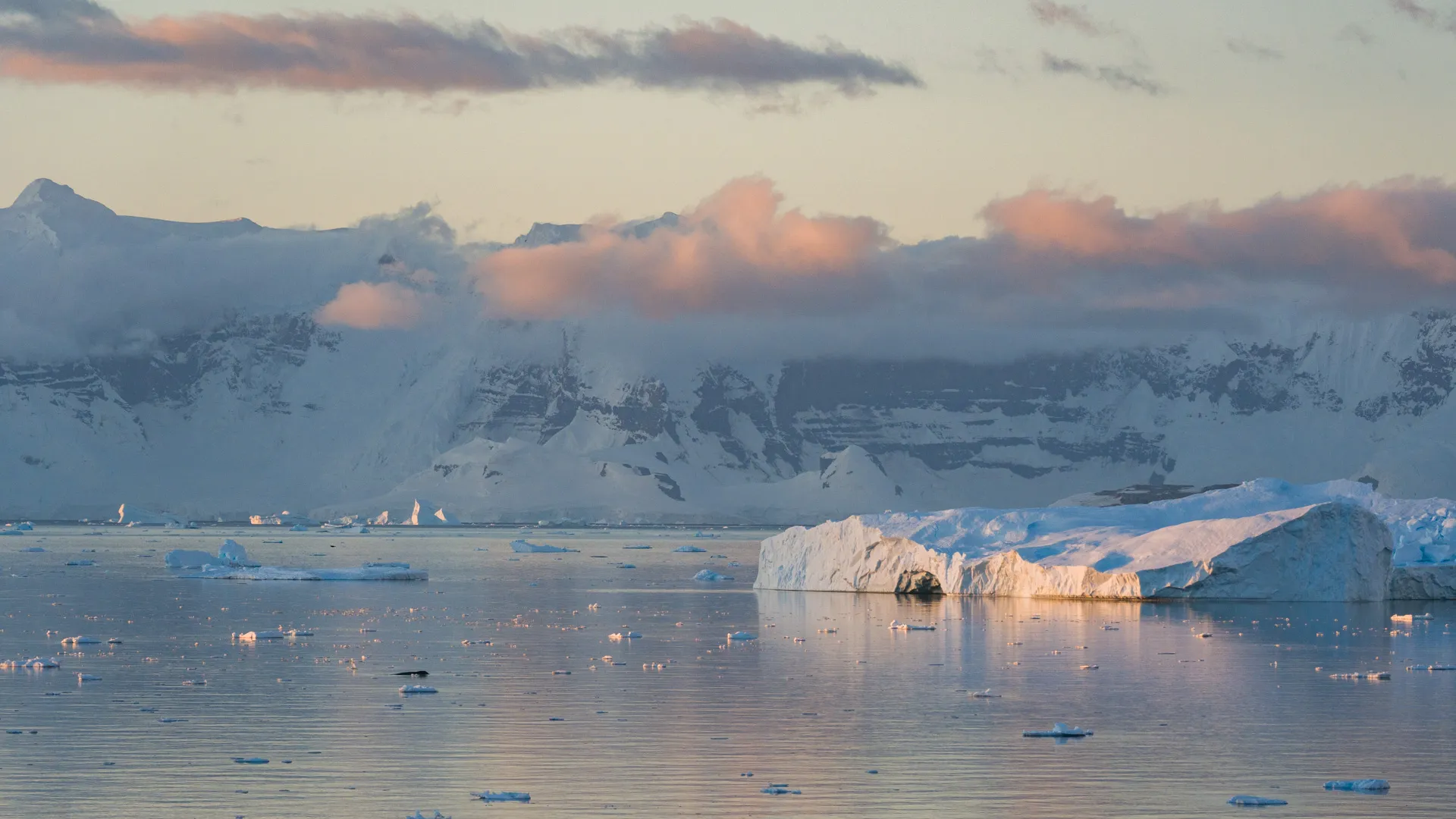
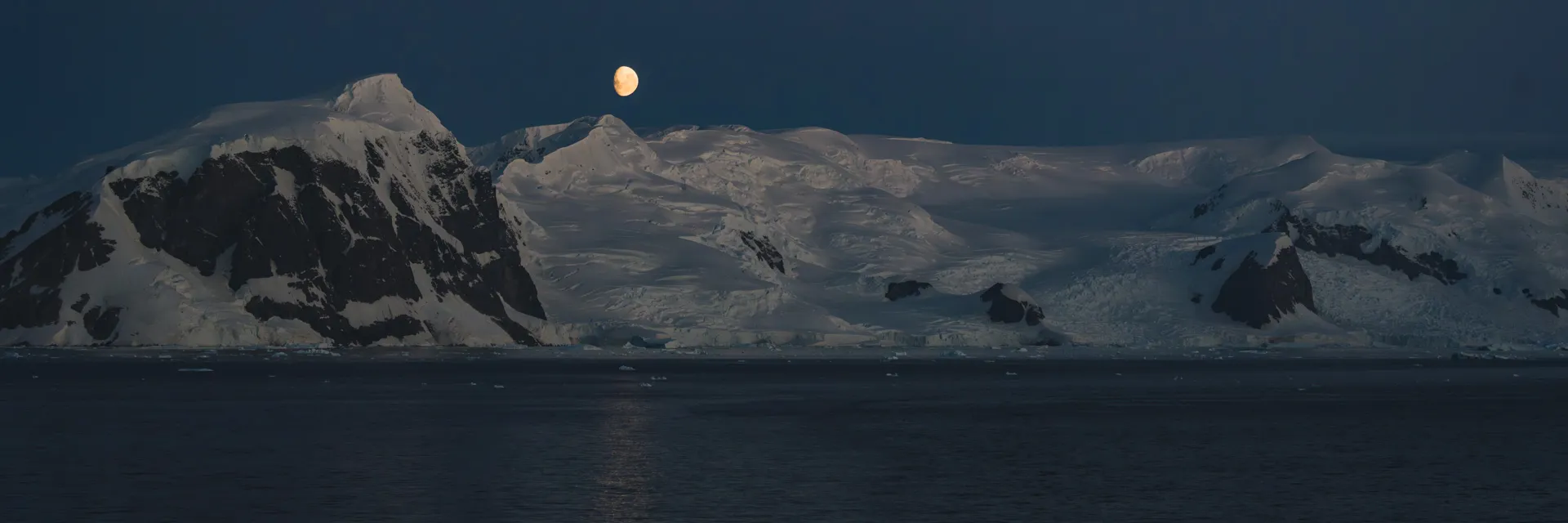
It had gotten dark, and just about when I was ready to get into the last cabin in the back of the ship (home for the week) to go and transfer those photos, Rick popped out of the door to the back deck of the ship. “Moon rise outside”, my cabin neighbor said. And out I went, where I spent a few minutes with him and Nigel admiring and capturing the moon rise and its reflection on the water.
What. A. Day! (again)
Day 4: Feb 6 2026
Day 4: Feb 6 2026After Paradise Bay, there was a small part of me that had Hopes for Day 4. In the endless videos I had watched about Antarctica there had been one place that popped up every now and then that piqued my interest a bit more than others: Port Lockroy.
Port Lockroy is home to the southernmost post office of the UK Royal Mail and I would’ve loved to send a calligraphed postcard back home (which would take from 3 months to 3 years for its journey). It is located closer to the Lemaire channel than our planned stops for Day 4, but Alesha had told us that they had been there fairly recently in a previous dinner so I hadn’t had super high hopes. Maybe it was a Plan B or C, but today definitely looked like a Plan A situation with the weather.
And here’s the thing with Antarctica: you typically do not get to choose the places you stop at, which is also why you should never trust any brochure about the white continent that promises specific stops. When going to Antarctica you sign up for a million magical moments on the Peninsula. That’s as specific as you should get.
And, in the end, even though we did not end up on my dream destination, what we did end up with this day was without a doubt my favorite day of them all that kept being topped with more and more incredibleness.
We headed even further south this day, and that means, it would finally be time to meet brush-tailed penguin number 3: Adélie.
Lemaire Channel Cruise
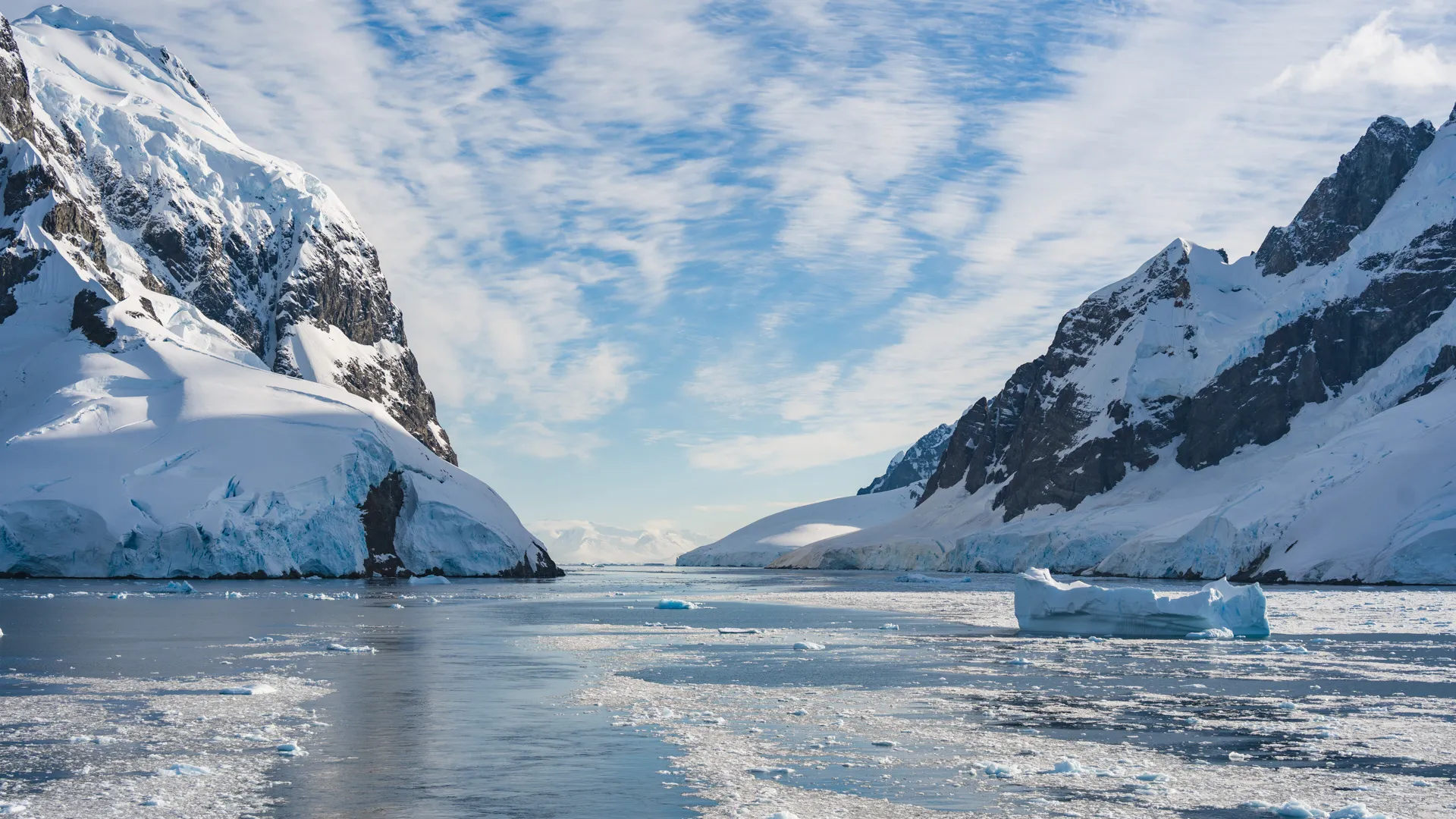
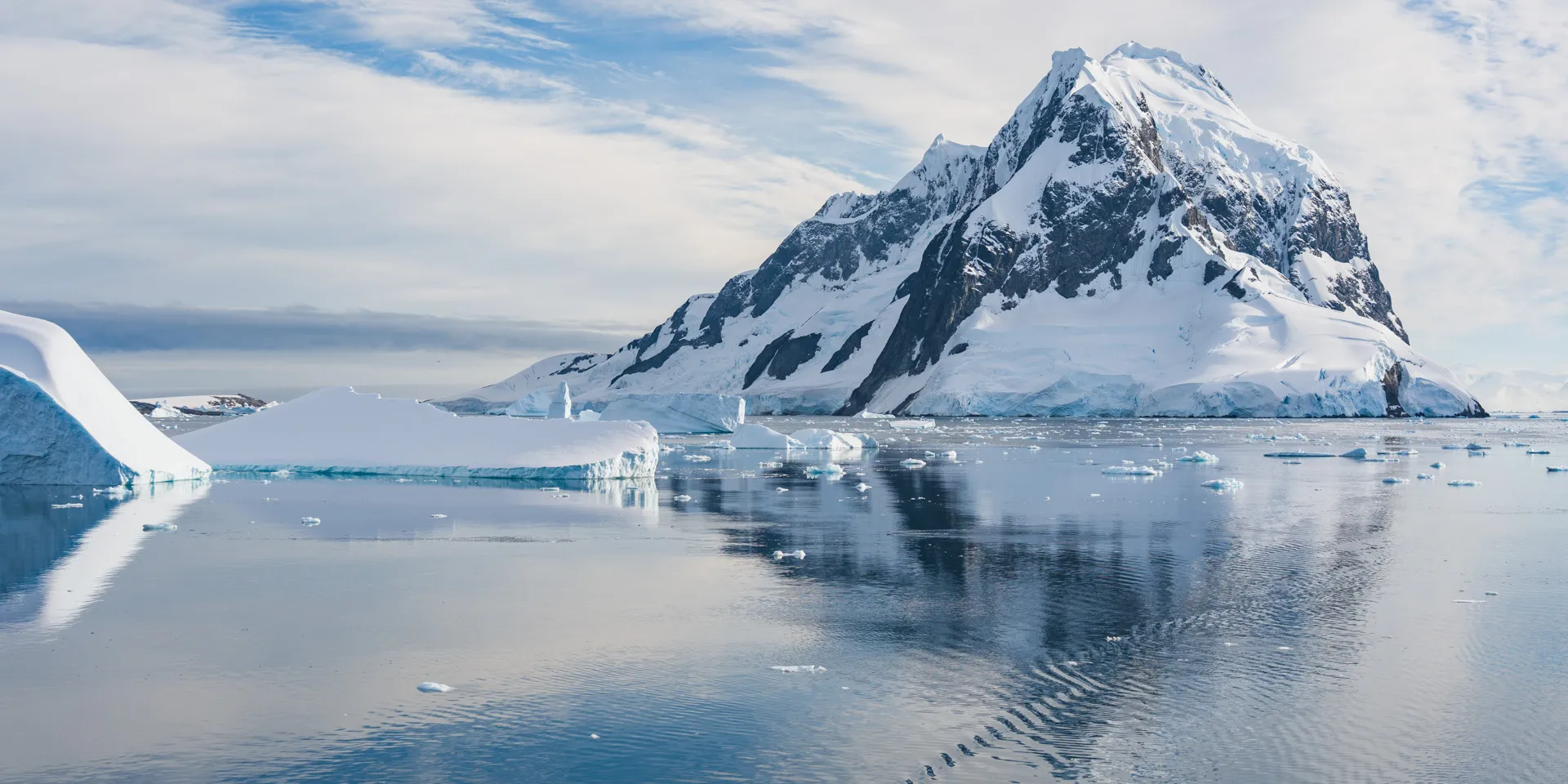
Lemaire Channel CruiseDay 4 started in the early morning with a Lemaire Channel Cruise. The Lemaire Channel is very narrow in some spots and it is not always possible to get through it, but this morning, the sun was shining and the water was still like the previous night, so still that it again acted as a mirror and reflected the mountains and glaciers that surrounded us.
We were getting closer to the Antarctic Circle and the landscape was getting more dramatic and somehow even more Antarctic, if that was even possible.
Petermann Island Landing
Petermann Island Landing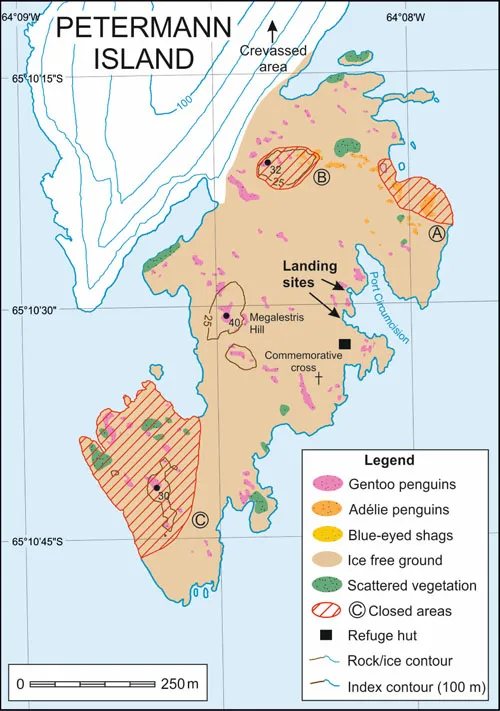
This day was going to be jam-packed and after that beautiful start into the day we had a morning landing on Petermann Island.
Petermann offers another red hut with a reflective little pond and a commemorative cross. It is one of the more iconic sites in Antarctica. It is also home to a Gentoo colony and some Adélie penguins.
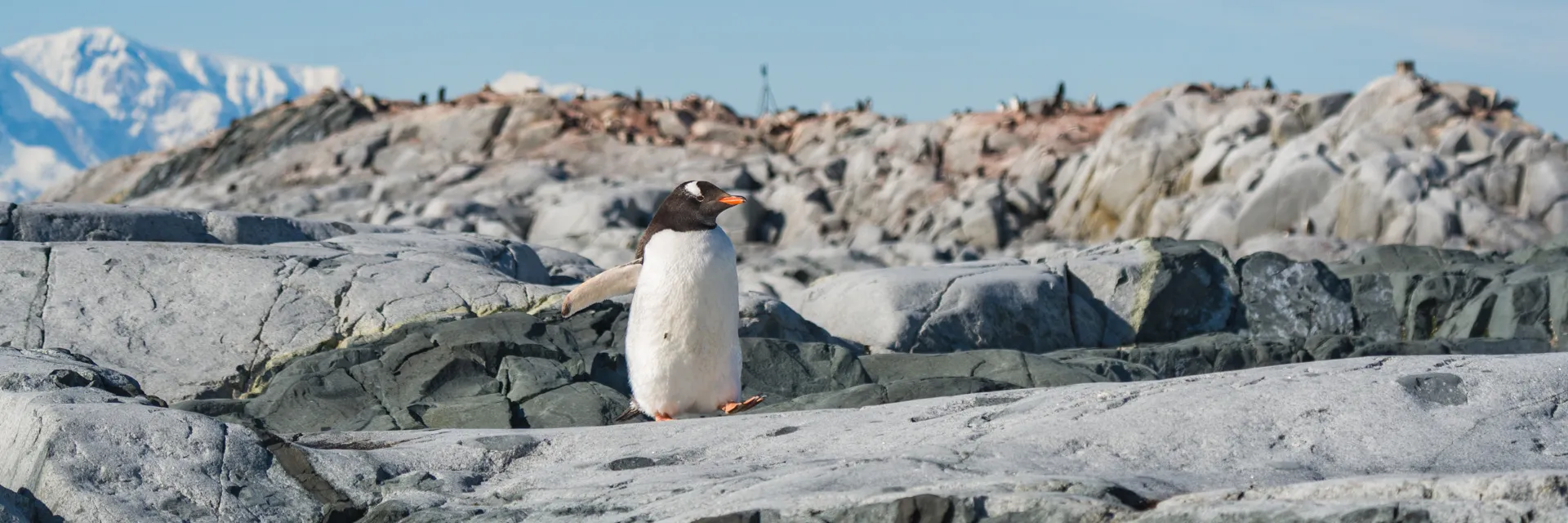
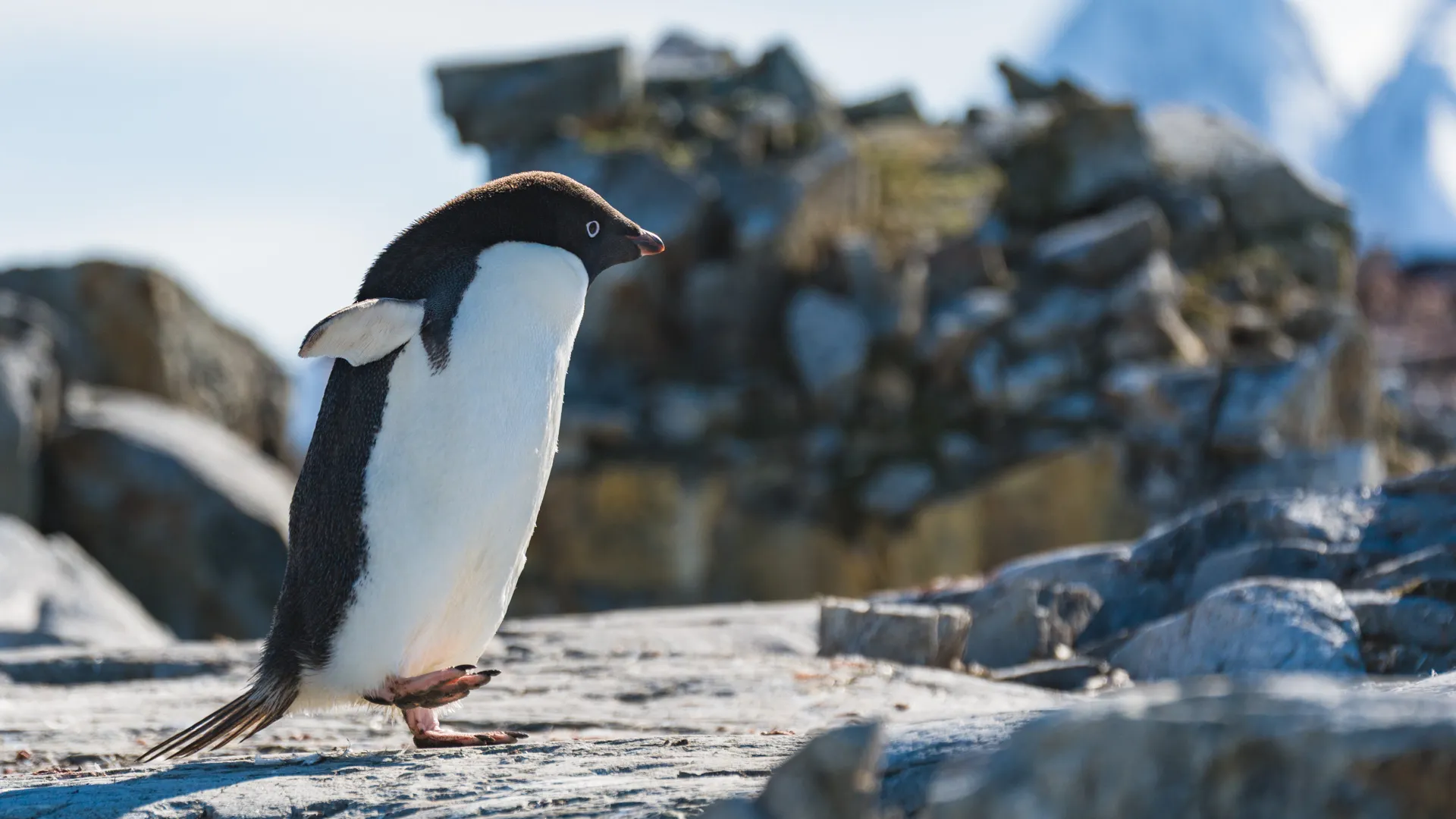
I barely looked at the red hut, got distracted a little bit by how insanely gorgeous the surrounding landscape was, but then went on to find an Adélie. Finding the smallest and goofiest penguin type of the ones we’d see was my priority number one.
And then I found my first black googly-eyed little model and I was absolutely smitten when I saw it stumble up some rocks. I had a feeling Adélie penguins might become my favorites and I only had to see one to decide that I loved them probably most. Each penguin seems to have its own little quirks and special behavior and Adélie seems to be the most playful through human eyes.
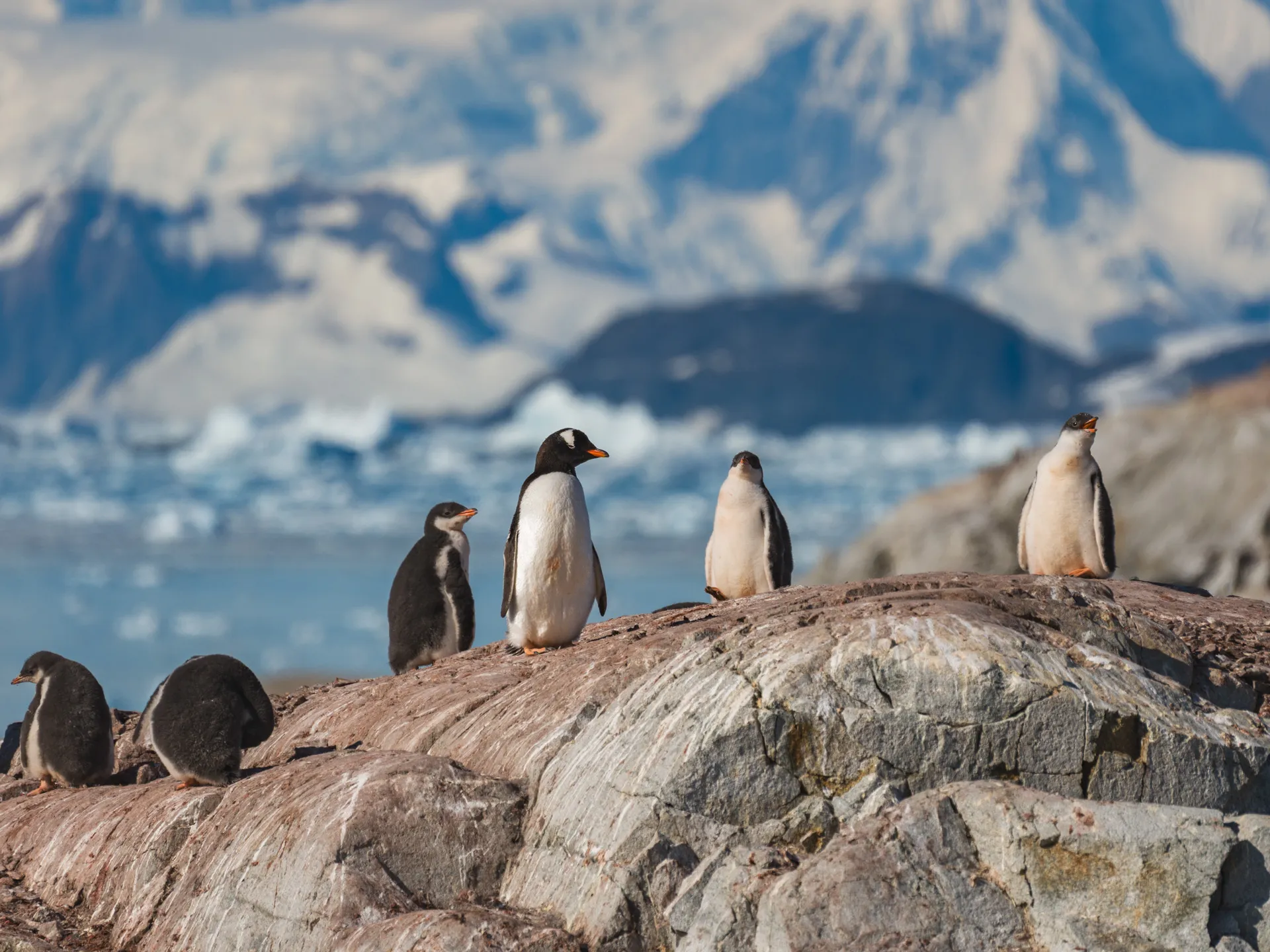
I was absolutely enamored with the Adélie penguins and for some time I really just watched the few I had found explore and hop and waddle around. And then I watched a few chicks and then took a few photos. This place really really lent itself to taking environment shots. It was absolutely beautiful.
It was super warm (literally, there were bare arms at some point). The light was harsh and only in a group full of photographers would you hear people complain about this type of weather. But really, in this spot I ended up not being much of a photographer and more of a spectator. I was just soaking it in while getting a little bit soaking in my layers.
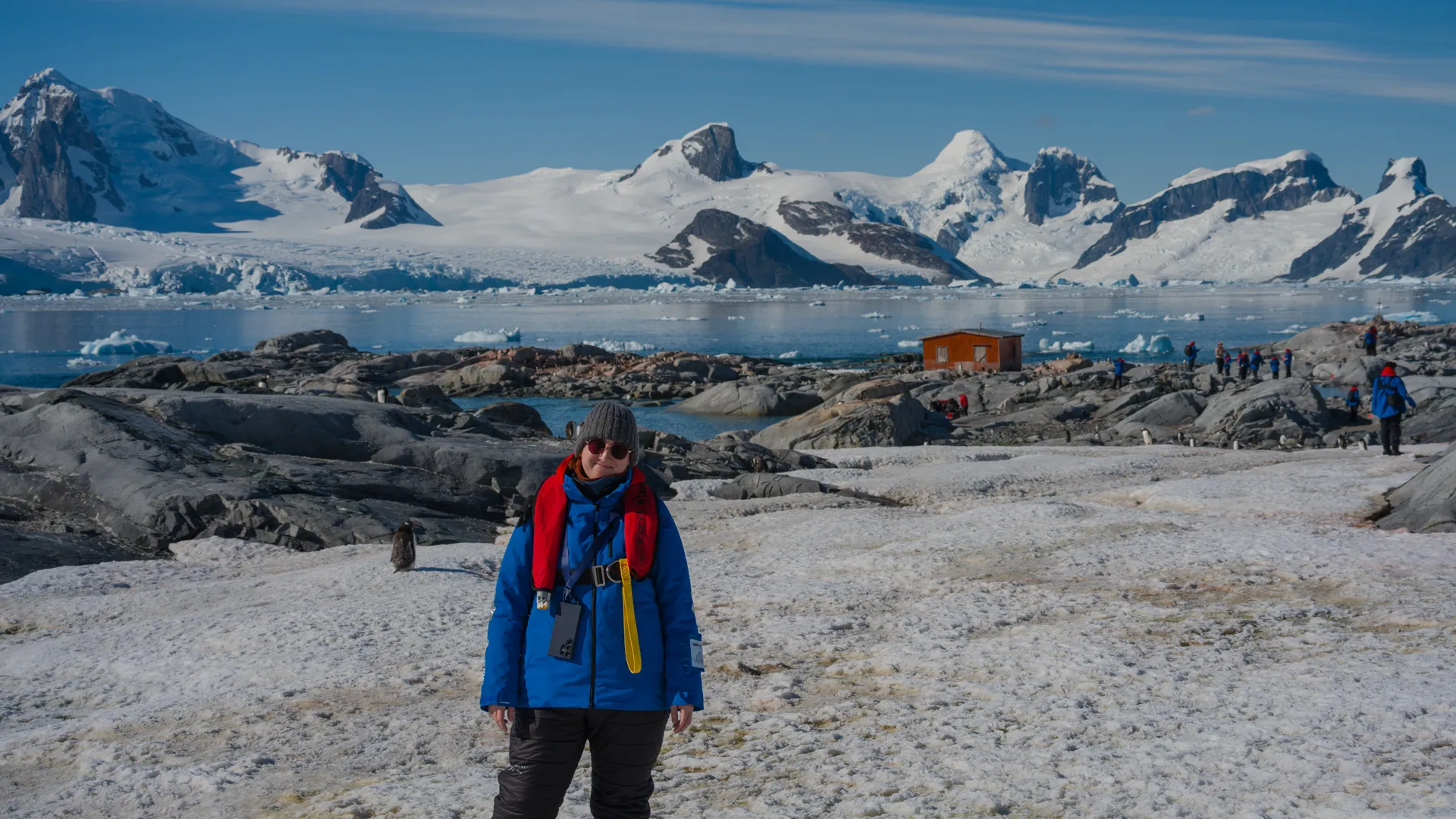
I’d spent a good chunk exploring most of the landing site before I got myself to the red hut, which is where I found James. I knew he’d probably spend most of his time with the hut as it is his favorite subject but it was still quite funny to me when I heard all he’d seen from the site was in that spot while I had been almost everywhere already.
But that is the fun of travelling with many different photographers. Also, James had to wait for the ship to be moved at some point, so that also takes some time (perk you may only get if you are a photography lead on a photography-specific trip). It was quite funny to hear at the end of the day that that had been the reason why the ship was suddenly in a different place on our way back.
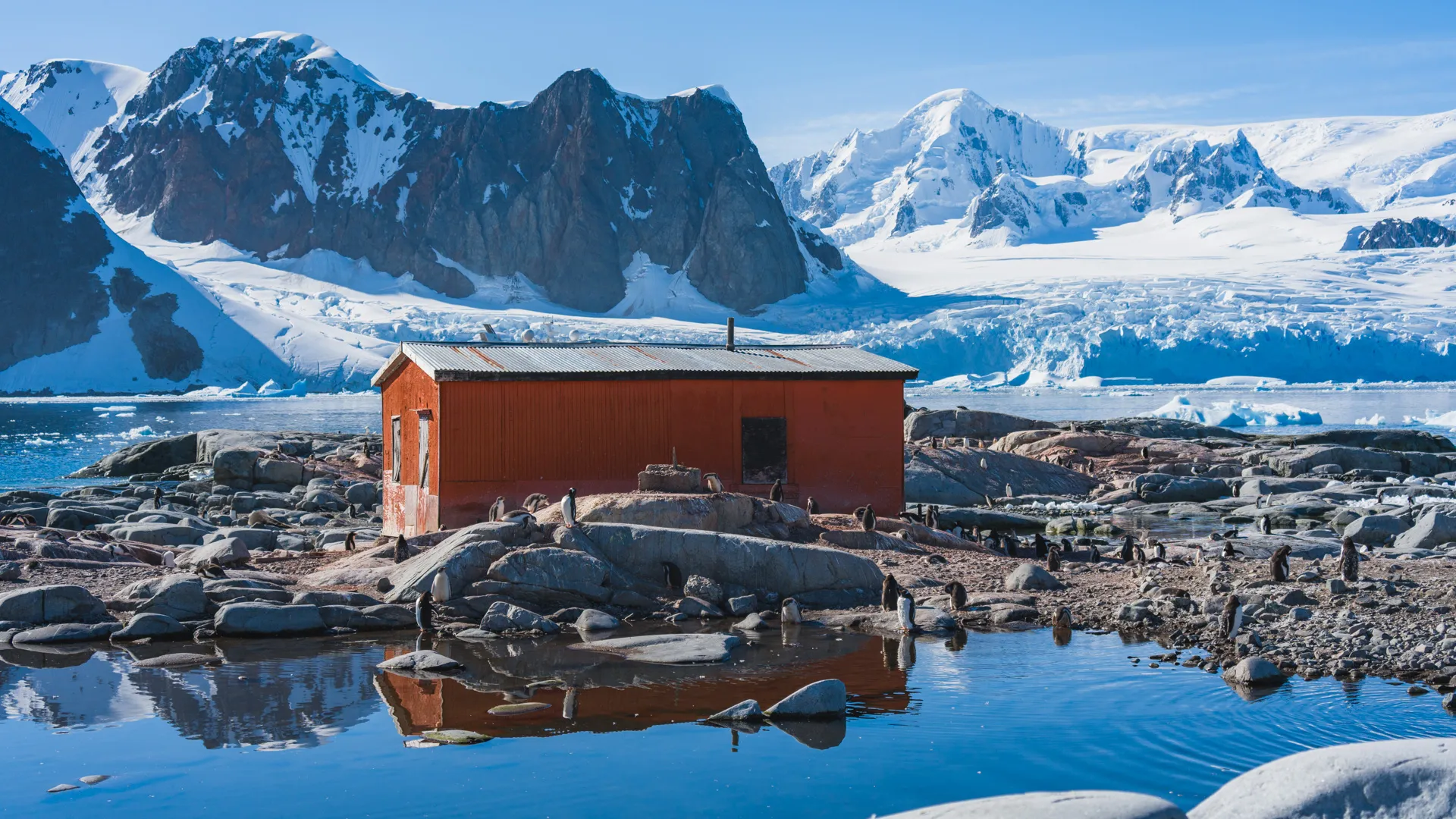
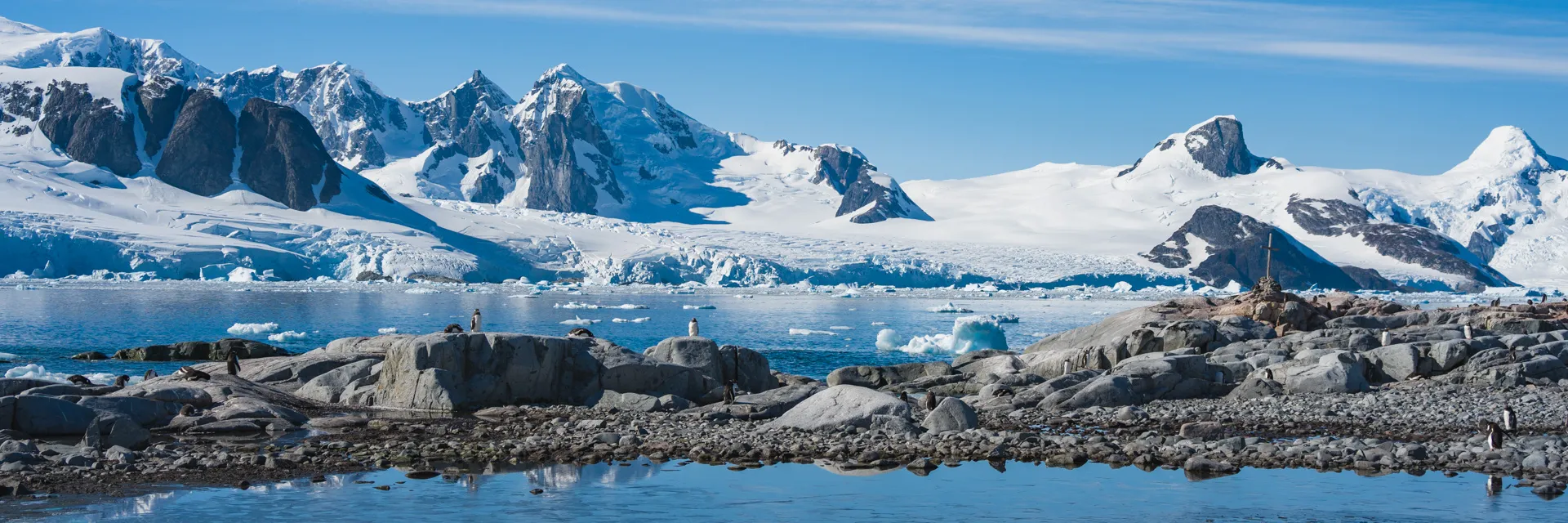
The best thing about the hut, in my personal opinion was the chicks that were hanging around it.
There was this pretty small little chick that ran up to one of the super reflective puddles to drink or play in and then puffed up and presented itself as if it was a big penguin and it’s actually a wonder I took any pictures at all because I was so captivated by its little display that I really just wanted to experience it with my own eyes instead of through a camera lens.
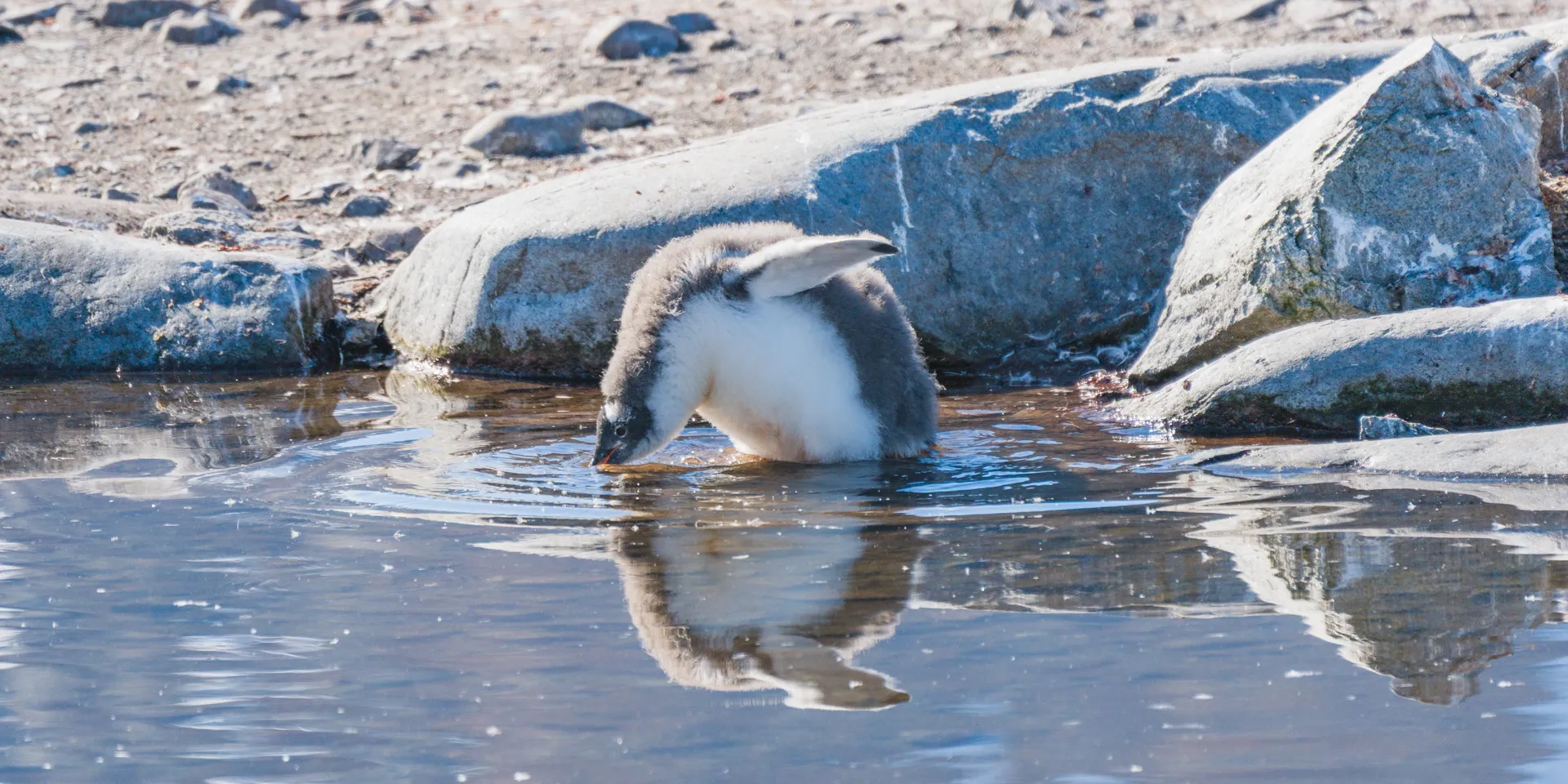
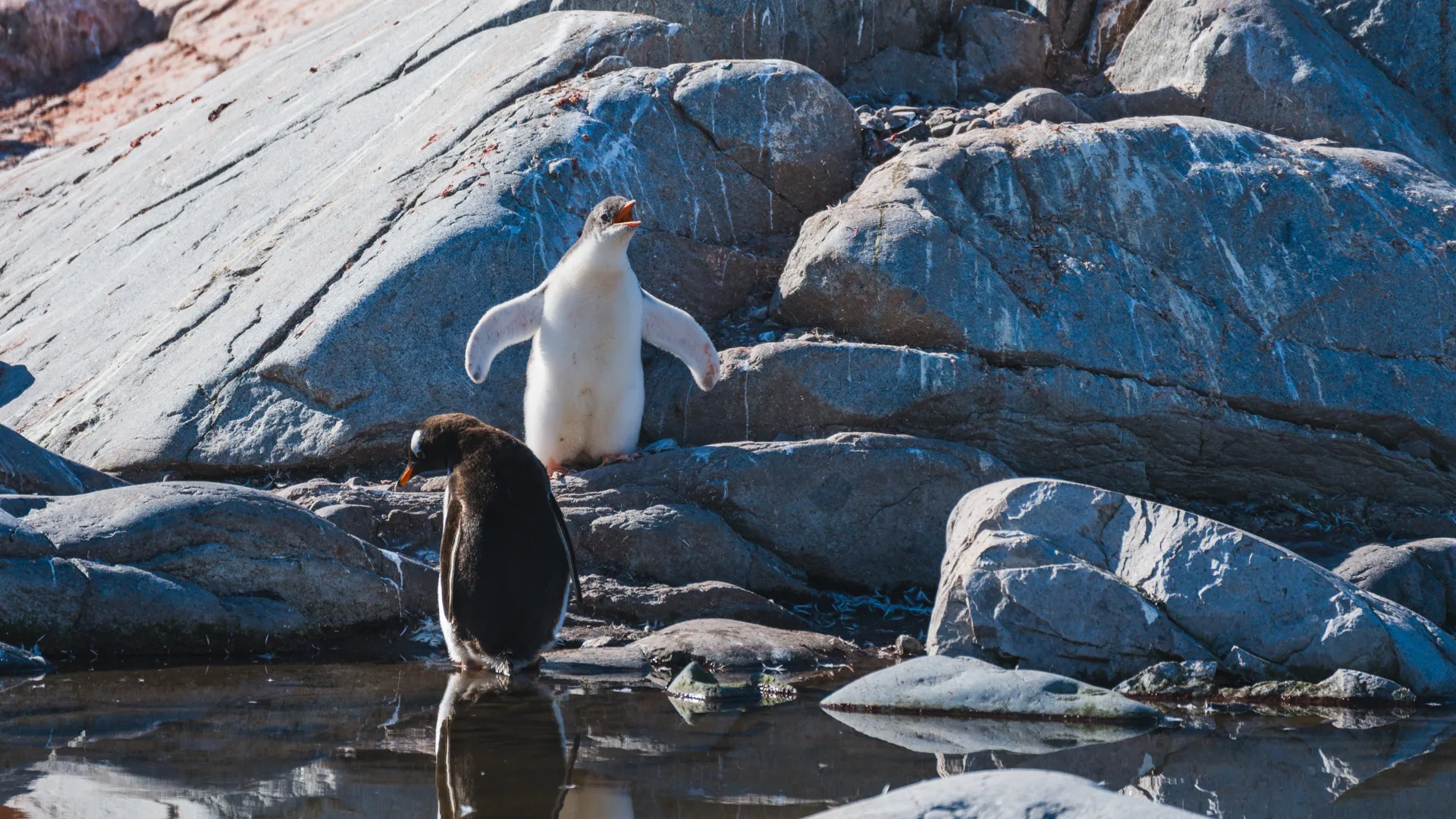
It was at this point, that I knew if there is ever a moment when I need a memory to cheer me up, I can think back that I got to see Gentoo penguin chicks playing in reflective puddles in Antarctica. Even now, it makes me smile just thinking about it.
When it was time to leave, I really didn’t want to. I could’ve stayed there for hours, heat and terrible camera light and all and just watch my fluffy little friends.
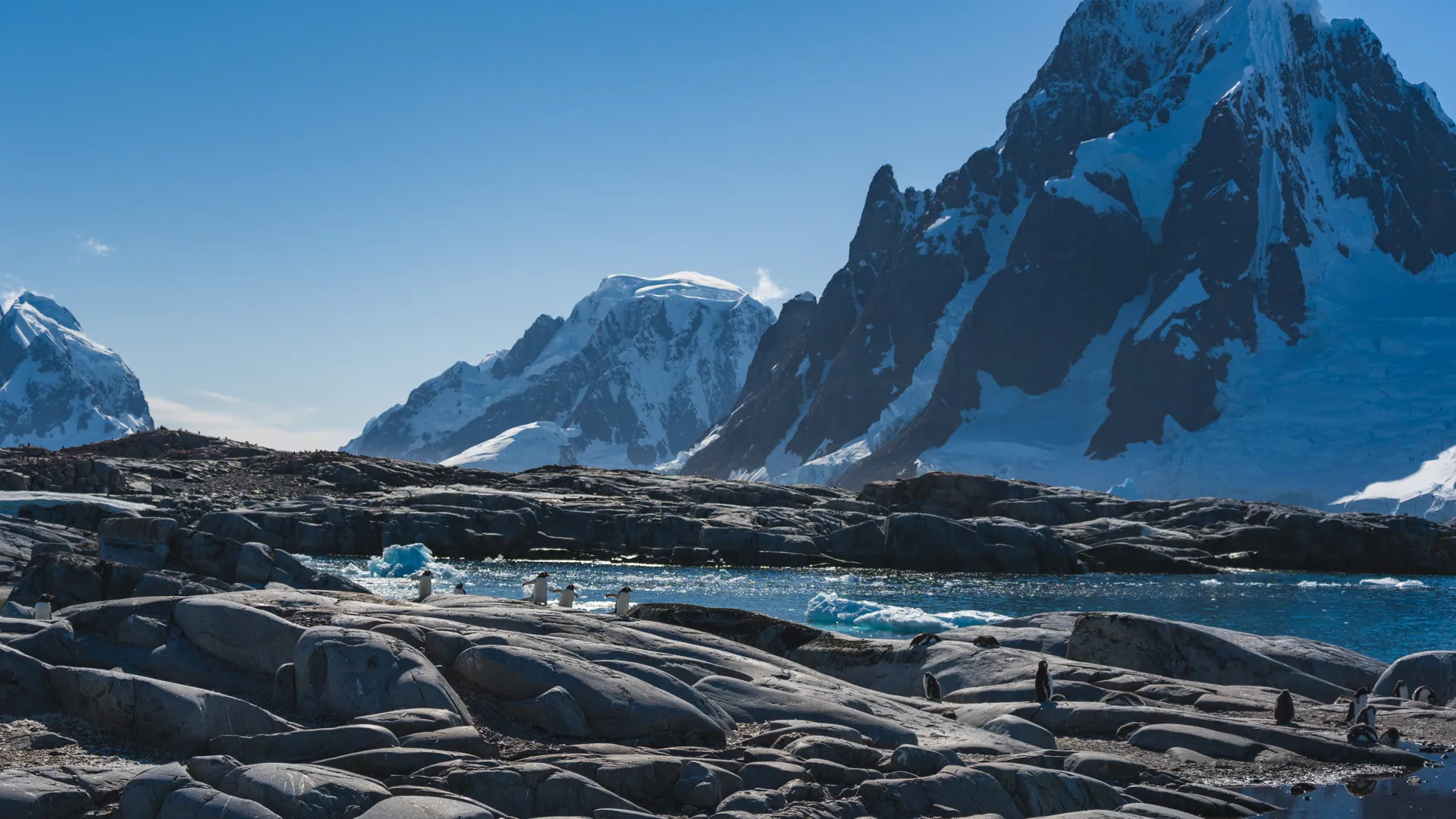
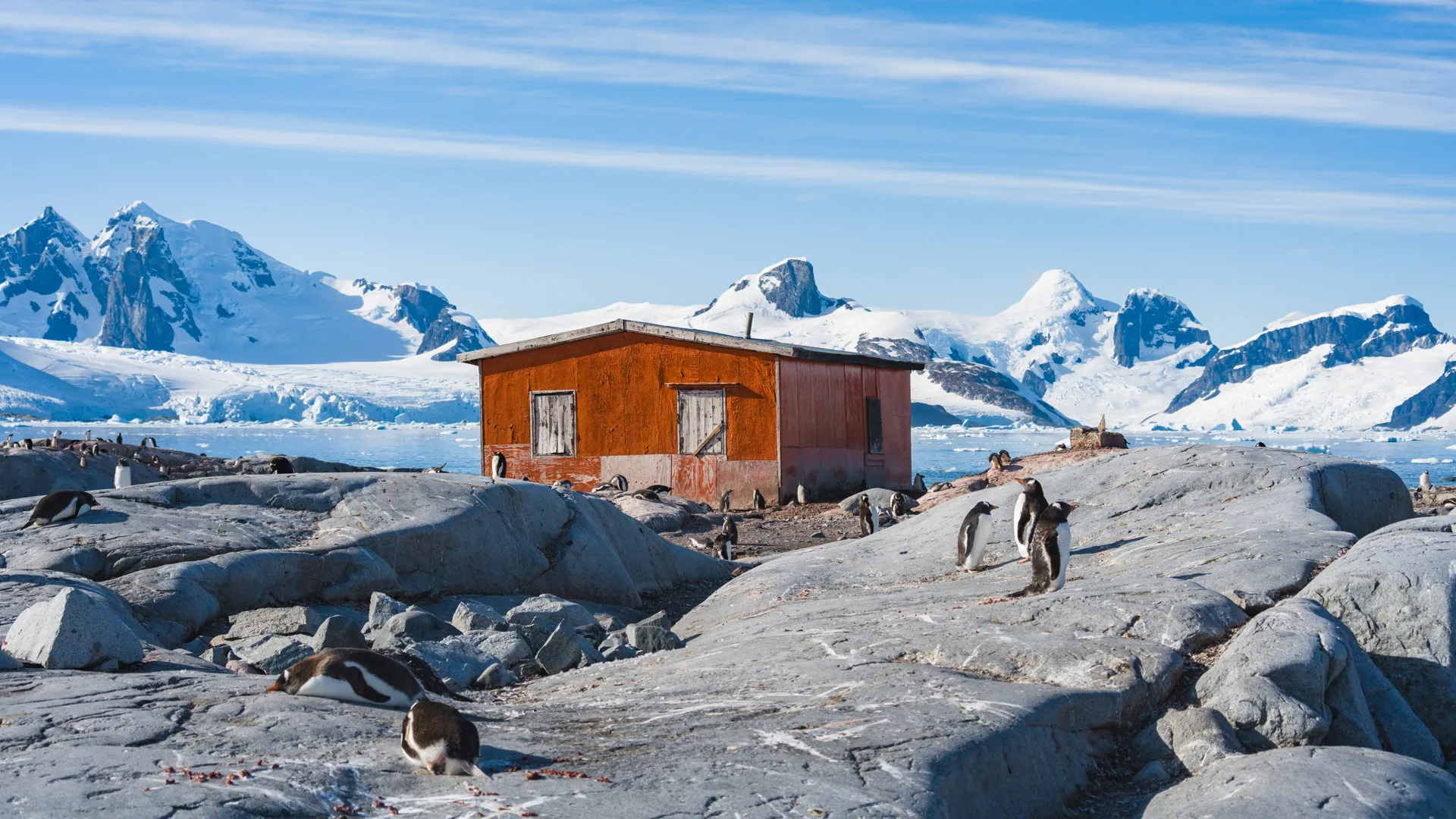
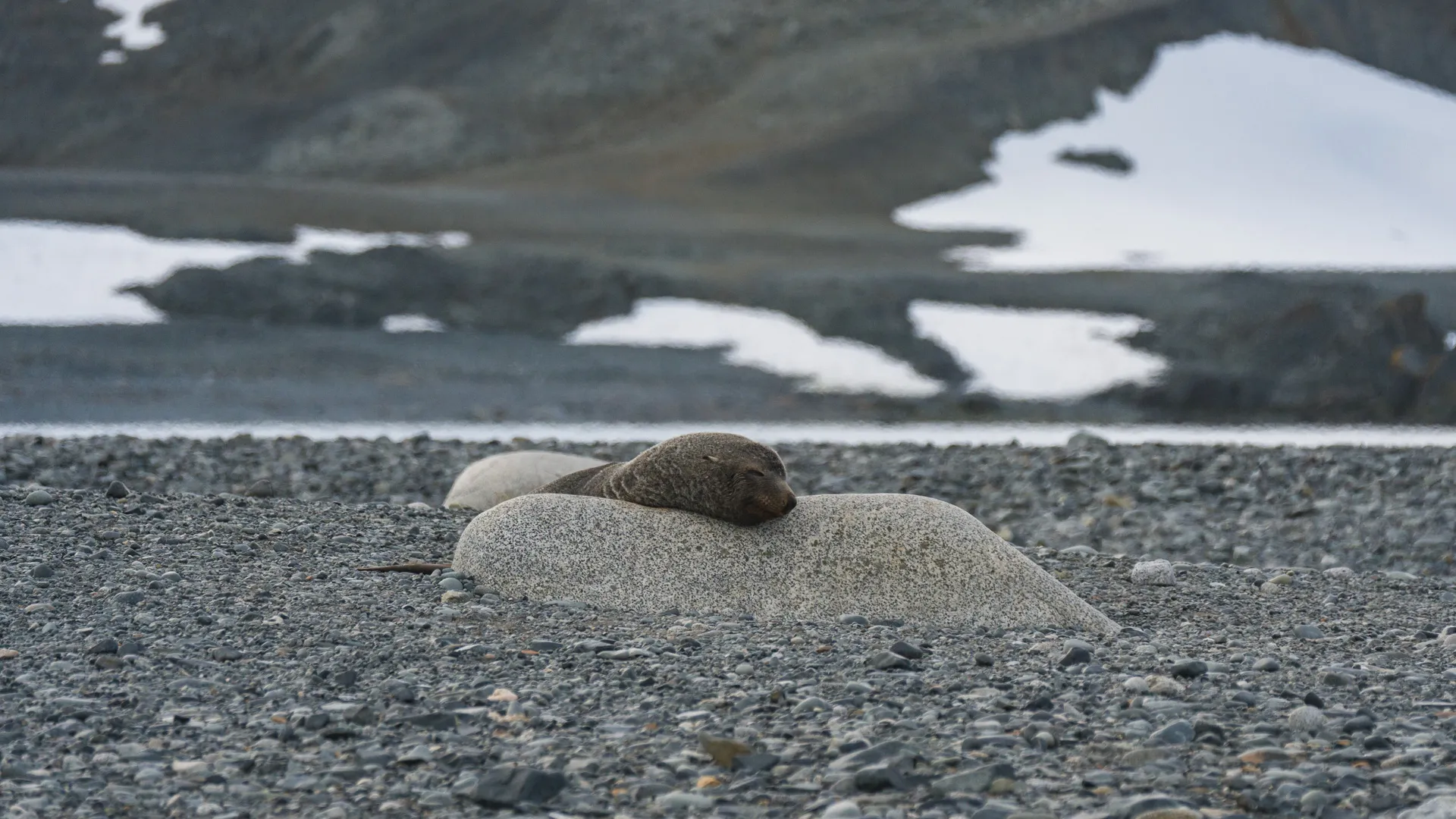
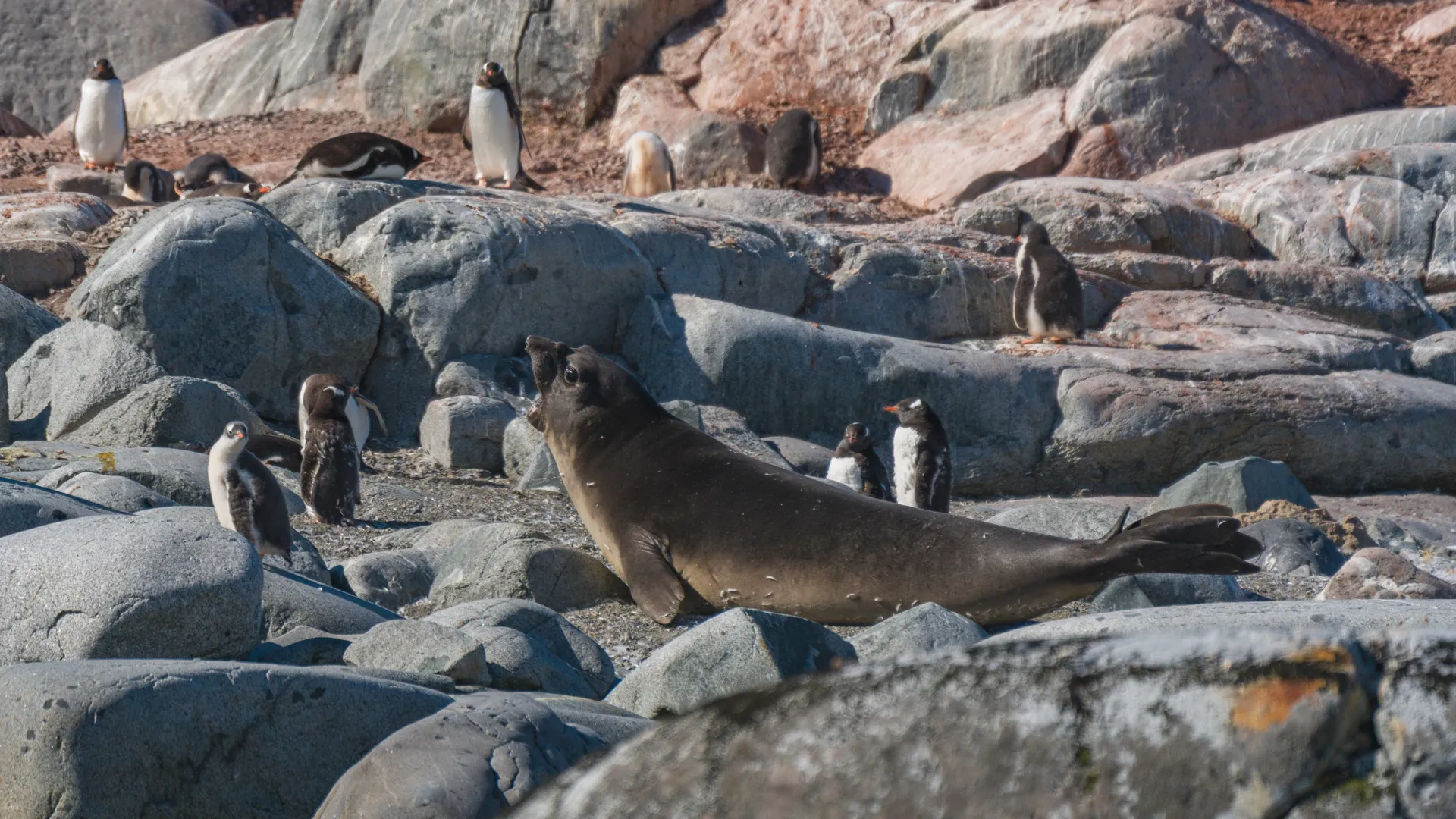
Right at the end, Petermann was then also where I got to cross off a fourth seal type! An elephant seal (the only one we saw this trip I believe). I had barely noticed it as it was camouflaged so well within the rocks and hidden between the penguins.
BBQ Lunch with Party Hats
BBQ Lunch with Party HatsAfter Petermann we definitely all shed a few layers and when we came back onto the ship I don’t think anyone had any complaints about eating out on deck.
Before lunch, it was group photo time and then we had a fun BBQ lunch and every person got a party hat plopped onto their head, if they wanted or not.
It was a good time!
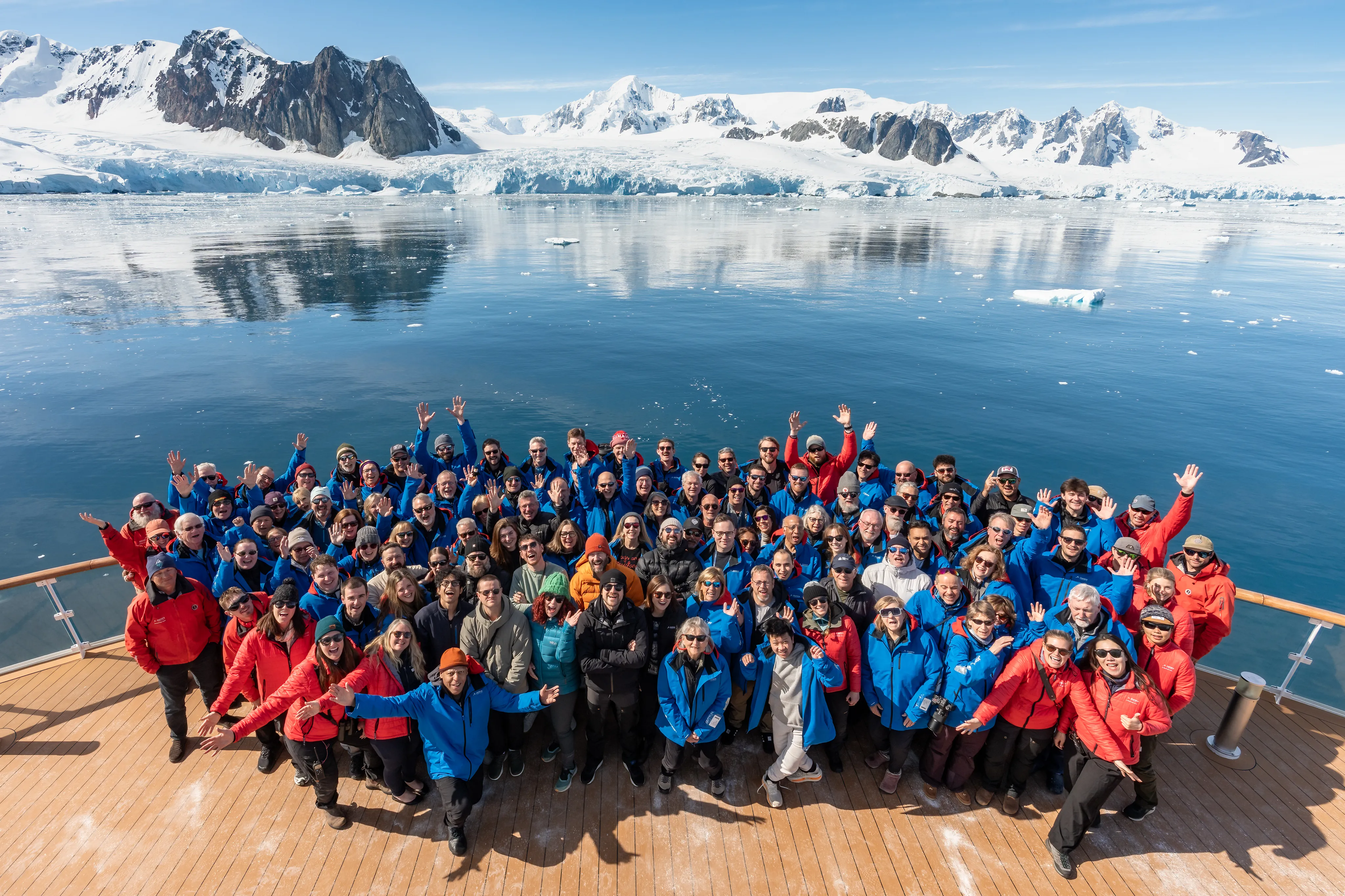
Antarctica Through the Lens 2026 Group Shot © by Jarryd Salem
Yalour Islands
Yalour Islands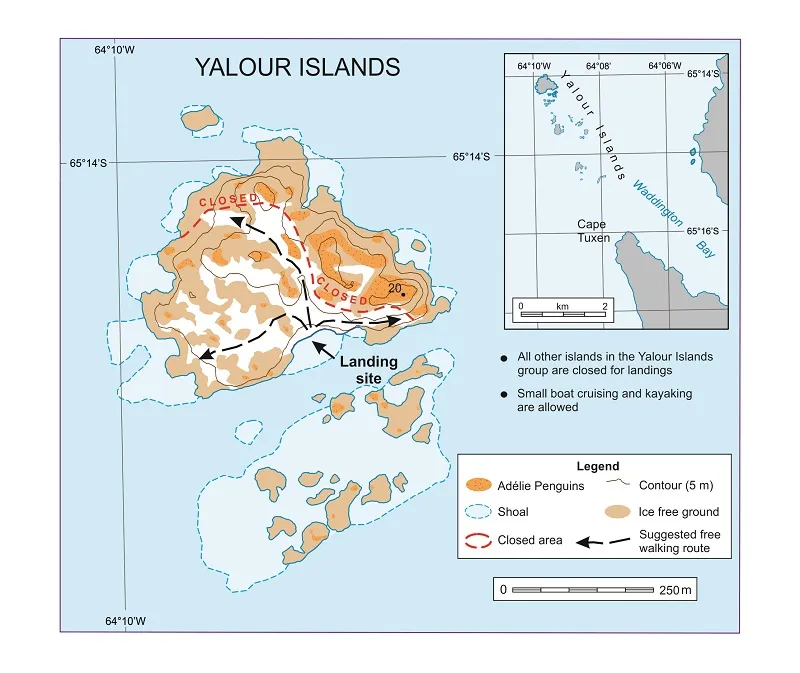
Our afternoon landing would be a split between zodiac and landing since the Yalour Islands had a maximum capacity of 60 people. I think those were my favorite types of excursions, where we could be on land and around it on the water, to experience a bit of both.
Since not everyone was on land or in the water at the same time, our Zodiac was also quite empty. A Zodiac at full capacity is 12 people, but we never were more than 9 or 10. This time we were just six people, which made maneuvering with big lenses easier. It was also a really successful zodiac ride, as we crossed off one of my bucket list shots!
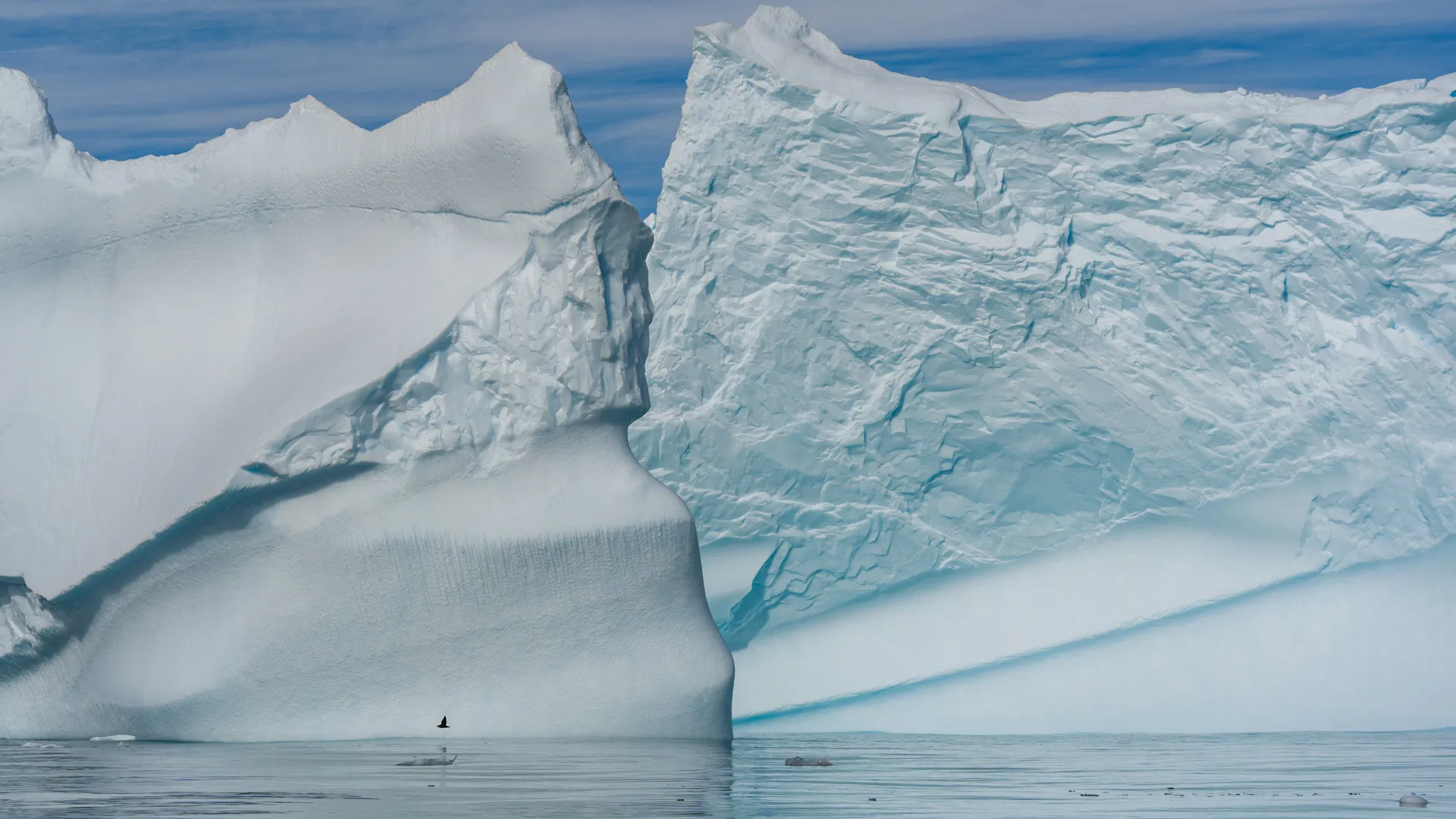
We started by driving through an ice berg graveyard and instead of the previous day where I was in a landscapey zodiac, this time we were all into wildlife. So, while we still took photos of stunning ice bergs, we were trying to find some animals.
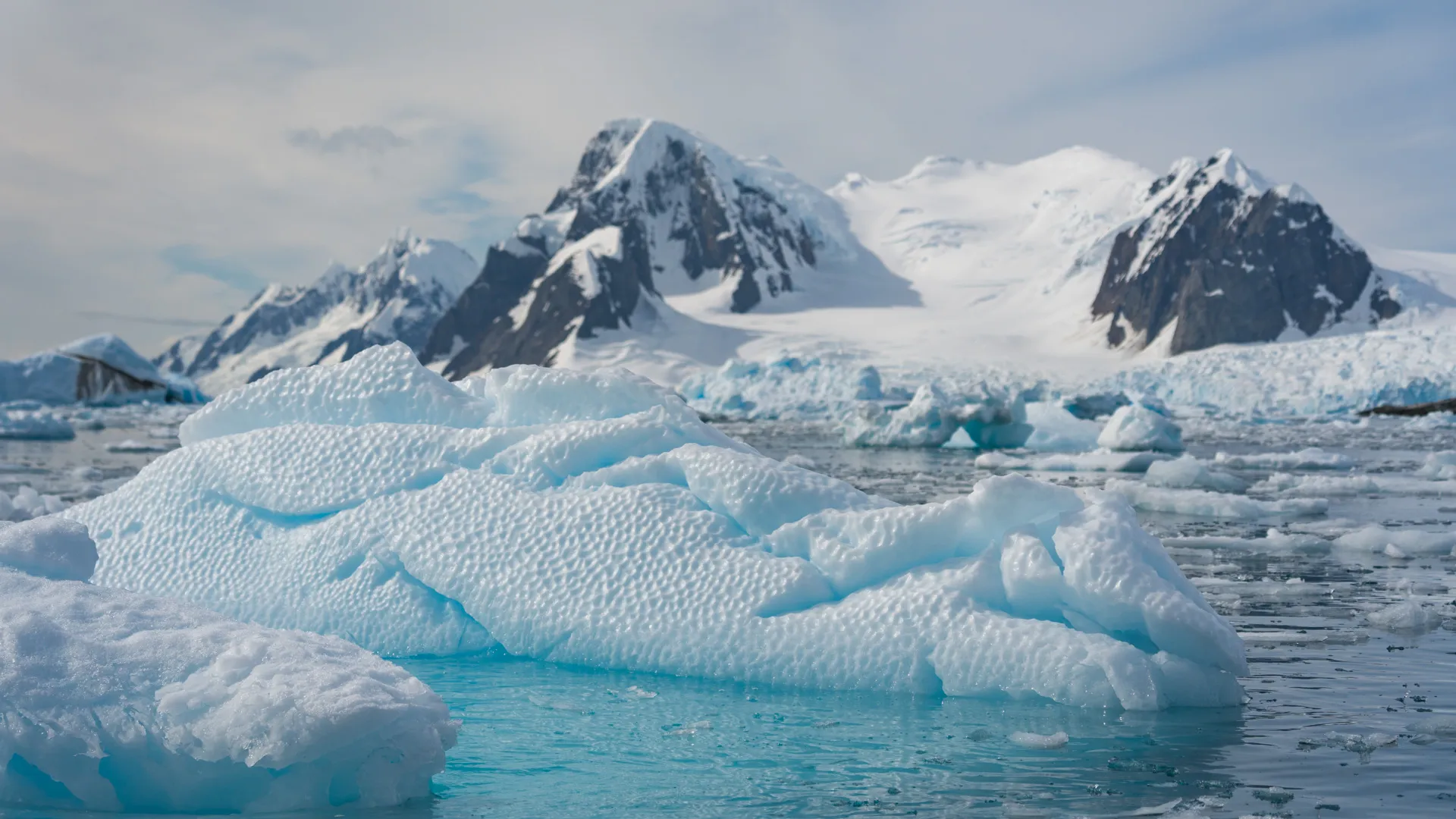
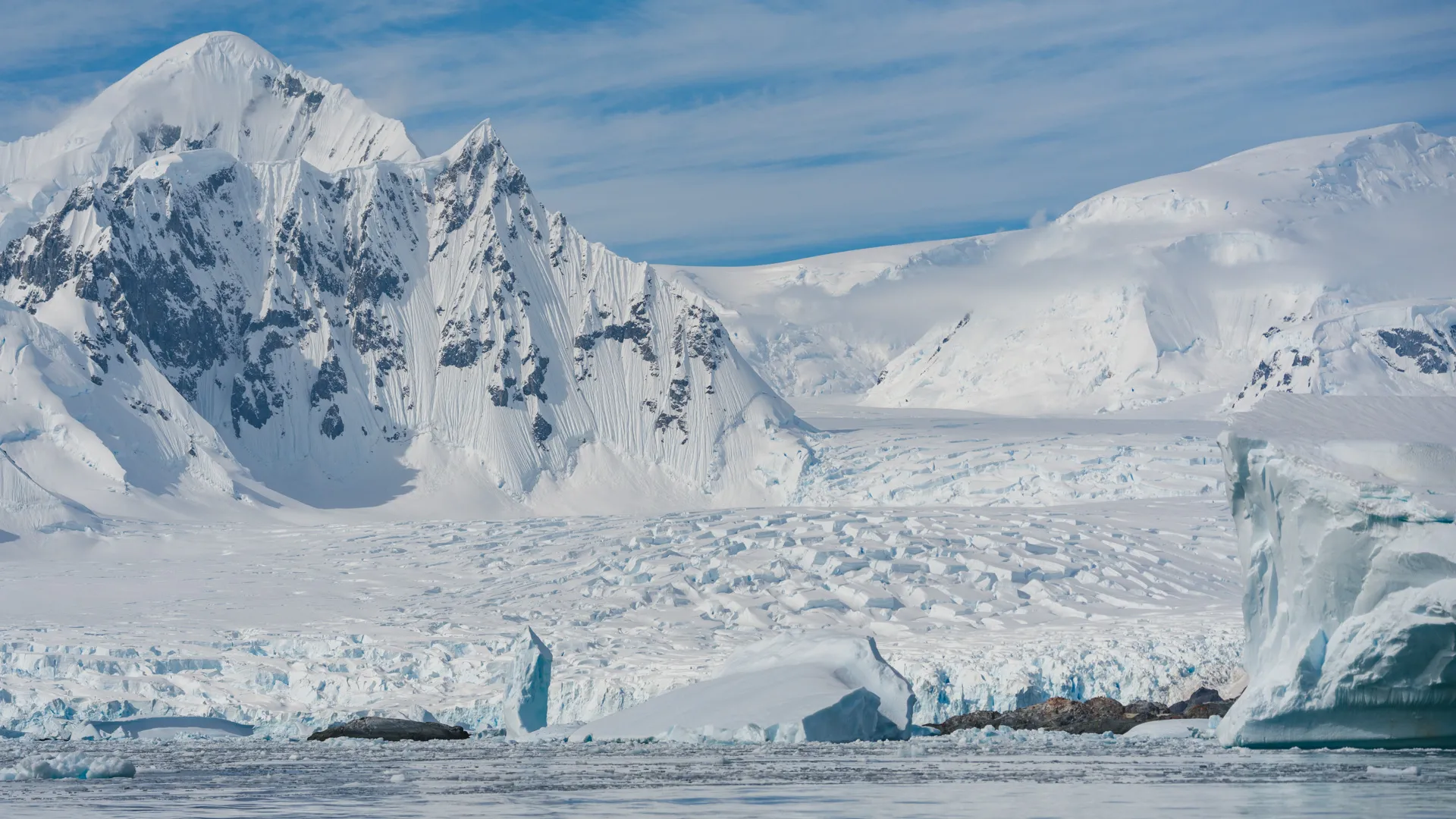
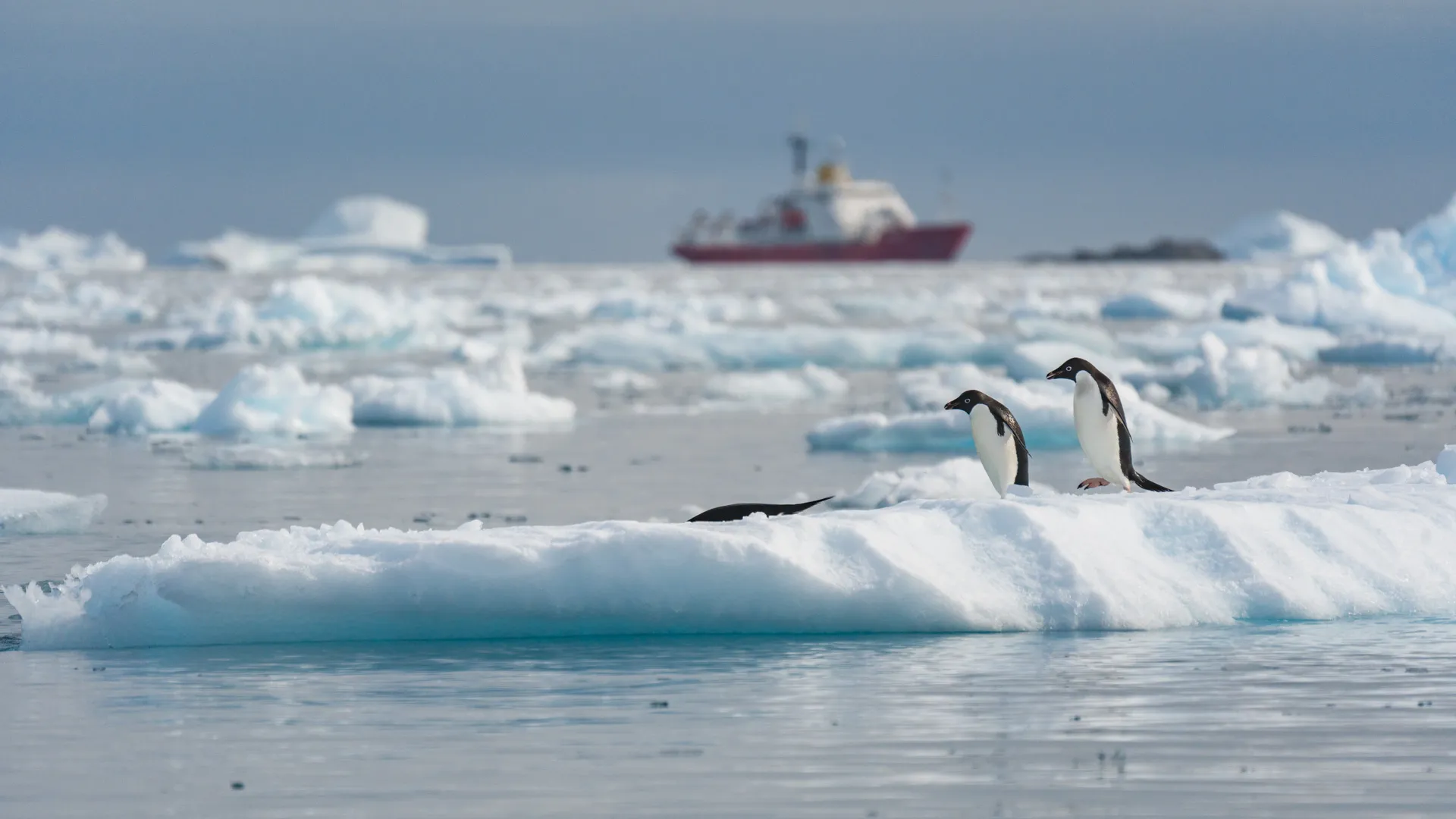
As we were cruising, I suddenly heard Dani say: “penguins on ice!” and that was the moment I had been waiting for. I had been hoping to get a shot of penguins on ice while we were in a Zodiac and while they were quite far away and did basically flee as soon as we were getting closer, I managed to get my shot. It’s a little soft but I still love it with the ship in the background and one of the penguins already almost in the water and the others following forming this little progression.
And then the wildlife piled up. We found another leopard seal. And while this is the apex predator, this one was yet again just chilling on the ice. And while I know they are very very deadly, it was actually very cute to me.
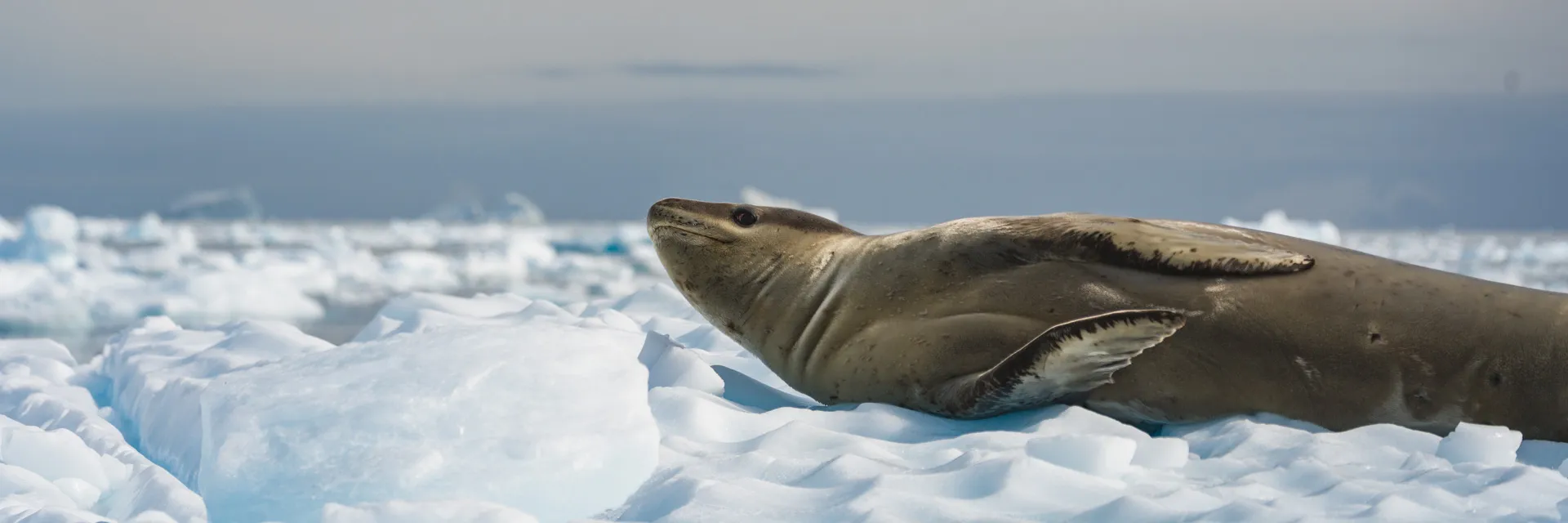
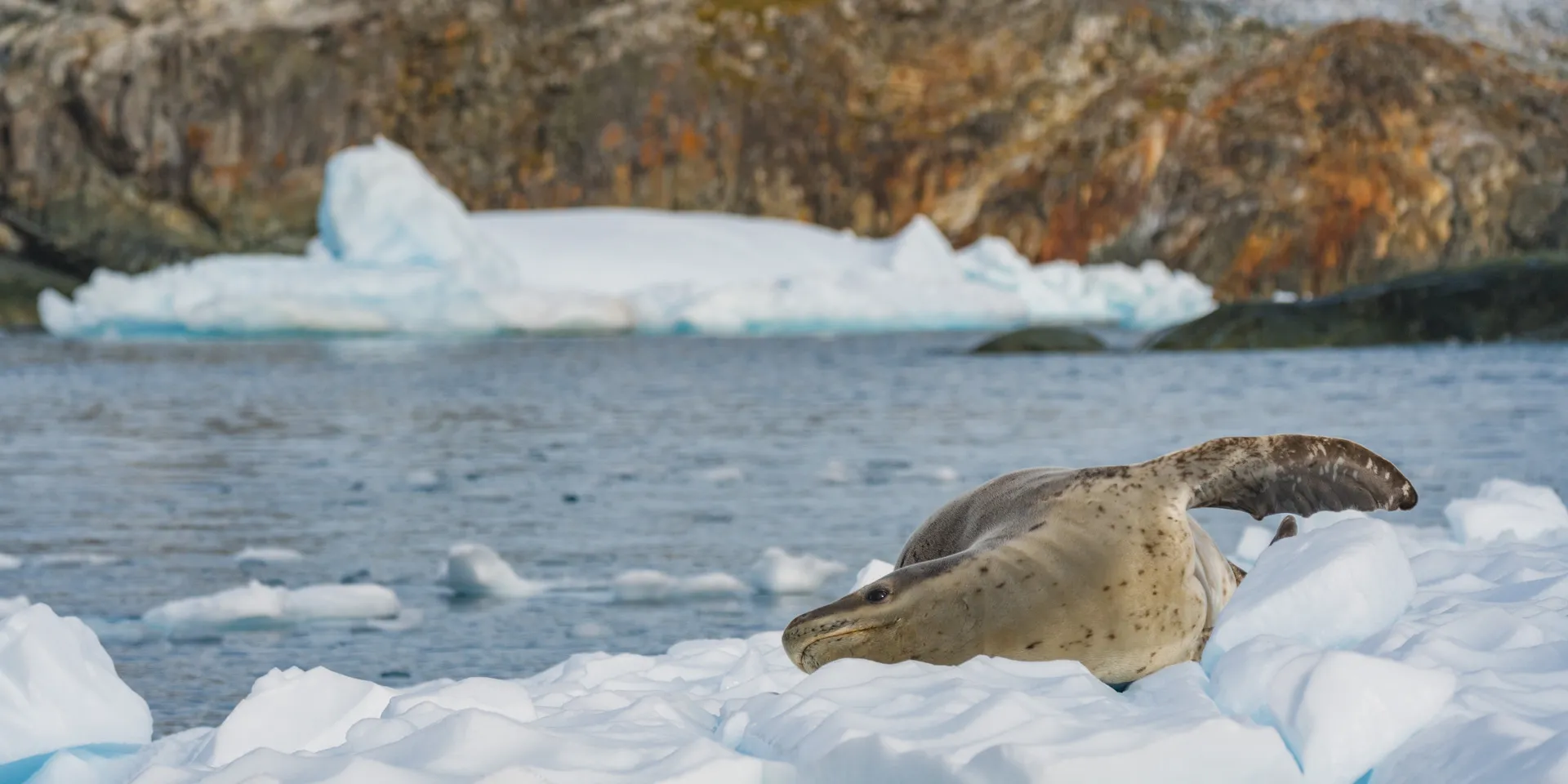
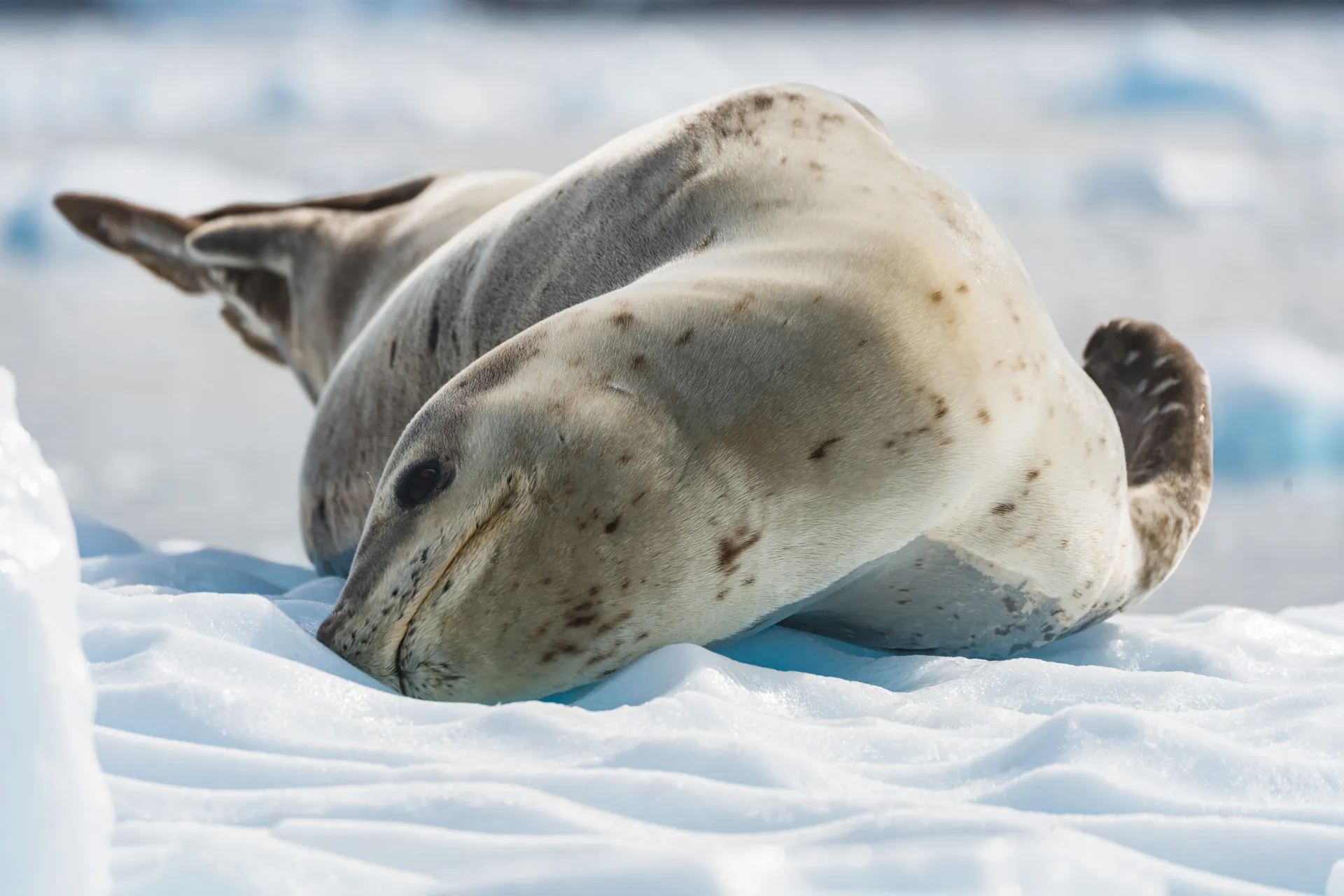
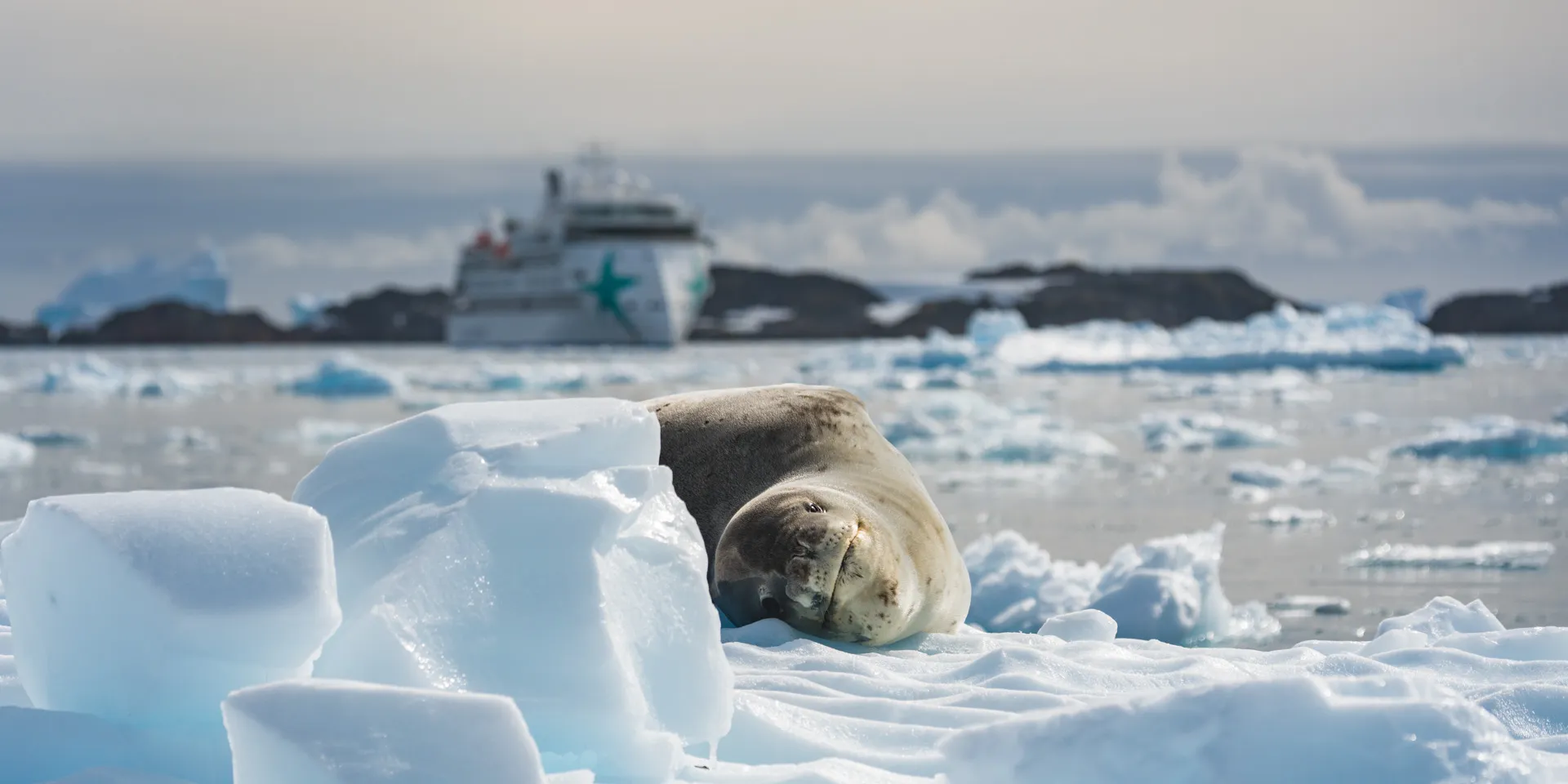
After the leopard seal turned its face away from us and showed us its hind flippers, we moved on.
And then we got to see the fifth (out of six, though Ross seals are usually not ones you see) type of seal found in Antarctica. We saw a crabeater! crabeaters are apparently the type of seal with most number of animals but they are fairly rare to be seen apparently. We learned that they don’t actually eat crabs, but mostly krill. We also got to see its teeth. I did not get a leopard seal with open mouth, which was a shot I’d love to have taken, but the crabeater was still very cool.
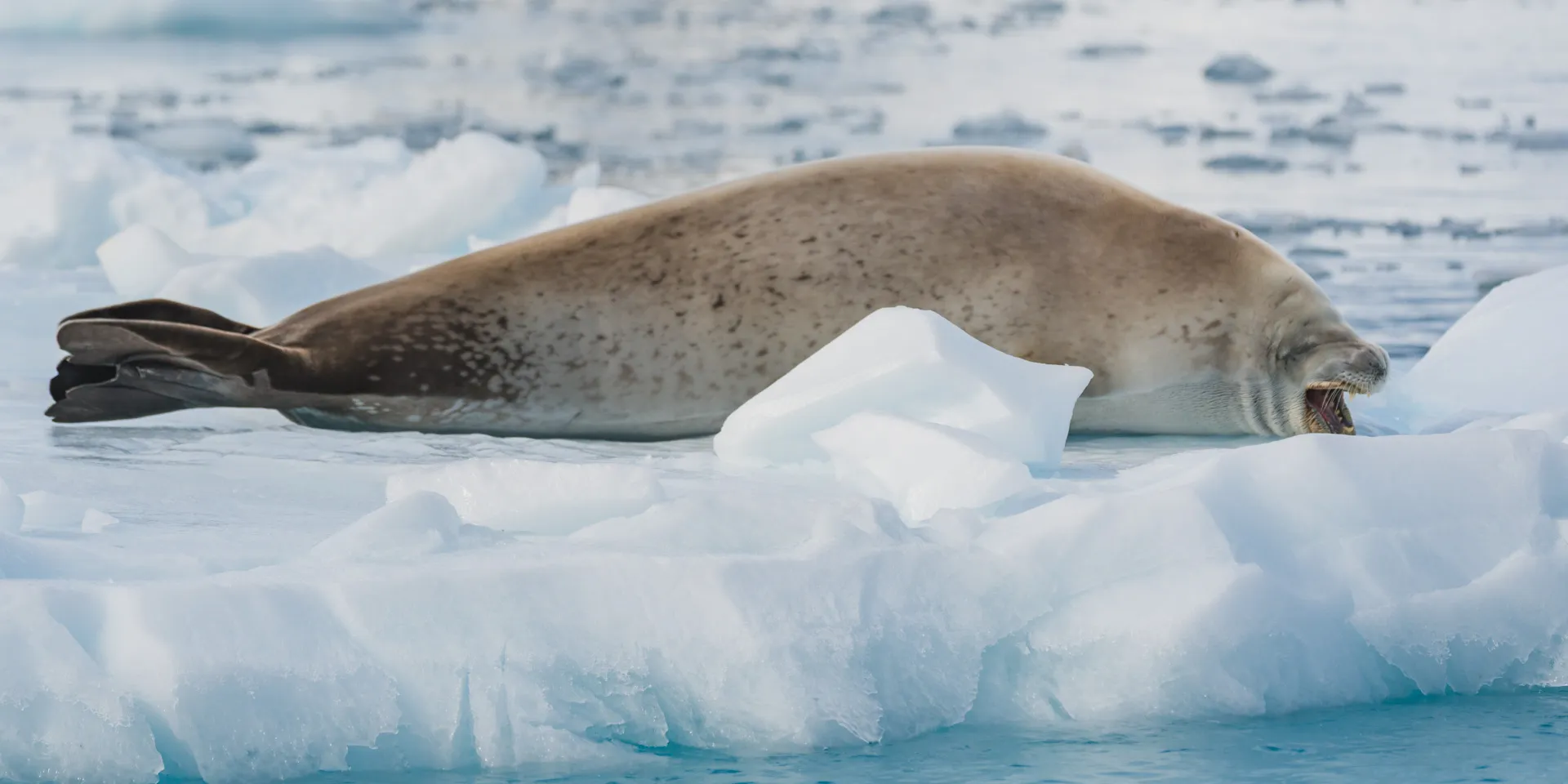
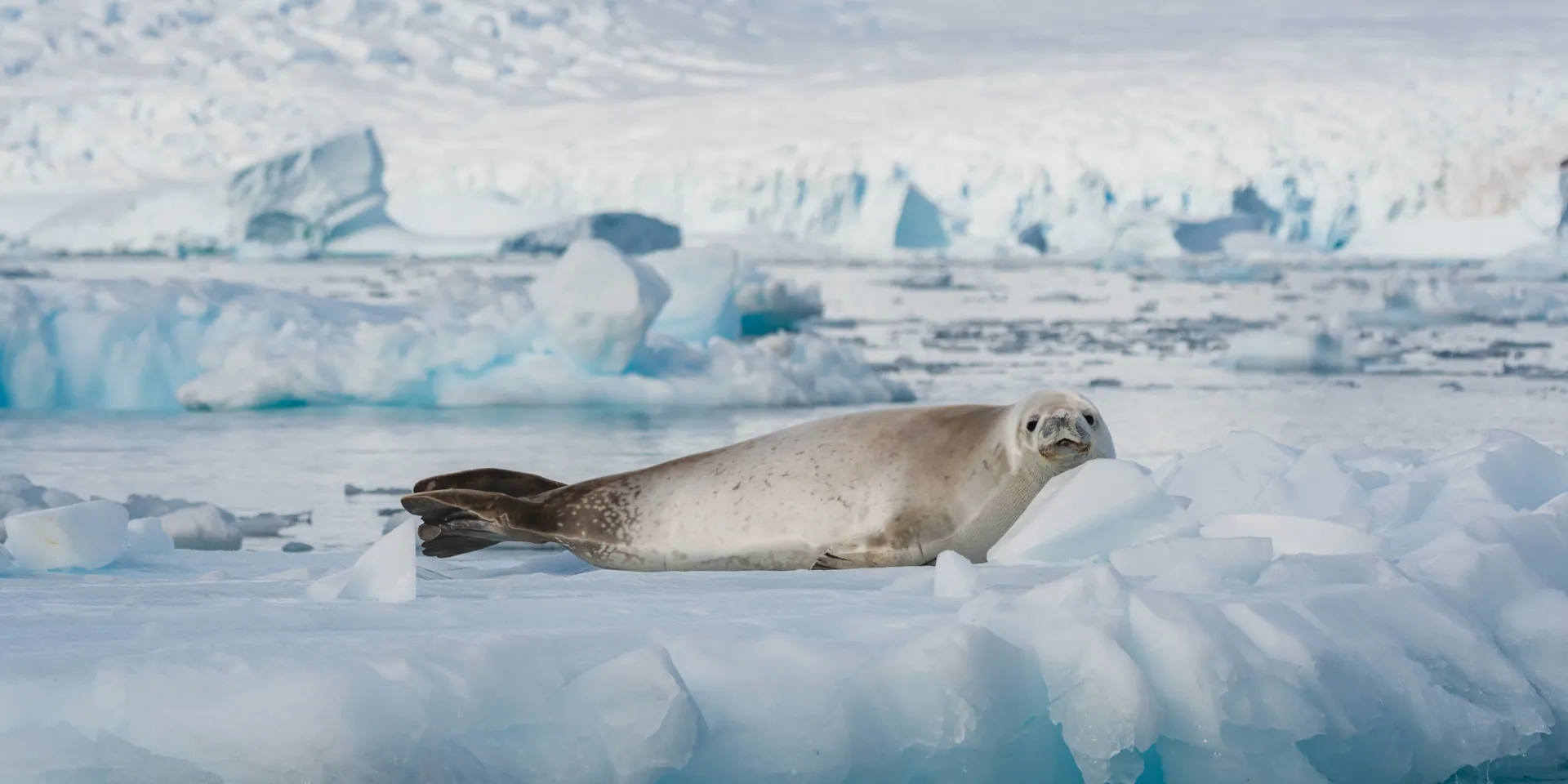
As we were getting close to the island, we saw another seal swimming in the water, but I missed those shots. What I missed was that there were new seabirds around! I took a shot of them but did not realize I had caught some snow petrels (I believe) alongside the Antarctic terns until I went through those photos back in Zürich.
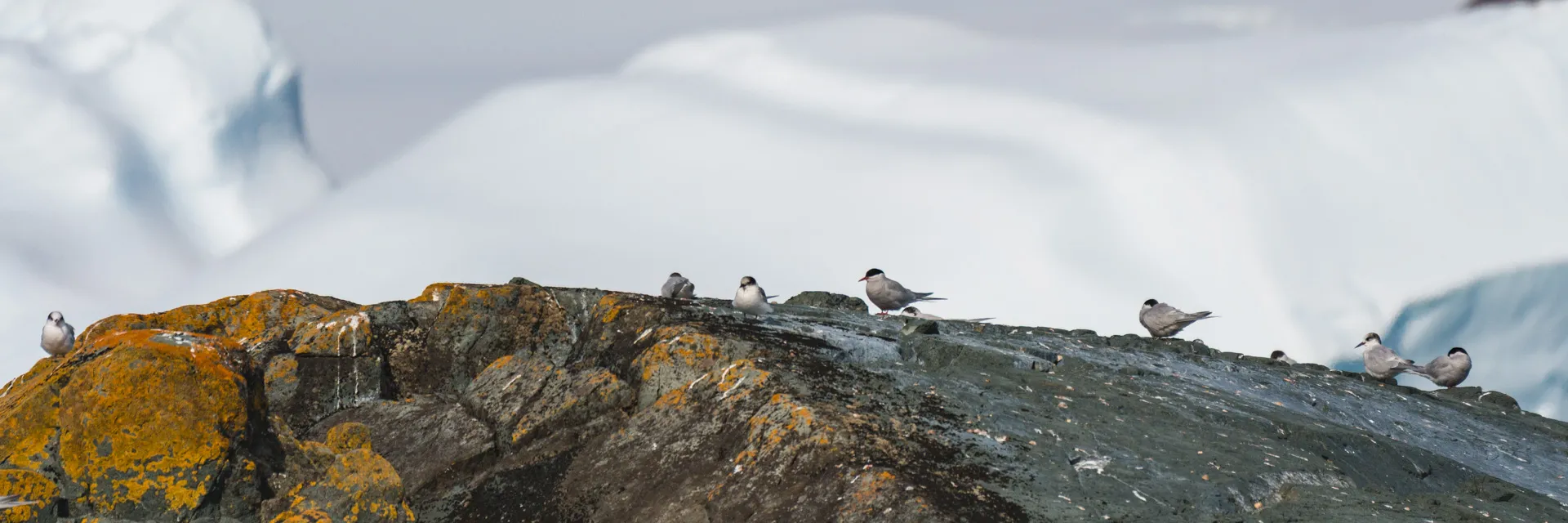
And then it was time to go on land. The weather was getting a bit more gloomy now and the terrain of the Yalour Islands had a bit more valleys than some other landing sites. It also featured an Adélie colony instead of just the few stray ones we had seen in the morning. Looking back, I love how different the locations were in terms of rocks. So many different ways the floor looked. And the penguins could deal with each different one!
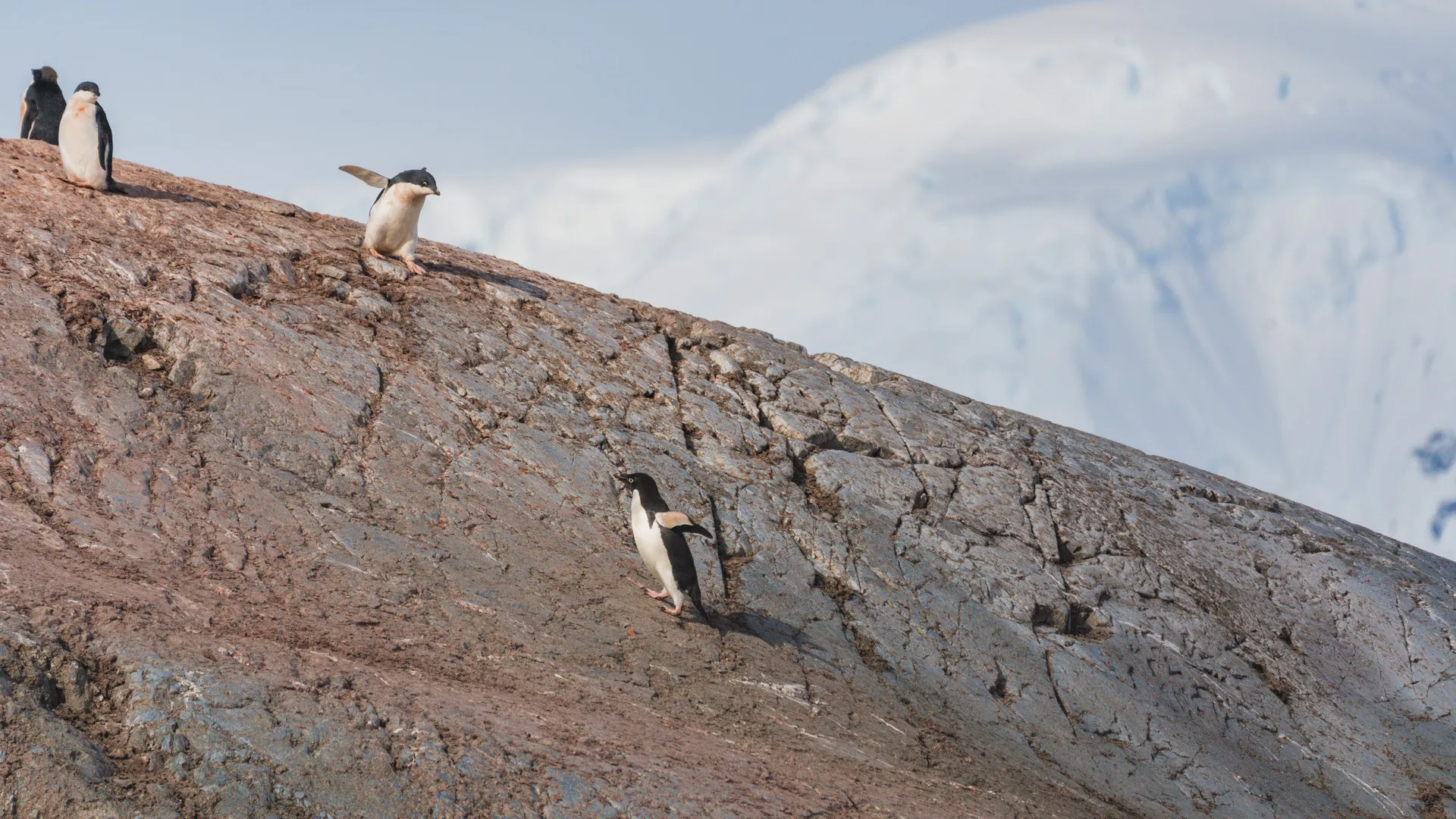
There weren’t as many moulting adult penguins here, but a lot of chicks that were right in the middle of loosing their fluff. My mission was to find a fully fluffy chick, but I wasn’t successful. However, when the fluff is gone, you can tell the young penguins by the fact that they don’t have the cartoon-eyes yet. The ring around their eyes only develop as they mature.
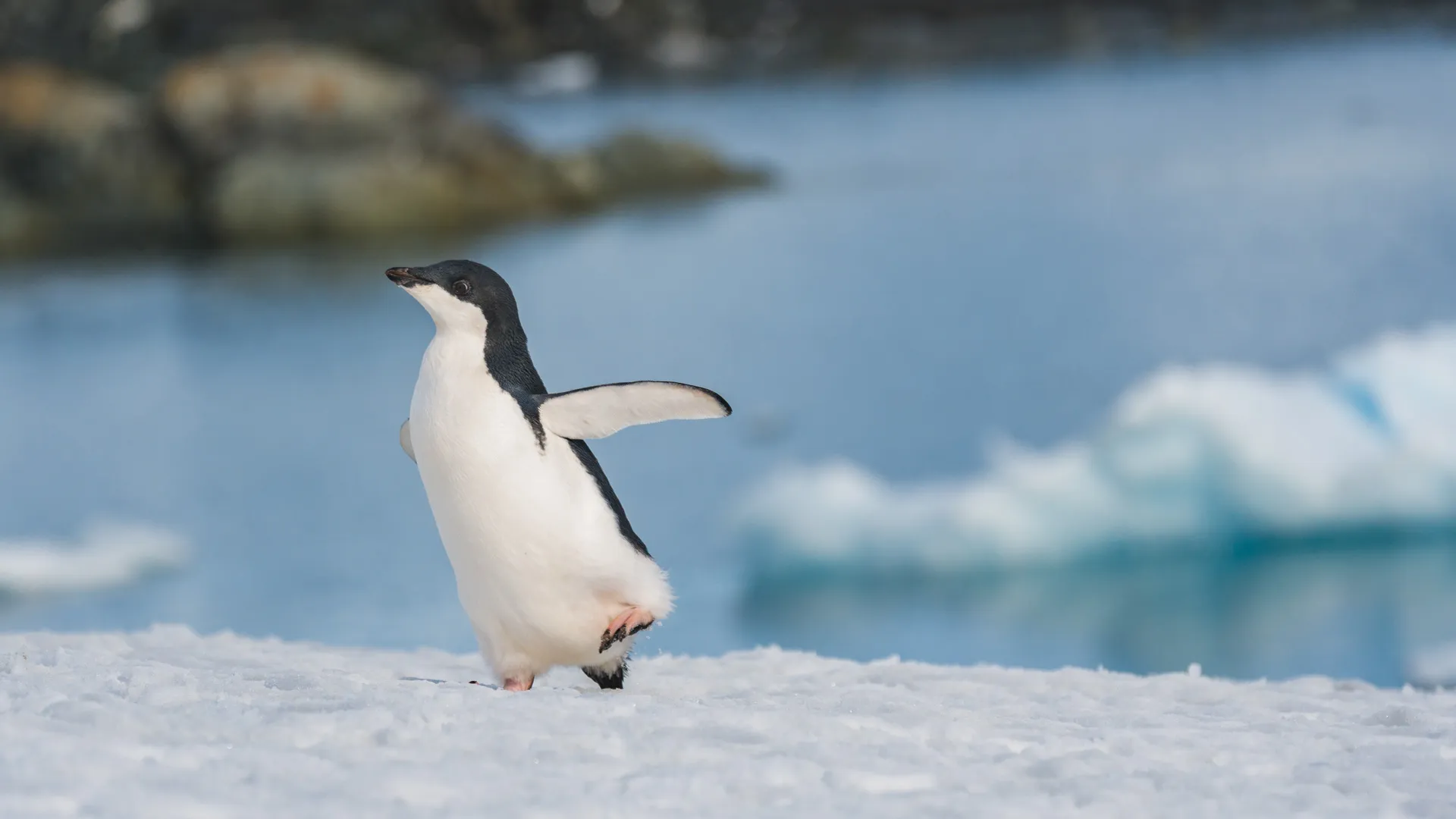
What I noticed though, was there was a significant difference in weight around the Adélie colony. Since adults need to fatten up before they start their moulting and then fast as it happens, I believe I caught a few in the process of bulking and a few that were in their skinny phase.
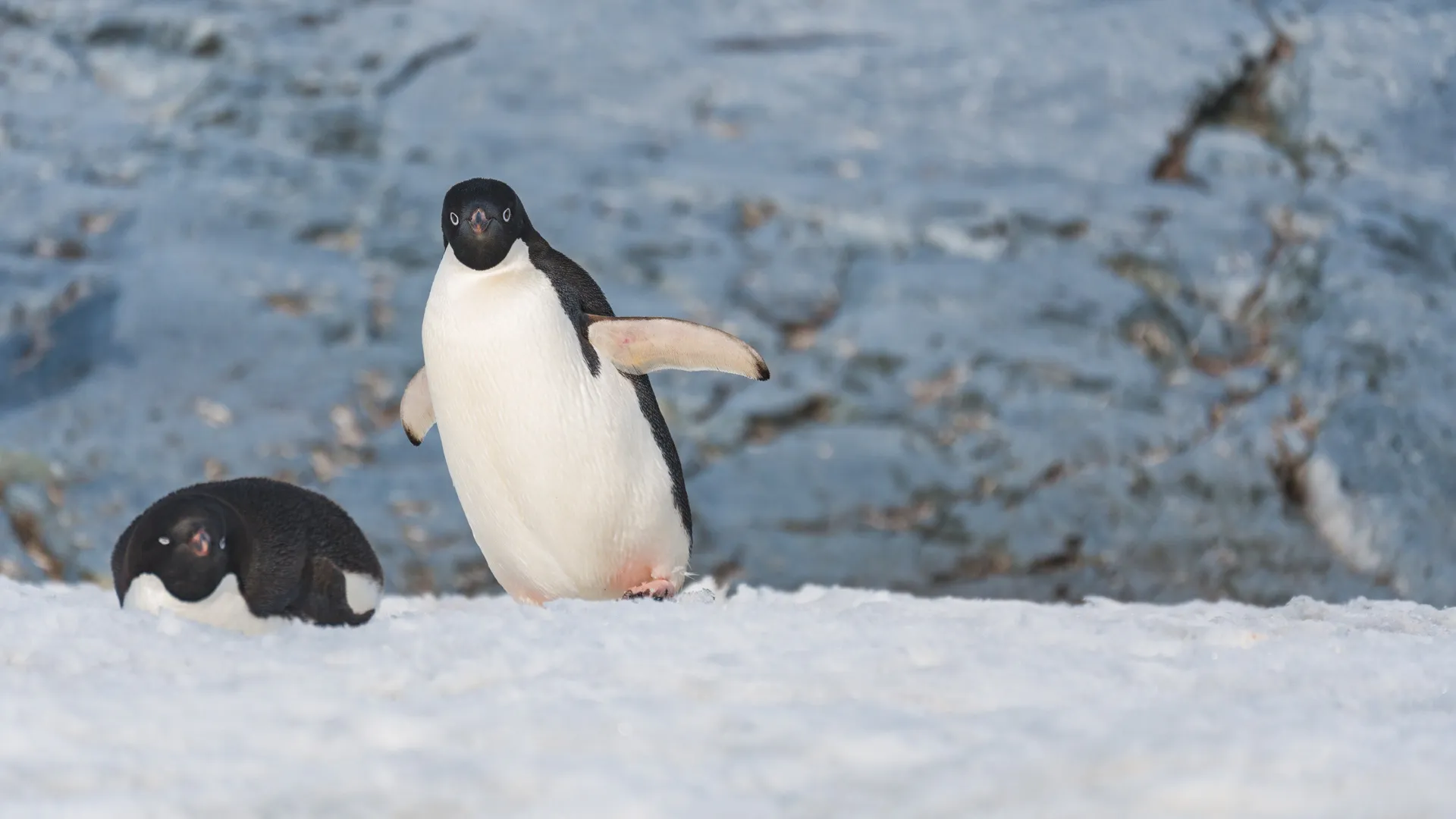
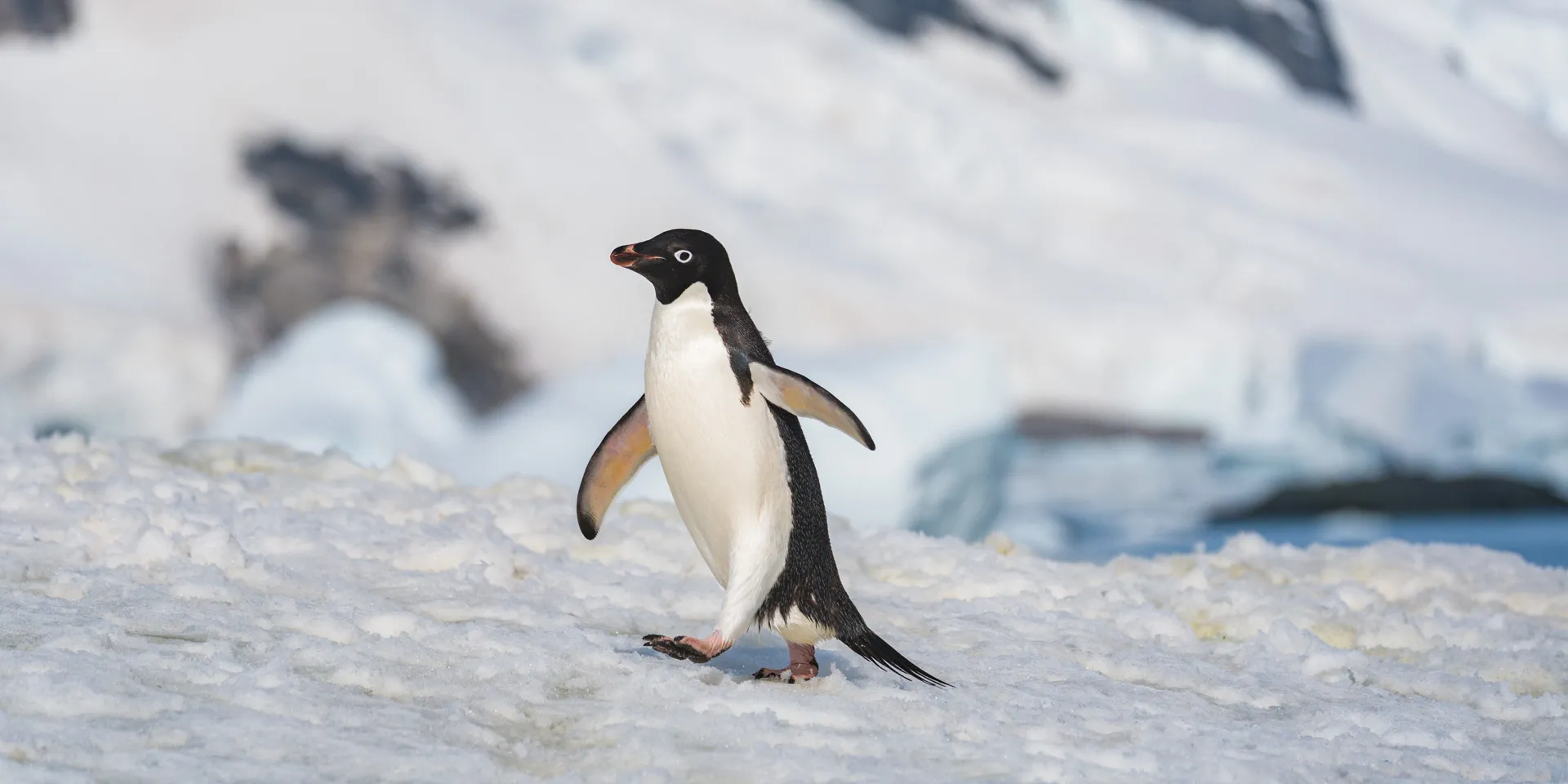
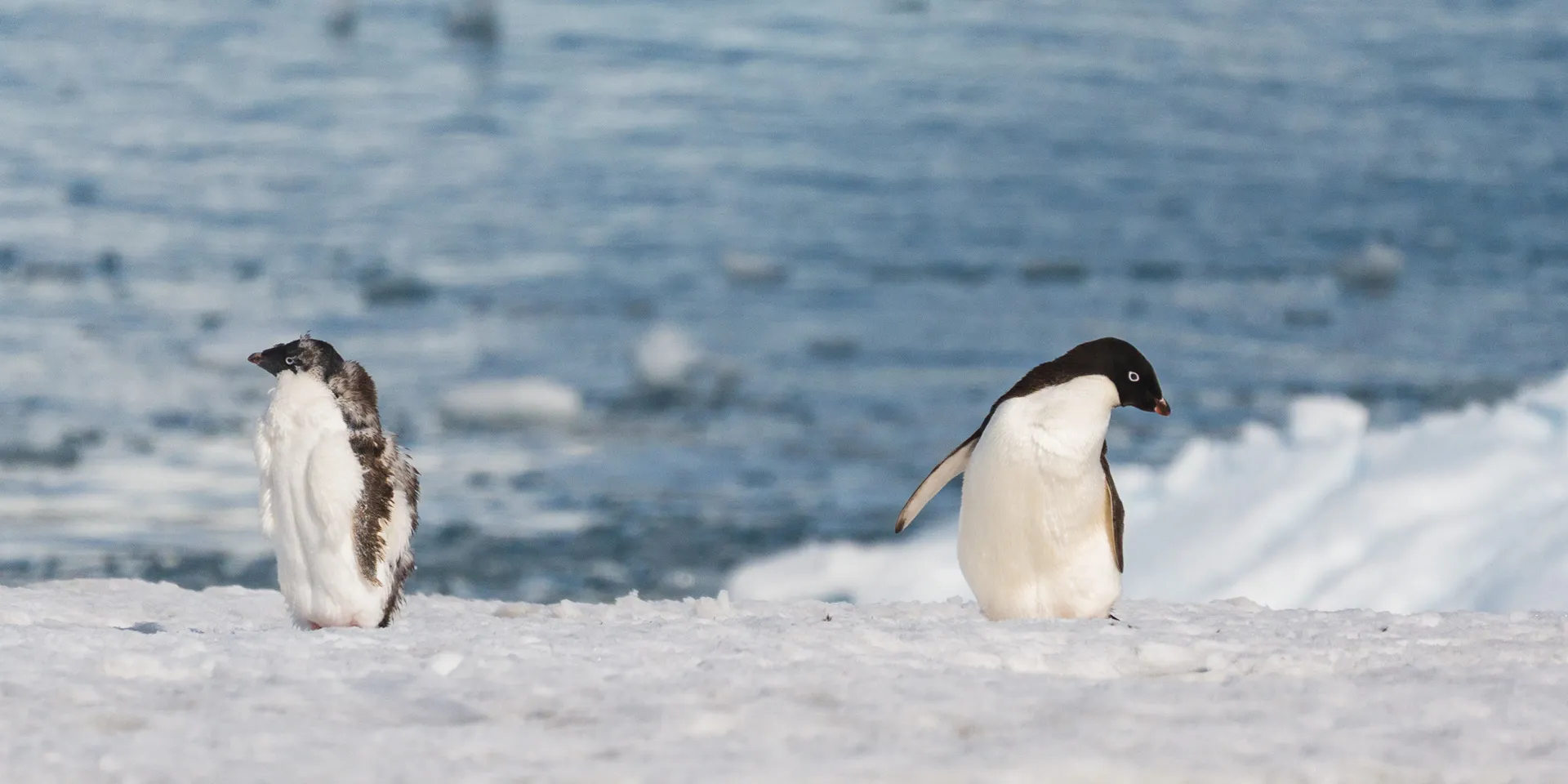
As a kid, I loved watching Pingu (originally a Swiss show, but apparently it is globally known and especially loved in the UK and Japan). The Adélie penguins reminded me of Pingu so much. Seeing these guys stretch their bodies with their round cartoonish eyes were so much like the clay animated show. I still feel like Pingu resembles a Gentoo or Adélie more than the Emperor he’s supposed to be, based on his little sister’s appearance.
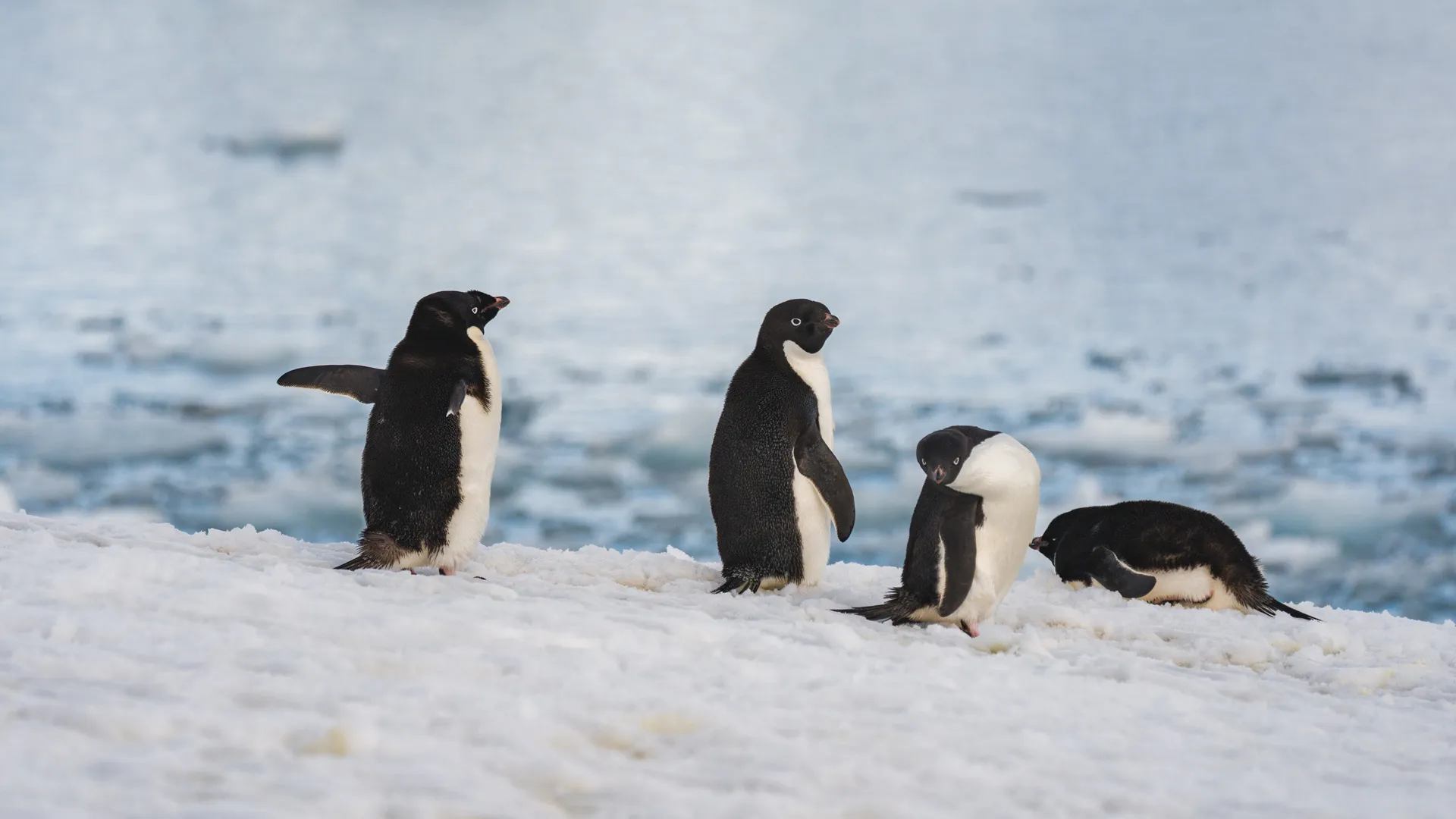
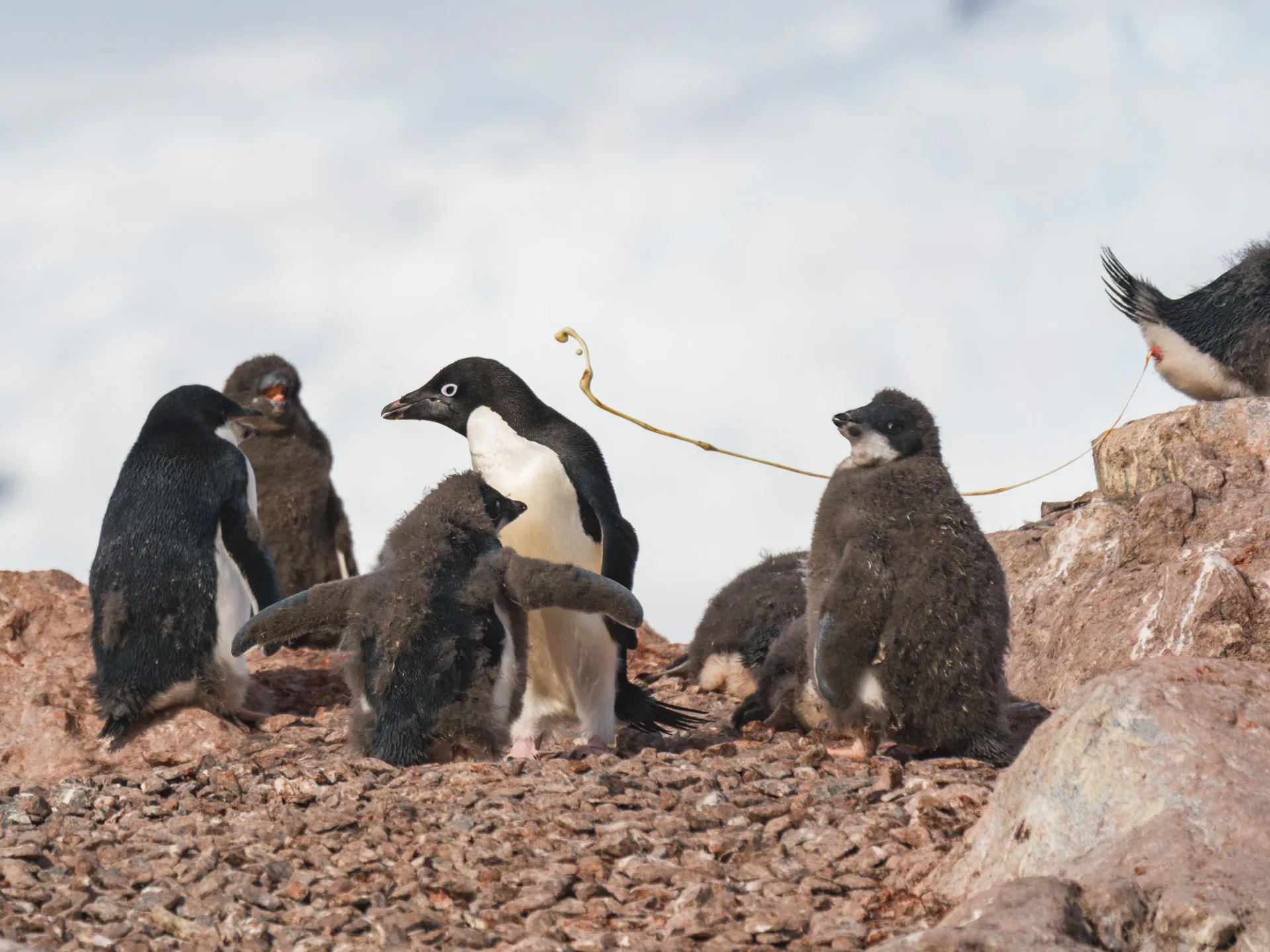
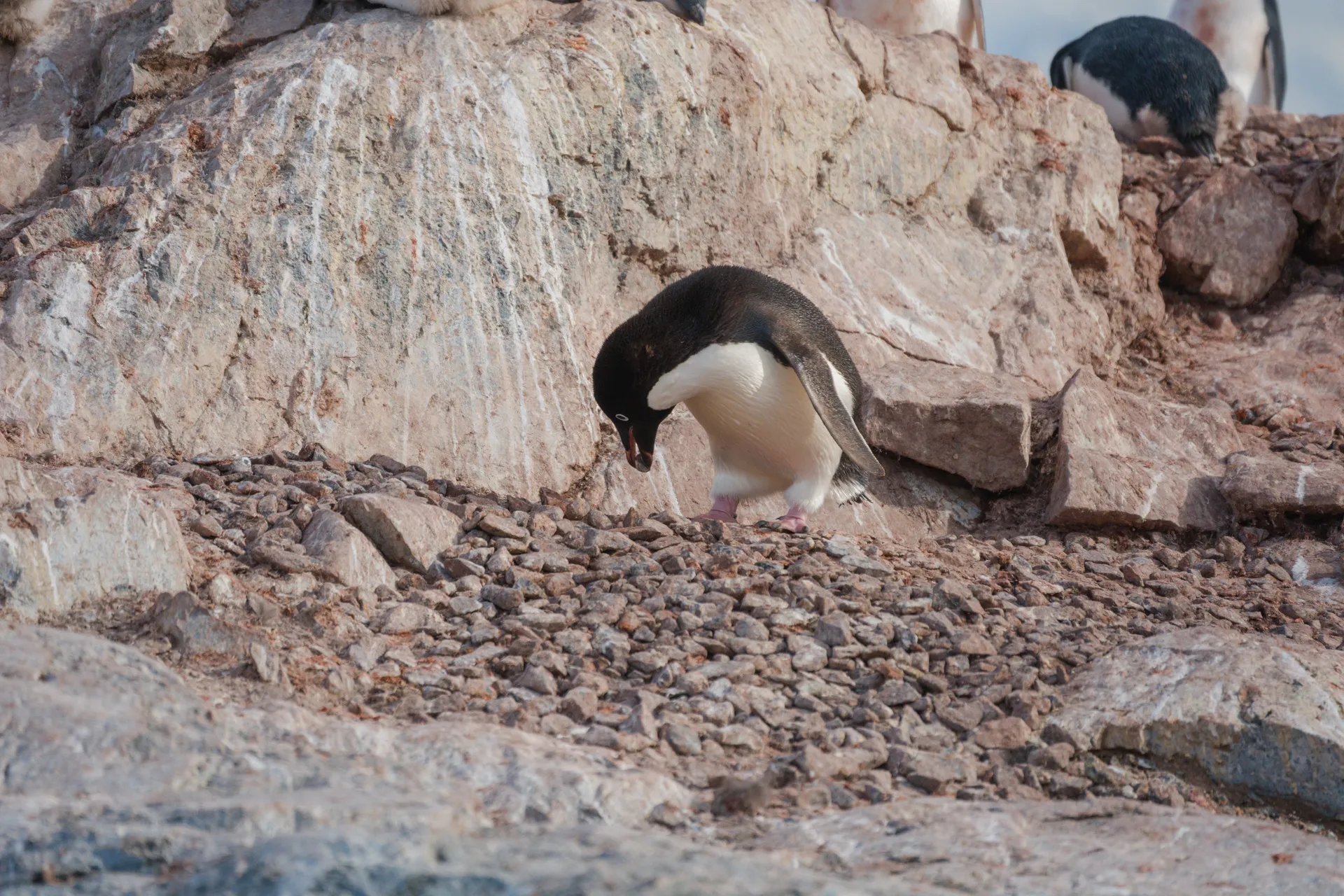
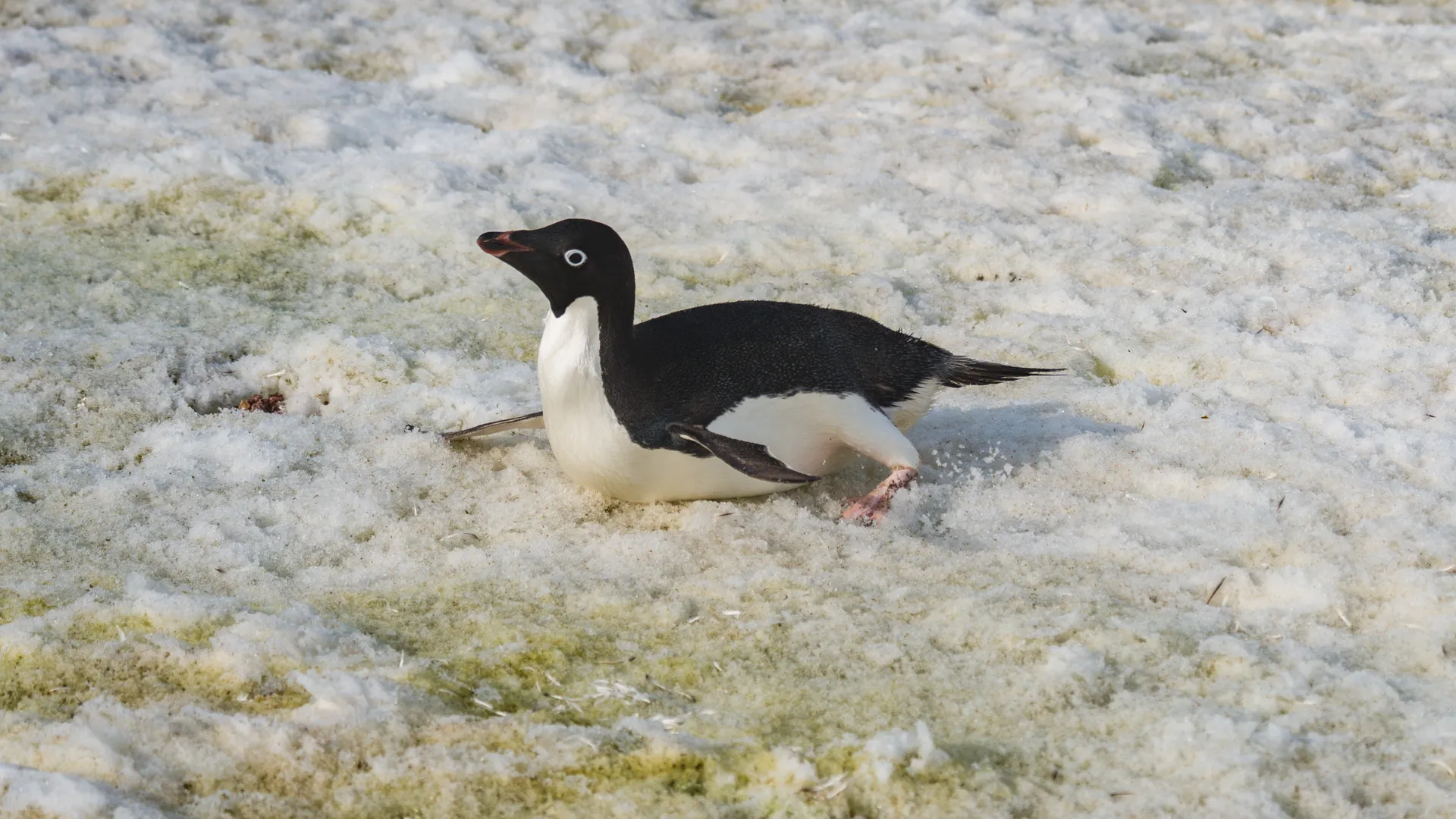
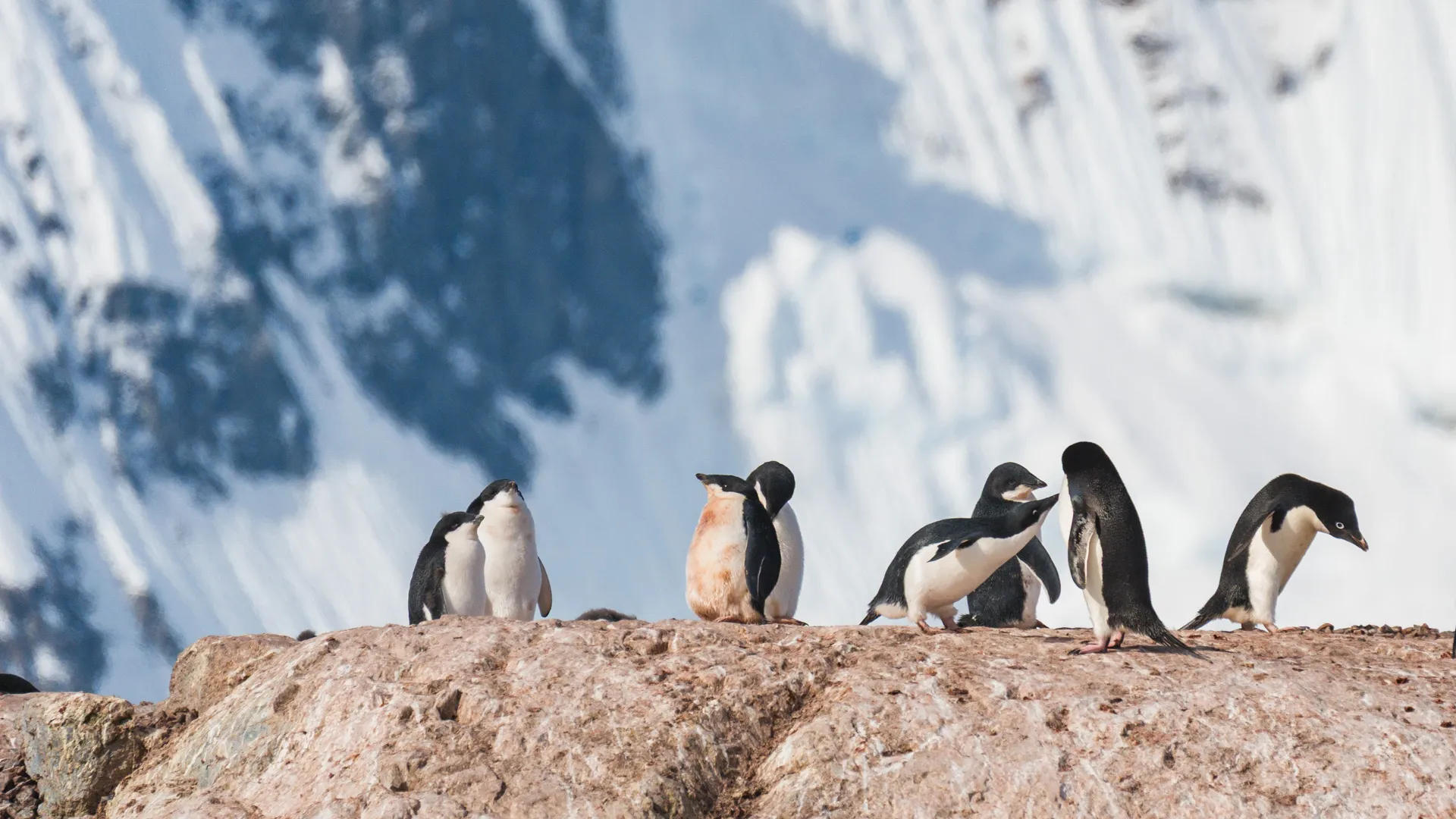
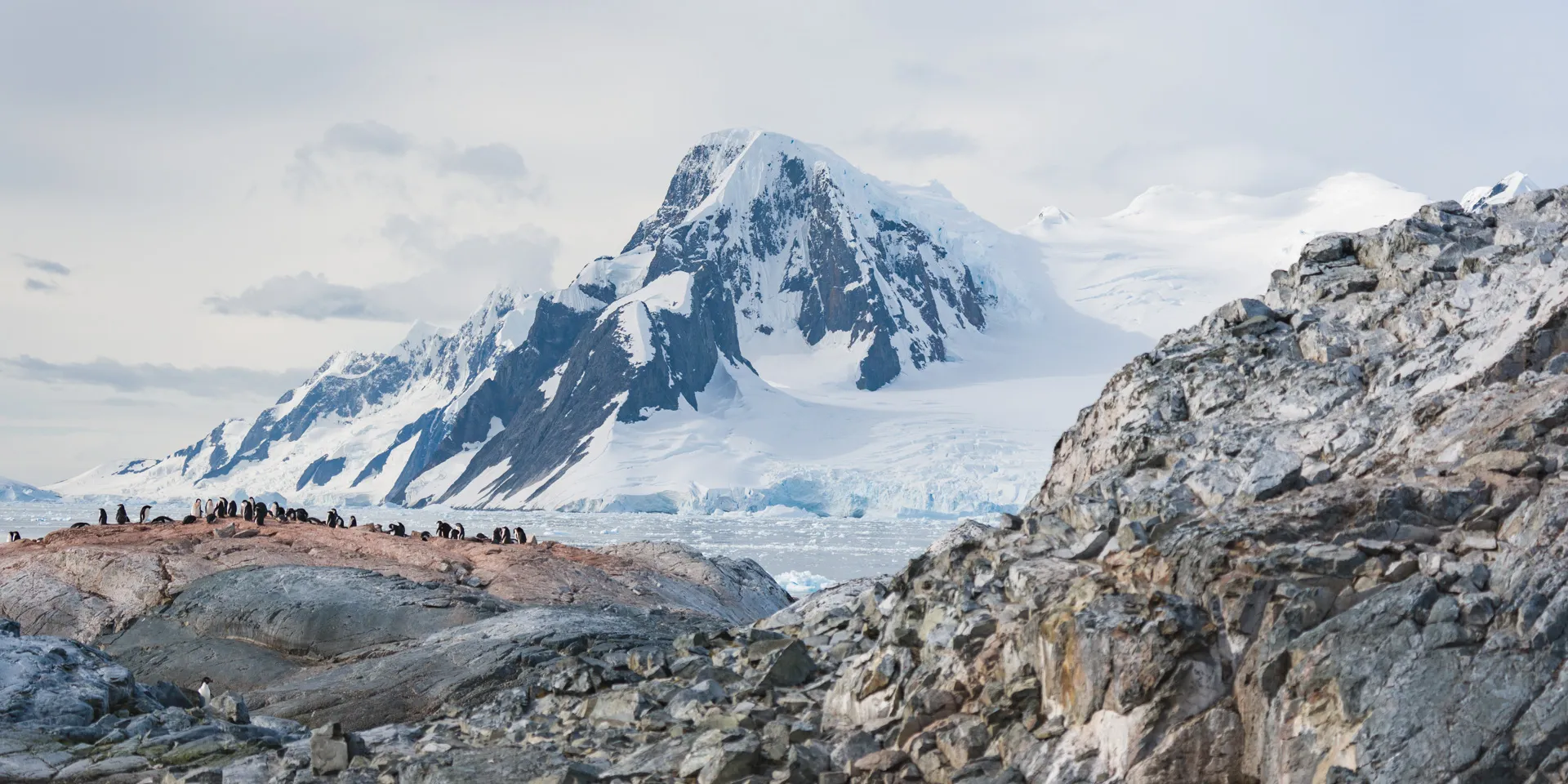
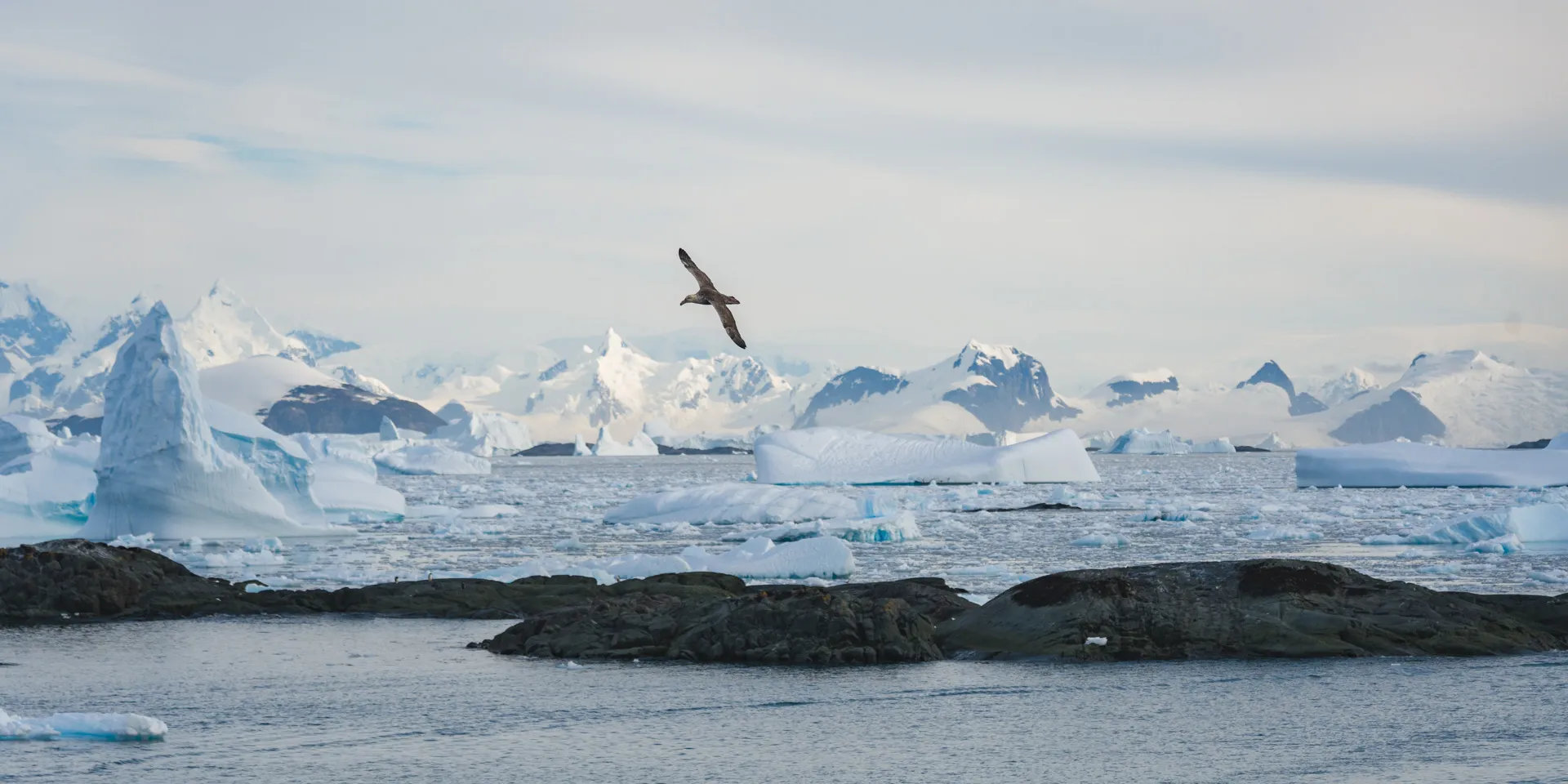
On a more darker note: This island had a lot more traces of penguin death. We saw skeletons and feathers and singular bones in many places. But that is the cycle of life.
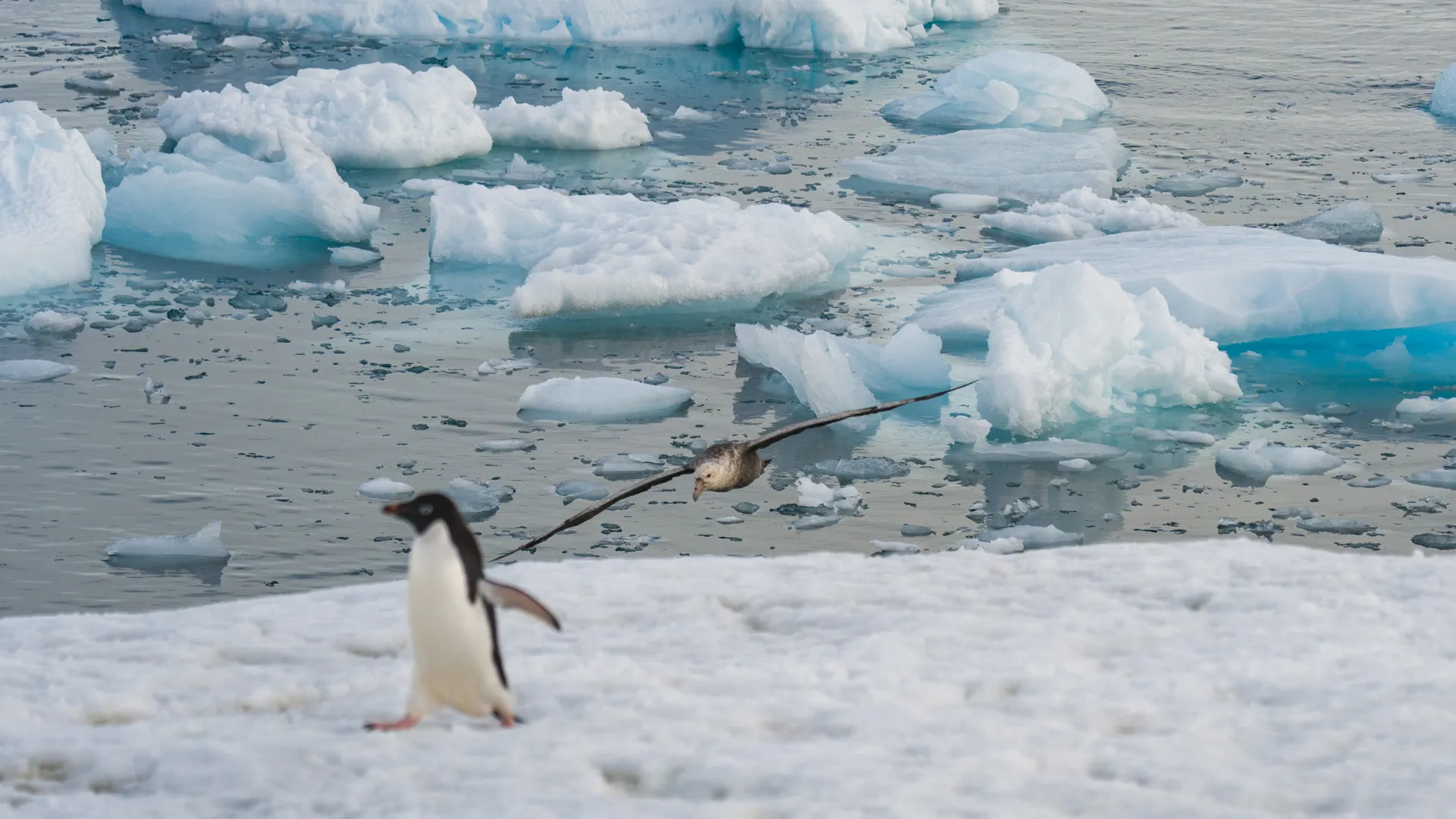
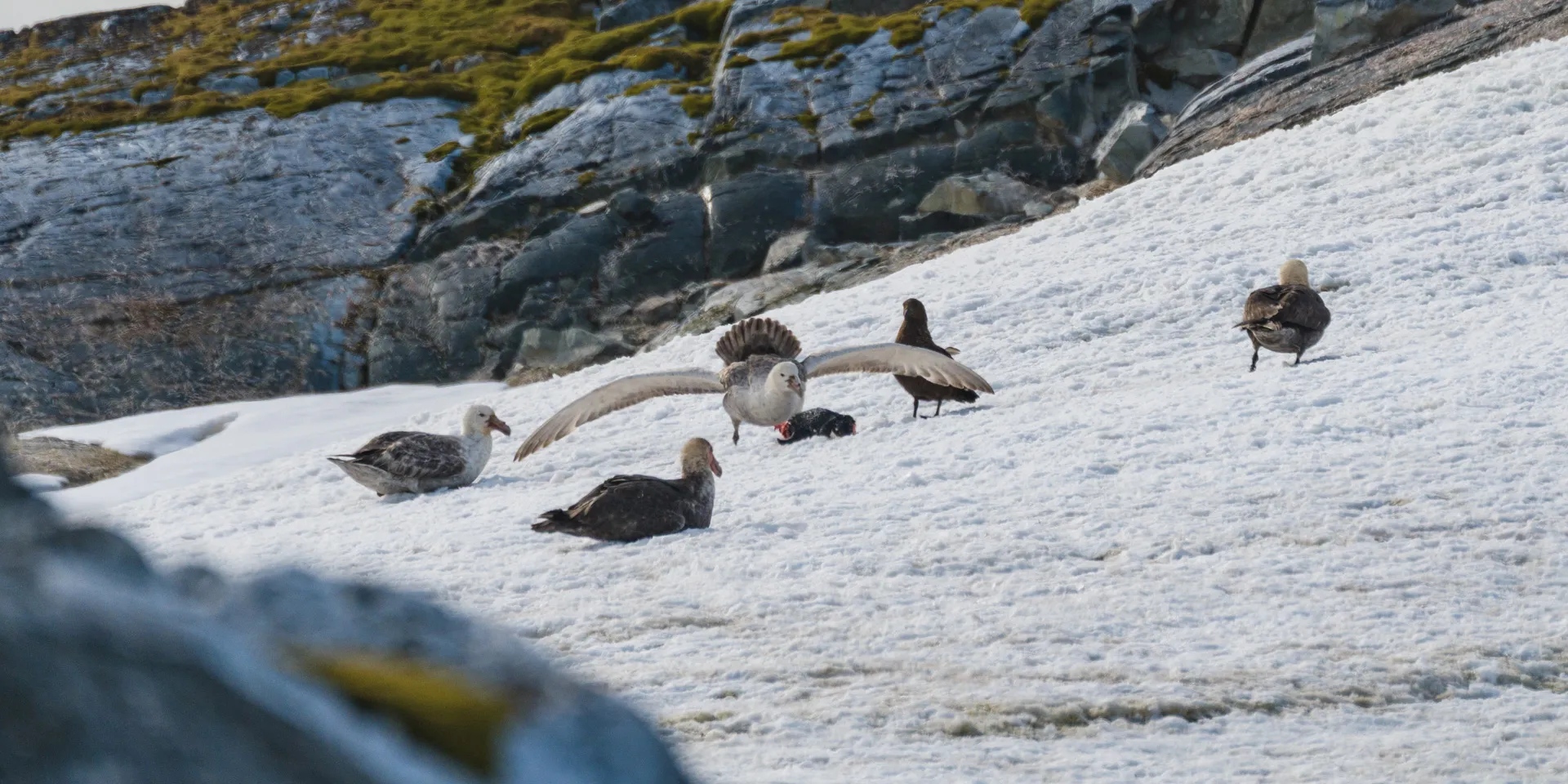
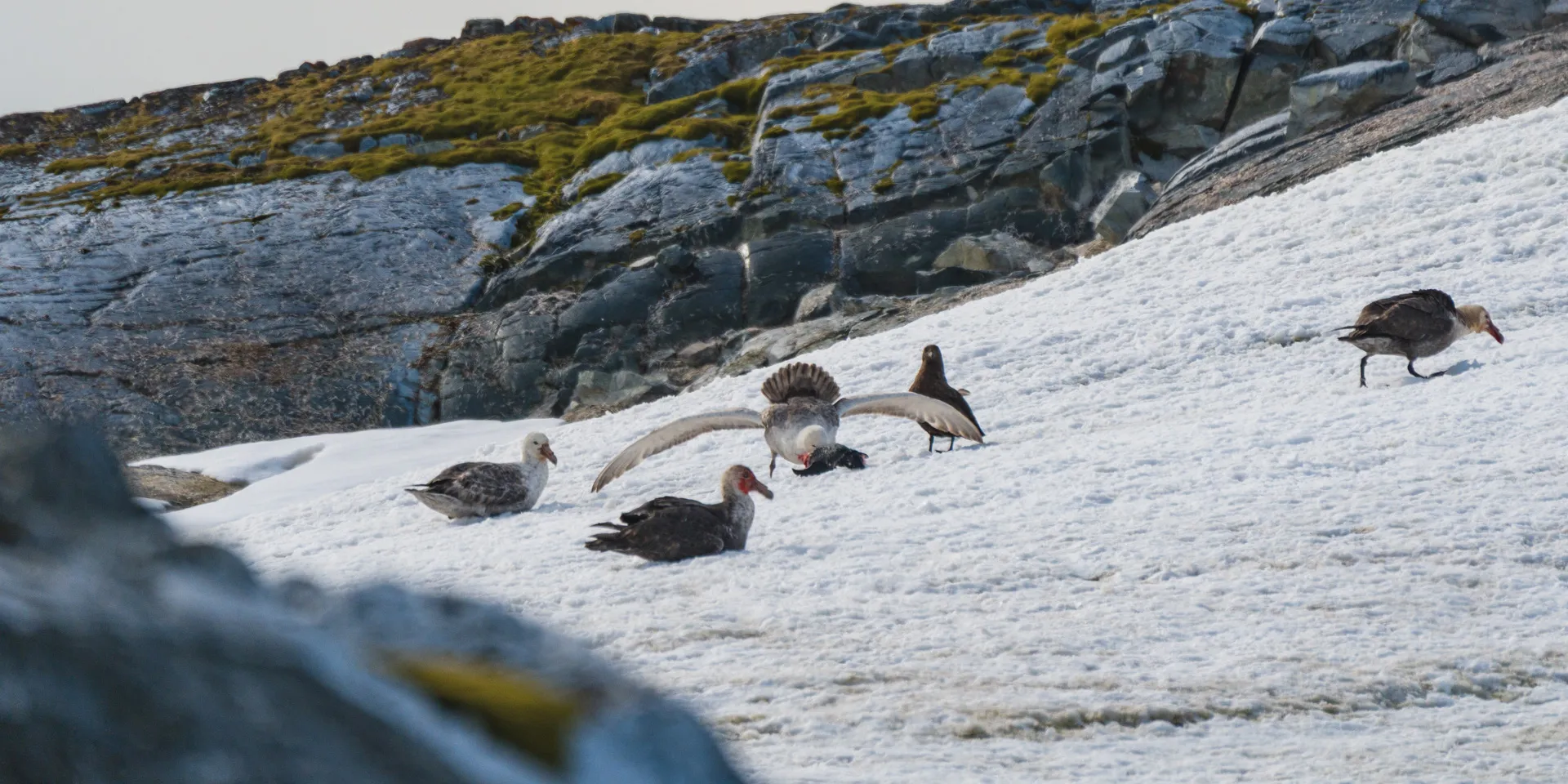
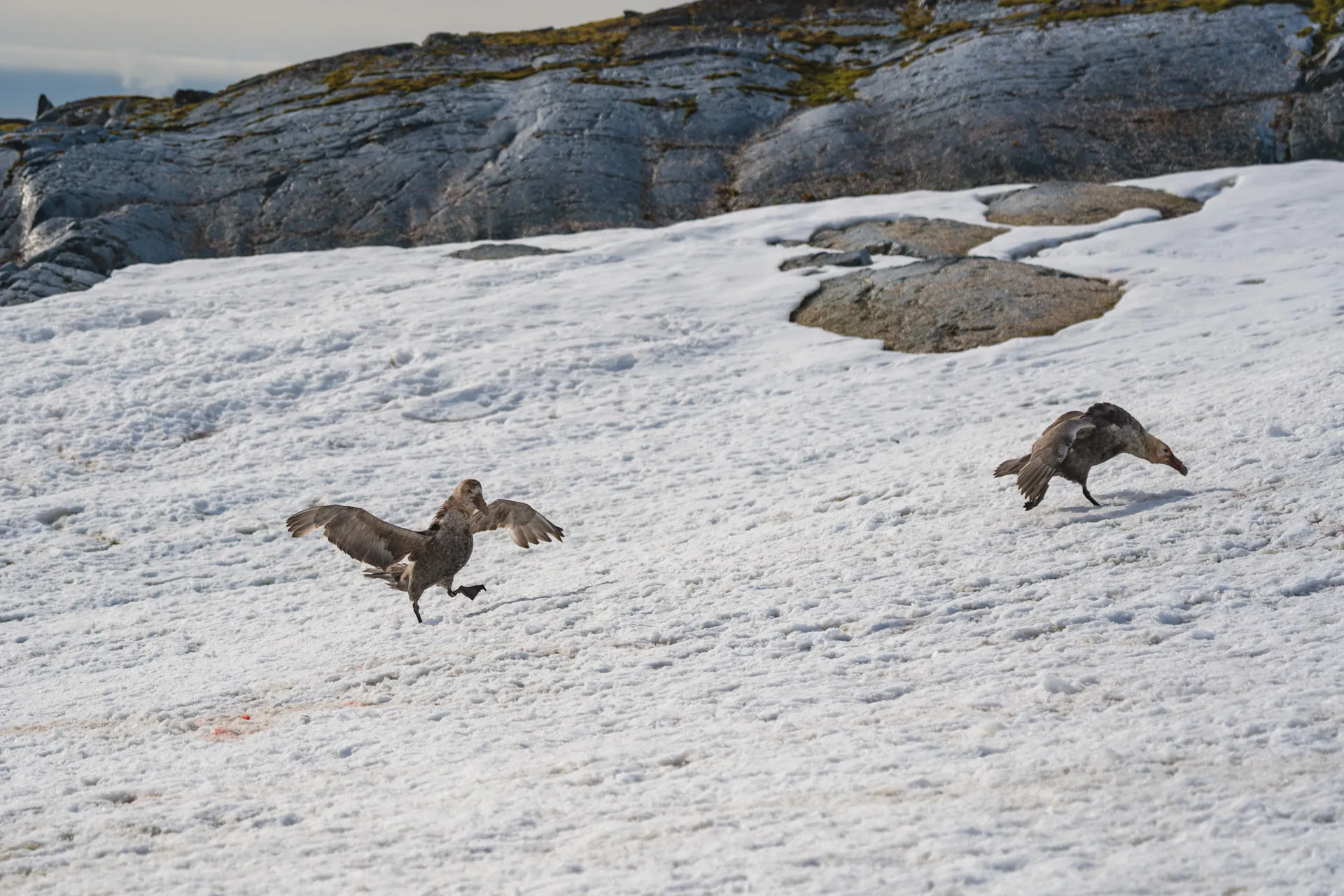
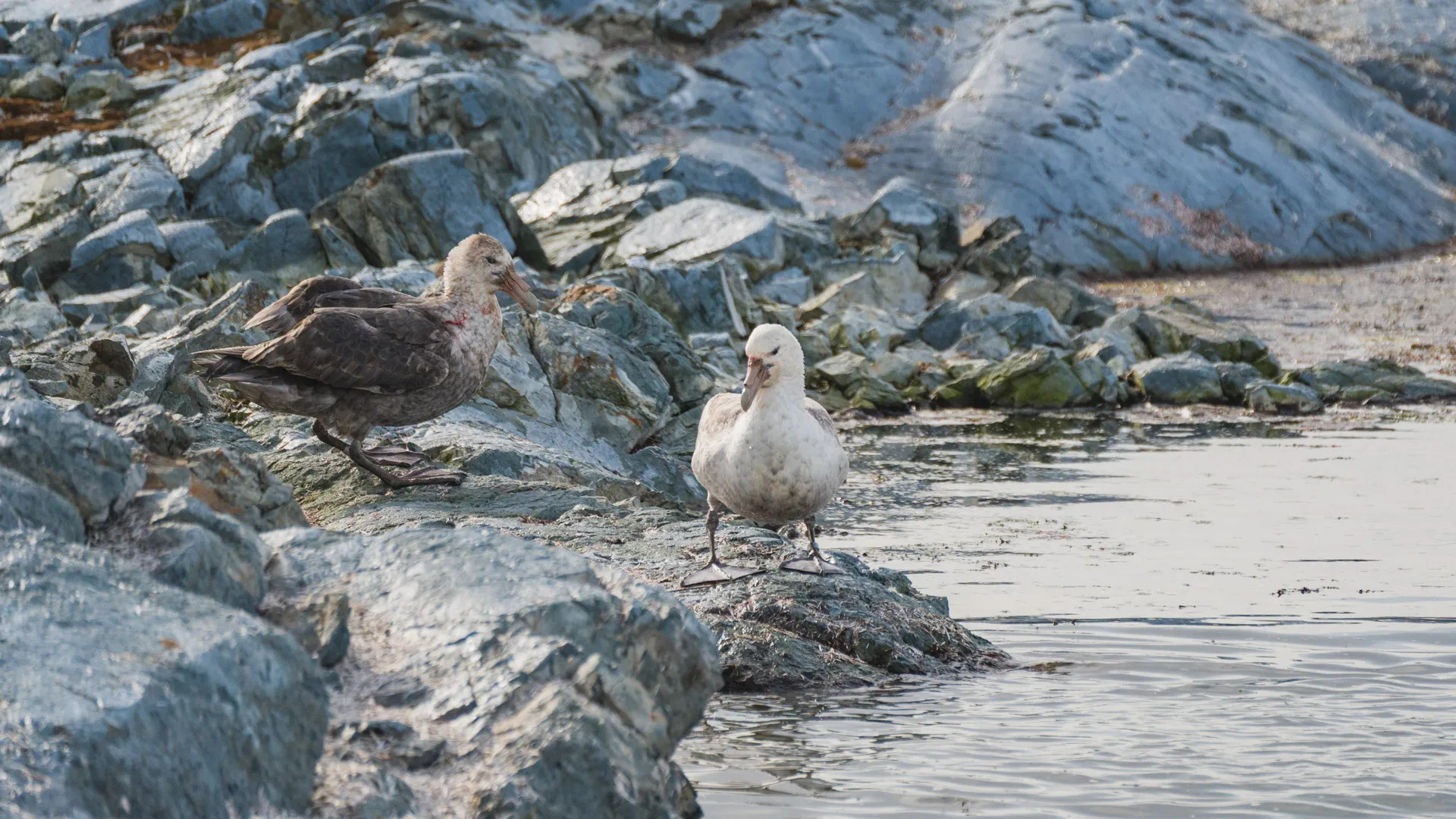
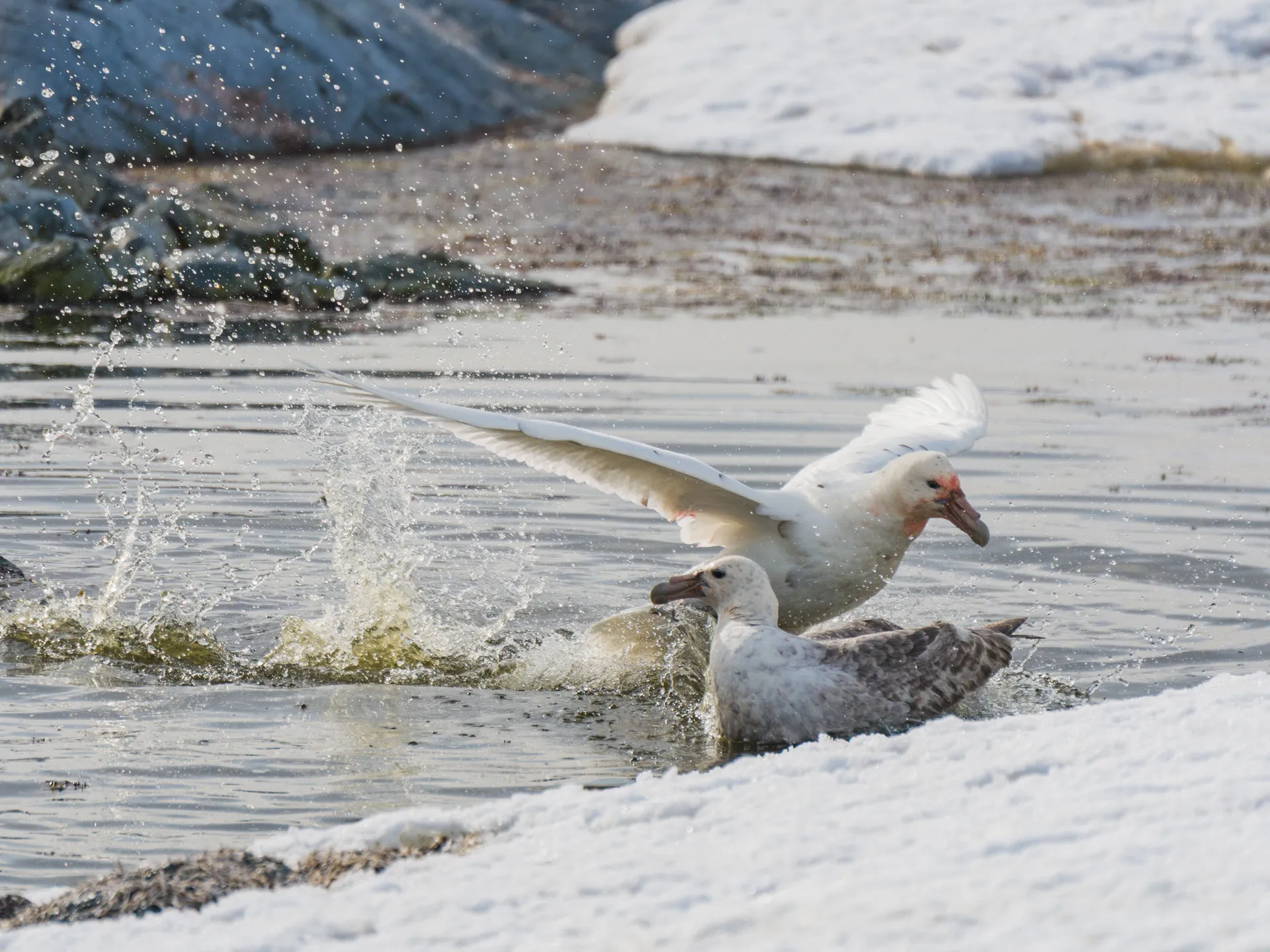
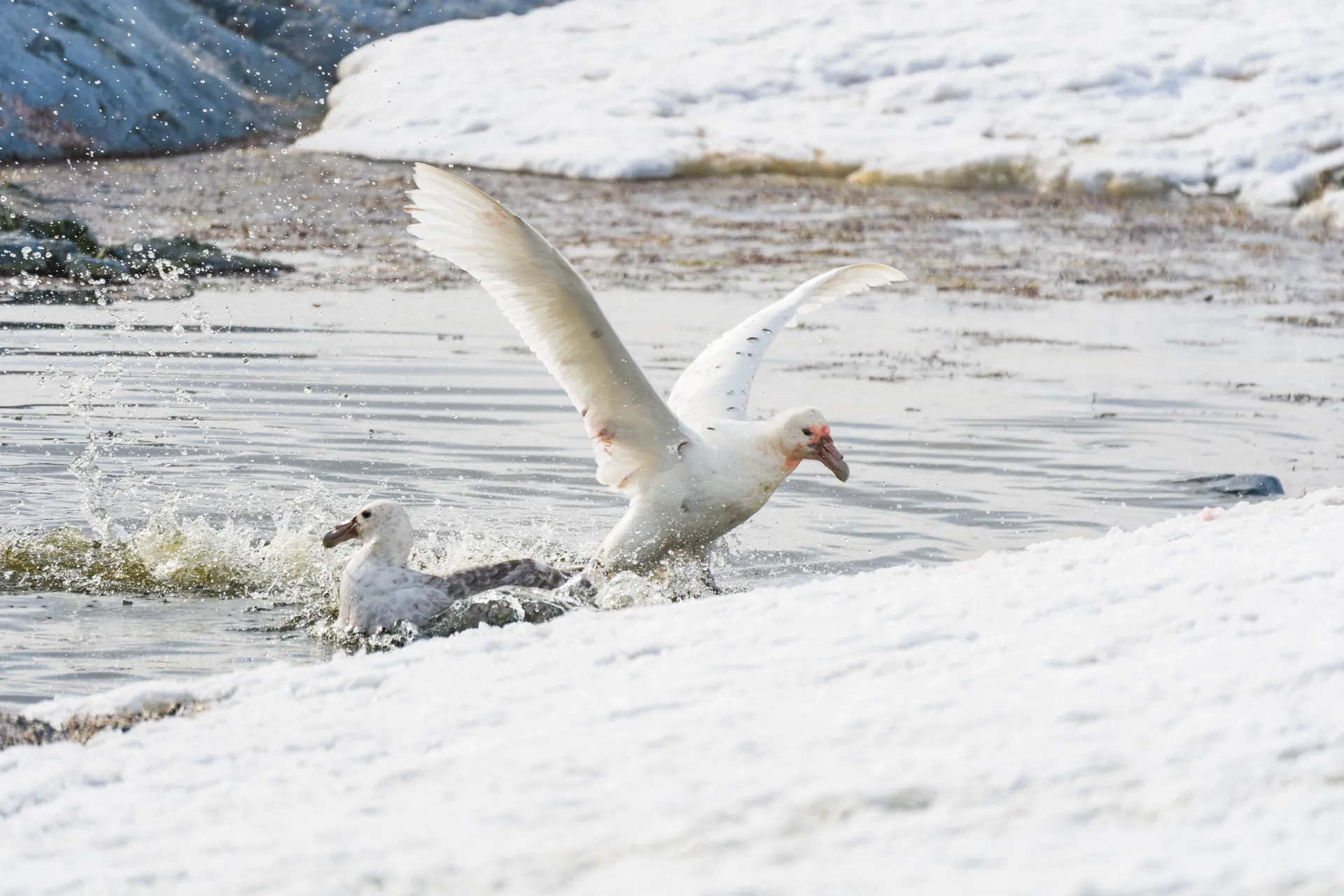
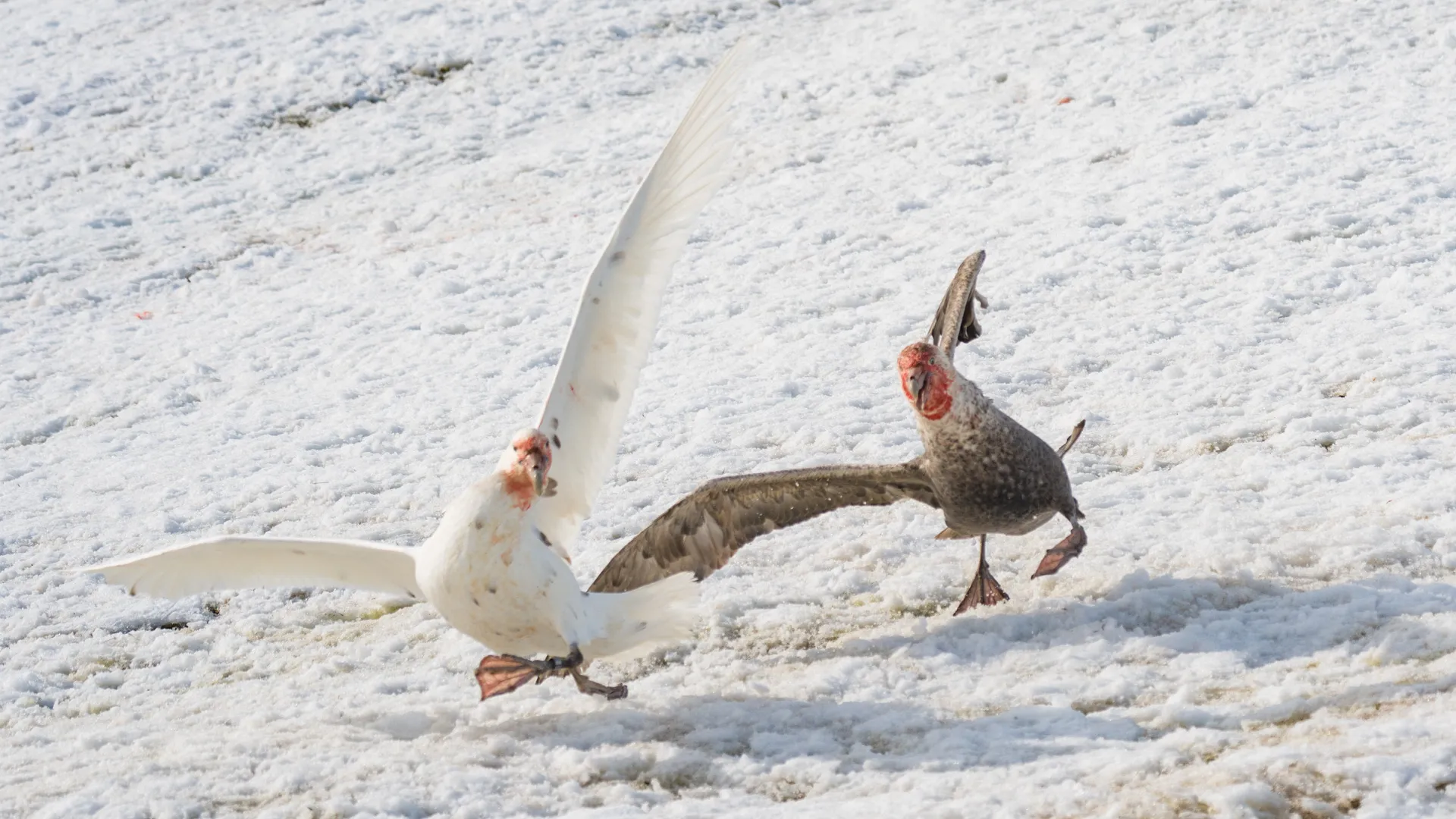
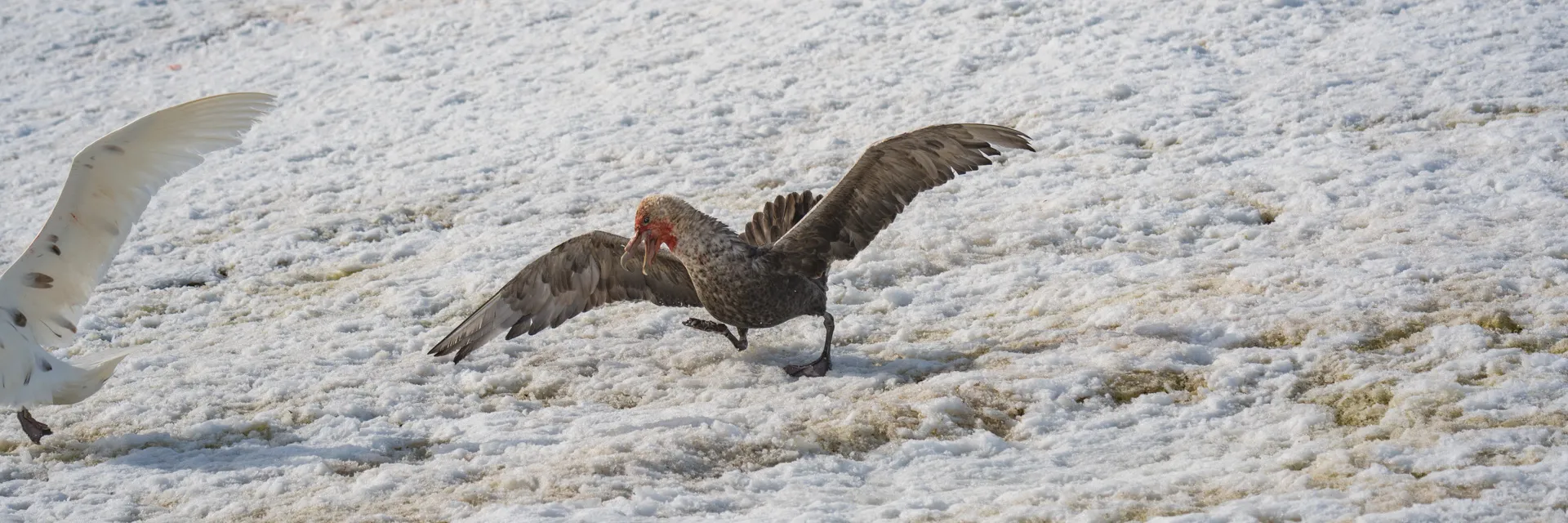
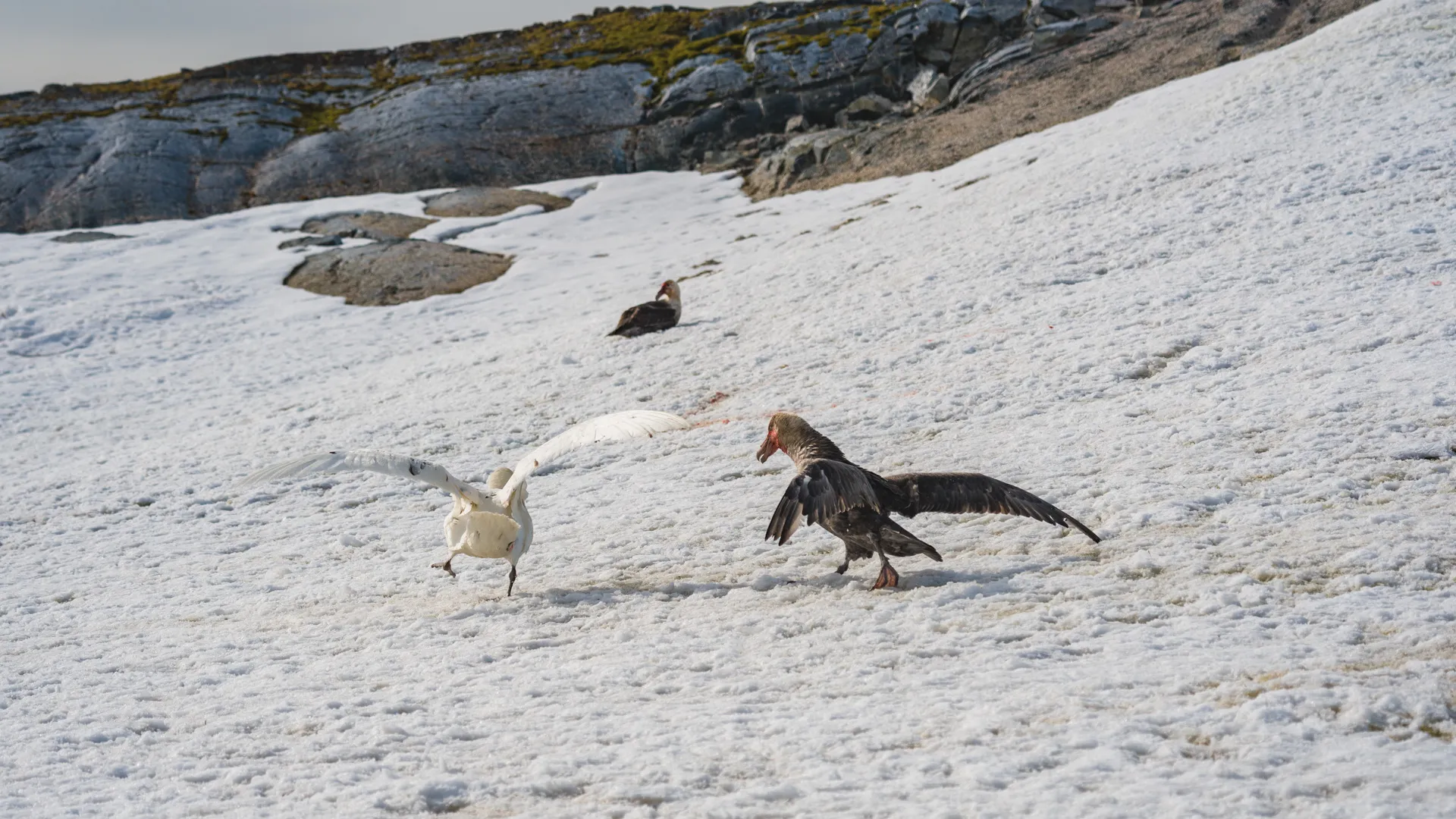
As we were walking around someone spotted two types of giant-petrels in the distance that seemed to be fighting over a carcass. Dani was close by and got some video cropped in. I pointed my camera in the general direction but only realized I had taken a photo of parts of the situation when I got back on the ship.
What was really fascinating though, was the behavior of the birds. They were circling around each other and performing almost dance-like power-play. It was also two different colored birds which made for striking visuals.
Unfortunately, they had gone further away into an area that was officially closed off for us, but Dani found Leo from the expedition team and he allowed us to get a bit closer and observe the situation.
The birds had sunk their prey into a small body of water, but were still performing their dance, now with bloody faces. It looked almost like a ritual and was probably the most fascinating thing to watch on the entire trip.
Coming up are a few shots, though I did not photograph it all.
Surprise, Surprise! Step Onto The Continent: Cape Tuxen
Surprise, Surprise! Step Onto The Continent: Cape TuxenFirst landing for most of the team members, no Guideline Link, See Map above for location.
The day had already been incredibly eventful, but then after briefing, presentations and dinner, we got a surprise announcement. Another landing!
So far, we had only stepped foot on islands, but since some people like to say that technically you can only cross of visiting a continent if you step onto the mainland—each cruise has to have at least one continental landing. And this was going to be ours.
Mind you, I was two very full glasses of white wine into the evening at this point, but still—into the mud room a third time we all went.
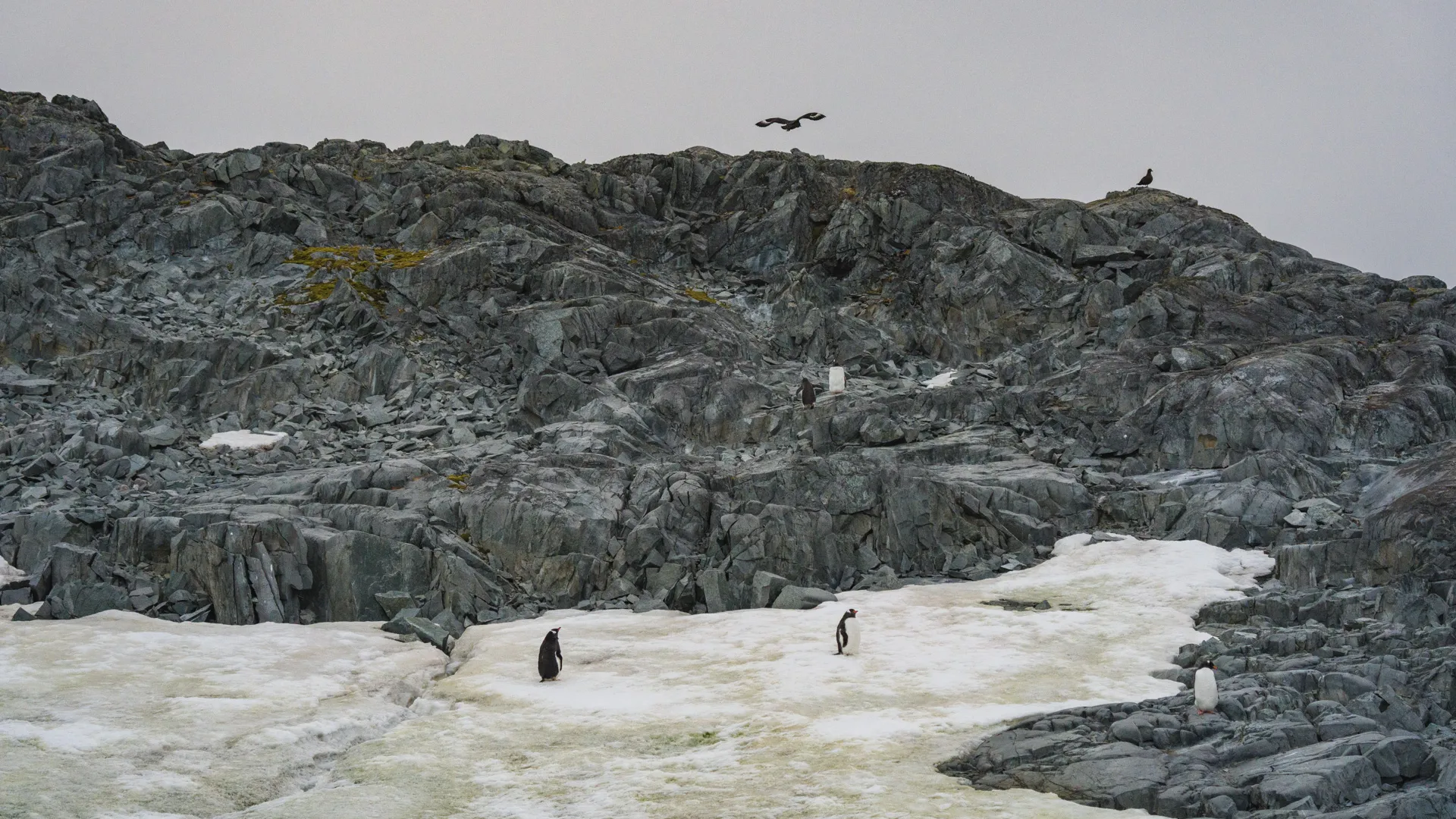
Cape Tuxen is on the mainland and it was the first time many of the ET landed there. It was going to be a short landing, but the main takeaway I had as we stepped foot on the continent and looked up at a really tall mountain was that penguins are insane climbers! There were little white dots of Gentoos in mind-blowing heights. Considering that they waddle up their in their little clumsy way was just so impressive.
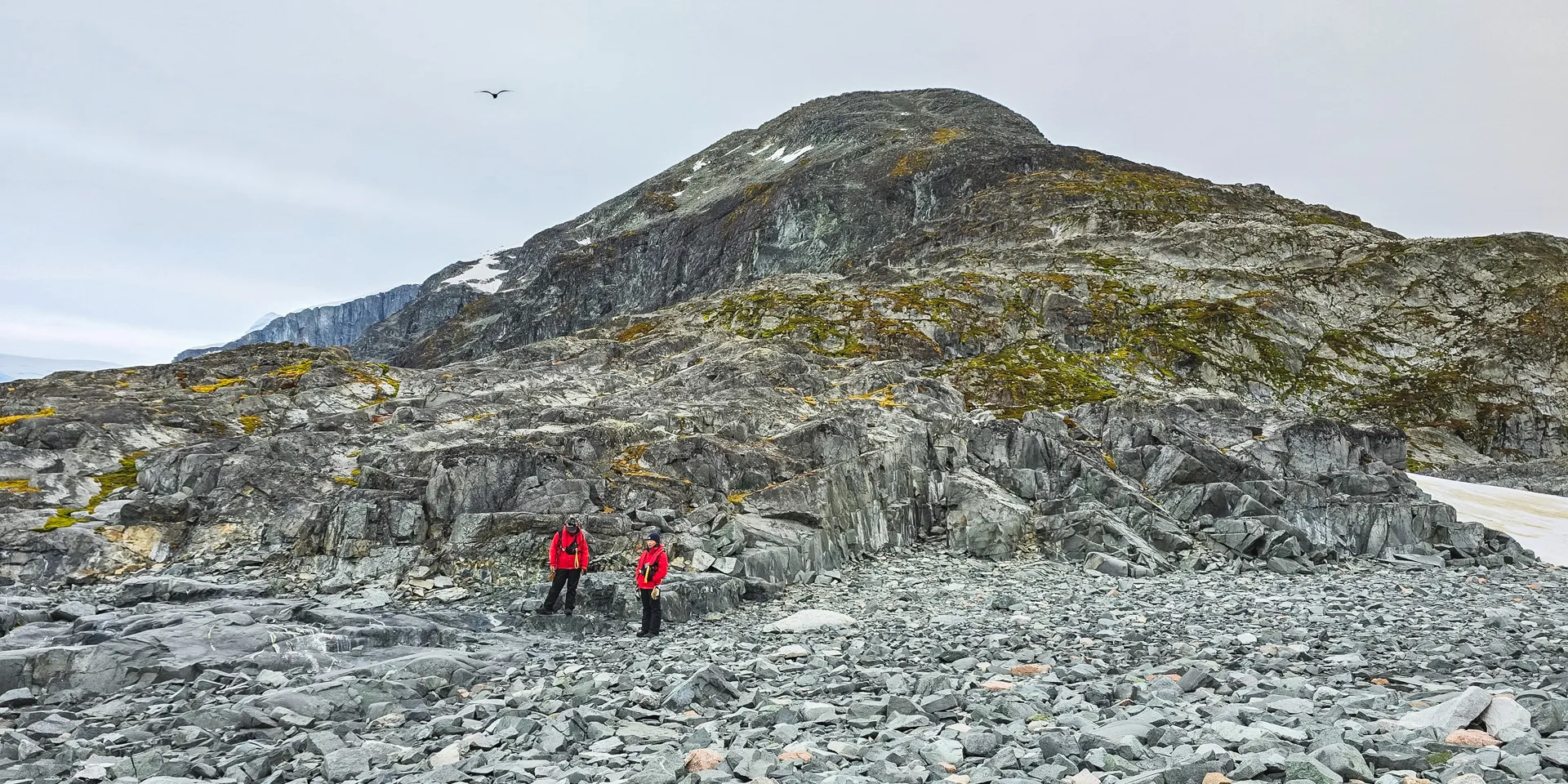
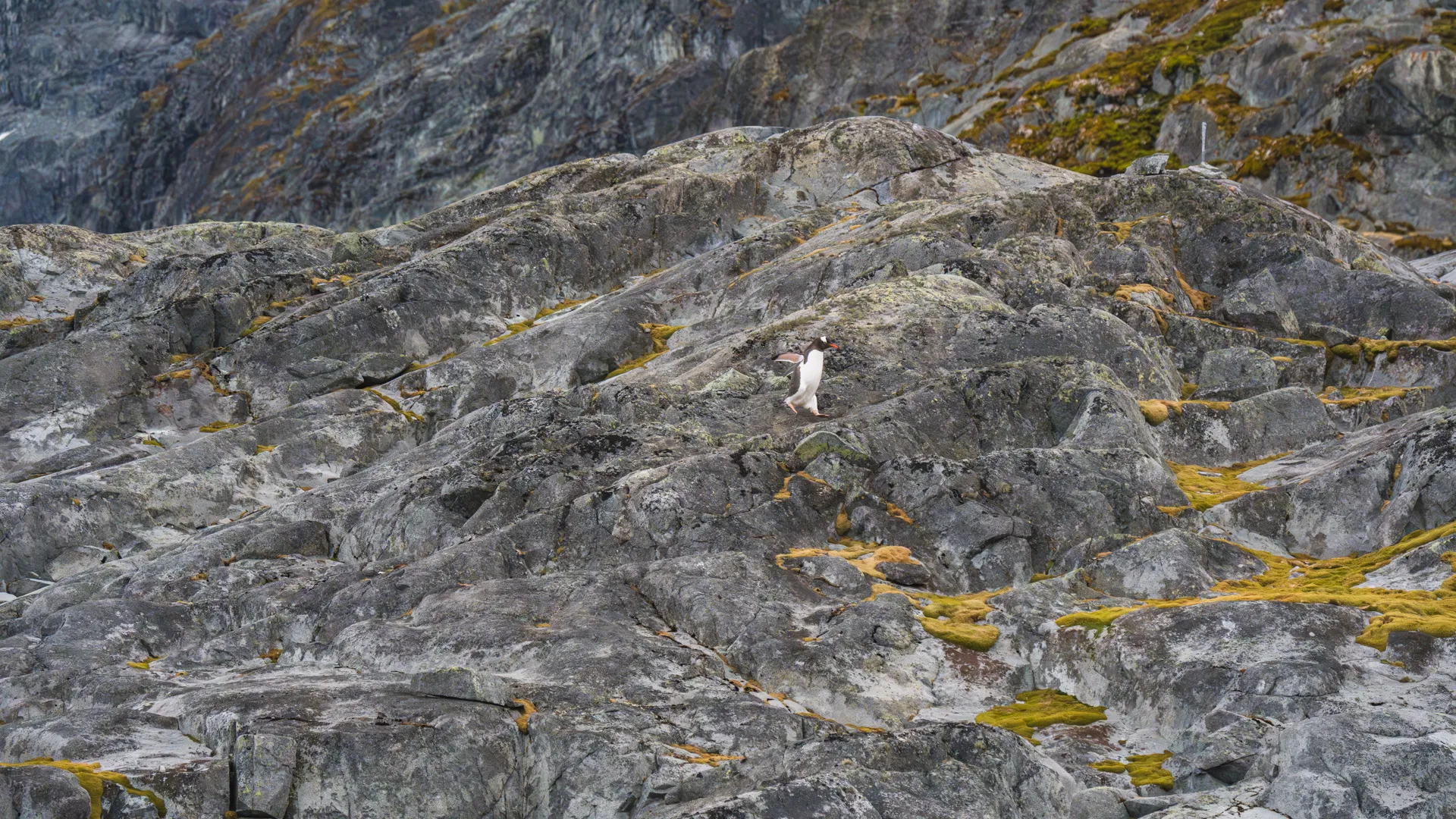
It wasn’t my seventh continent. It was my fifth or sixth, depending on whether you give me Africa with Mauritius or not, but it was still nice to be on land in the soft evening light and reflect on the madness that that day was. Also checking Google Maps that moment made it feel crazy because we were further south than I had expected we’d go.
Day 5: Feb 7 2026
Day 5: Feb 7 2026We woke up to snow and fog. Now, had this been a “normal” Antarctica expedition, this would probably the time where people would be complain about the “bad weather” after all the wonderful glorious sunshine.
But, this being a photography expedition, everyone was so excited for mood.
On the other hand though, we had heard the warning that the weather was supposed to get worse. So really, we were hoping to get just enough bad weather to make it look good in photos, but not so bad, that we couldn’t get those photos.
Argentine Islands Cruise and Wordie House
Argentine Islands Cruise and Wordie House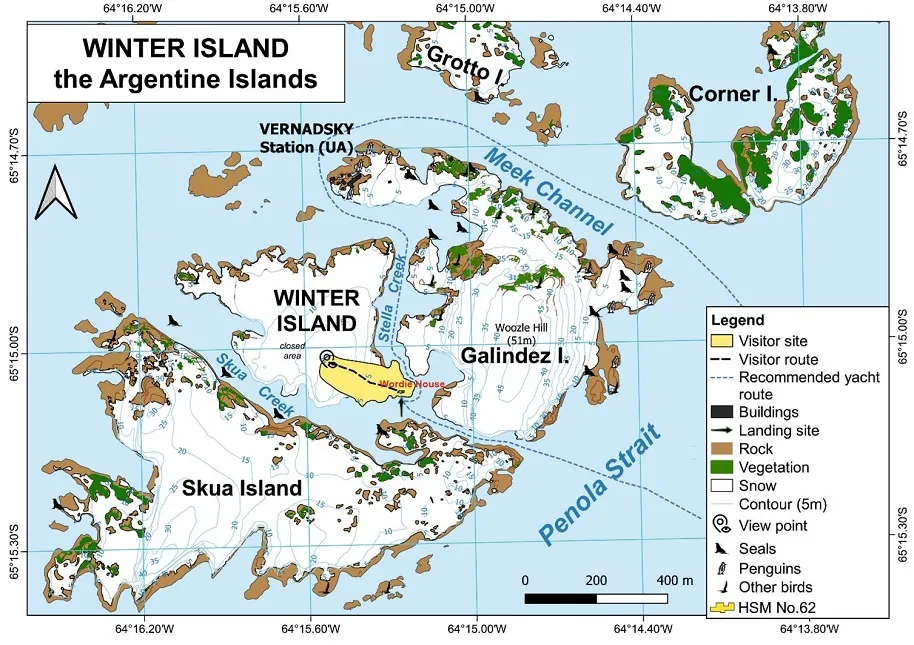
In the morning, we had another split landing and zodiac cruise. The landing was at Wordie House, which only allows 36 people at a time, and 12 inside the hut. The hut has been restored to look like it did when it was used and is now a small museum. It is also close to a Ukrainian research station, which was sold by the British to the Ukrainians for just £1 back in the nineties.
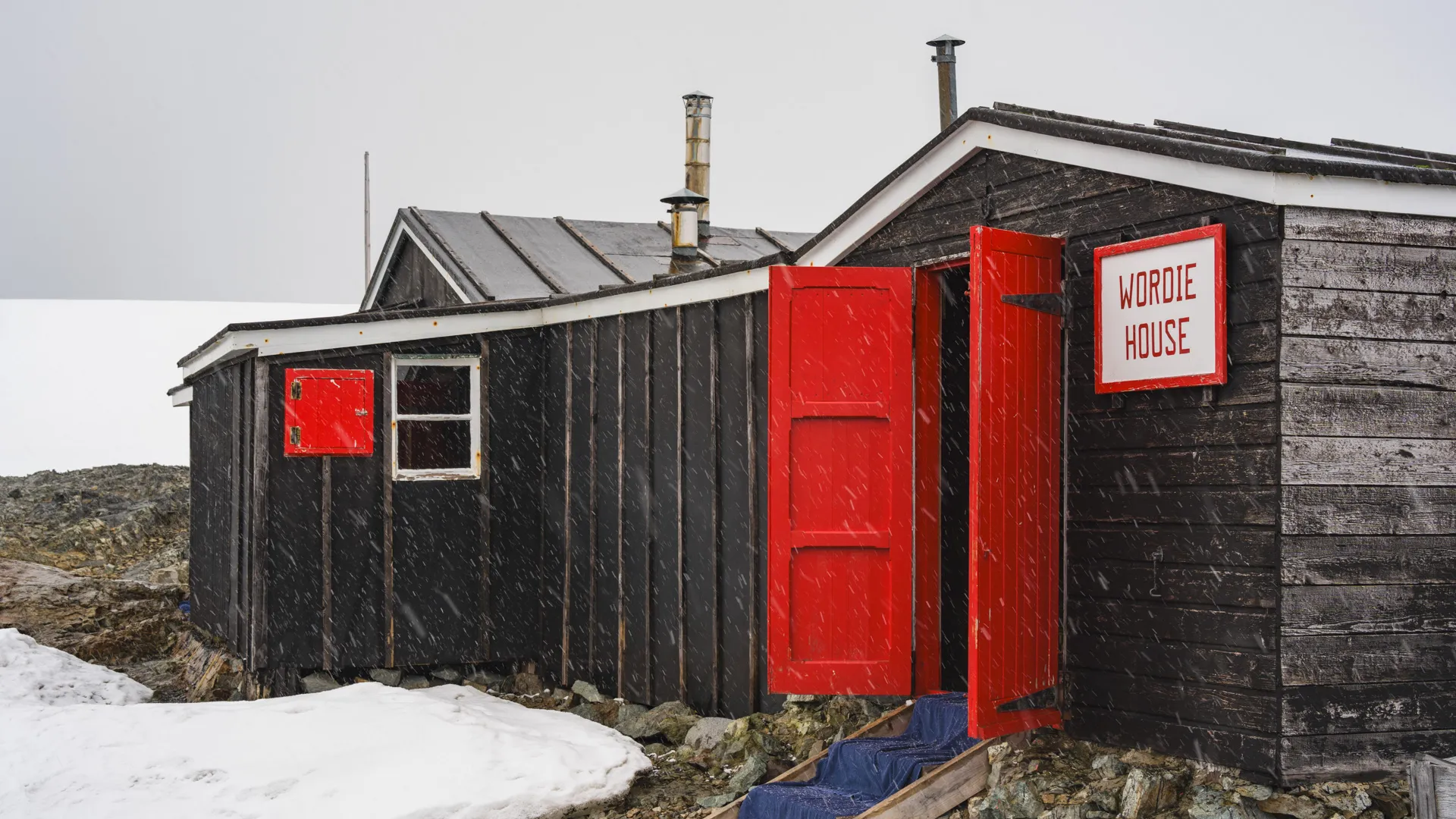
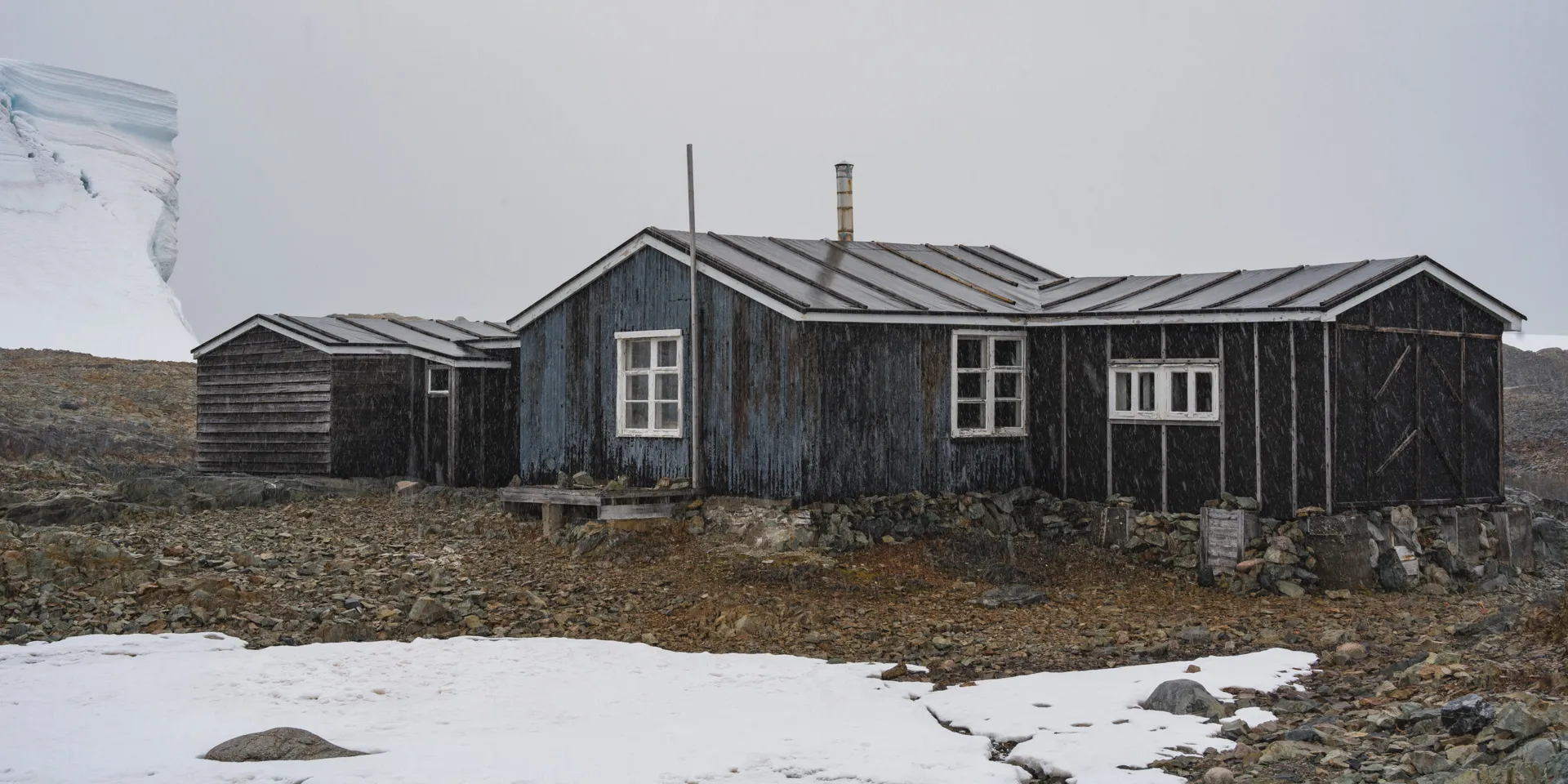
The inside of the hut was quite interesting. In the kitchen I loved looking at the different tins.
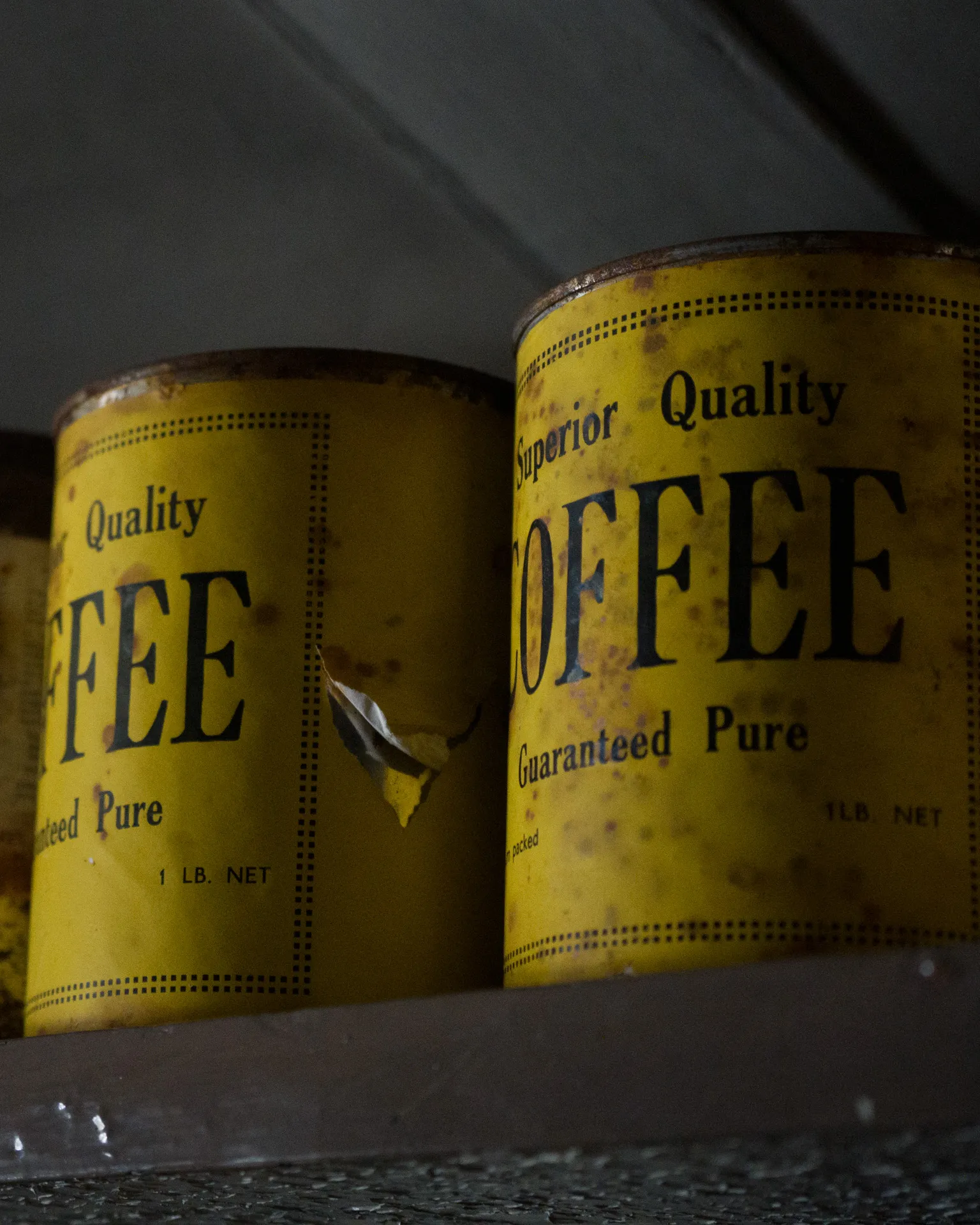
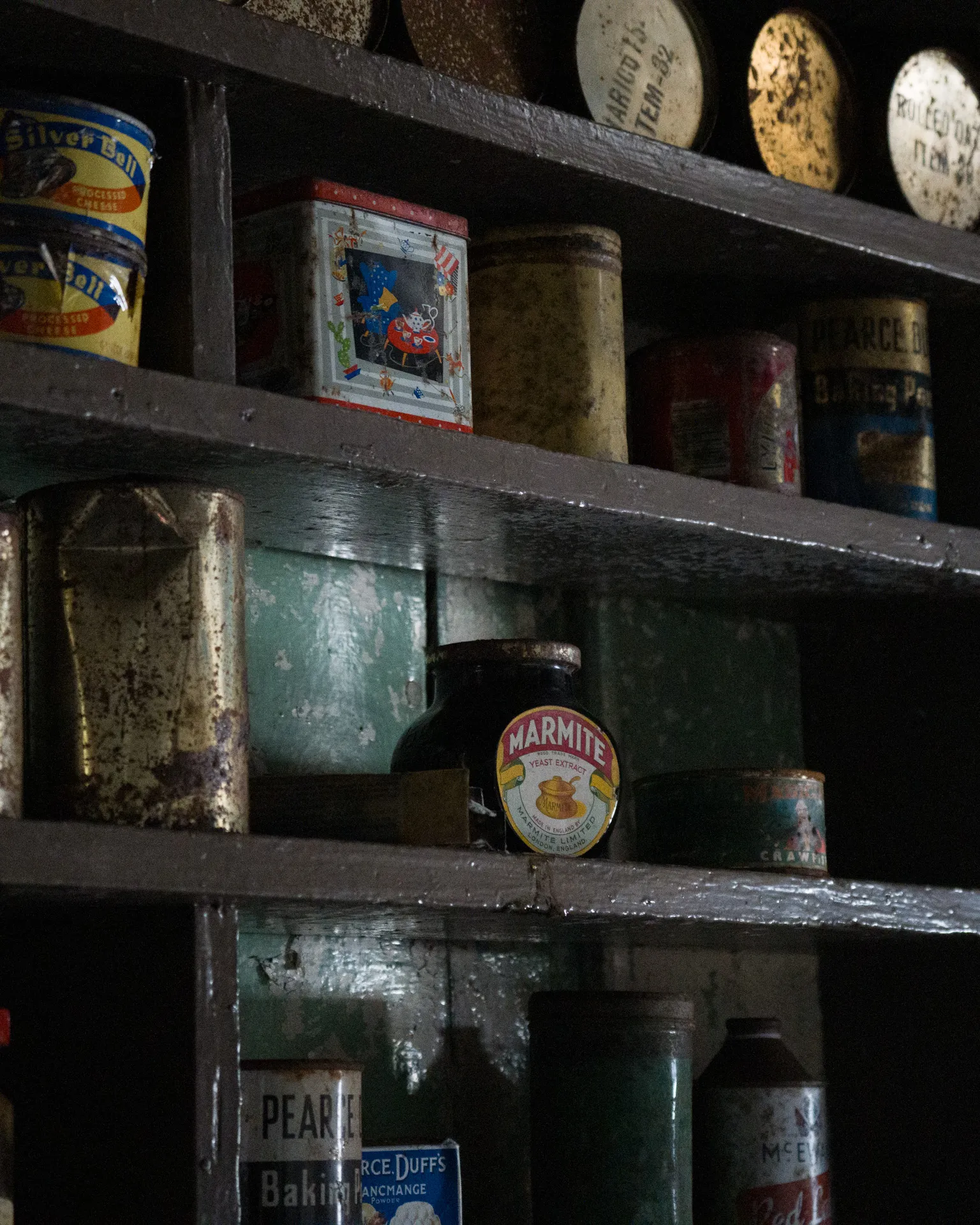
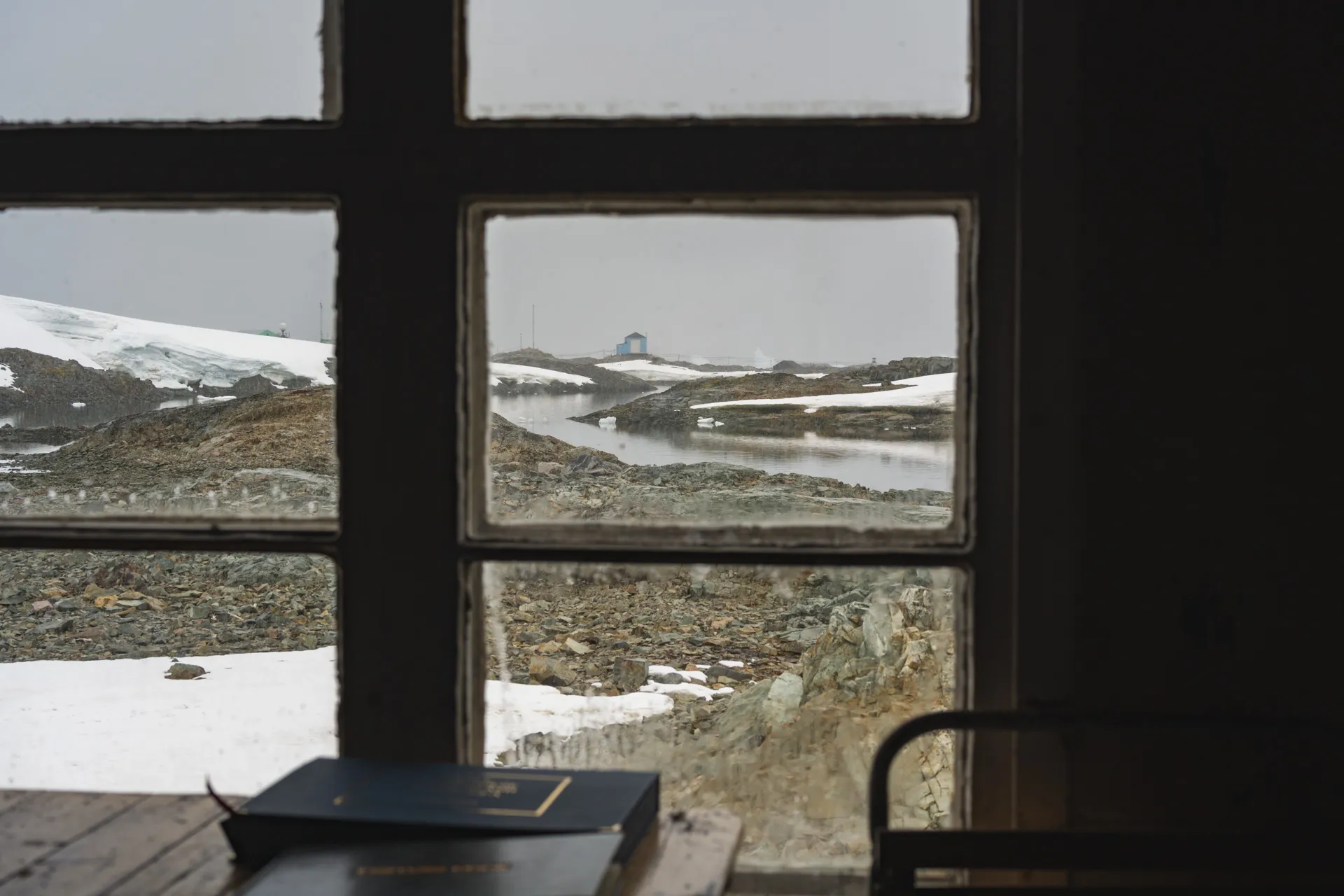
After visiting the house we went off for the zodiac cruise around the Argentine Islands. We spotted some penguins on ice and some really cool ice bergs.
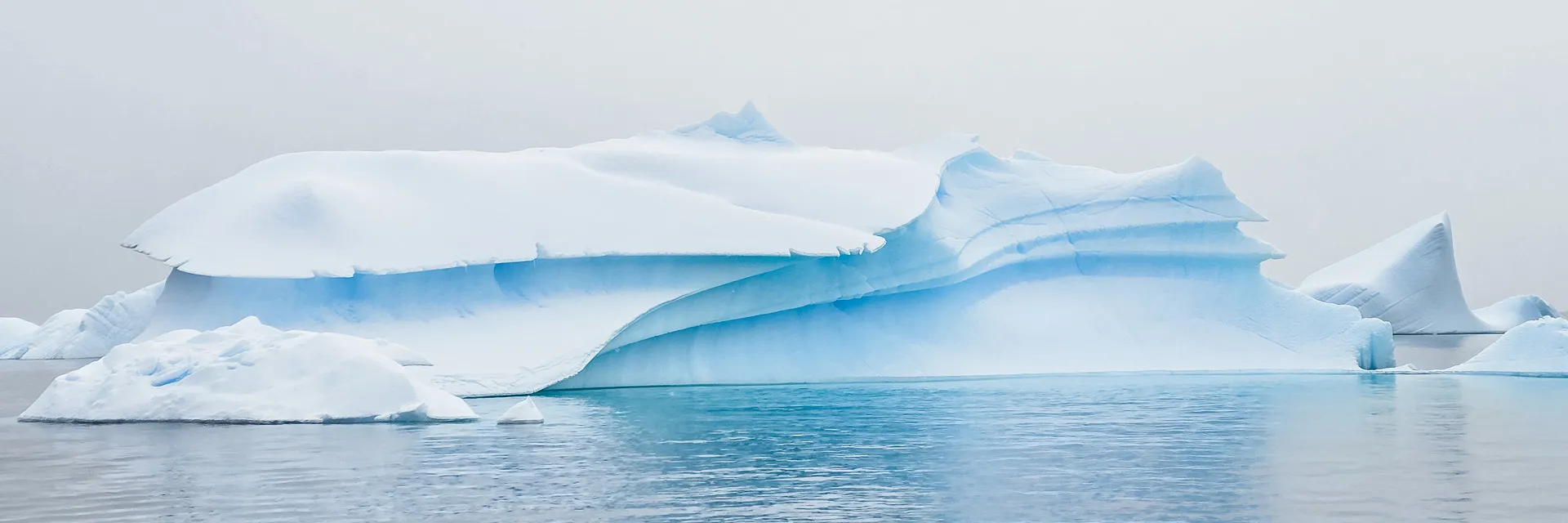
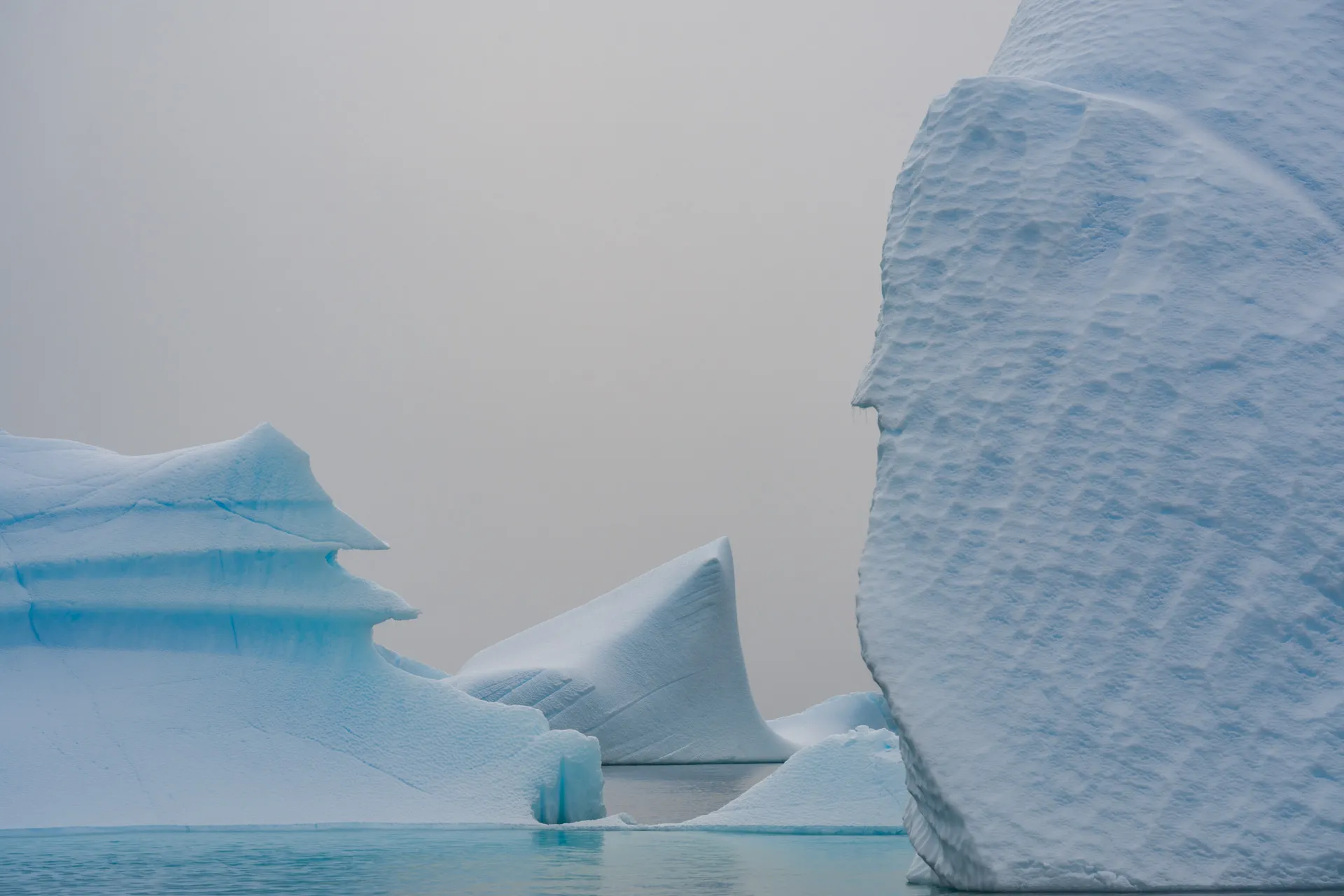
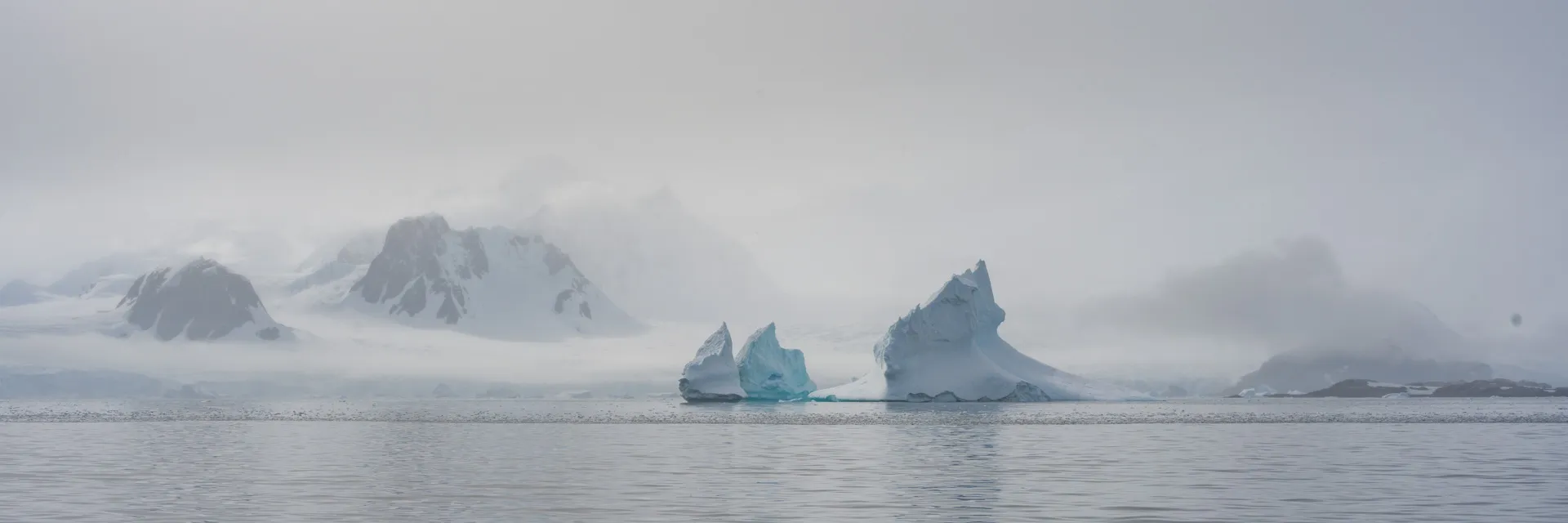
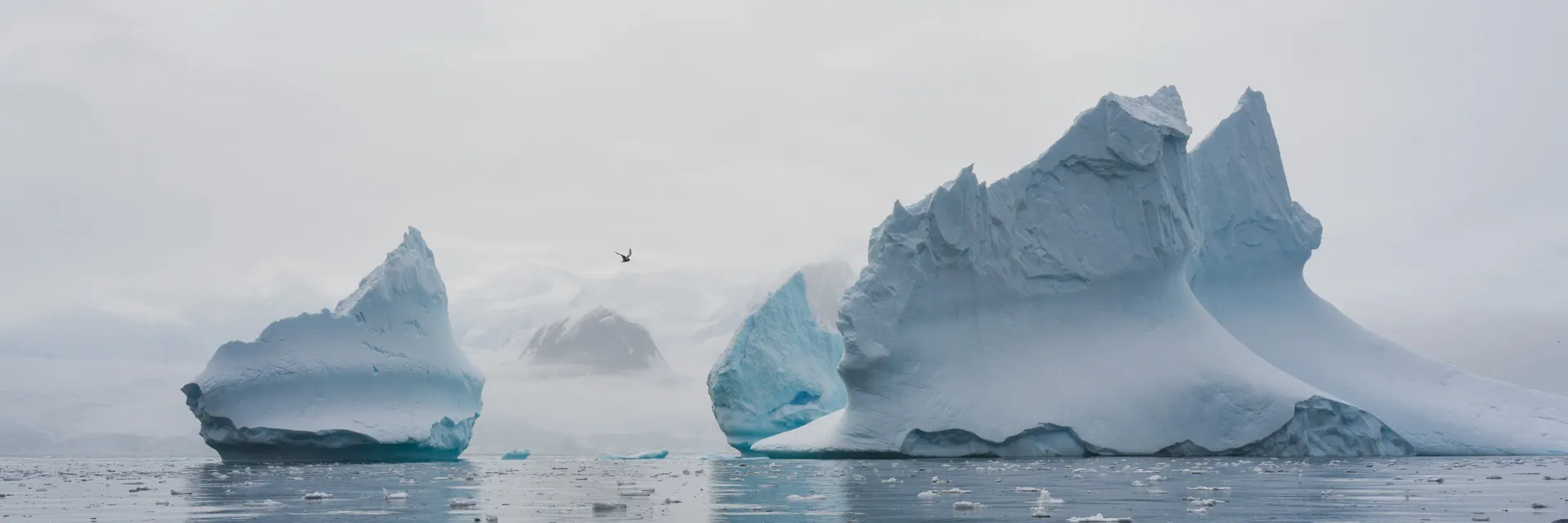
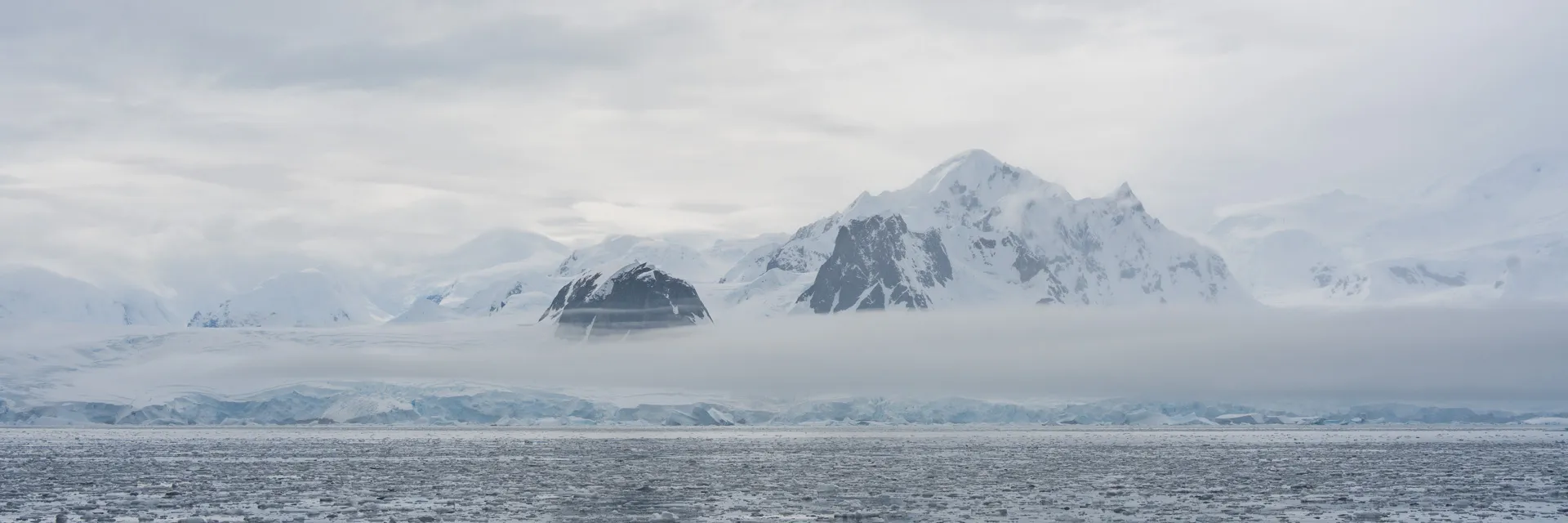
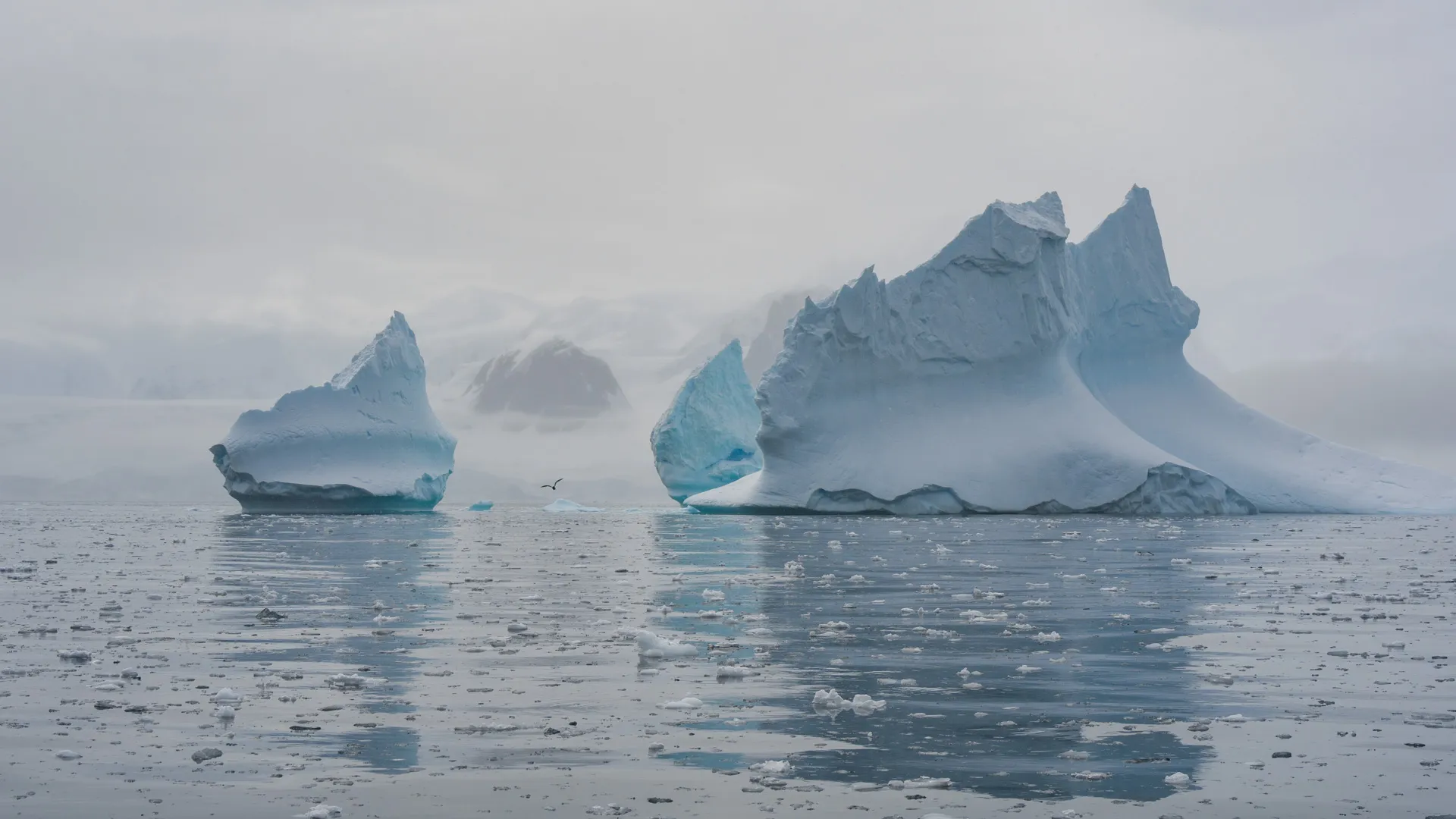
And then as we were back in the same area as the afternoon before, we got this absolutely dreamy landscape, with a completely different vibe.
We had James on our Zodiac this morning and you know you got yourself a pretty fantastic landscape when James Popsys, lover of man-made things suggests skipping taking photos of the research station and to stay longer with the mountains and ice bergs instead.
This is probably the type of weather most of us hoped for.
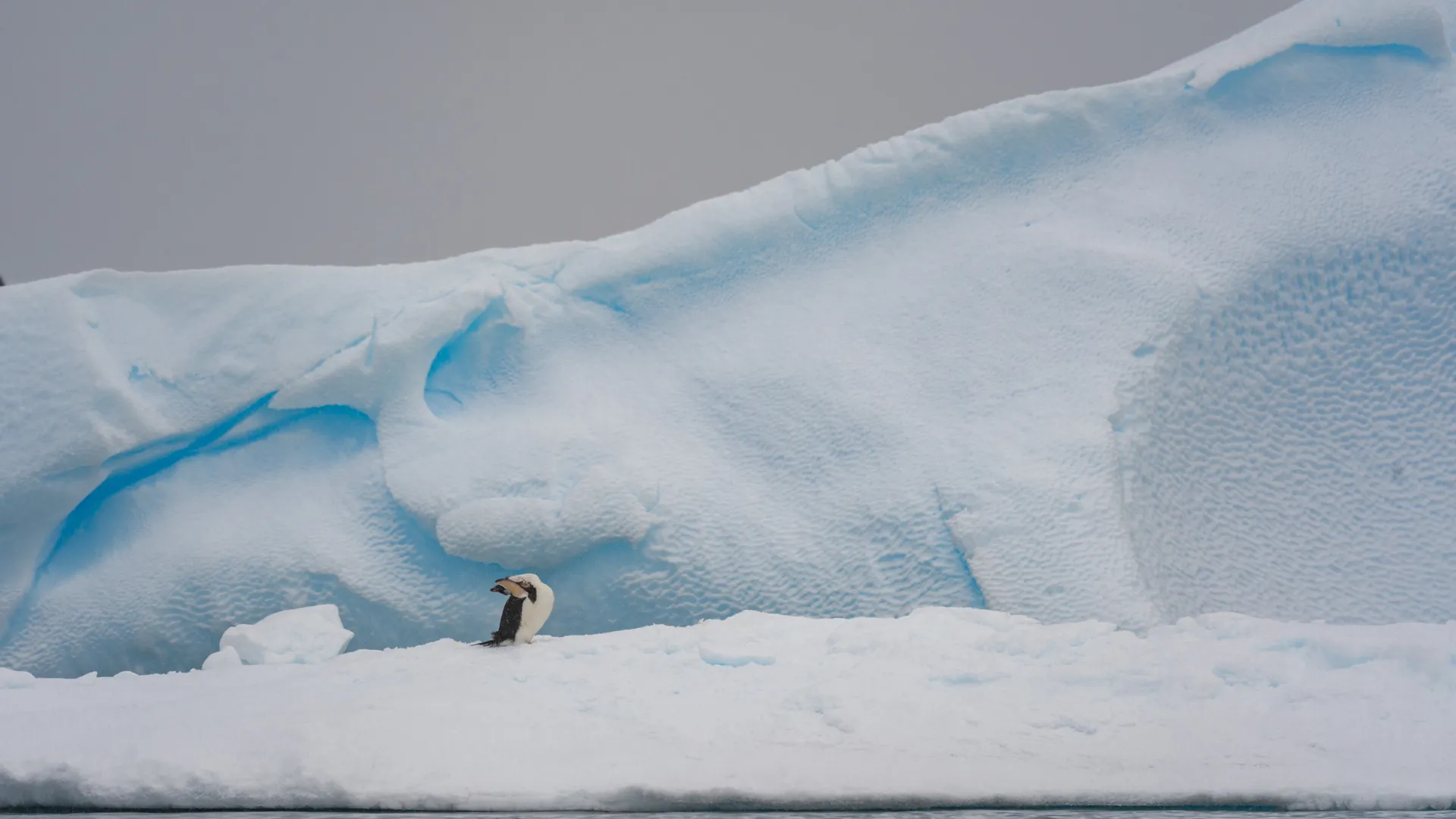
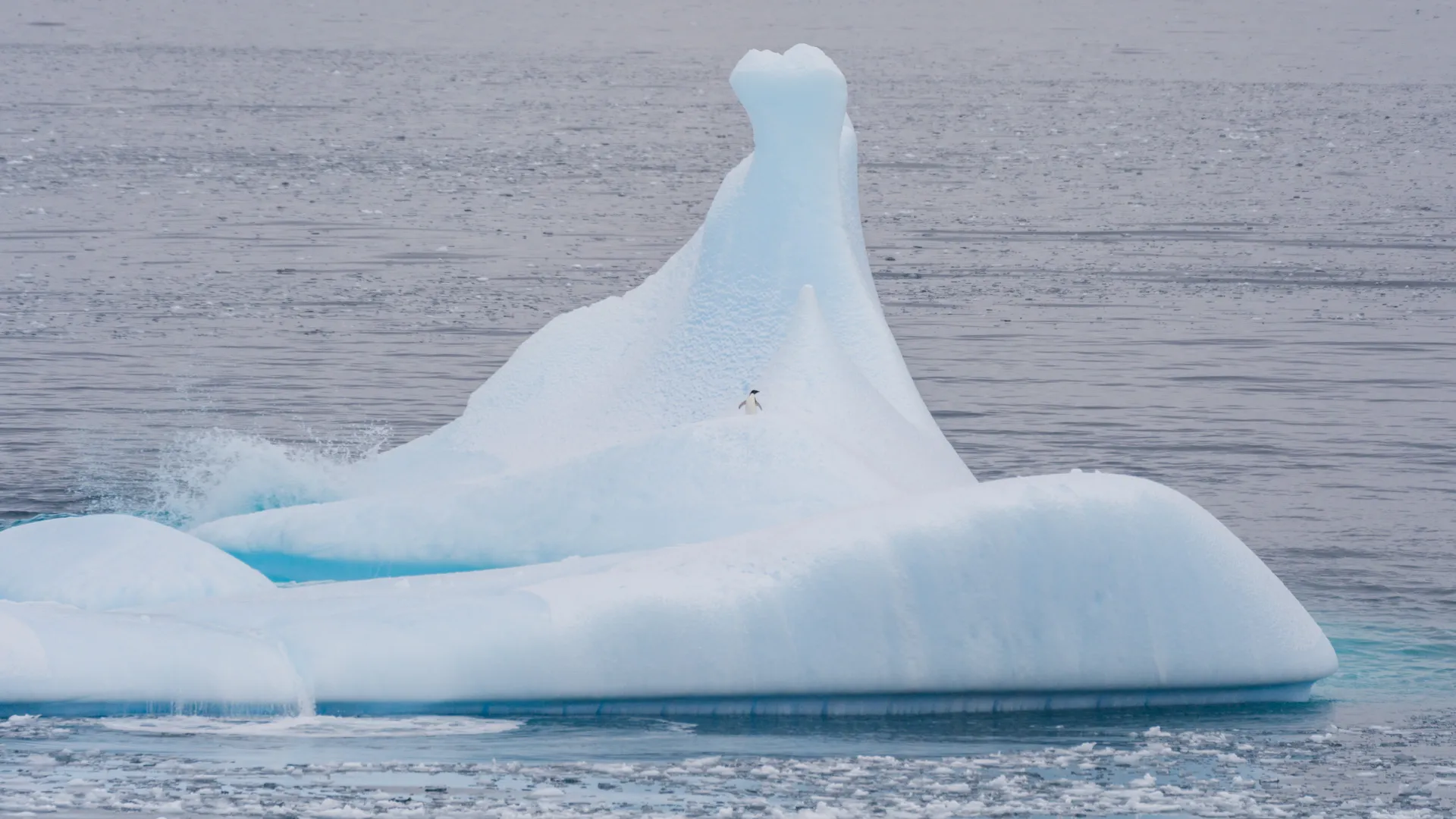
When I was back, just before uploading my photos to the computer, I saw water fall of the edge of an ice berg. I wanted to snap a picture of it, and then saw a tiny little penguin on it. Loved seeing this one.
Pléneau Island Cruise
Pléneau Island Cruise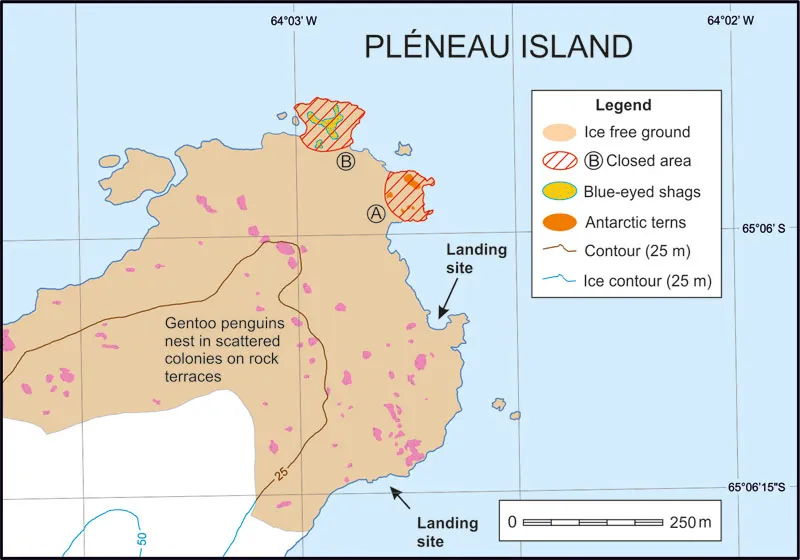
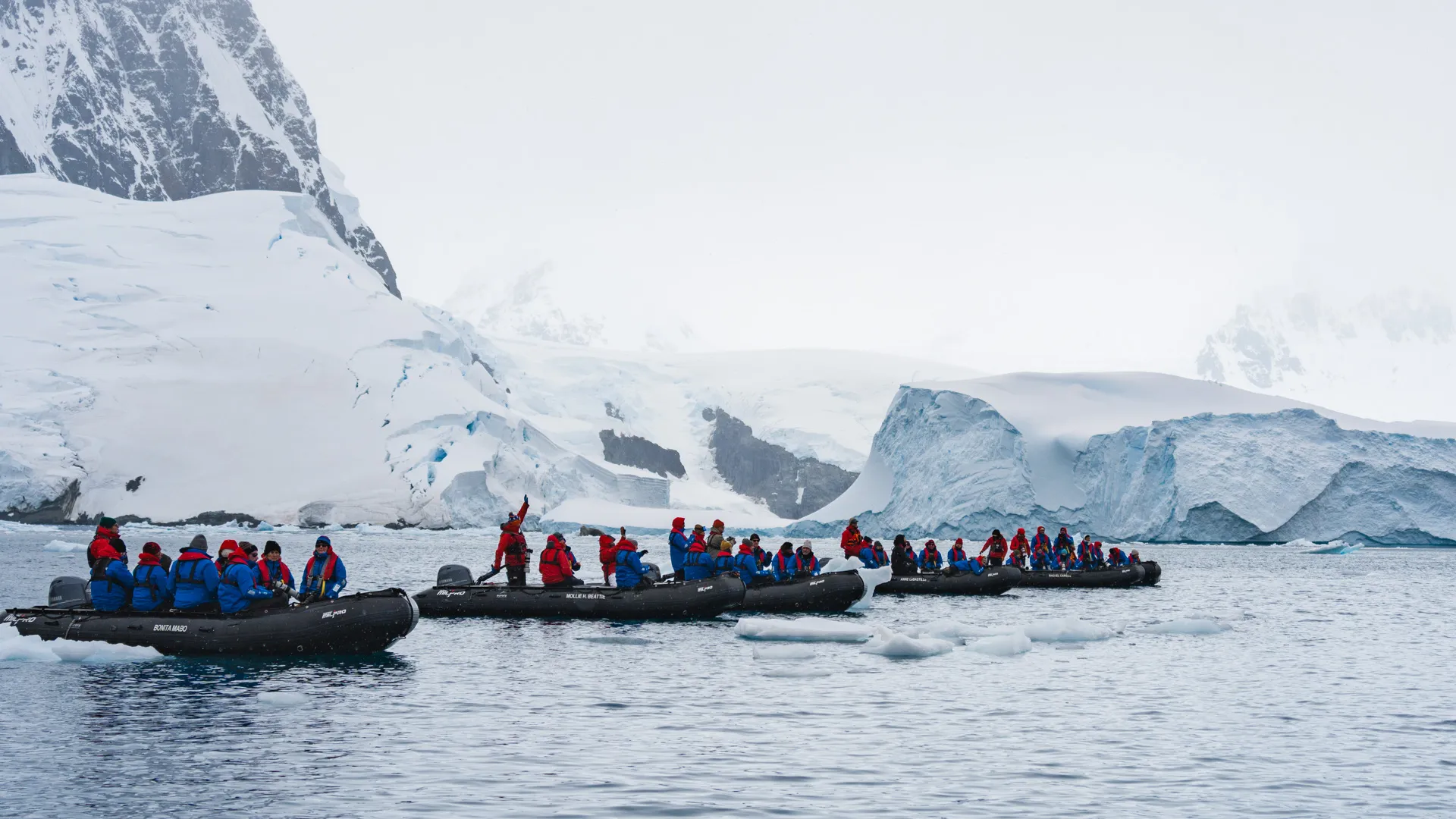
In the afternoon, we were supposed to have a landing at Pléneau Island, but this time, the wildlife was in the way. I mentioned that plans in Antarctica change. Usually it’s the weather but sometimes it’s a penguin colony that decides to use its entire available space. And instead of squeezing in there, we respected the rules and stayed away. Our plan shifted to just be Zodiac rides instead.
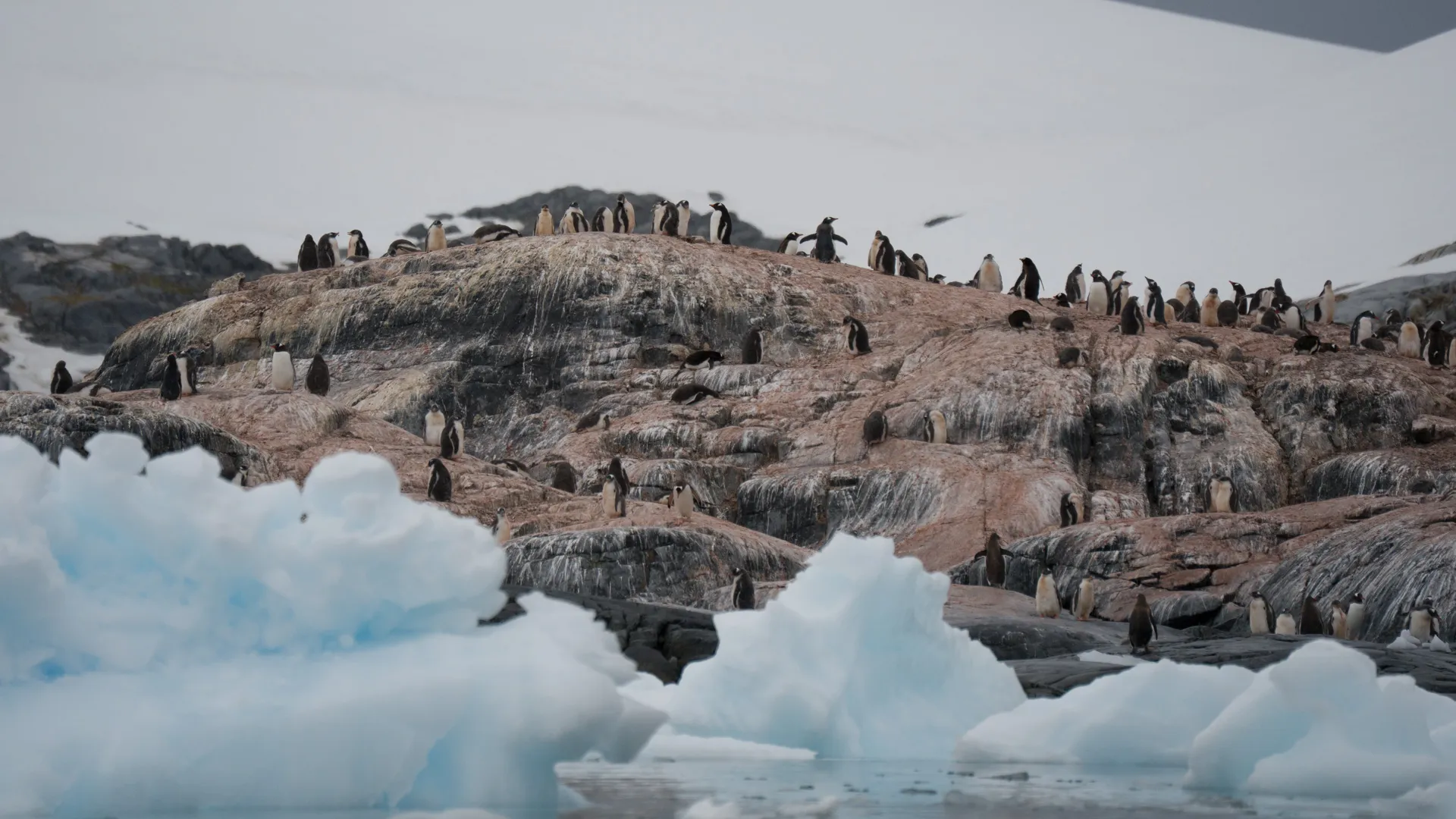
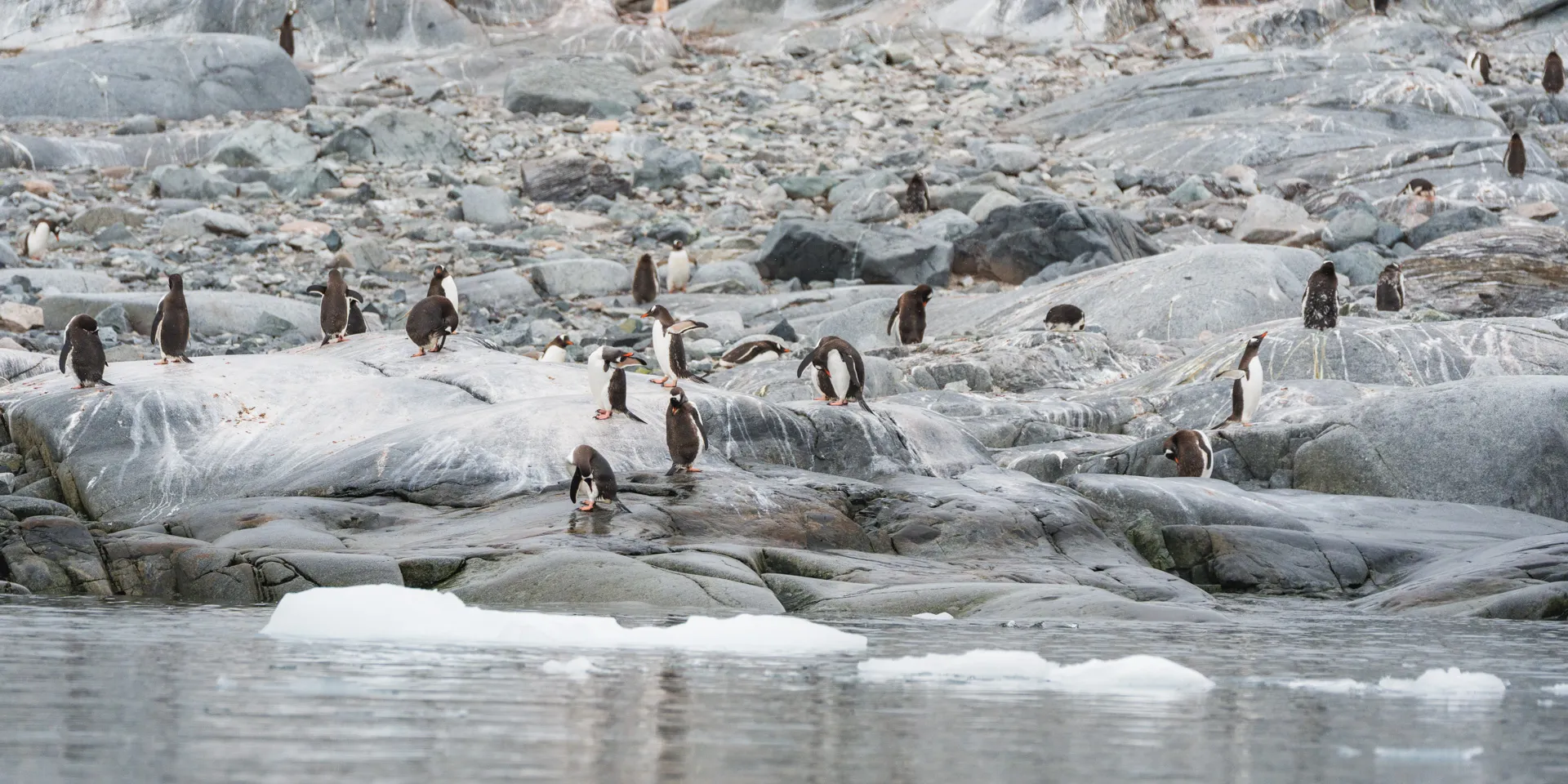
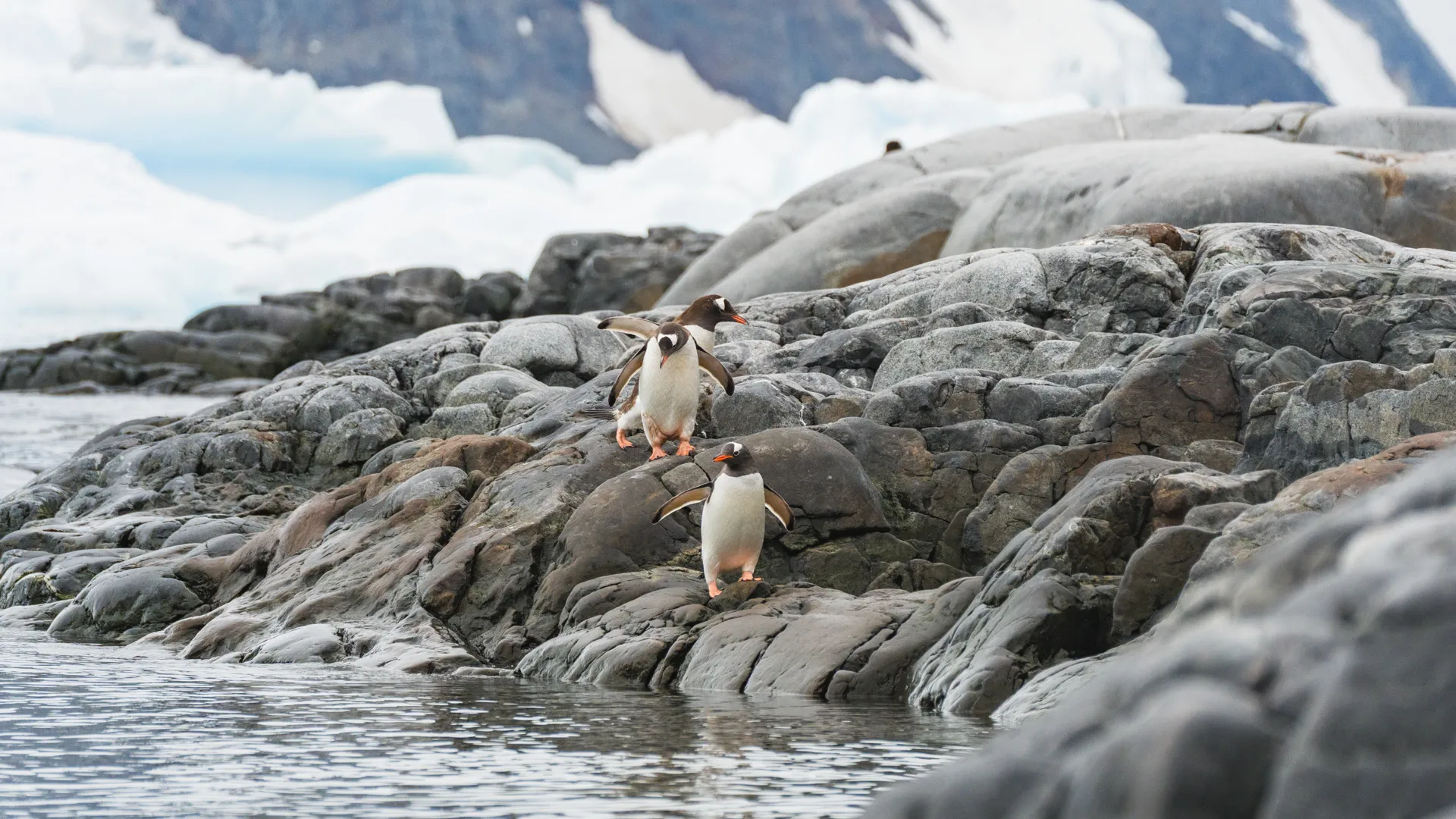
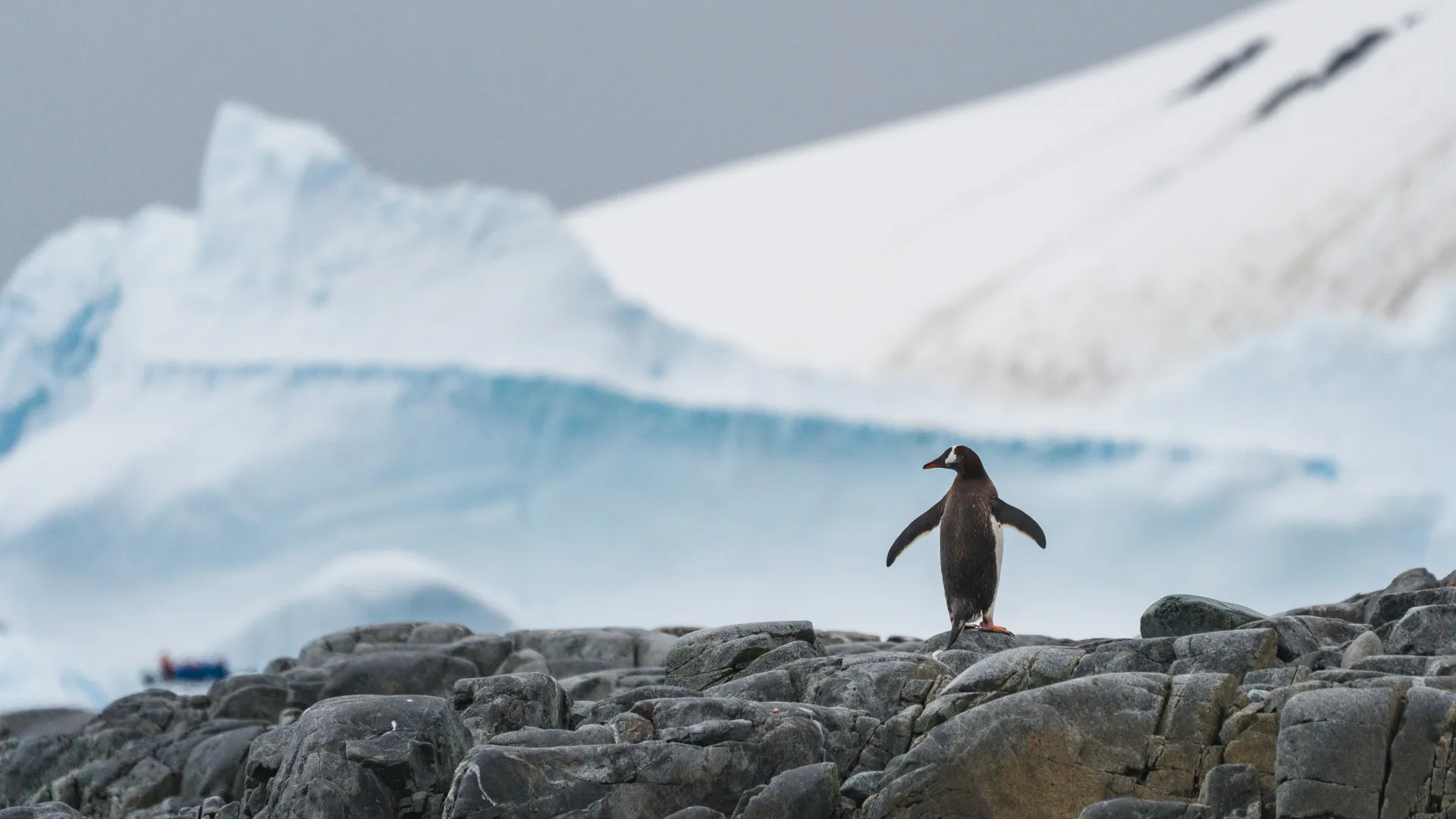
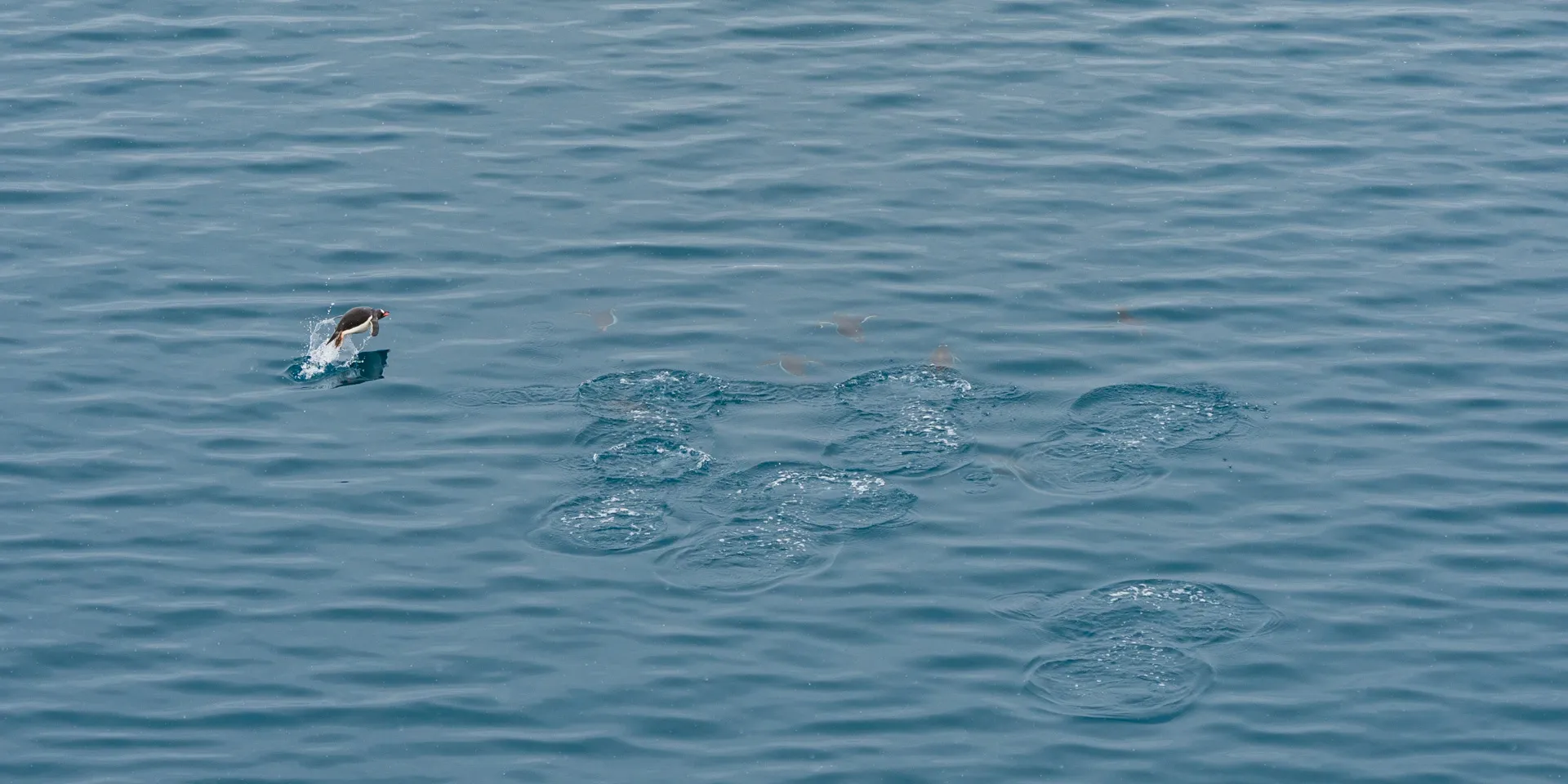
The waters were full with ice bergs and porpoising penguins and a lot of wildlife this afternoon (we didn’t see as much as others).
Our zodiac was really hoping to photograph the porpoising penguins from the front or in front of a gorgeous ice berg. Nigel was on our boat that day and we kept joking about the fact we’d just have a whole bunch of splashy water.
This zodiac was when I really regretted not being able to use the 1s pre-capture and 30fps my new camera was capable of, because of my slow cards…
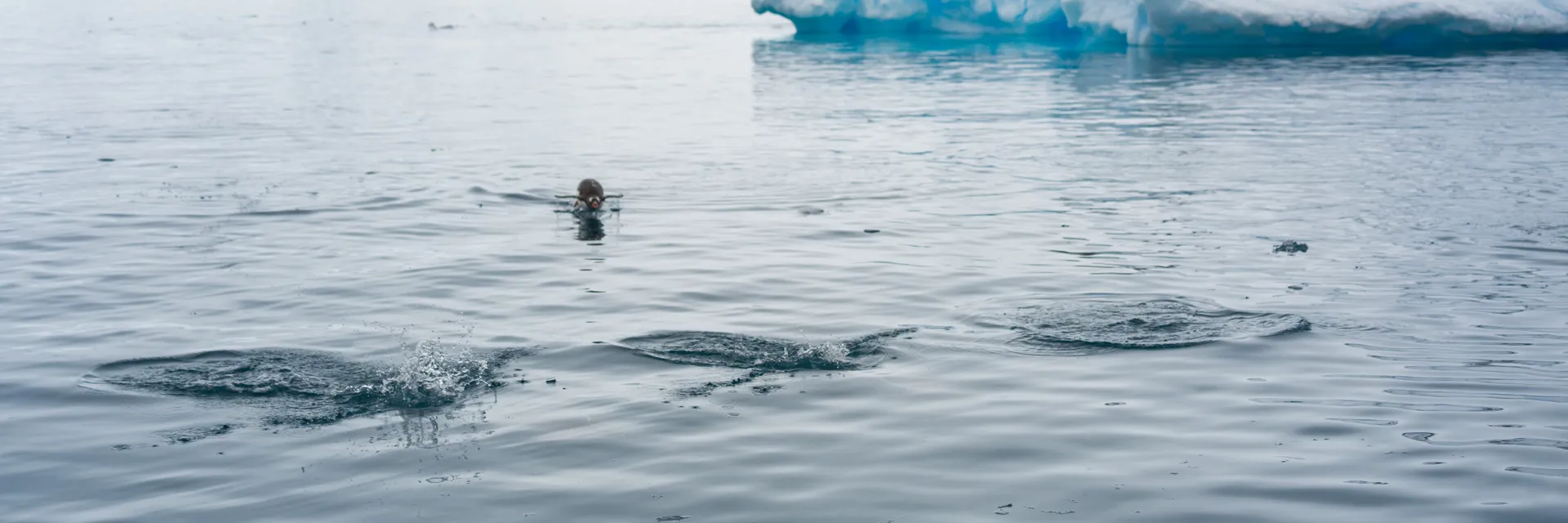
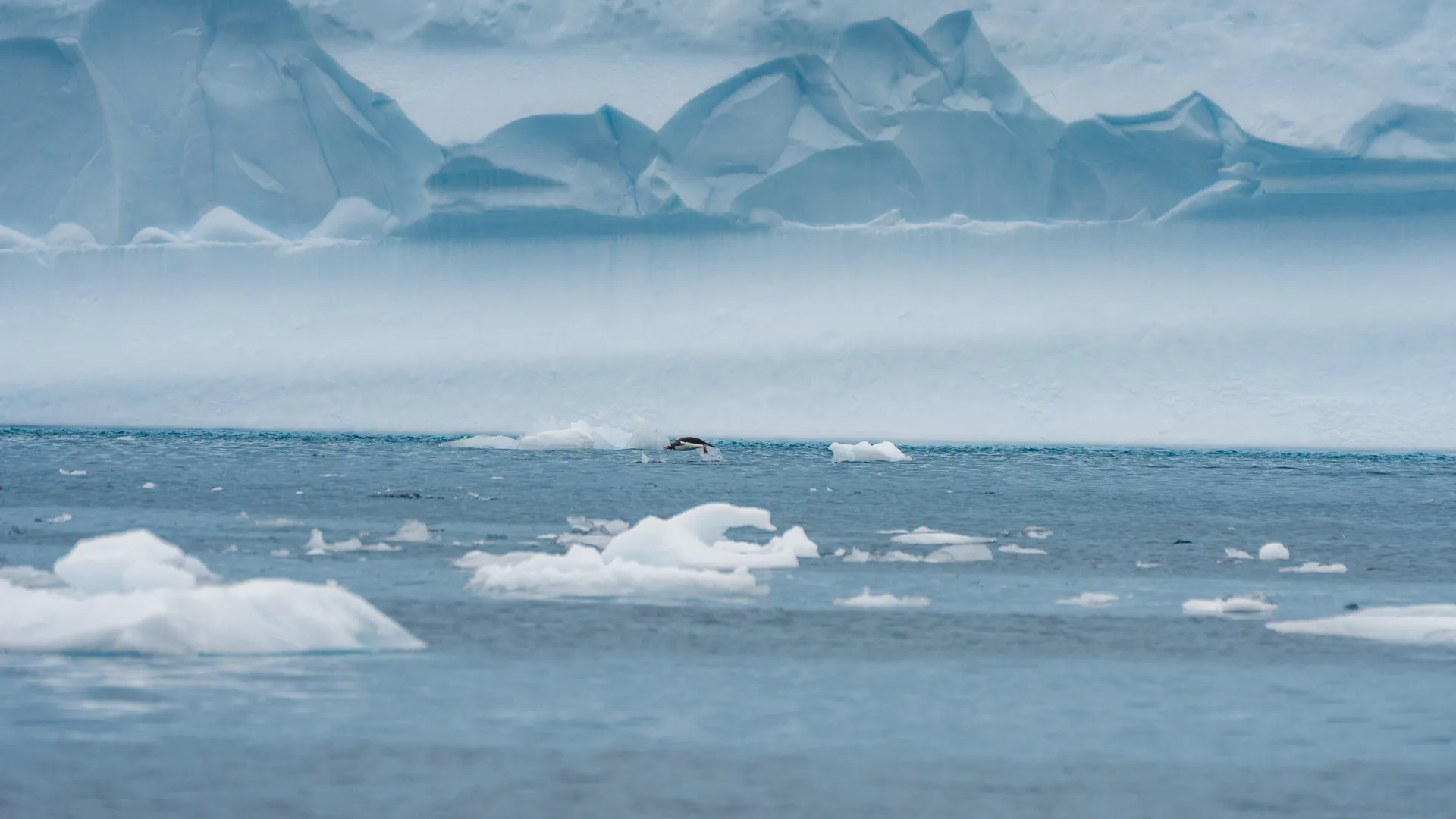
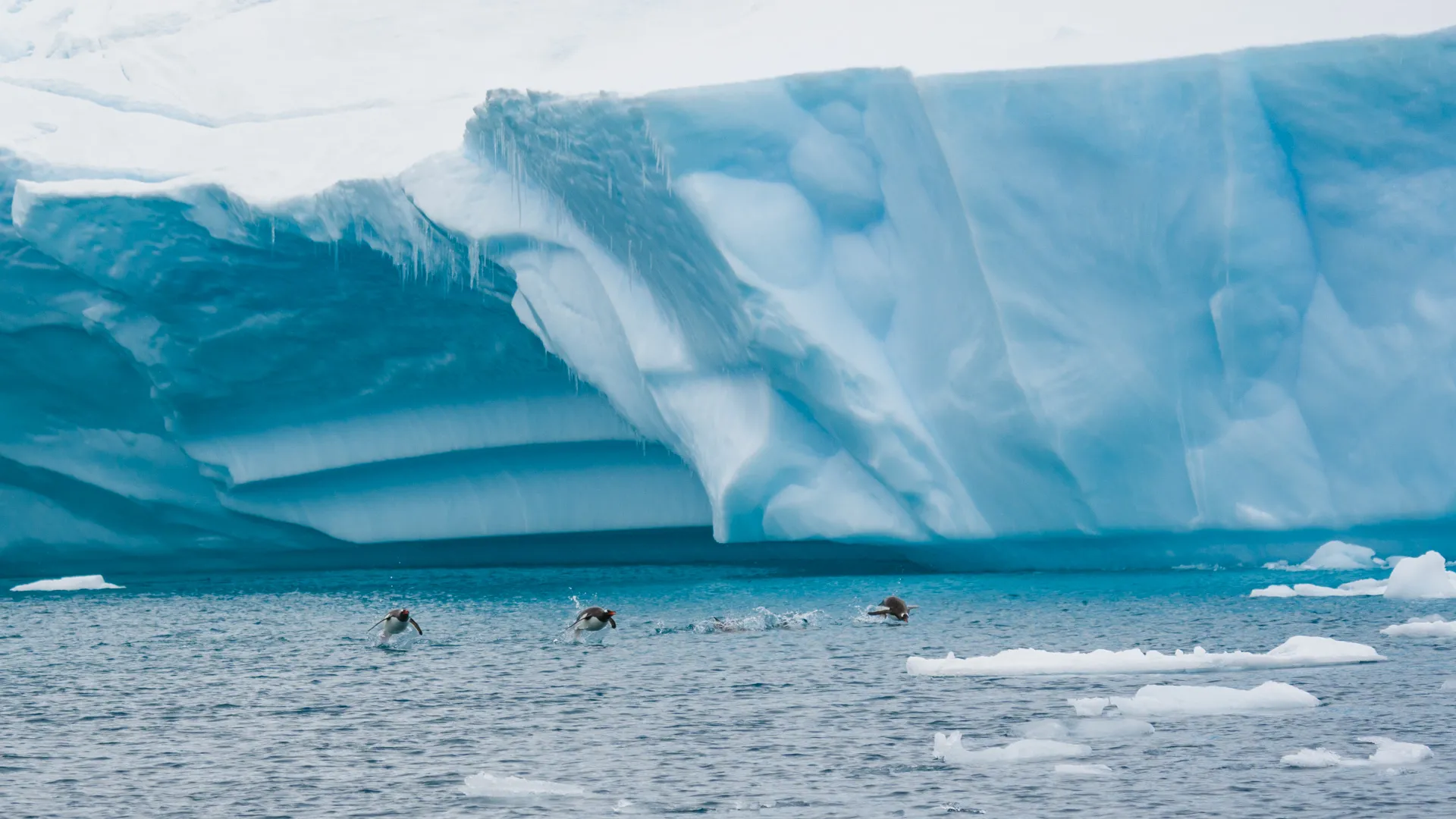
At this point of the trip, a lot of people in Zodiacs I had not been on had already had close whale encounters. This was one of the things I really wanted to experience as well, but unfortunately it was not in it for us on this cruise either.
Not for the lack of trying! As we were rushing to a whale sighting the winds started to pick up a lot and the swell of the water was being quite harsh.
Our driver this afternoon was our EL Gaby and she had to check with the bridge on what the weather looked like and made the call that we probably should not head out that far.
So, we ended up getting closer to the ship. We saw a leopard seal that swam in the water and tried to get on some ice, which was quite fascinating, (not shot, due to buffer. I was not happy with past me at this point and my card-buying choices) but as the temperatures were dropping and our time was slowly towards running out, we headed closer to the ship.
That was when we saw a big accumulation of zodiacs and we got to see some of the last bits of a whale! We were not quite as close as some others, and we had missed the fluke, but seeing some of the humps up close would have to do as my one close-ish whale encounter for this trip, as there was no closer one after this.
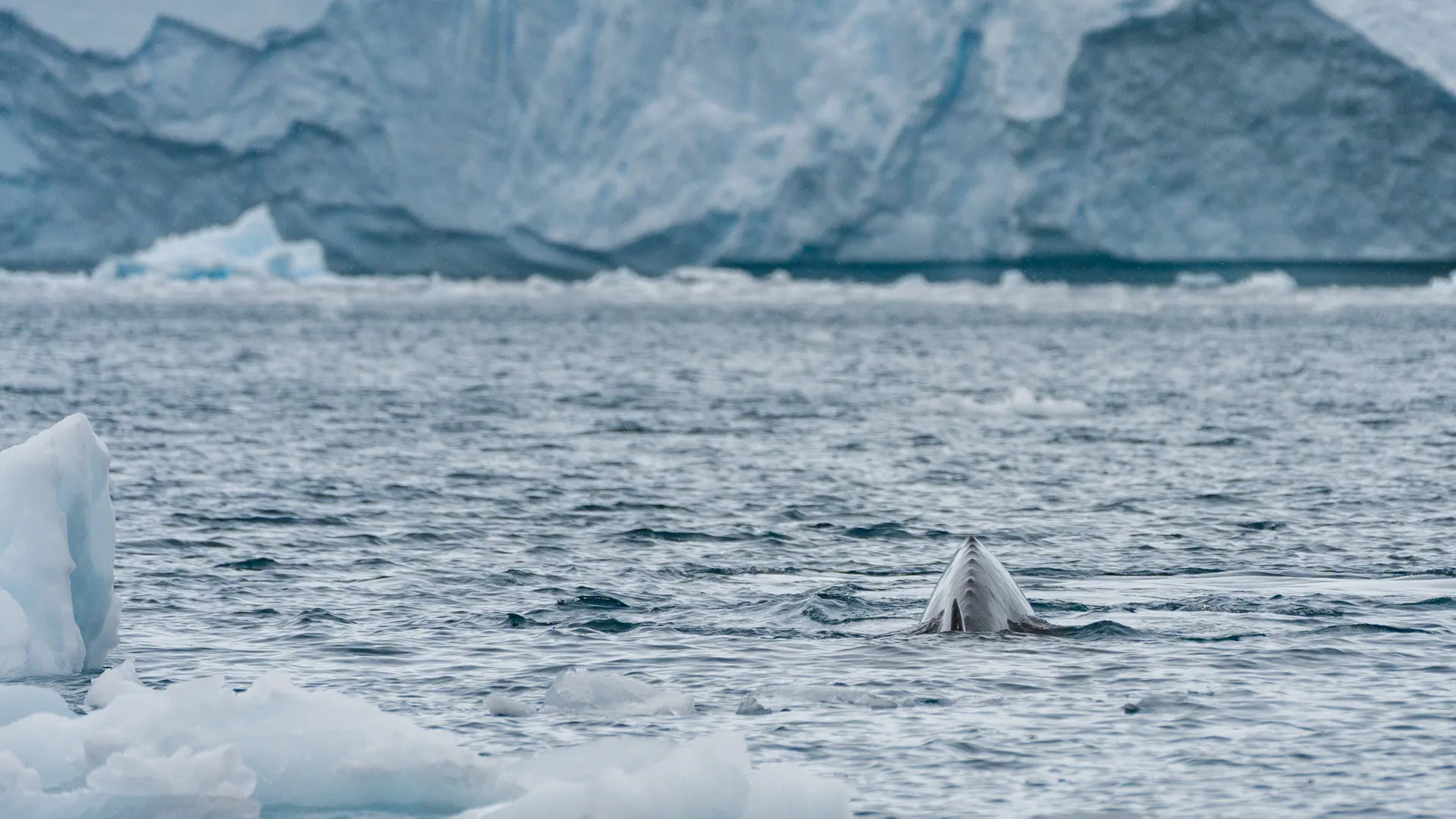
Lemaire Channel II
Lemaire Channel IIIn the Evening we had another crossing of the Lemaire Channel, this time round in completely different weather, which was a treat.
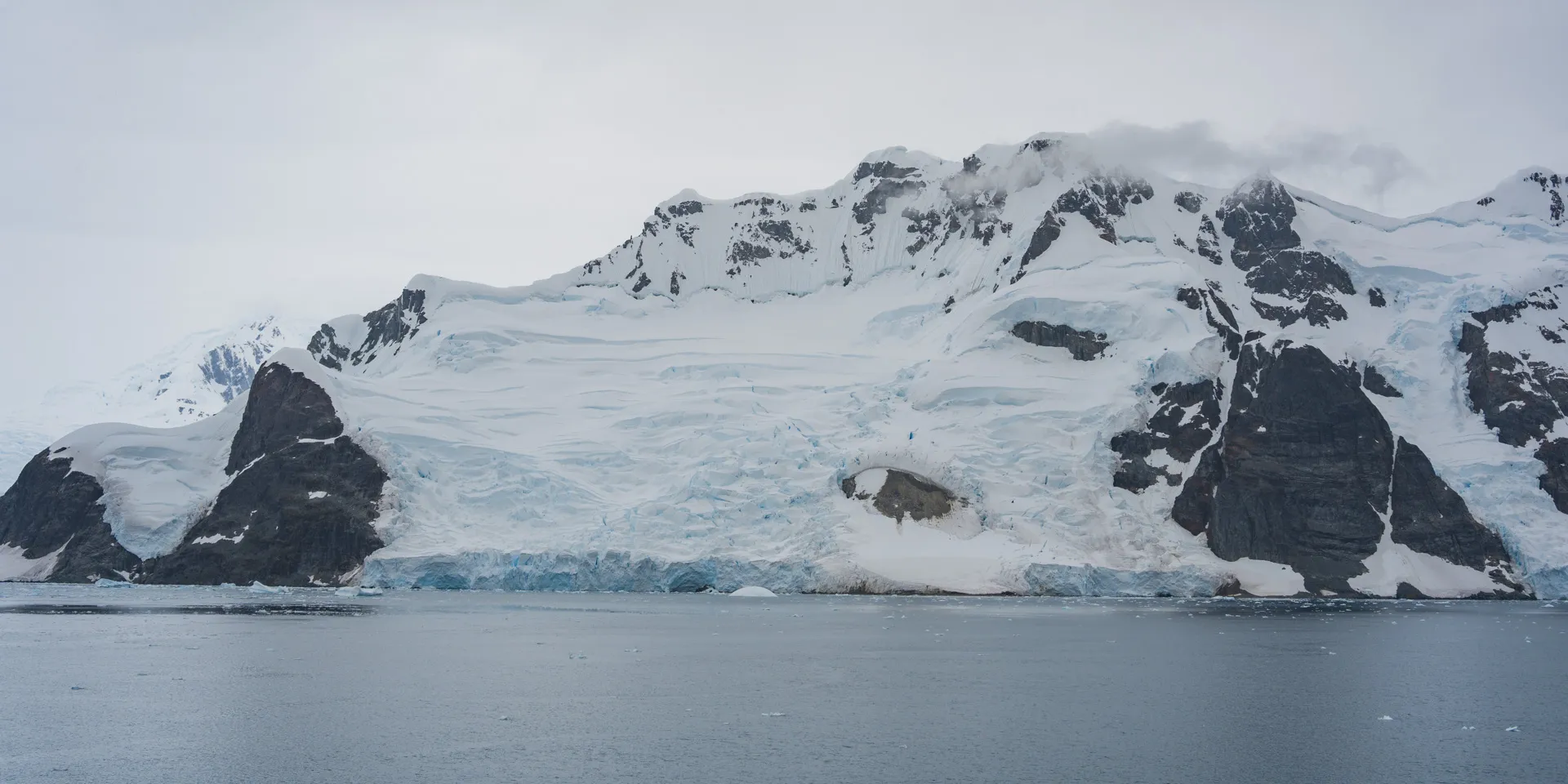
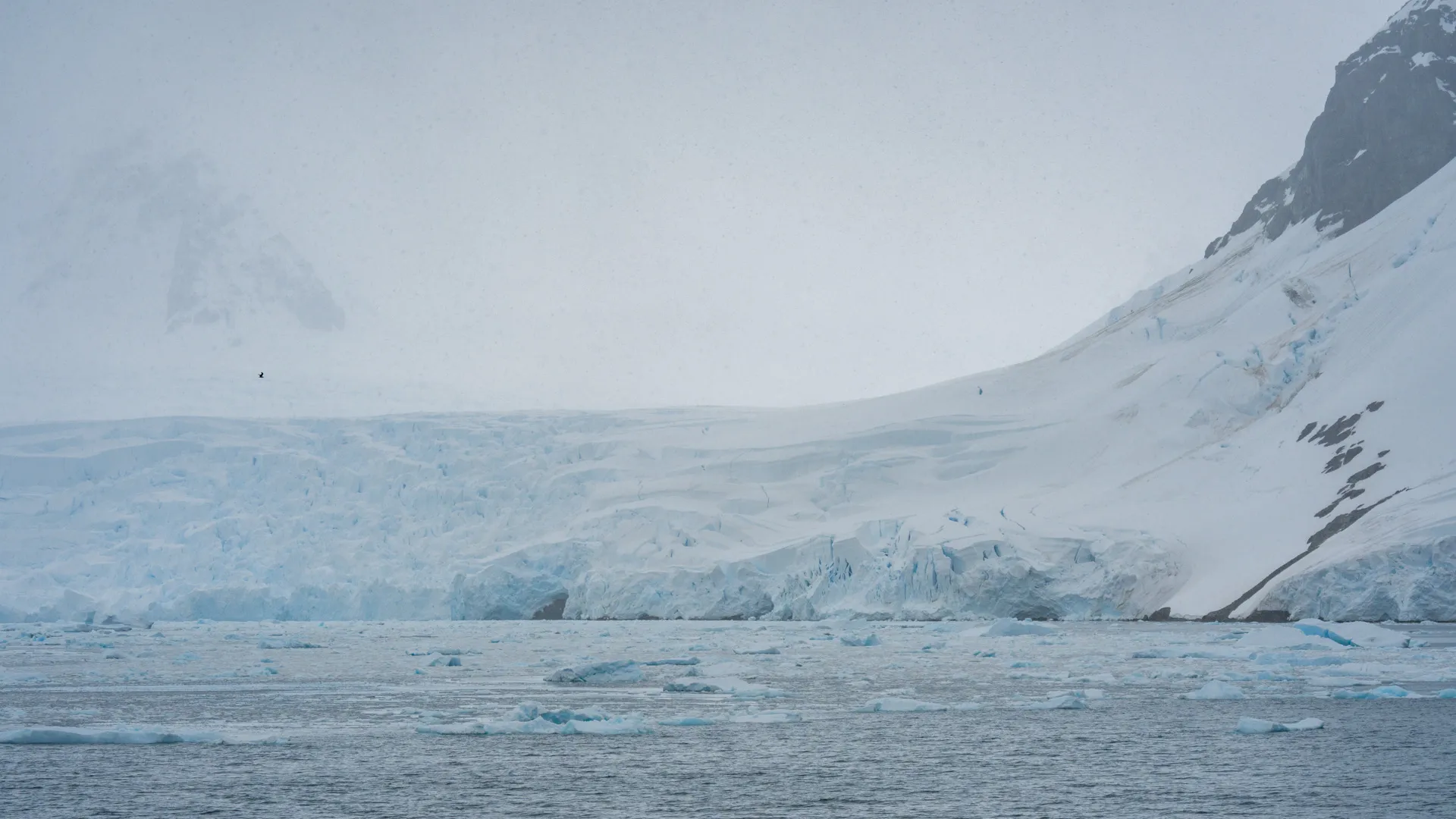
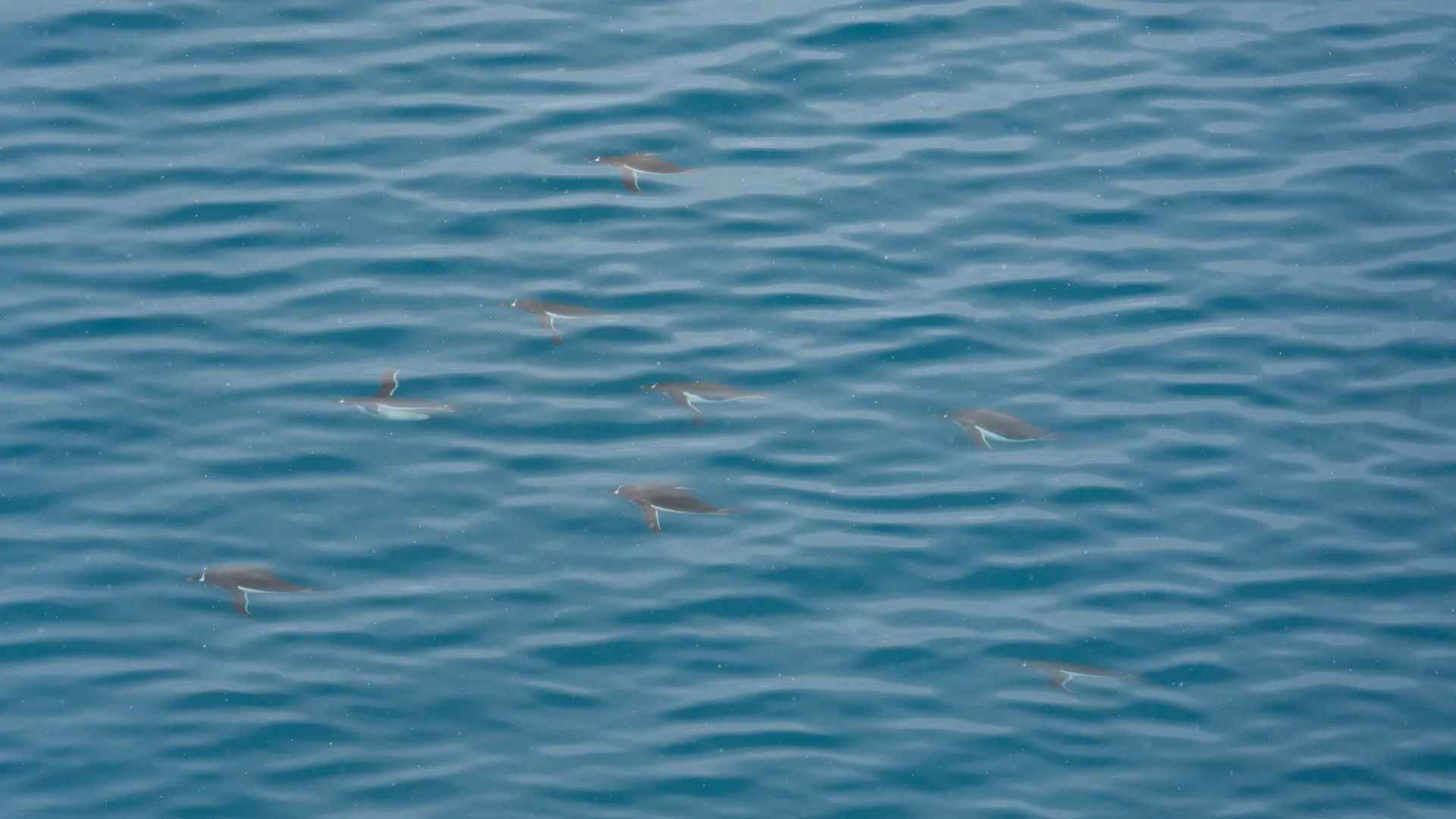
It was foggy and snowing and there were still all of those porpoising penguins in the water when the weather was nice and as the snow got worse, it seemed like the weather was brewing whale soup!
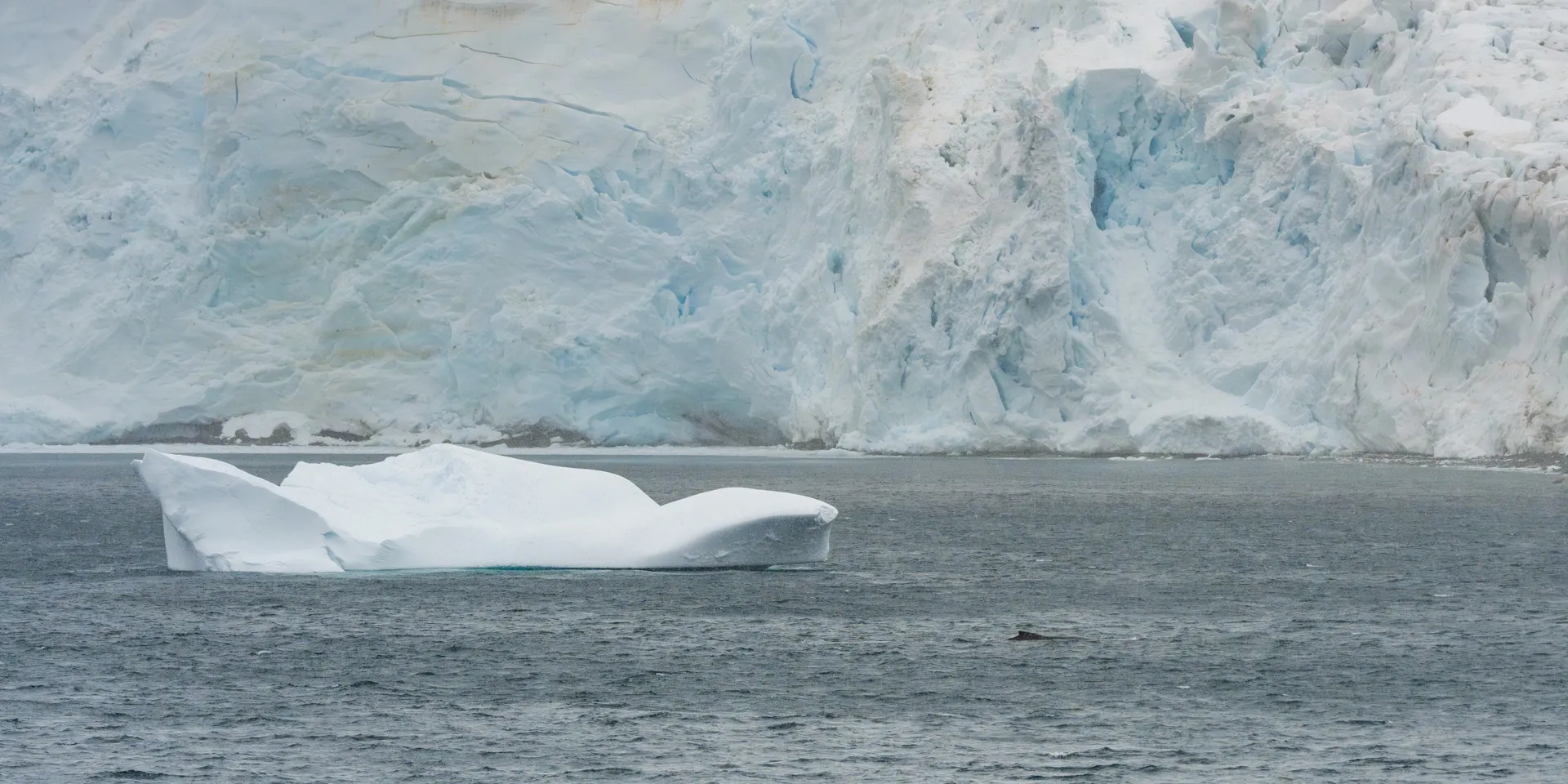
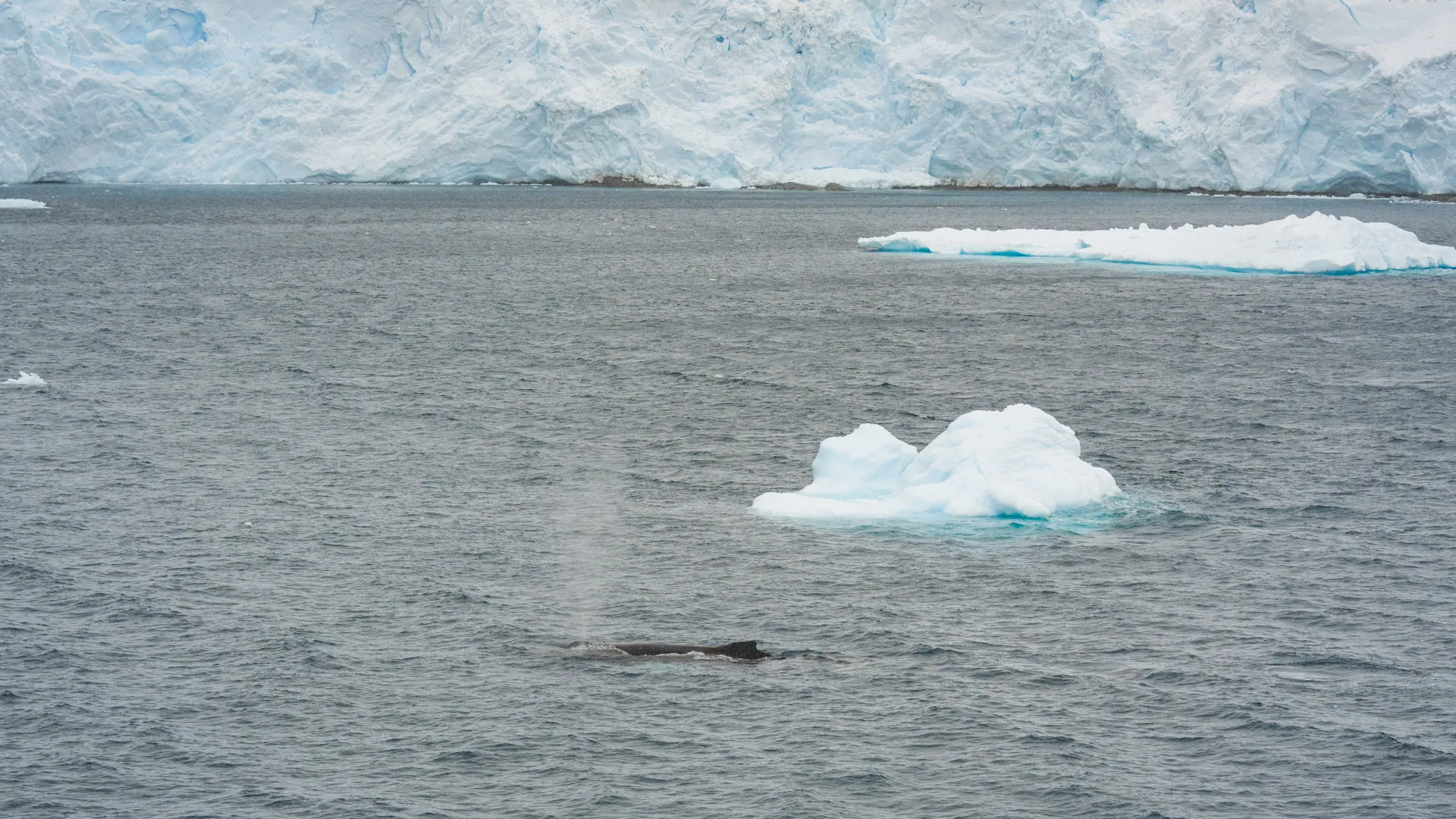
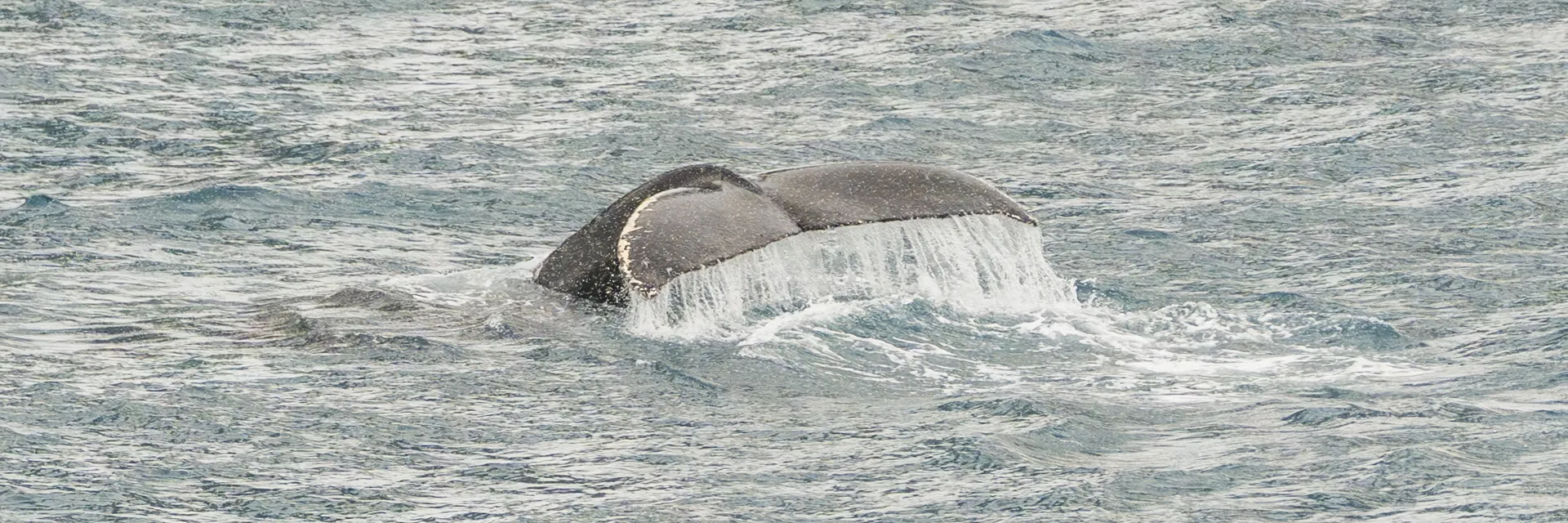
And then—I got my dripping fluke! Though, no nice landscape around it and I somehow also photographed it at 200 instead of 400mm. But hey, it’s pretty! Did you know whales have special markings on their body? Apparently you can identify them by those markings. There’s a site called Happywhale where you can upload your whale photos and they will tell you if it’s a known whale and if so, which one. They require a tail shot for a humpback, so I submitted this one. So far no reply yet on which one it is.
What wasn’t so sweet, though, was the forecast for the next couple days.
Pink and purple is bad on a wind and swell forecast. The forecast was looking very very blushy…
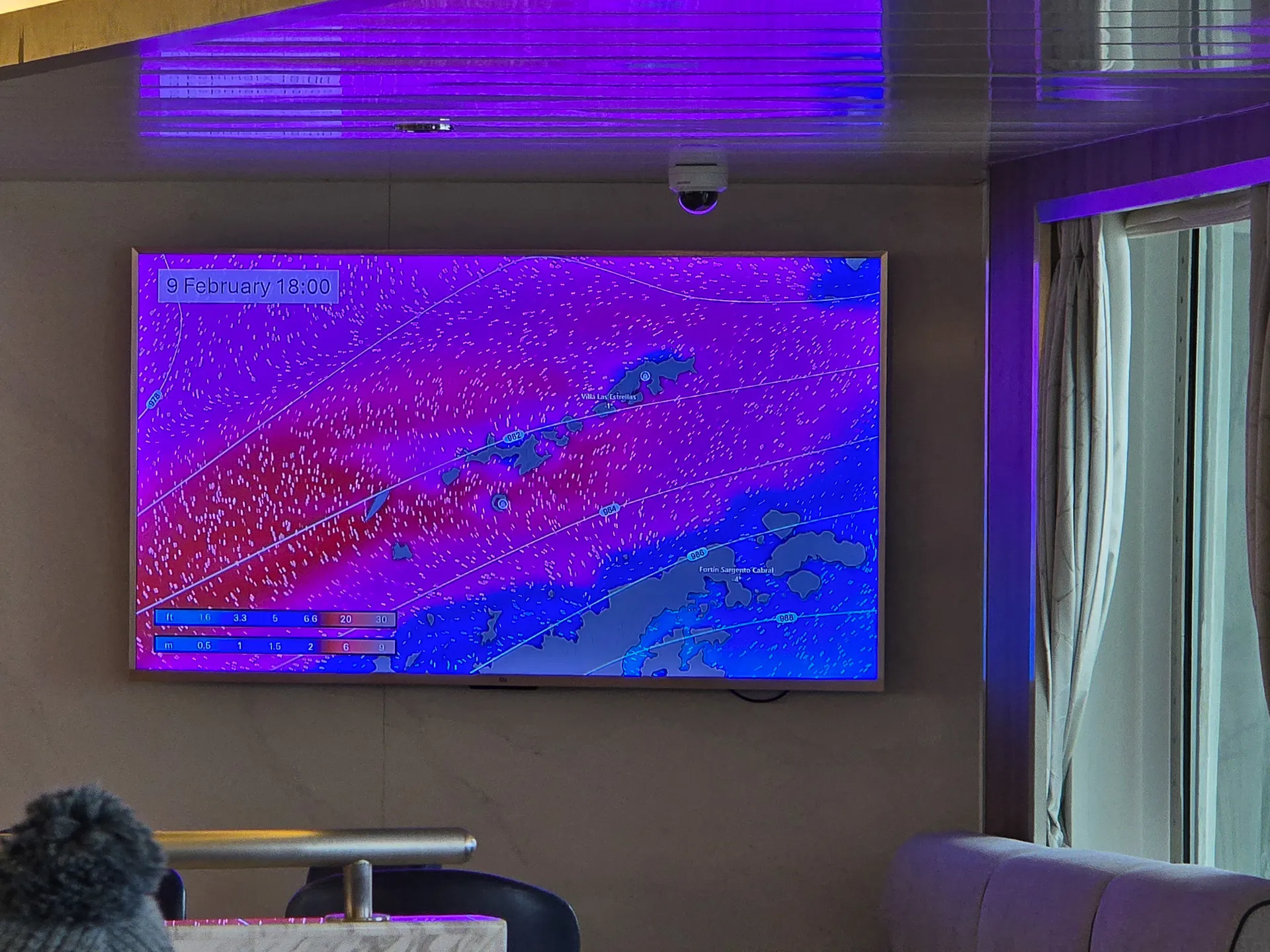
We were supposed to have 7 days in Antarctica, but a storm was brewing and in the all pink and blue weather cards forecast for our planned departure, some of us could already feel that our trip may have to be cut short, as the weather was worsening more than we had expected already within this day.
Day 6: Feb 8 2026
Day 6: Feb 8 20265.30 a.m. Orca Call
5.30 a.m. Orca CallThe next morning, I was brutally woken up by the wake-up call, which told us that there were Orcas next to the ship.
Orcas are not as common a sight as humpbacks and some trips don’t see them at all. So even though I was barely cognitive at that moment, I got some warm clothes on and stormed out on the deck. I didn’t catch a good glimpse of them, only a fin really.
Took a few glances around at rumpled faces, some people even just in T-Shirts and then decided to go back to bed.
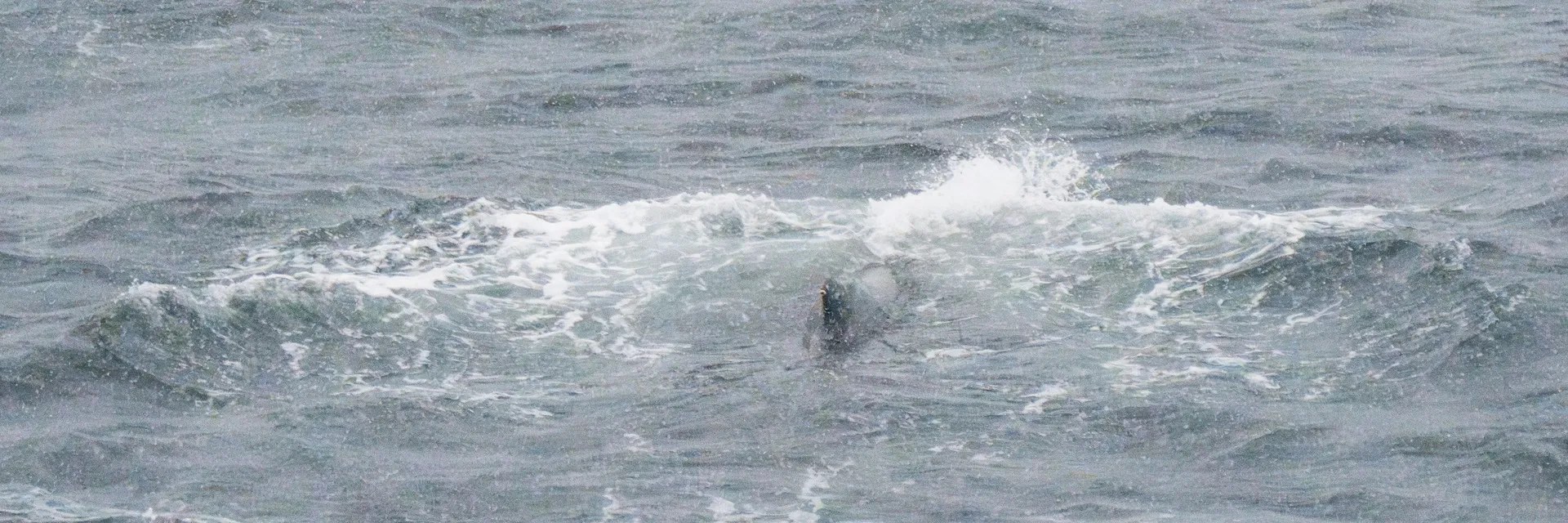
Well, that was my mistake, as when I woke up twenty minutes later, I was greeted with stories of a pod of orcas super close to the ship and hunting seals and insane photos in our group chat that had all happened in those minutes after I had gone back to bed.
What is the lesson we learn?
When in Antarctica, those who sleep or eat miss out.
Rhiannon had warned us before we got here that we would definitely be jealous of other people’s sightings and that we should just be happy for them and not let it get to us. That we, too, would have unique memories that people would be jealous of.
Still. In that moment, I had not seen the Orca really and not seen a close up whale fluke and I was a bit bummed about that (still am).
But then, I had to remind myself that the entire trip I had seen things with my own eyes a lot of people could only dream of. We had a wonderful privilege here and Orcas and close up whales are not unique to Antarctica. They can be found on other trips as well. And I’m 31—I still need some stuff to remain on the bucket list (or so I tell myself).
Final Landing: Cuverville Island
Final Landing: Cuverville Island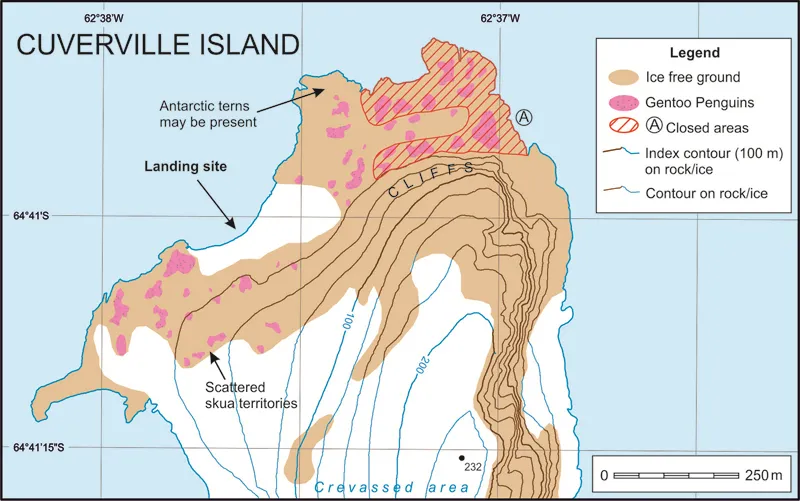
The weather was moody and snowy as I went out on deck that morning. I saw a lot of whales in the snow, but there was a part of me that felt like this was going to be our last day of the trip. I had already been a bit sad about the fact that the end of this incredible place was near but that morning did not feel good weatherwise. So, it was important to make the most of this landing. As, it was most probably going to be our final one.
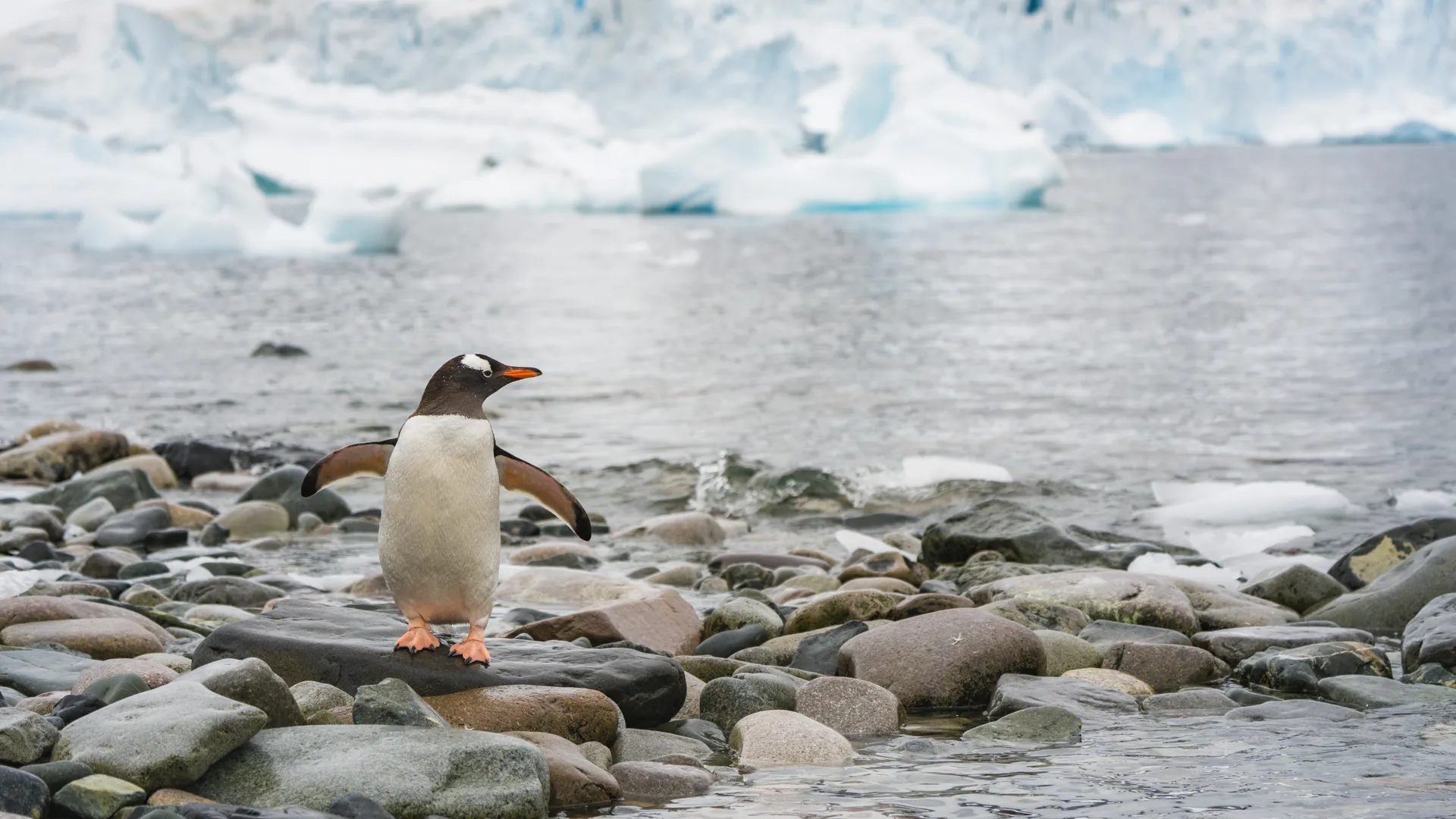
Cuverville is home to the biggest Gentoo colony, with over 6k breeding pairs. Luckily, there is no way to get tired of penguins, because we were about to see more penguins than we had seen on the entire trip so for, or at least it felt like that.
And, almost poetically, Cuverville is where I shot the image I used for the article header.
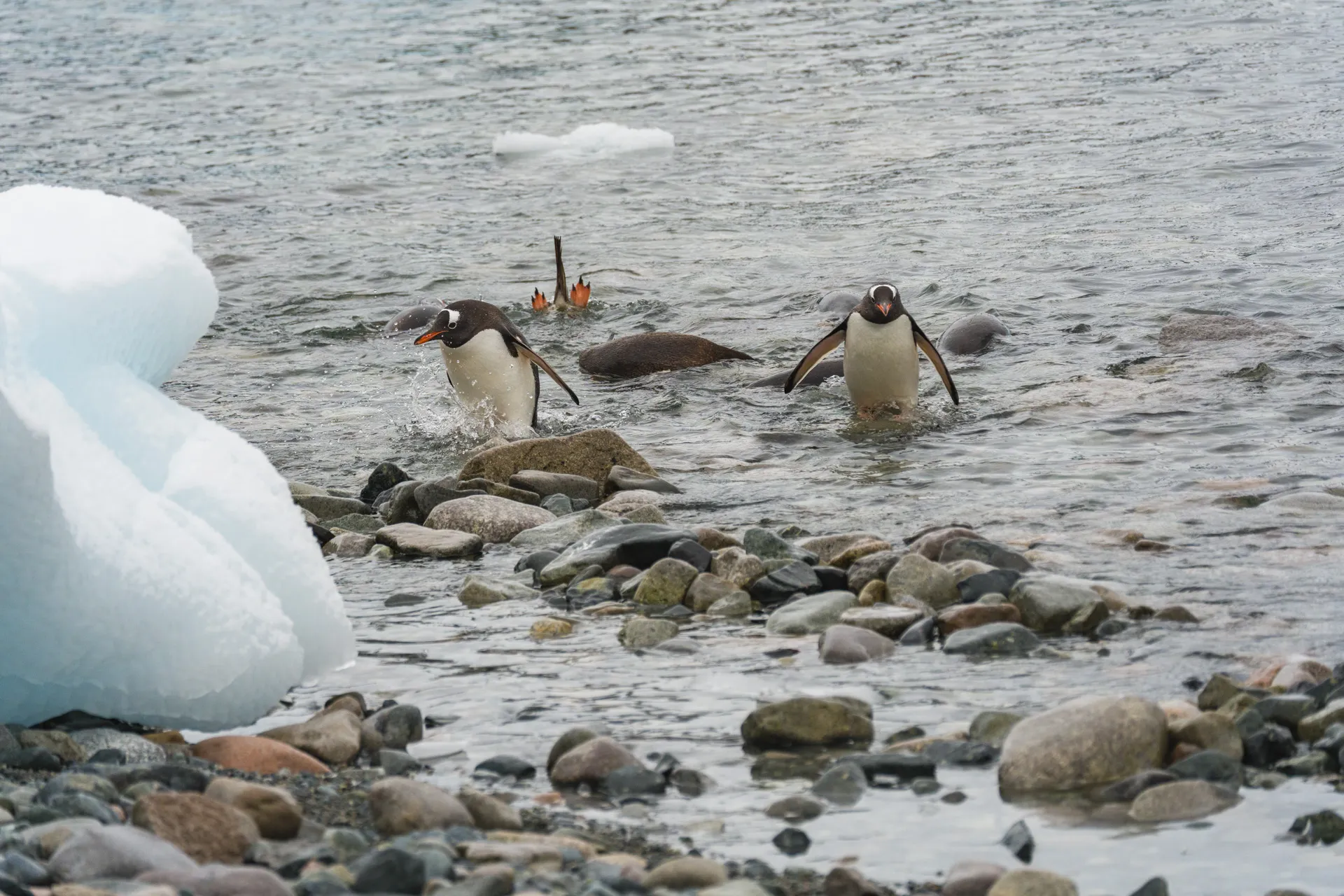
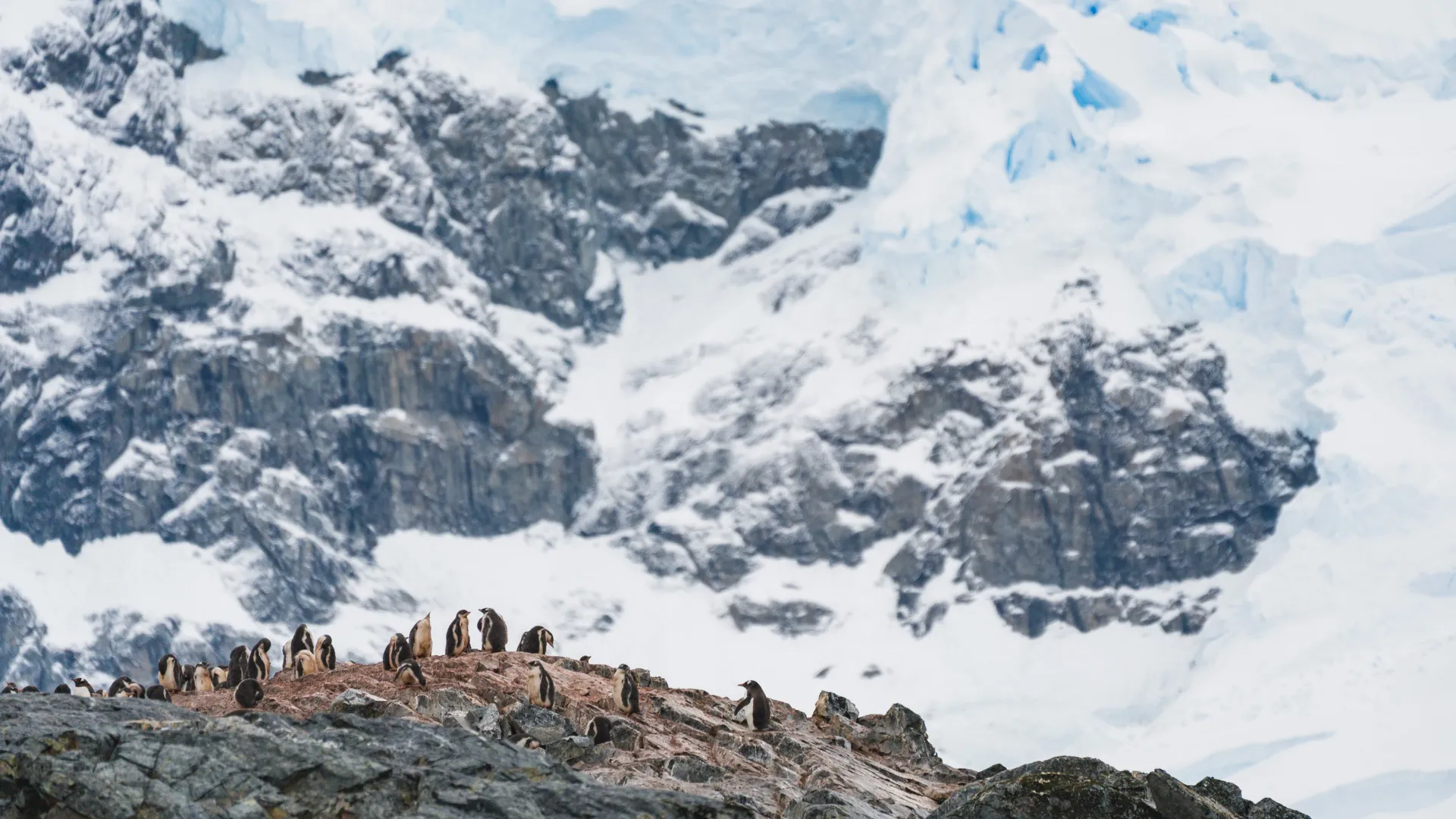
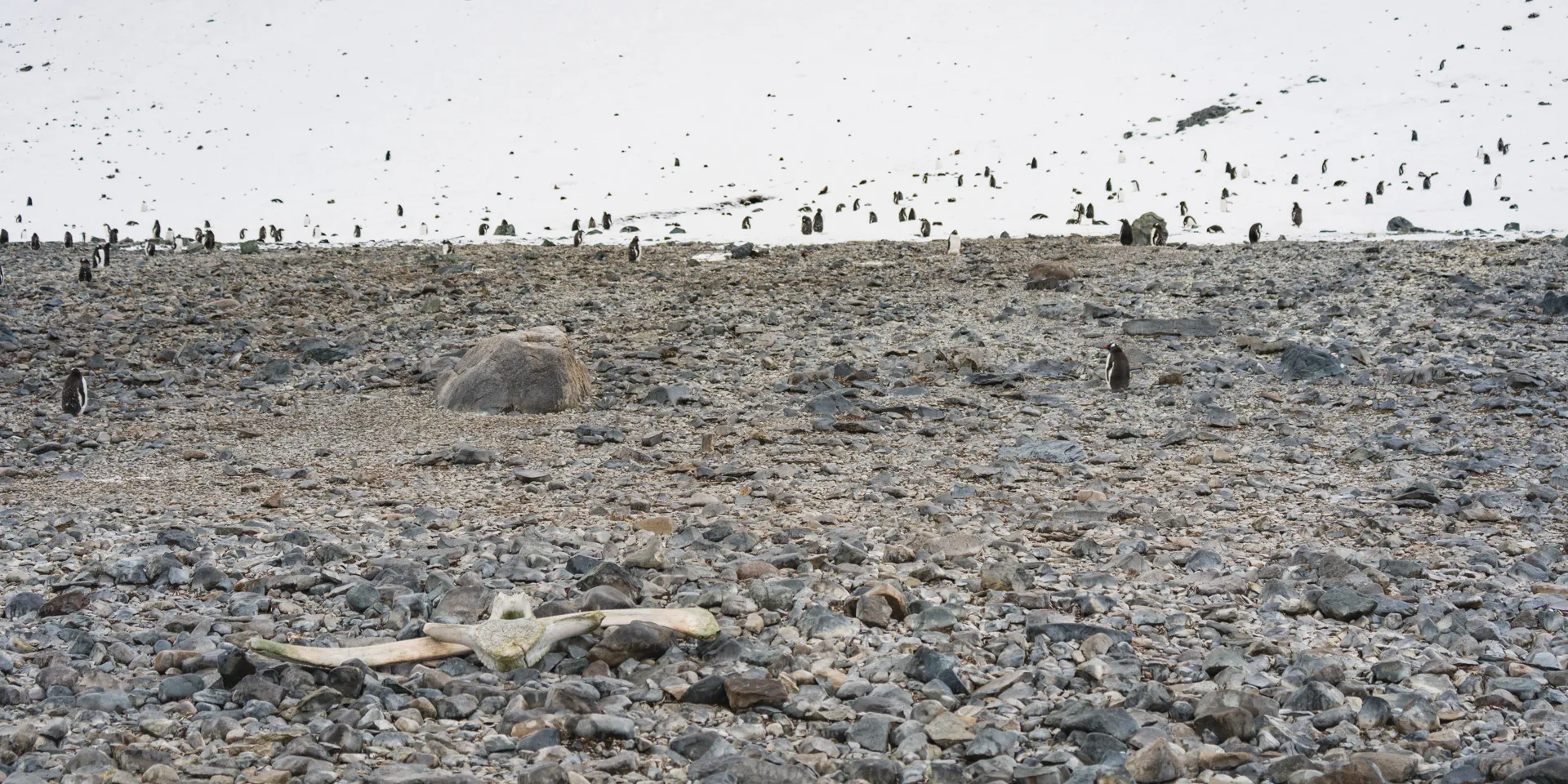
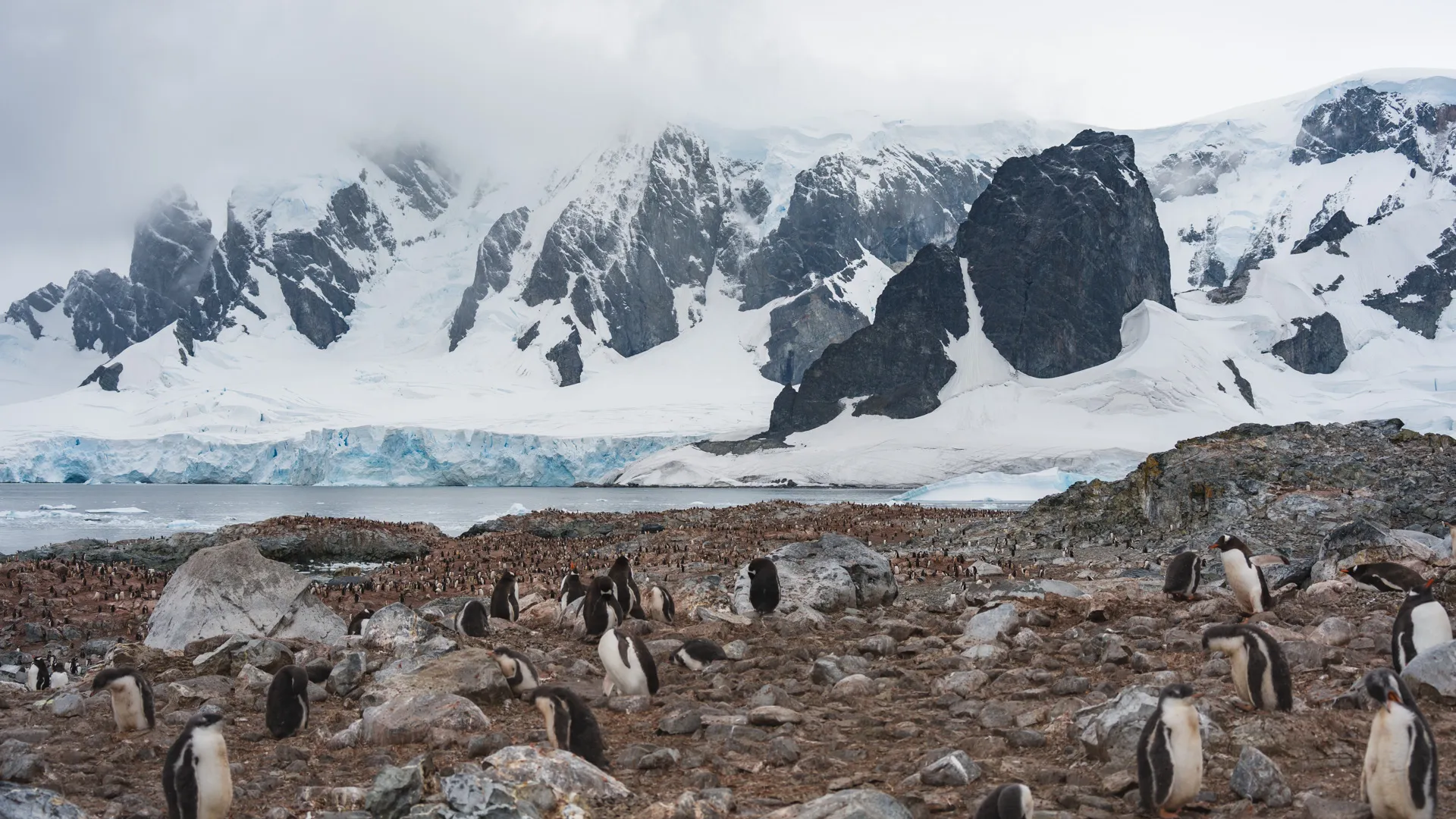
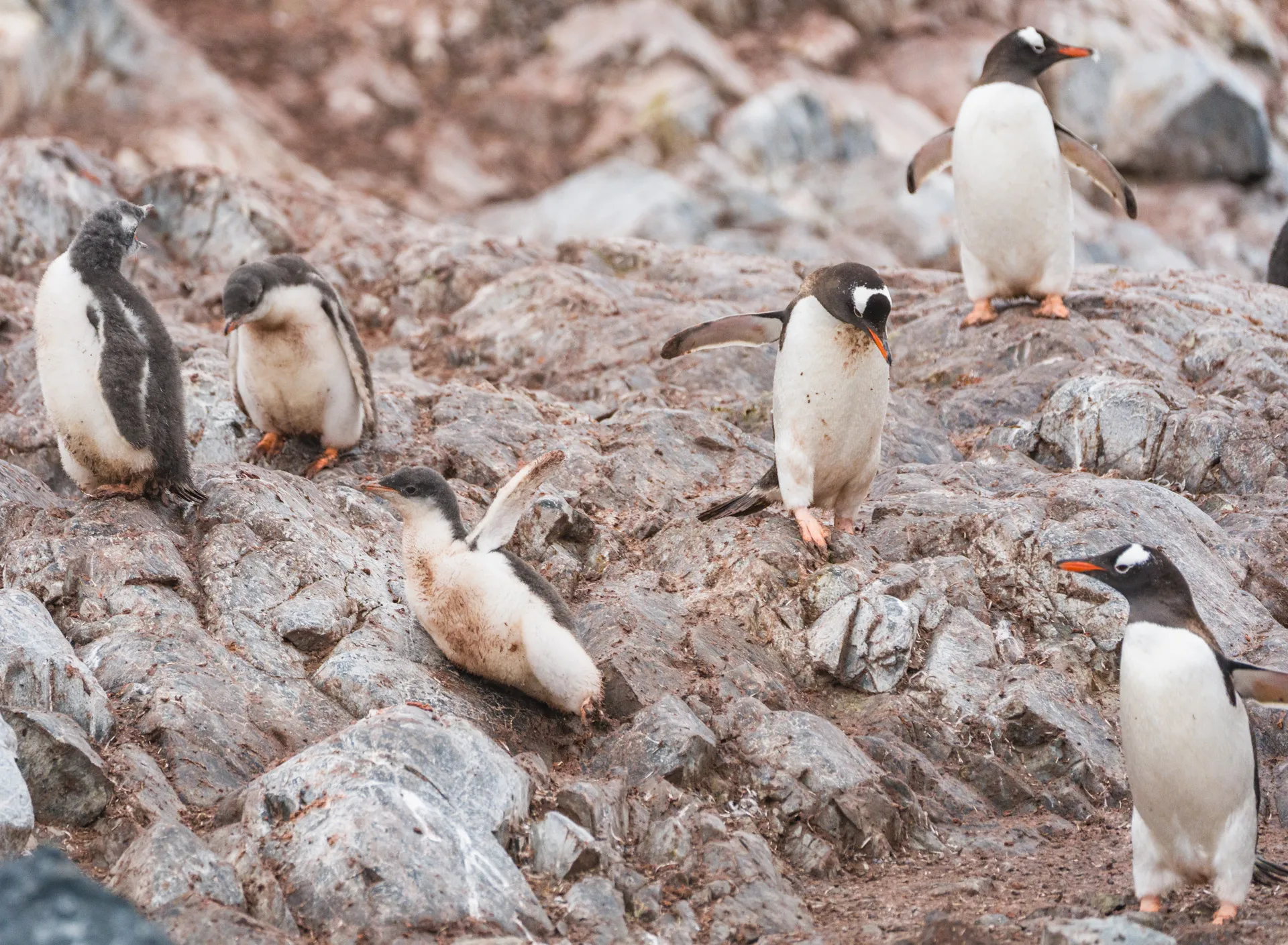
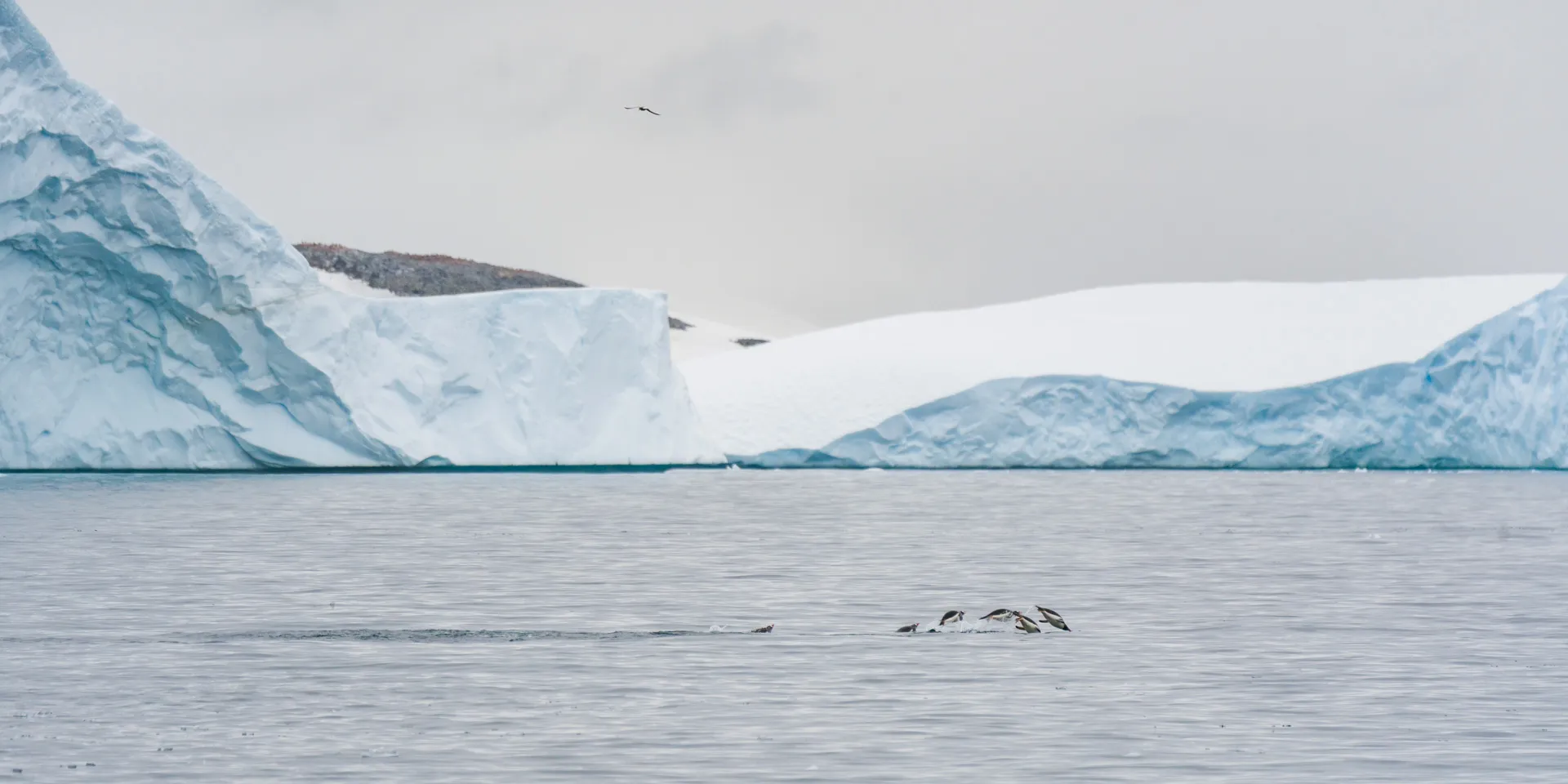
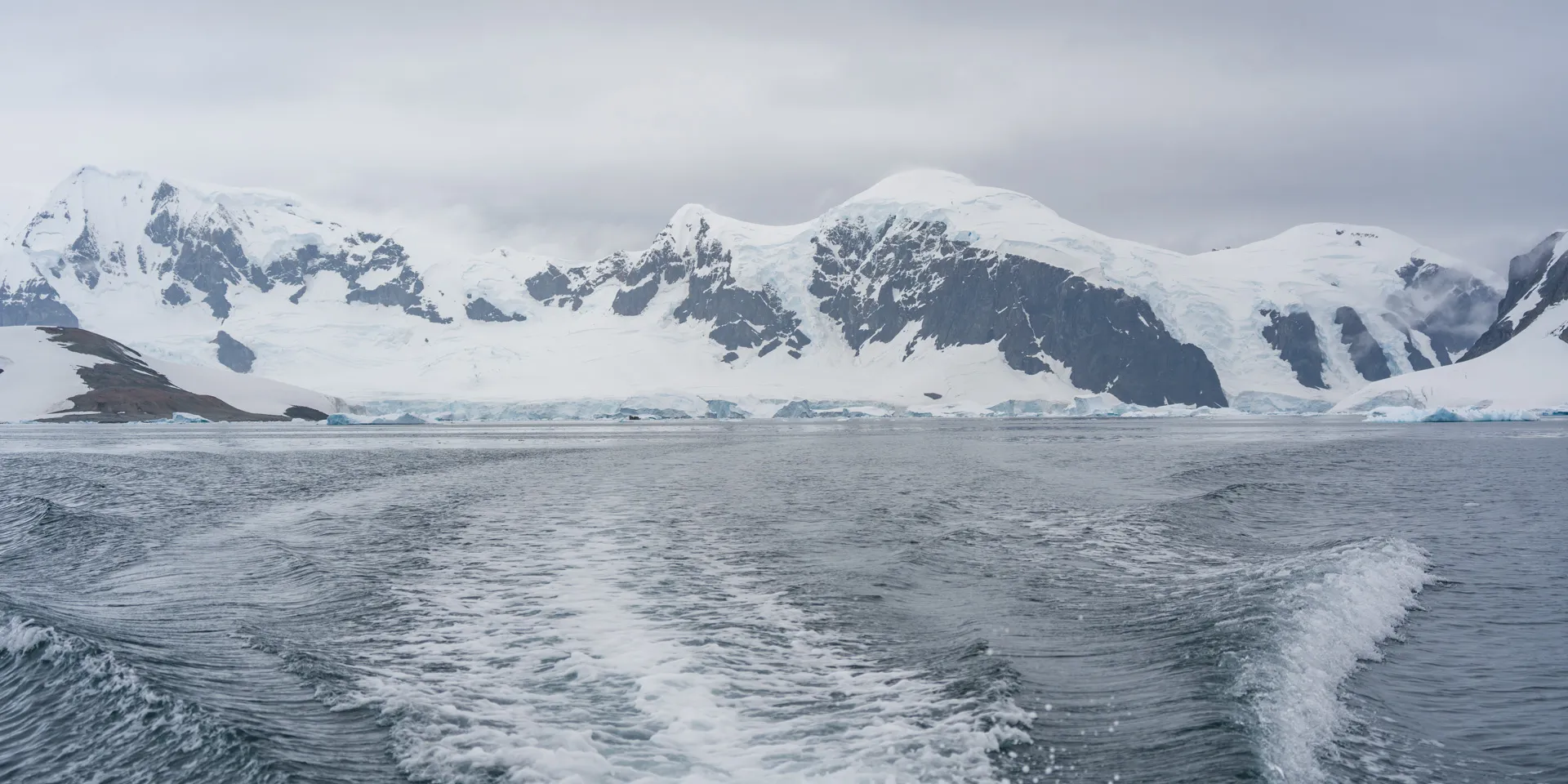
The landing was not as large as some of the others and we had quite a bit of time and one of the ET members told me that there was the option to have a quick zodiac cruise before we were heading back.
I felt like this was my last chance at getting to see a whale up close, so me and a few others headed back a bit early. We got a nice view at the backside of the rookery.
We did not find a whale, we heard a blow but ended up waiting for nothing.
That nothing, however.
In those final moments off the ship, the zodiac motor was off for the first time and for a few seconds, all 6 people on the zodiac were quiet.
Antarctic silence was how my trip on the continent ended for me personally. And nothing ever quite felt like it.
I’ve been to remote places by myself and I’ve experienced a lot of silence. But there is something special about the silence of Antarctica. The water. Being surrounded by nothing but water and ice and rock in a place so far off from the rest of the world, it—made me feel small.
As we were on the ship and I was walking outside up to my cabin, I spotted my final fur seal on an ice berg. It was sitting in the little crevice and then jumped out so fast, I was quite surprised by how agile it was!
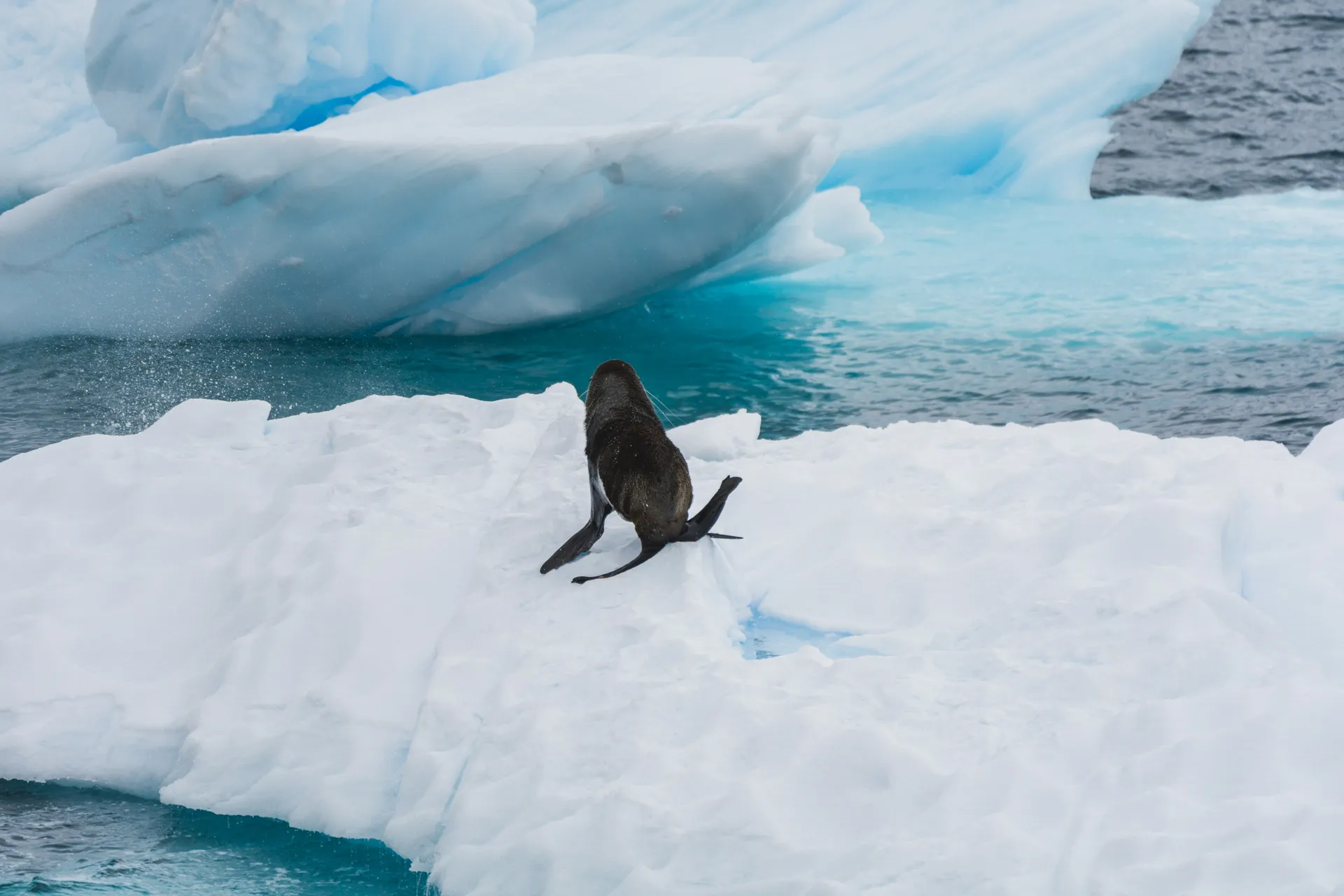
Full Speed Ahead
Full Speed AheadIn the morning, Gaby had left us a chance that there might be a zodiac cruise in the afternoon and that we would check the weather. But—the weather was not playing along.
Forecast was looking worse and worse and we learned that due to deteriorating weather, we would cut one day of Antarctica.
Wind wasn’t as bad, but swells were hovering around 3-4m and were expected to get worse, even with us trying to outrun the storm.
And so, our way back—began.
Unluckily for us, the drake passage and seasickness, wasn’t the only thing that was a potential threat to our stomachs, though. That afternoon we also heard that some people on the ship had been feeling unwell and were isolated. Gastroenteritis was doing the rounds and since we were a small ship, it was very important, that we had to increase our hygiene and health measures to prevent it from spreading further.
The hand-washing stations would now be monitored by members of the ET and buffet would be served, instead of self-service. They were very serious about this.
It’s funny how before this trip, I had never in my life been sea sick. I had been on boats and I had been on boats surrounded by people puking, but never had I been affected.
Not at all.
But, my cabin was on Deck 6 way in the back of the ship and I could feel those swells. In the afternoon, James gave his lecture and tips and he was known as a person that gets sea sick. To my personal surprise, I felt myself very much reflected when his face grew paler and paler as he was going on.
I popped a seasickness pill. Not quite early enough, which lead to a very very embarrassing phone call with reception where I had to ask for someone to come clean up my cabin as I had not quite made it to the balcony to throw up, because the sliding door had no way of being fixed open and Dr. Pranav’s voice of “I don’t want amputations” was the only thing in my head when I evaluated dirty floors or being decapitated by the door and decided the former would be less admin work for everyone involved.
I missed Roman’s presentation that afternoon. But, luckily, my pharmacist had given me some magical gum you were supposed to chew 5-10 minutes (“7 minutes is the magic number”, she said) and those chemicals worked like a charm, so that by evening I felt a lot better.
My American co-travelers had way harder stuff and told me the gum was just some common non-hardcore thing, but it did the trick for me.
Due to the pills most of the rest of the day and the next are a blur.
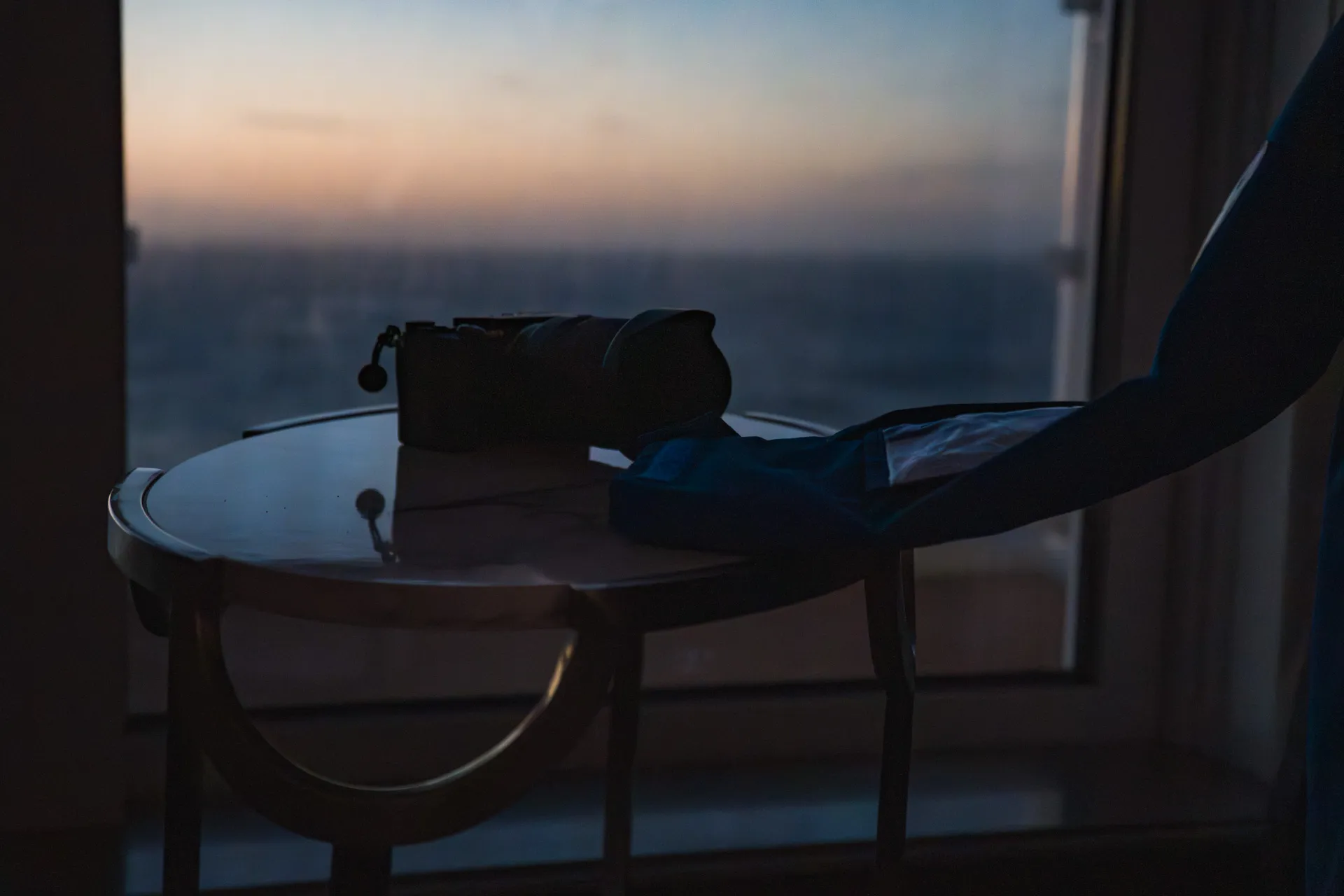
Day 7-9: Feb 9-11 2026
Day 7-9: Feb 9-11 2026Drake Passage Program
Drake Passage ProgramBeing on the Drake. Gaby joked that it’s weird to the ET to have a full ship of people that had no idea what the Drake was like on the way back, since we “cheated” our way into Antarctica by flying.
Day 7 was projected to be our roughest, with swells up to 6m at night, which we could definitely feel during dinner, where we had to hold our wine glasses and plates and a couple sets of cutlery went flying.
I was doing okay thanks to my pills. But, while they had caffeine in them to counteract the sleepiness, I’m probably too much of a caffeine addict for that to work, so I was so sleepy. I took probably three naps a day (me, a person who can only nap when severely sick) and my memory was severely affected. I only retain fractions.
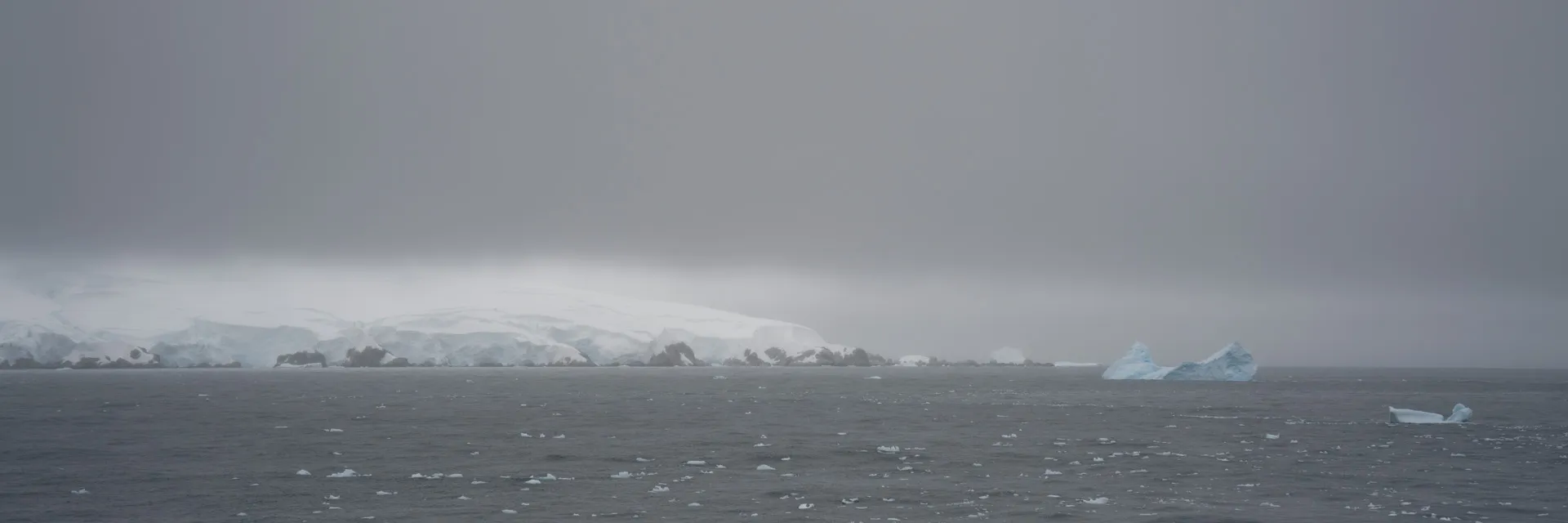
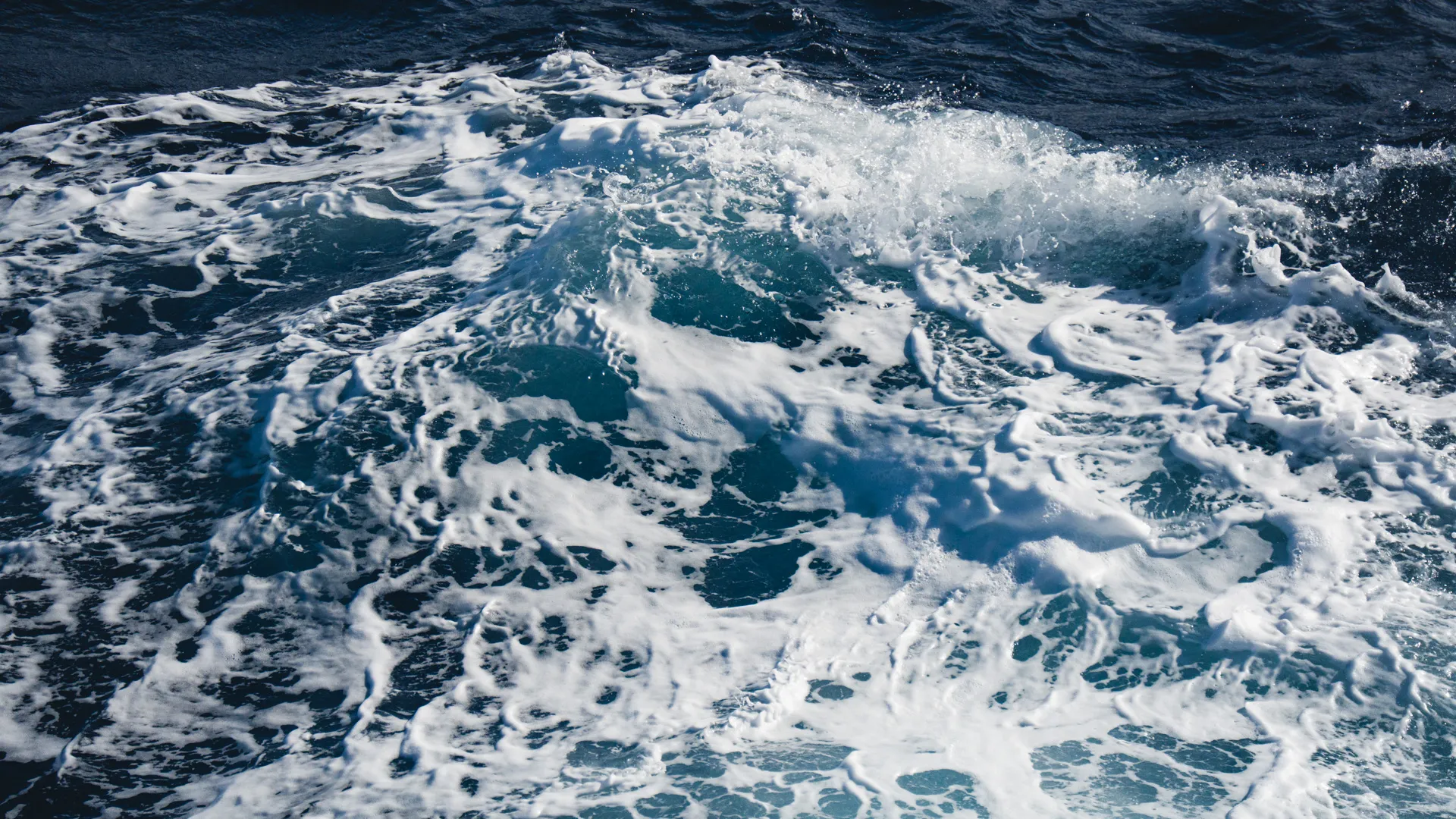
I was editing photos. There were presentations by amazing photographers. There was a pub quiz with the strangest questions (like, the pressure of penguin poop. Blame them, why I had to google that at 1a.m. a week after returning home). There was an attempt at sea scape photography.
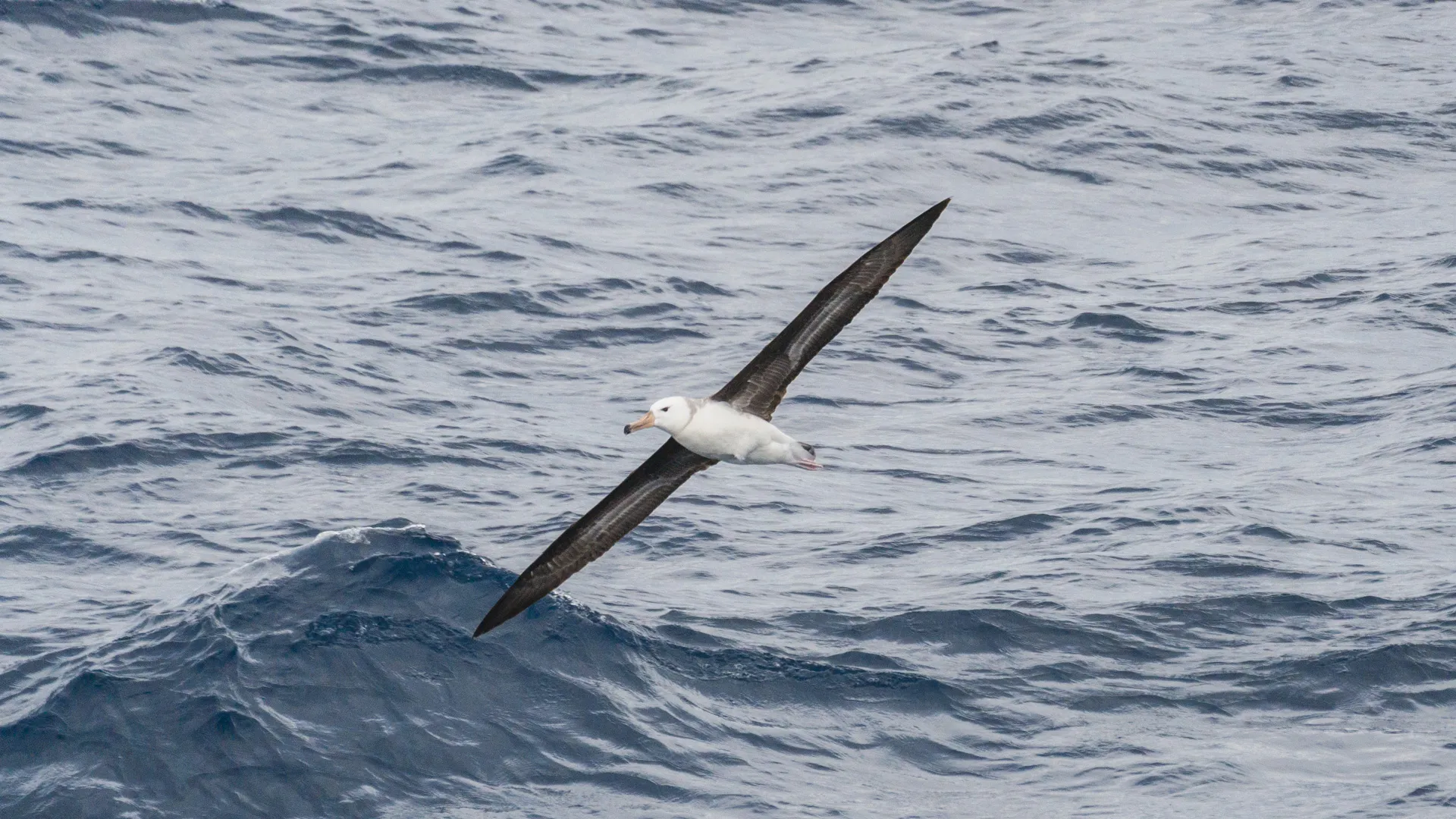
There were big giant huge birds, and that was the end of it.
Oh, I think I also attended a bridge tour, where I got to see all the captain’s instruments and where the team work from.
The End
The EndAnd then it was morning of Day 9. Our final day on the ship. Gaby said we’d be doing donuts in the Beagle Channel while we waited for an Argentinian pilot to be able to take us to Ushuaia, since you can’t go into Argentina without that person present (I assumed the donut part was a joke, it was not, our route literally has proof of the waiting donuts).
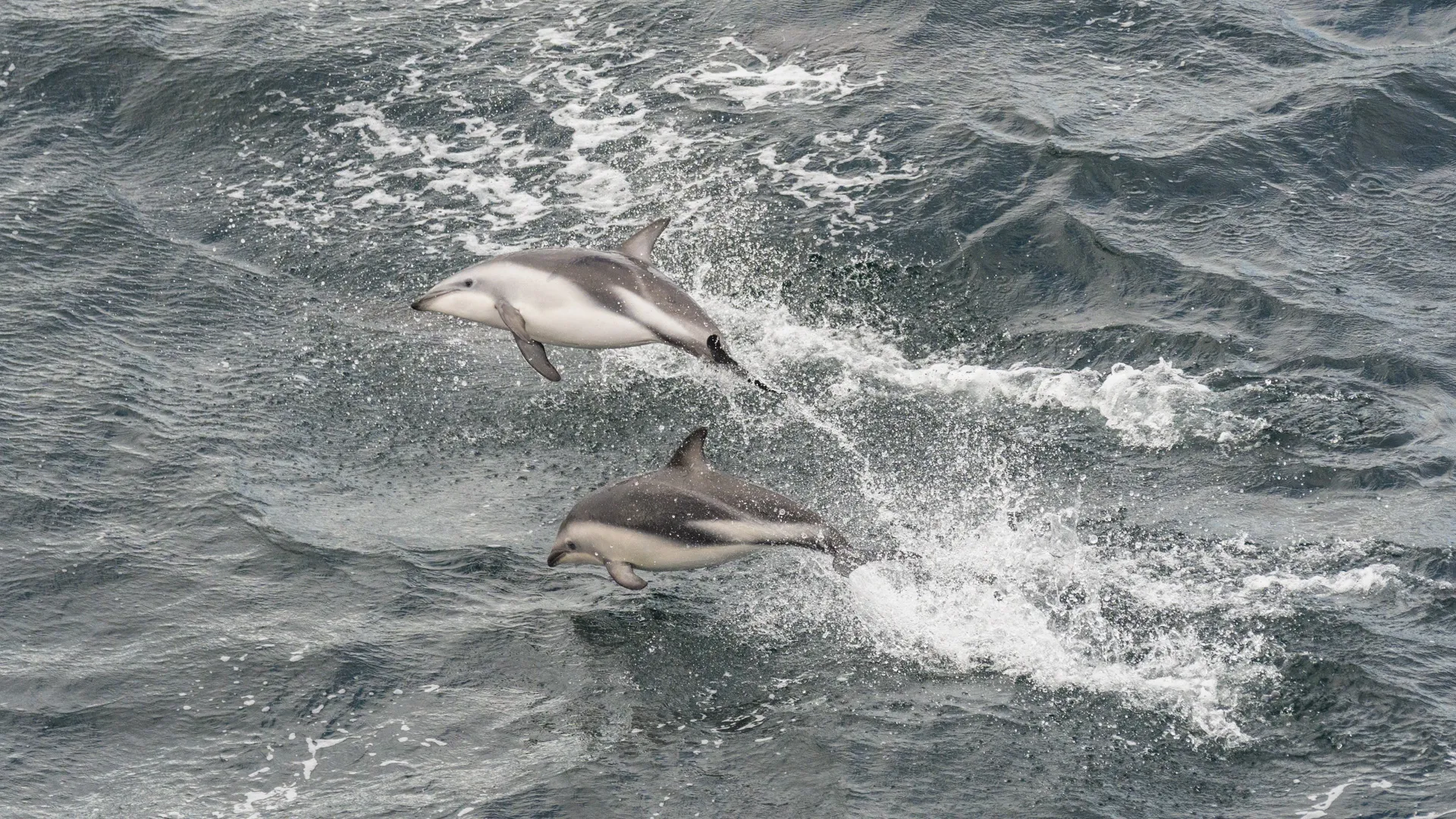
That morning started with a huge pod of dolphins swimming around the ship. Unlike the Orcas, they had a way more humane time of showing up. We watched them in the pelting winds jump and jump and jump. I think those dolphins had more fun than we did.
We were sitting and drinking in the bar, reminiscing over the past days when we realized that we somehow had ended up back in civilization.
When I went to bed that night, for the first time, I closed the curtains because there was artificial light outside.
Day 10: Feb 12 2026
Day 10: Feb 12 2026Ushuaia, Argentina Disembarkation
Ushuaia, Argentina DisembarkationOur final morning was a blur. We had arrived in Argentina, yet another country crossed off in this trip. Ushuaia is the southernmost city in the world and is a popular starting and ending point for Antarctica cruises.
I had almost three days in this place before heading back to Switzerland.
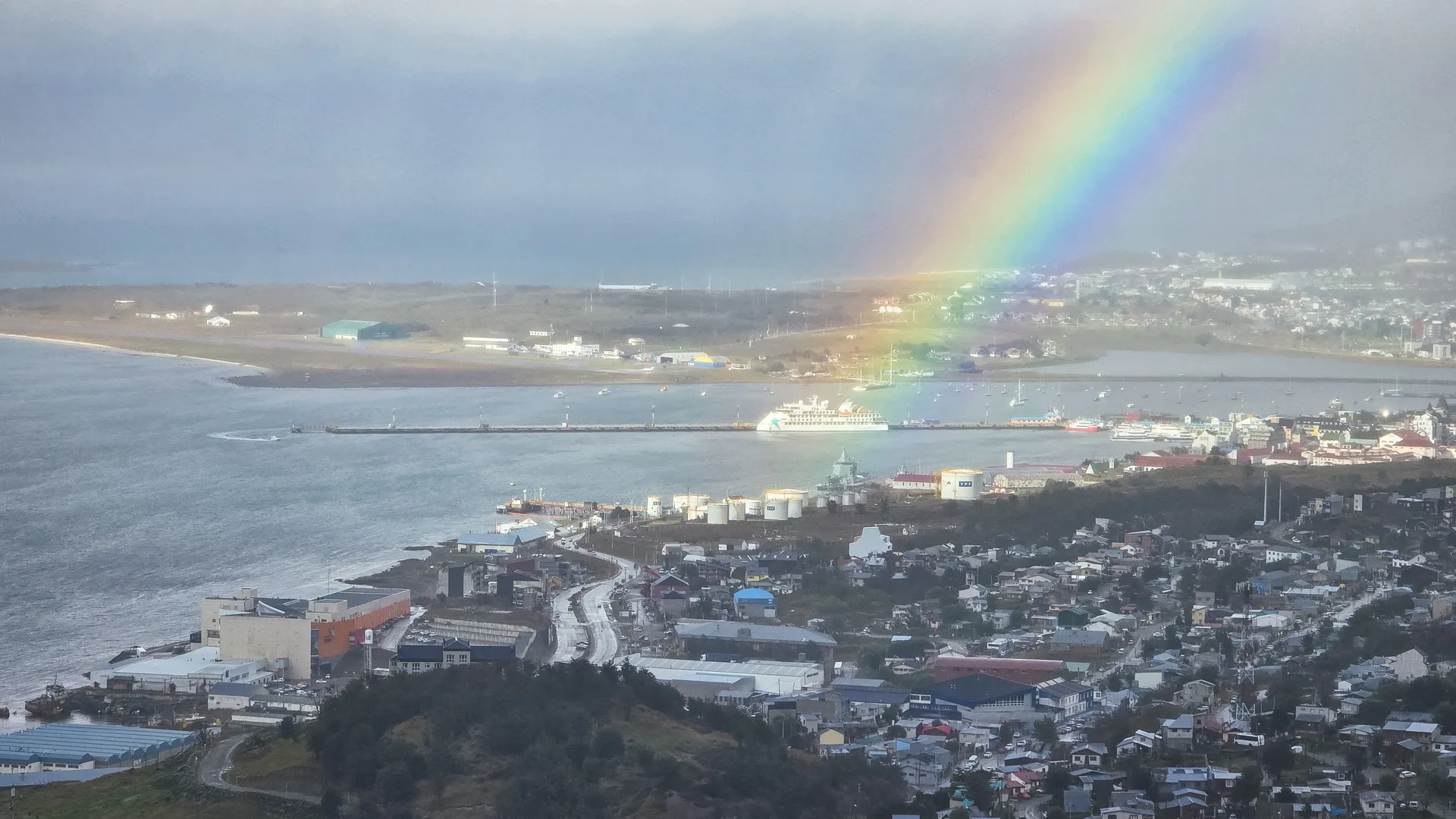
After saying Goodbye to my fellow travelers, I was taken up the hill to the hotel I had booked. And, really, the trip had already been magical at this point. But as soon as I was sitting in the heated infinity pool overlooking the city and the port, somehow, magically, the sky opened up and a rainbow appeared, striping right over the Greg Mortimer, awaiting its next set of adventurers to the end of the world.
Final Thoughts
Final ThoughtsIt’s been 16 days since I got off the Greg Mortimer. I’ve spent over a week sorting my pictures, over a week writing this monstrosity of a recap (which, really, is more for me than for you, though you deserve a medal if you made it this far!).
When people ask me how Antarctica was, I keep telling them: “It was amazing! I want to go back!”
That first moment, when I talked to Steve, one of the fellow travelers I had met back in Santiago airport, who had been on the trip for the third time. I keep thinking back to that. I keep thinking back to the reaction I had back then, when I asked myself: “Why on earth? This is a once-in-a-lifetime trip. Why would you do it three times?”
I knew, by day 2.
Before going to Antarctica, I had watched almost all of YouTube on the subject. I had barely slept the week leading up to it because I was soaking up all of the content surrounding it. I had seen so much content, so many pictures, had read so many words. No sight was “new” in Antarctica, because I had seen them all through a screen.
But. So. Much. But.
No words, no picture, no video can capture what Antarctica feels like. Antarctica makes you feel small in the best way. Antarctica shows you what a place of peace looks like. Antarctica shows you what good nature is. I feel like—in a way, Antarctica was where I met more goodness than I have ever met before. Truly wonderful people, wonderful nature, the idea of a world where humans and nature can coexist in a respectful way, where we can be in awe of the world around us and not feel the need to conquer it. And it left me with an insane urge to protect all of that.
This trip started with a rainbow and dolphins and ended with dolphins and a rainbow.
In my professional work,
{...}is what brackets the visuals.And maybe
[rainbow dolphin]...[dolphin rainbow]might be nature’s bracket syntax for literal magic.
Experiencing Antarctica once—yeah, put that on your bucket list. And maybe—maybe add it twice.